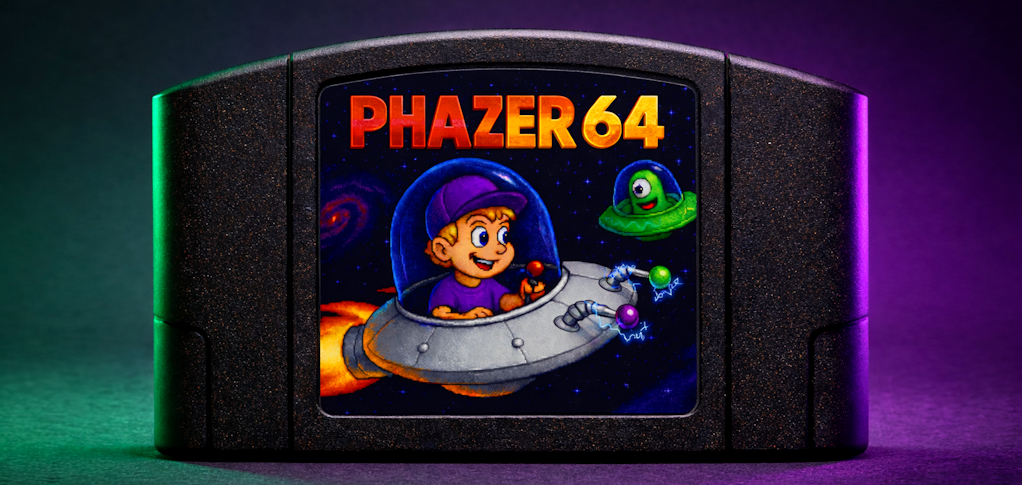
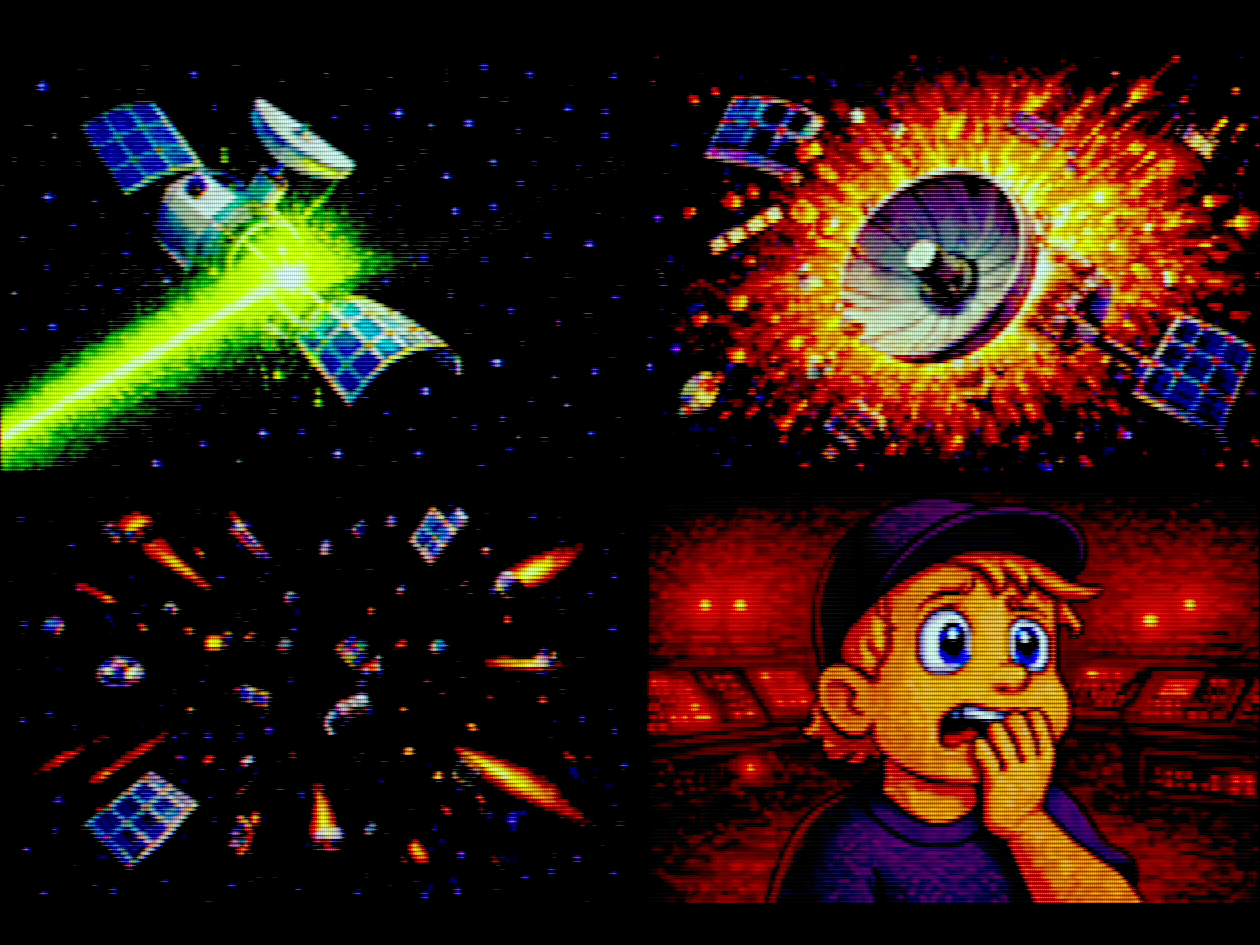
The former Mimimi Games founder Johannes Roth is back in games development: With one man show Core Productions and a love for the Nintendo 64. We spoke with him in detail about his reignited love for coding, how his family helped him shape expectations for his game and the end of his time at Mimimi.
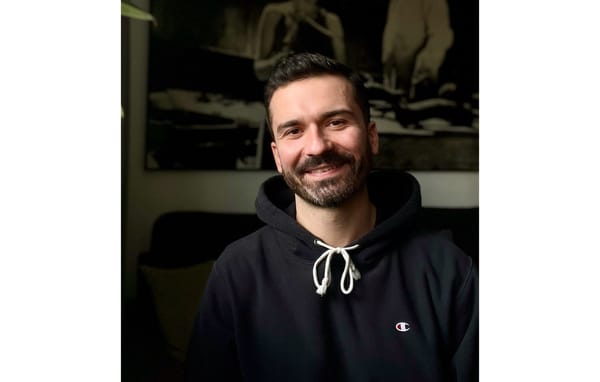
Johannes Roth has been Mimimi's MD from founding to closure. His solo project brings back his love for coding from being a kid - through his kids (all photos: Johannes Roth Core Production).
GamesMarkt: You made a surprise comeback with Phazer 64. What prompted you to step out of the shadows right now?
Johannes Roth: A year ago, I developed and released Bowl Timer, a small, 100% free meditation app that simply makes a beautiful “gong” sound and can divide meditation into equal sections. My frustration with the fact that there seemed to be only either huge “how to become a better person” subscription apps or ad-supported tracking timers was a strong motivation.
I'm proud that we were able to shape our own ending at Mimimi —cleanly concluding Shadow Gambit, finalizing DLCs, and closing doors in an orderly and gradual manner.
At some point during development, I sat there and had this feeling of “I could keep coding forever, how cool would it be if this were my job.” I'm aware of the irony of the situation... but it was the first time in a long time that I felt that special flow state while programming.
Last year, a few friends from my hometown visited me. We play N64 once a year. I still had a SummerCart64 lying around – an N64 module with an SD card slot – and, purely out of curiosity, I googled “N64 homebrew” and how to develop for the console myself.
Immediately, the inner voices arose: “Don't waste your time with the N64, who still wants to code in C, it's all a pointless niche, there's no market for it.” Nevertheless, I spent four hours tinkering with a little joke game for our meeting – and got hooked. Starting up the N64 I bought myself as an 8-year-old and seeing my own game flickering across the CRT TV was absolutely magical. It was that emotional world and fascination which originally led me to study game design.
Then I stumbled across the N64 Homebrew Game Jam, which takes place annually, and decided to just go ahead and participate. And in those two months, I had an incredible amount of fun.
How did Phazer 64 and the idea behind it come about?
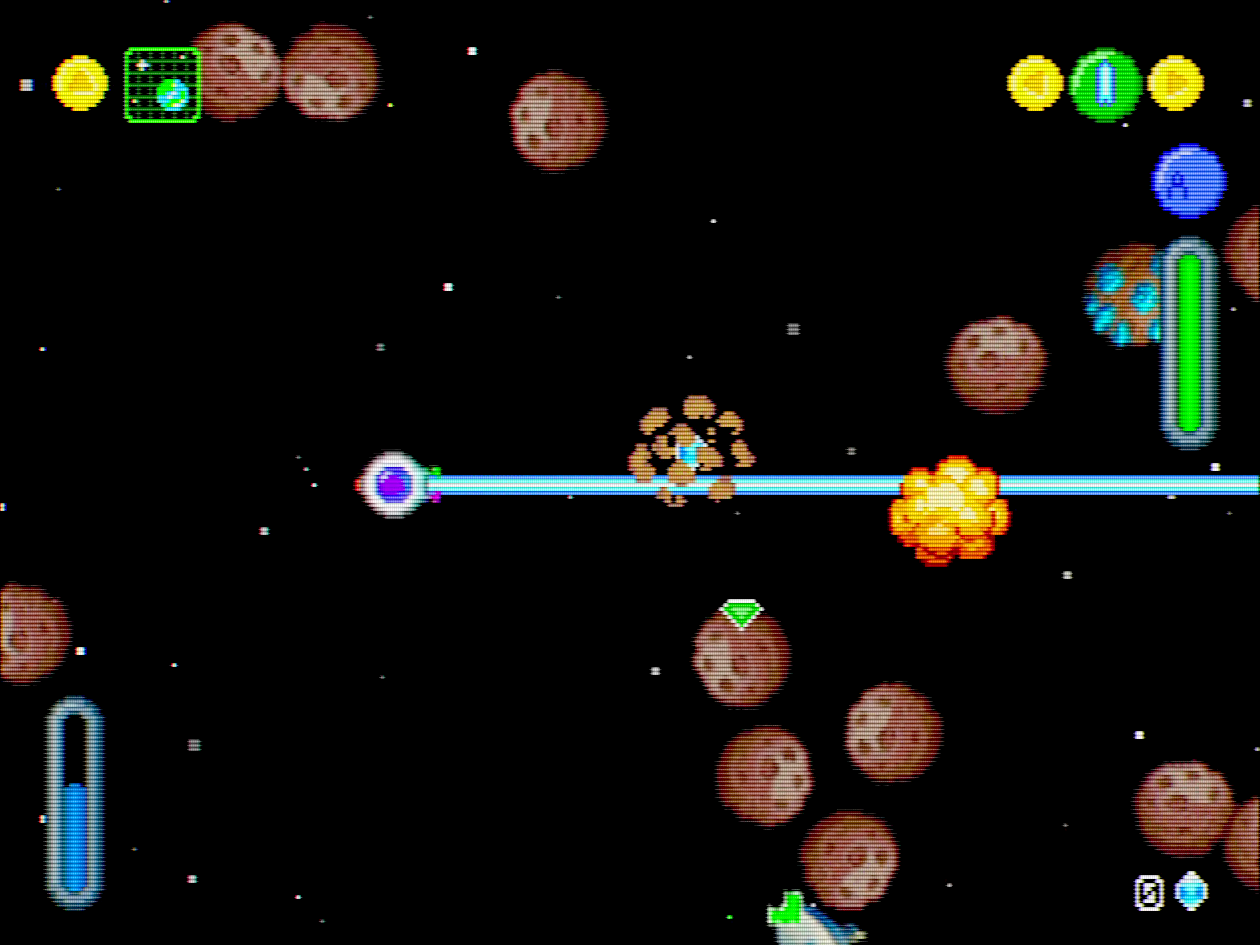
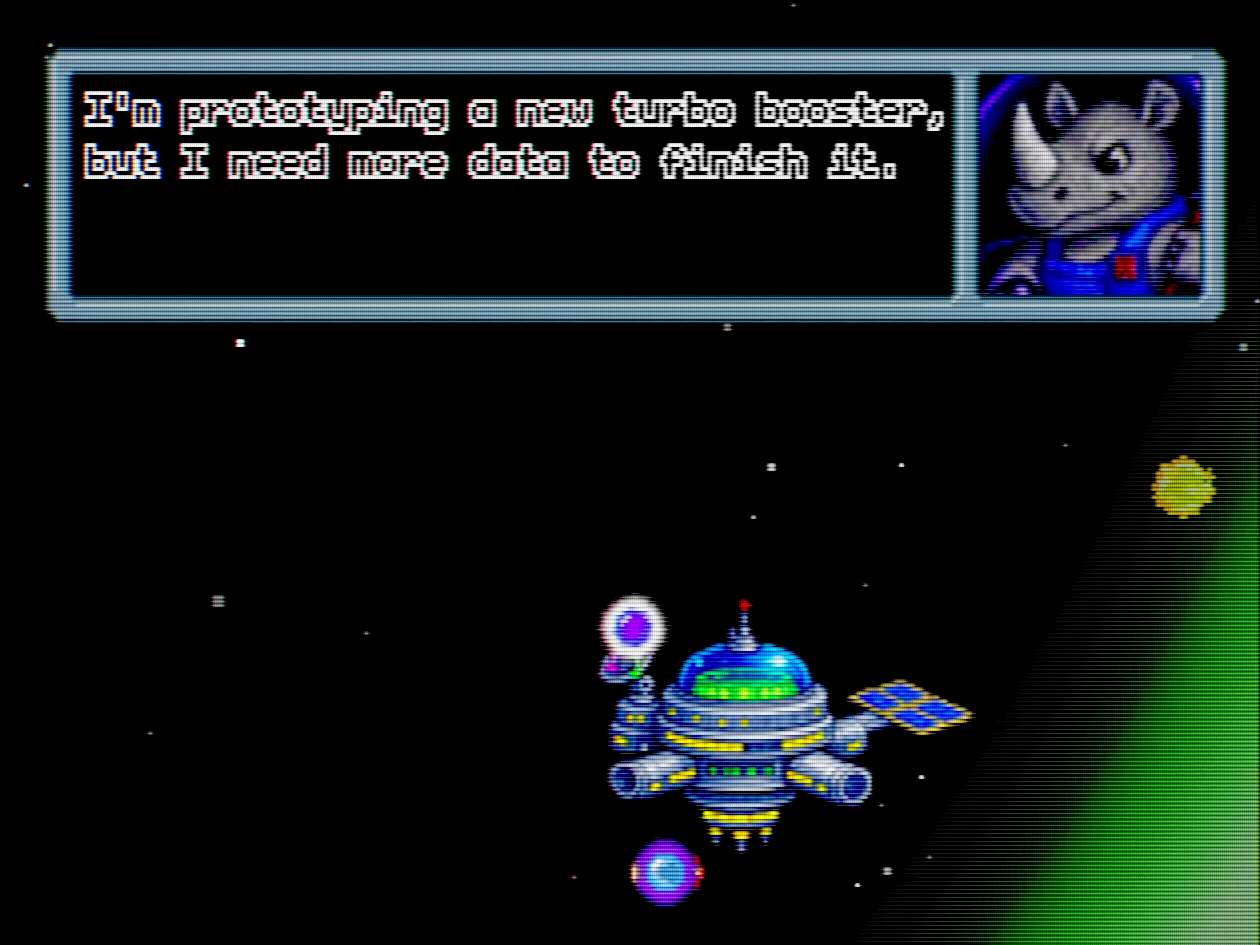
Phazer 64 is essentially based on the desire I felt as a toddler when playing Commander Keen. When moving to Munich in 2008, I had already worked on a small prototype in which you could finally fly Keen's spaceship – something that was never possible in the original games. For the game jam, I picked up on the idea again: a cool space simulation with a sense of speed is always fun, I thought to myself. But then my project management brain kicked in and said: OK, a UFO in space is enough for the jam, don't overdo it.
Luckily, my son played the prototype. And he kept coming back to the important core questions: “Who's actually sitting in the UFO?” “Why can't I see them?” “How can I land on the planet now?”
It hit me like a bolt of lightning: it was exactly the same fascination I had felt as a child. For hours, I tried to fly away in the spaceship in Keen 4, but it just didn't work. As a child, I didn't care that there were technical or economic reasons for this. It’s such a fascinating idea, it just had to work! And perhaps that's also the reason for the success of No Man's Sky, I thought?
So I came up with a little trick: I would integrate a planet surface, but you would fly over it with the UFO just like in space. That way, I could reuse large parts of the code. I proudly presented my clever solution to my son. “Cool... but Dad, how can I actually land now? And when can I get out and jump around?” Well.
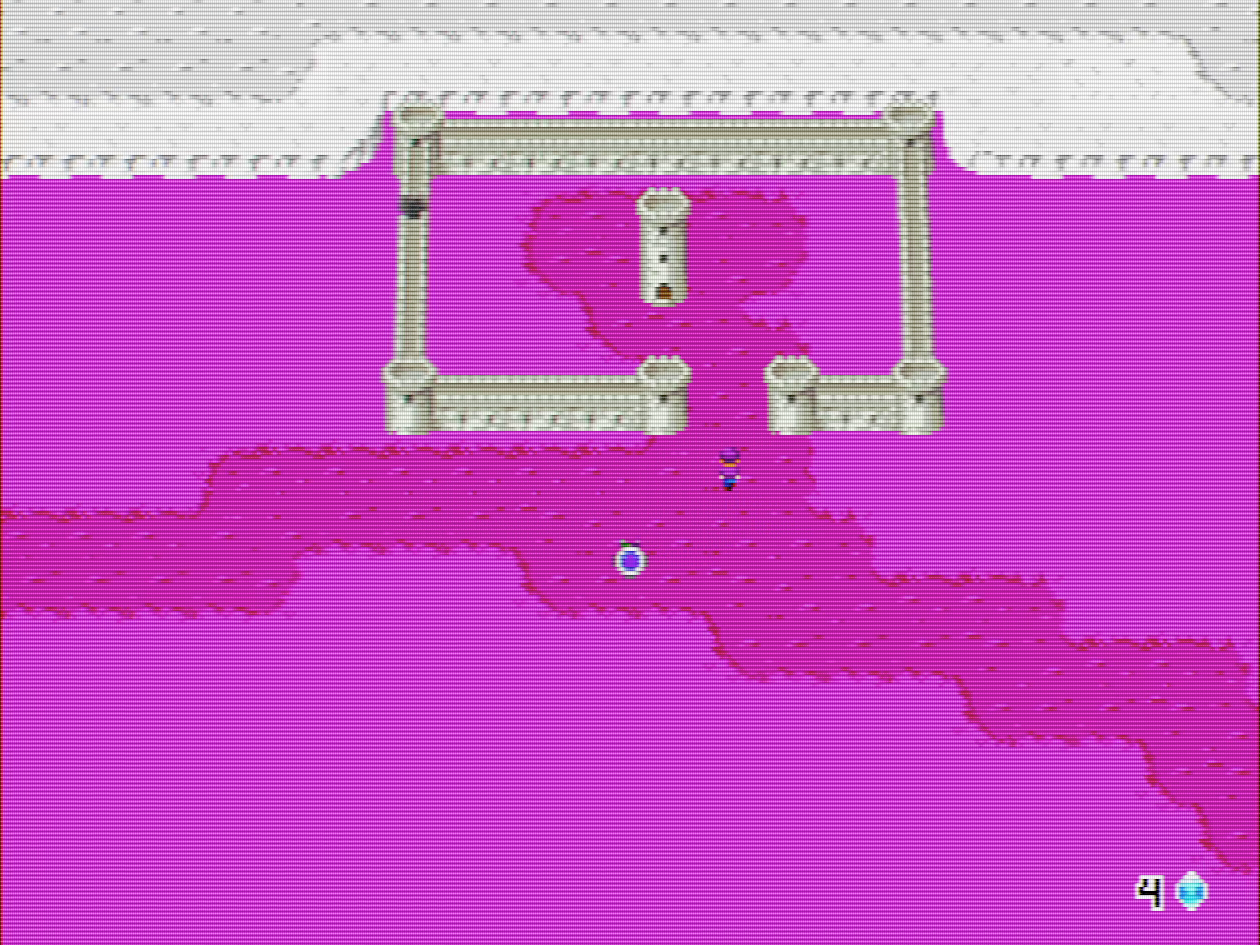
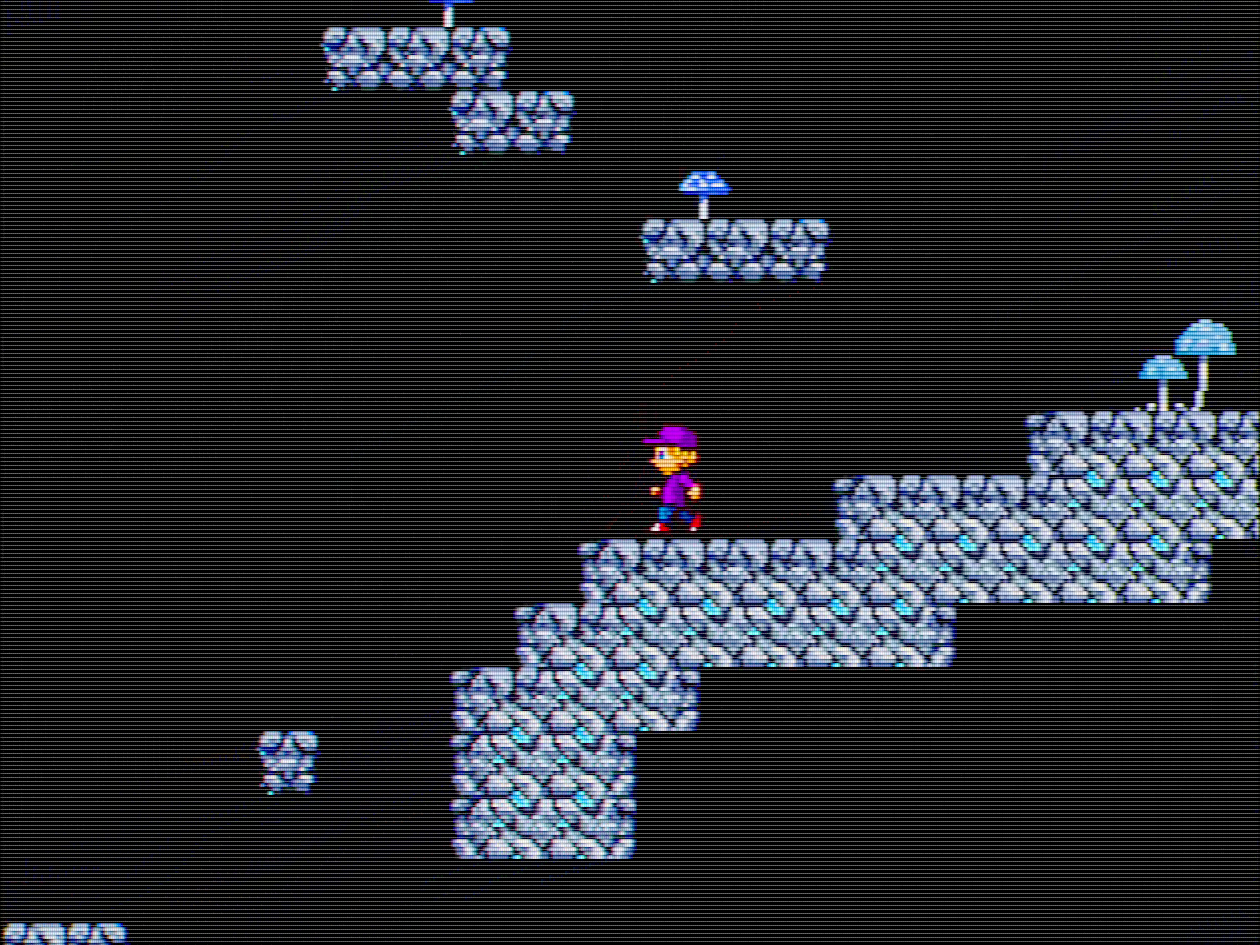
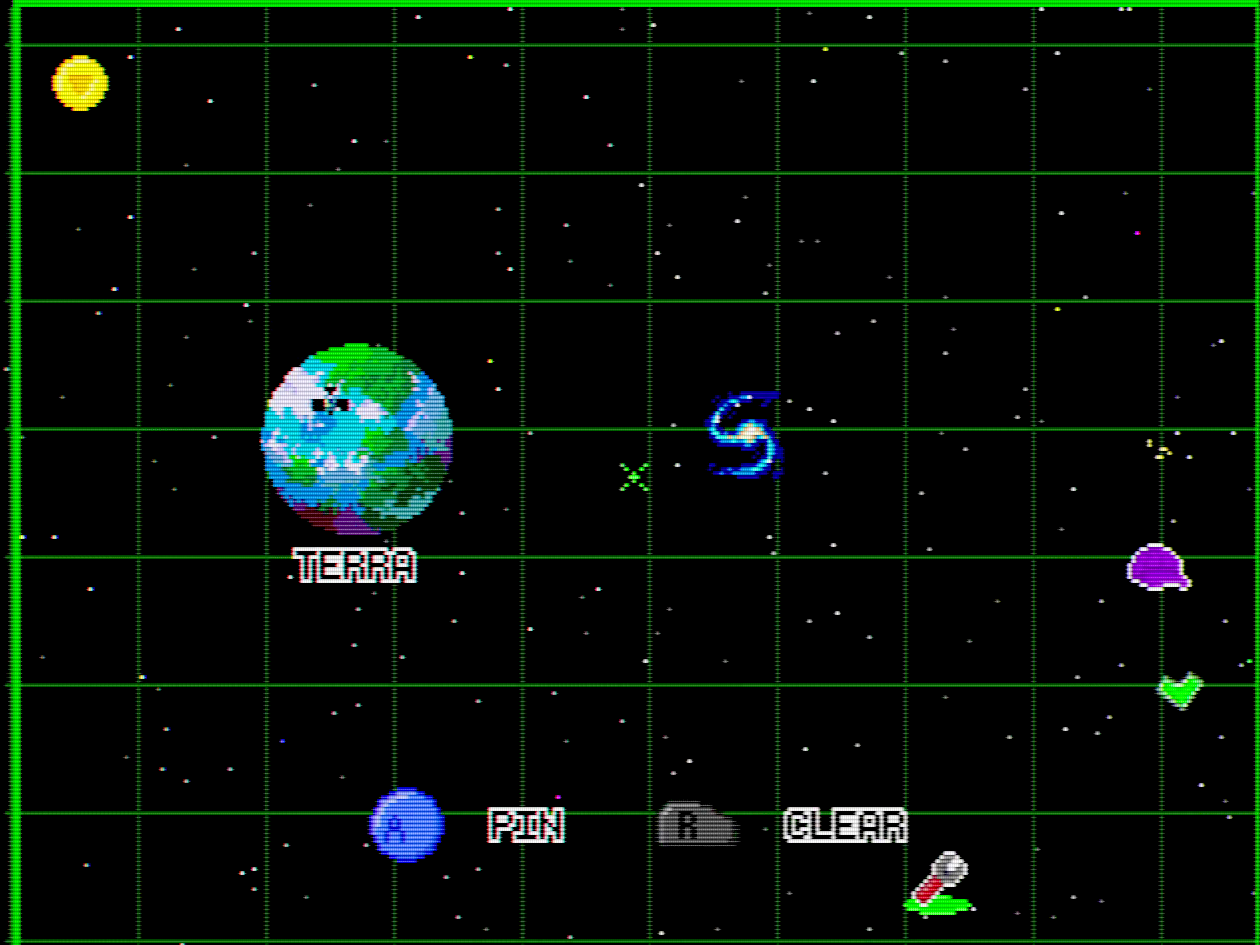
Combined with the efficiency of numerous AI agents, I got to work. So I added an overworld and a Jump and Run platformer, and now everything I missed as a kid in Keen was possible. Fly around, discover things, land, get out, explore, get back in, and fly on. Save anywhere and continue exploring at any time.. Oh, and I used music I composed myself for the first time and learned lots of new tools at the same time.
On many days, I felt like an author who wants nothing more than to continue writing his book. It was an exciting experience for me, rediscovering a lot of joy in game development, and at the same time, I was able to be mindful not to overdo it in my enthusiasm. I succeeded in balancing the two sides, and I am totally proud of the result.
You write on LinkedIn yourself that "the journey will continue". Do you already have concrete plans and would you like to talk about them?
The result of Phazer 64's game jam feels like the prologue to something bigger to me. I had to build so much of the technology from the ground up (and got to know so much sensational open source software) that in the end there was only limited time left for the actual content. Now everything is in place and I can really fill the universe. That's what I feel like doing now, and I'm going to make clever use of the built-in game mechanics. Let's just hope that's where the parallels with the Commander Keen series end – otherwise it'll end with a huge cliffhanger that never gets resolved.
If you want to follow my journey, you can sign up for my personal newsletter here.
You also write that the title has helped you rediscover the fun of development, because you had to focus on the business side of things during your time at Mimimi. How important do you think it is for studio founders to stay in touch with development?
First, you have to make a distinction: are the founders also involved in management, or are they responsible for creative direction, for example? Every studio is different.
Yes, in management, it's definitely a big advantage to know a lot about video game development and to keep your finger on the pulse. But still developing yourself? I think that's unlikely, depending on the size and setup of the studio. There are certainly cases where it works. I, on the other hand, once found myself at a crossroads: as Managing Director, should I deal with the ominous-sounding letter from America, or should I fulfill my duty as a programmer, because the team was blocked by a pending technical evaluation on my part? Both were extremely important. Splitting my attention meant I couldn't do either of them wholeheartedly, and I felt torn between two sides.
At that point, I made the painful but inevitable decision to focus on my role as MD. At the same time, it was also a huge relief.
And being in management, you don't get to choose the unpredictable tasks that come your way. At that point, I made the painful but inevitable decision to focus on my role as MD. At the same time, it was also a huge relief. Of course, I still pitched, tested, and presented our games in a business context (if not a press context). But that had nothing to do with “developing games myself” anymore. For Mimimi, it was definitely the right decision. For my individual and personal happiness: I would never have decided differently at the time. Mimimi was a lot of fun for a long time, we did a lot of things well, we achieved so much – I wouldn't want to miss that for anything. In that respect, I have no regrets and am grateful for the path that has brought me here.
You are using a new studio name – Core Production. Does that mean we will see you back in commercial game development as well?
The name Core Production including the logo actually date back to 2007, when I was working in Zivildienst and dreaming of becoming self-employed. When I wanted to release Bowl Timer, I needed a website with a privacy policy and so on, i.e. a domain, logo, etc. – and decided to keep my old design.
That's why it's called “Johannes Roth Core Production,” because I use my name as a sole proprietor. It's not a studio. Anyway, it feels like I've played through the concept of making games with a team for now – I enjoy the creative freedom and the luxury of being accountable only to myself. That doesn't mean I have to do everything on my own, but I want to talk about games, not vacation requests and sick days.
The N64 is currently being actively maintained. With the Analogue 3D and ModRetro M64, two new consoles are coming onto the market that support both the original games and homebrew. In this respect, I'm very interested in the niche and, of course, I'm actively thinking about commercial titles. The Game Jam game was initially a side project to warm up – and it worked well.
Have you ever regretted the decision to give up Mimimi Games?
No, not at all. That doesn't mean I don't sympathize with the team and fans who wanted things to be different. But for me, it was the right decision.
Even though the slow dismantling was extremely exhausting and it was of course very saddening, I'm proud that we were able to shape our own ending—cleanly concluding Shadow Gambit, finalizing DLCs, and closing doors in an orderly and gradual manner.
On the contrary, there were moments after the closure when I saw stuff happening in the industry and I thought to myself: I'm so glad that didn't happen to us too, and it sent a chill down my spine. When, for example, Paradox publicly wrote off Lamplighters League as a commercial failure, it made it almost impossible for studios in the tactics/strategy sector to get any kind of big investment.
And who knows, maybe one day there will be a press release: Former Mimimi employees found new studio.
I am sad that, despite weeks of 24/7 effort, we were unable to keep the team together in any form, and no new company was spun off from former Mimimi employees. Of course, we tried everything to find the team a new home, and the team would have been on board. It was extremely frustrating and painful. But that was and is also a result of the crazy state of the industry.
And who knows, maybe one day there will be a press release: Former Mimimi employees found new studio.
Mimimi Games was and still is – thanks in part to its success – a great role model for young teams. What advice would you give to today's founders?
One of my biggest learnings from Mimimi was that production value and quality don’t matter as much as expected. In hindsight it would have made much more sense to keep making games on the level of quality of Shadow Tactics, with roughly 15 people. On the other hand, there’d be no Desperados 3 and no Shadow Gambit in that case, and I wouldn't want to miss any of these games and experiences with the team. Still, production budgets of both following games multiplied each time, but the target audience (more or less) stayed the same. We always tried to really grow our audience, but it didn’t work out as much as we hoped for. Also, Shadow Tactics is definitely the best and cleanest pitch in terms of aligning the theme and gameplay, and I think this is getting increasingly important in the ever-growing competitive market.
One of my biggest learnings from Mimimi was that production value and quality don’t matter as much as expected. In hindsight it would have made much more sense to keep making games on the level of quality of Shadow Tactics, with roughly 15 people.
In that regard, I see a lot of younger teams or even solo-devs that deliberately stay super small and enjoy small and medium successes and the freedom those created for them. I think that’s very smart in today's games business.
The Gamecity Hamburg Prototype Funding 2026 Awarding Committee comprises the following individuals: Michael Schade (CEO and Co-Founder of Rockfish Games), Valentina Birke (Director of Indie Arena Booth), Karsten Schwaiger (Head of the Hamburg Ministry of Culture and Media's Media and Digital Economy division), Nina Müller (Goodgame Studios' VP of Publishing & Development Services), Jonas Hüsges (COO of Daedalic Entertainment), and Dennis Schoubye (Head of Gamecity Hamburg).