Durable Advantage: Chris Hewish's New Book Debuts at gamescom 2026
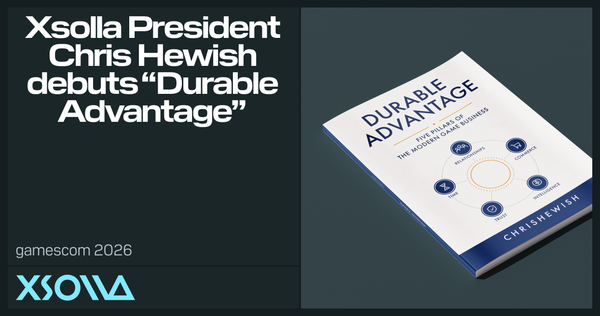
Advertorial | Every year, gamescom fills with trailers, hardware reveals, and platform announcements. This year, Xsolla President Chris Hewish is bringing something the show floor rarely sees: a business book.
Alongside the company's usual slate of product news, Hewish is launching Durable Advantage: Five Pillars of the Modern Game Business, built around a question most studios never stop to ask. Not how to make a hit game, but how to build a company that keeps creating value long after the hit stops trending.
Hewish sees the industry split into two camps. One makes strong games but hands distribution to platforms it can't control, measuring success in downloads and chart positions. The other holds the player relationship directly (the commerce, the data, the ongoing connection) and uses that ownership to build value that compounds rather than resets with every release. He calls the first group renters and the second owners. The entire book is a guide to moving from one category to another.
When a Hit Wasn't Enough
The book opens with a story from earlier in Hewish's career. He worked on a mobile title that crossed 100 million downloads within months of launch, a number most studios would call a triumph. But when the marketing spend dried up, the business did too. The game had reached an enormous audience without ever building a real relationship with it. The player base belonged to whichever platform or ad channel had funneled people in, not to the company that made the game. The download figures were real. The business behind them wasn't durable at all.
That gap, between a hit and a lasting business, is what sent Hewish looking for what actually separates game companies that fade from those that keep compounding. More than three decades in the industry went into the answer, and the result is the framework at the book's center.
Five Pillars, Working Together
Hewish builds his argument on five elements: Relationships, Commerce, Intelligence, Trust, and Time. He's careful to note these aren't five separate workstreams. They reinforce one another. Deeper player relationships make commerce more effective. Sharper intelligence produces better decisions. Trust keeps players around longer. Run all of that over enough time and the advantages stack into something competitors find genuinely hard to replicate.
In practice, the framework points studios toward a handful of concrete moves: own the direct relationship with players rather than renting access through a platform, consolidate commerce, engagement, and backend systems into one connected setup instead of a patchwork of tools, expand into new markets through localized payments and distribution, and strip out operational complexity so teams spend their time making games rather than maintaining infrastructure.
The throughline is a shift away from dependence on third-party platforms and toward owning the pieces that create long-term value: the player relationships, the commerce layer, the data, and ultimately the enterprise value all of it generates. It's also, unsurprisingly, close to the thinking behind Xsolla's own platform strategy, which exists to give developers the infrastructure to turn hit games into lasting businesses.
A Presence at gamescom
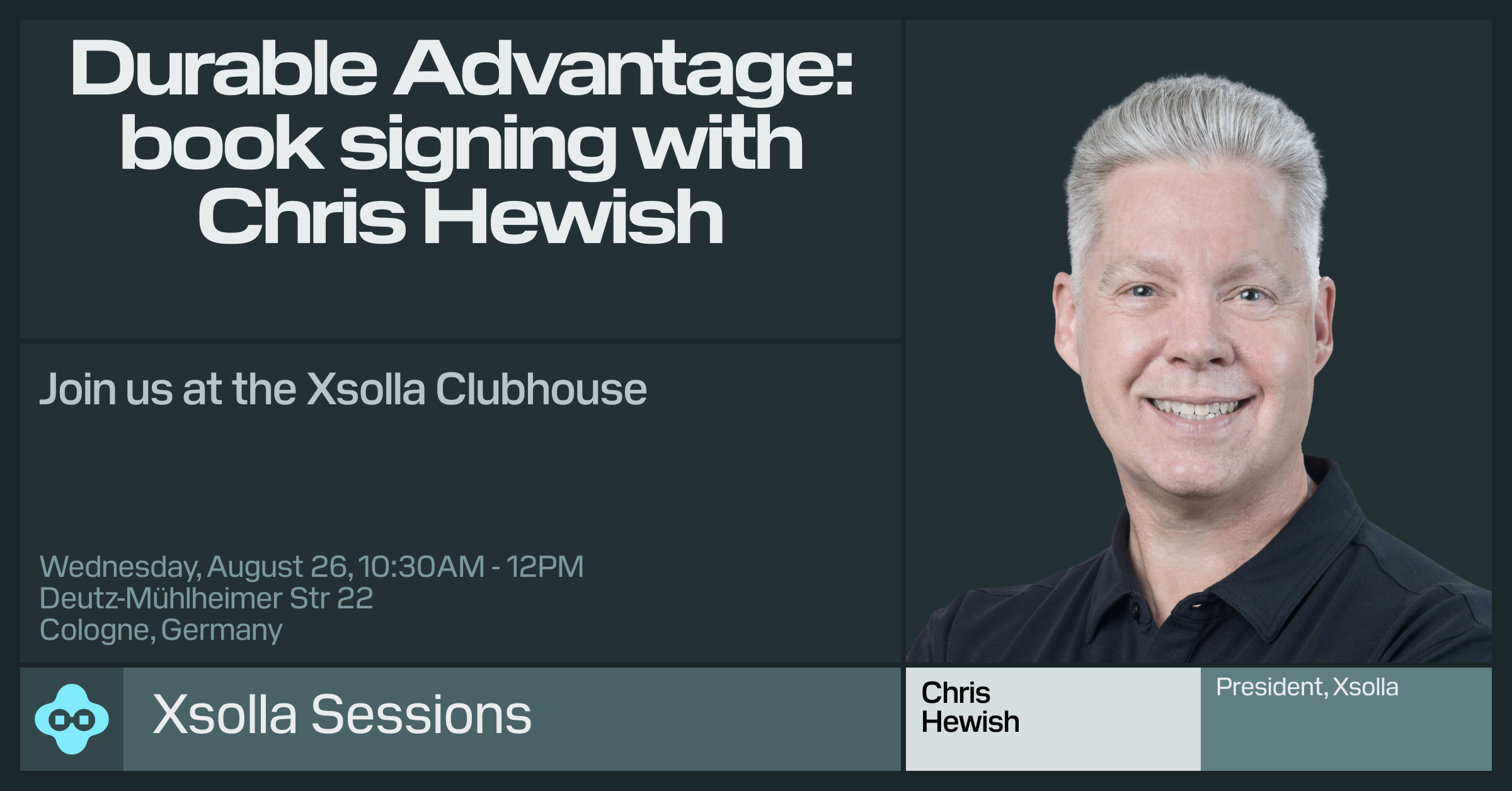
Xsolla is bringing physical copies to gamescom 2026 in Cologne, with free printed editions available at the Xsolla booth while stock lasts. Hewish will also walk through the framework in person at Xsolla Clubhouse on Wednesday, August 26, from 10:30 AM to 12 PM CEST, covering how studios can deepen player relationships, capture more of their own commerce, and build advantages that last. Attendees can hear from Hewish directly and receive a signed copy of the book.
The Second Book on Xsolla's Shelf
Durable Advantage isn't Xsolla's first move into publishing. It follows Once Upon Tomorrow, written by Xsolla founder Shurick Agapitov, which looks further ahead to where creative technology is headed: a future in which the tools for building worlds, running commerce, and growing communities sit in the hands of creators rather than the platforms that host them.
Read side by side, the two books complement each other. Agapitov sketches the destination to which creators and the industry are ultimately headed. Hewish supplies the map for getting there, the operating model a company needs to build something durable enough to survive the trip.
Getting a Copy
Making a great game still matters. That hasn't changed. Hewish's argument is that it's no longer enough on its own. The companies that last will be the ones that hold onto more of their player relationships, their commerce, their intelligence, the trust they've earned, and the compounding value that comes with time. Durable Advantage is a practical guide for building that kind of company on purpose, rather than hoping it happens along the way.
Copies are available at the Xsolla booth in Hall 2.2 (#A030-B035) throughout gamescom. Both Durable Advantage and Once Upon Tomorrow will also be available on Amazon in physical and digital formats as they roll out.
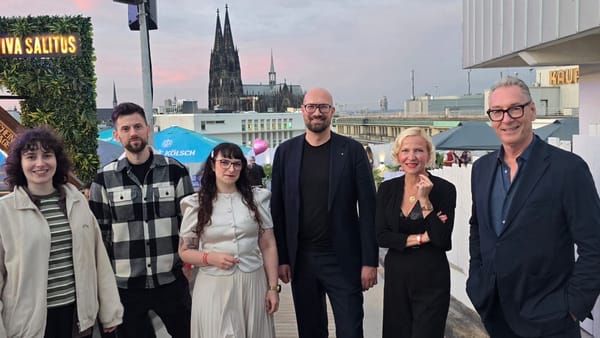
The team of Medienboard Berlin-Brandenburg, State Secretary Michael Biel (center), Jeannine Koch of medianet berlinbrandenburg (second from right) and Helge Jürgens (right) (Medienboard Berlin-Brandenburg)