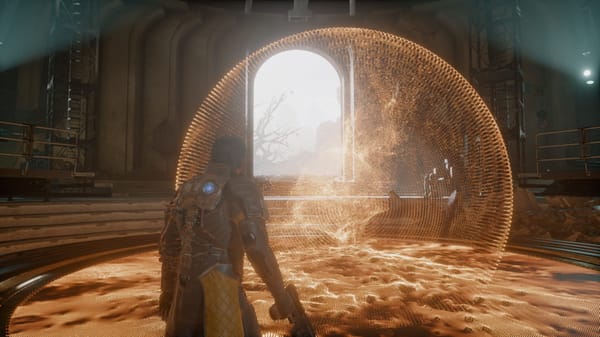
Rune Factory: Guardians of Azuma is a spin-off of a spin-off. This action RPG, farming, and social simulation hybrid is made particularly accessible by a number of streamlining features without compromising the core elements.
Rune Factory. Harvest Moon. Story of Seasons. How are these franchises connected? Rune Factory is a fantasy spin-off of the original farming simulation game, Bokujō Monogatari. It was first released in the West as Harvest Moon, then as Story of Seasons, beginning in 2014. Today's Harvest Moon games (developed by Natsume) are not from the original developers and differ from Story of Seasons and Rune Factory, which are from Marvelous. Story of Seasons is a classic farming and life simulation game, while Rune Factory expands the genre by incorporating role-playing and fantasy elements, making it much more action-packed. So, Rune Factory: Guardians of Azuma is a spin-off of a spin-off. The setting has changed completely, familiar elements have been streamlined, and new elements have been introduced.
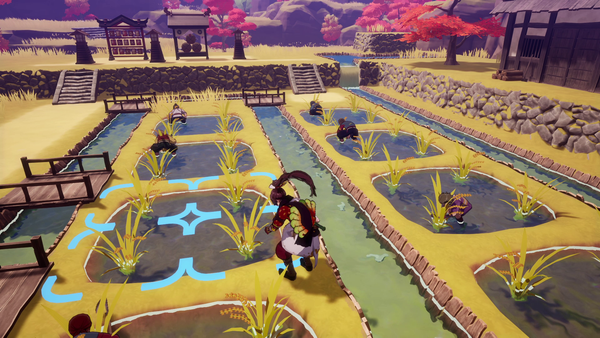
So, Rune Factory: Guardians of Azuma is a spin-off of the main Rune Factory series, which released its fifth installment in 2021. It is the first Rune Factory game set in an Eastern setting. The land of Azuma features seasonal villages, Japanese aesthetics, and new festivals. Players take on the role of an Earth Dancer. They engage in action combat, explore the land, and meet characters to hang out with and form relationships with. There are also four seasonal villages and farms to rebuild and restore with the help of locals. Most importantly, players must fight the corruptive forces that caused the gods of nature to withdraw from the world. The people of Azuma seek aid against a blight that has swept through these once-bountiful lands. Players can choose from two main characters: Subaru and Kaguya. Their stories are intertwined. The unchosen character remains as an NPC and can be selected as a romantic option. Unlike the linear Rune Factory 5, Guardians of Azuma features larger, more expansive areas with numerous secrets, ruins, and dungeons to explore. A new feature is the ability to expand and manage entire villages. Players build structures, attract residents, and assign them tasks, which provides additional bonuses and resources.
The farming system has been enhanced with convenient features. Fieldwork is less limited by stamina, tools no longer need to be changed manually, and a bird's-eye view building mode makes placing fields and buildings easier. Creating fields, sowing seeds, and watering are now much faster. The process of gathering resources has also been streamlined. Resources are gathered using context-based tools, and the character automatically uses the appropriate tool depending on the object in front of them. There is no need to constantly switch tools manually. Additionally, players organize not just their own farm but entire villages. They construct buildings, attract new residents, and assign them jobs, which unlocks bonuses such as money, resources, or new businesses.
The happiness of the villagers influences productivity, but players should not expect any significant negative effects. Villagers can be instructed to tend crops, harvest trees or stone, or manage shops. Although players are not forced to take on the tasks themselves, they could do this if they want. New villagers can be obtained through story progression and exploration. Players can spend time with characters (love interests and townsfolk), engaging in conversations or activities they may love, like, or hate. In addition to the usual human candidates, divine characters are also included this time. Romances unfold in fully voiced scenarios, though players can also cultivate friendships. Characters become either friends or romantic interests and can accompany and support players in battle.
As Earth Dancers, players use dance, sacred treasures, and new weapons, such as bows and talismans, to purify the land and farm and undo the damage caused by the Blight. The revamped combat system allows players to carry two weapons at once. Players can take up to three NPCs as party members, including villagers such as samurais, gods, treasure hunters, and more. Party members can be customized with items and abilities, and they can take on various roles, such as support or tank. While combat is accessible, boss fights require a strategic approach, such as exploiting elemental weaknesses and dodging. Despite the addition of new weapons and mechanics, the combat system remains fairly straightforward and doesn't rival the depth of other action RPGs.
Rune Factory: Guardians of Azuma, developed by Marvelous, was originally published by Marvelous Europe in Europe and Australia on 5 June 2025 for PC, Switch, and Switch 2. Marvelous Inc. published the title in Japan, and Marvelous USA published it in the Americas. In Germany, the physical editions for Switch and Switch 2 are distributed by Flashpoint.
Since 13 February, Marvelous has also published the game on PlayStation 5 and Xbox Series. The release comes with a new Accolades Trailer as well:
On Steam, this is also Marvelous Inc.'s best-launching game ever, and the company's first to achieve a five-digit concurrent user count (>13,100).
The Nintendo Switch 2 Edition is available in physical form for €69.99. Physical editions for the Nintendo Switch are currently available in standard and limited editions. The standard edition is priced at €59.99 and a Limited Edition for €99.99. The Limited Edition comes in a custom outer box and includes a physical copy of the game, a two-CD soundtrack, a 160-page art book, an Azuma-inspired folding fan, a plush Woolby keychain, and a DLC pack. The DLC pack includes the "Seasons of Love Bundle," the "Festive Attire and Dark Woolby Bundle," the "Rune Factory 4 Hero Outfit Bundle," the "Rune Factory 4 Bachelorette Outfit Bundle," and the "Useful Item Bundle."
The game is also available on the Nintendo eShop for the Nintendo Switch. The standard edition costs €59.99. The Digital Deluxe edition includes the game and the "Seasons of Love Bundle" and "Festive Attire and Dark Woolby Bundle" and costs €69.98. The Super Digital Deluxe edition includes the game, the "Seasons of Love Bundle," the "Festive Attire and Dark Woolby Bundle," a digital soundtrack, and a digital art book. It costs €79.98. The Nintendo Switch version can be updated digitally to the Nintendo Switch 2 version with the Upgrade Pack for €10. The game is available in standard, Digital Deluxe, and Super Digital Deluxe editions, each of which contains the same content as the Nintendo Switch versions.
Conclusion
Yes, Rune Factory: Guardians of Azuma introduces new features and streamlines gameplay while maintaining the strengths of the series, such as action RPG elements, farming, and social simulation. However, some elements could have benefited from more depth. The home console versions offer better graphics and enhanced performance.
Features
An eastern setting for the first time in the Rune Factory franchise
Good mix of action RPG, farming, and social simulation
Simplifications without overly restricting strengths
Marcel Kleffmann is Chief of Content of GamesMarket and our B2B and B2C expert for hardware, market data, products and launch numbers with more than two decades of editorial experience.