The Game Studies Watchlist newsletter, curated by Prof. Dr Rudolf Inderst, is published weekly on GamesMarkt. This week's topics include the closure of Bluepoint Studios, an anthology on Games & Storage and reminiscence on the gaming year 1998.
Last week, GAME STUDIES WATCHLIST quietly turned six. No fanfare, just another issue landing in your inbox. Six years of weekly musings on games and deals — and if we make it another six with your support (Buy Me a Coffee), I might finally be able to afford a Dr. Pepper (or two) as fancy as Rintaro Okabe’s. Please do tell ... what was the greatest year in the history of video games? 1998, when masterpieces seemed to ship every other week? 2004, when online gaming stopped being a niche and became infrastructure? 2013, when blockbusters started to feel like prestige culture? Or is it right now when more games release than ever before, and our only real problem is that we don’t have time to play them all? The question sounds nostalgic, but it’s actually strategic ... because what we call a “great year” says less about the calendar and more about what we value most: creative breakthroughs, technological leaps, or that rare moment when hype, hits, and heart all align. I came across a video essay called The Greatest Year of Gaming Ever by Raiden Valentine and thought ... well, that's no small task here. Now, let's see!
"1998 was a big year for gaming and many of the years events and releases would impact the industry and shape it into what it is today."
So, as I have mentioned above, trying to crown a single “greatest year” in video game history might sound like barroom nostalgia, but it opens up a surprisingly rich set of questions about how our favorite medium (is it? isn't it?) evolves. Any answer immediately forces us to define the criteria: Are we measuring aesthetic innovation, commercial impact, technological breakthroughs, player communities, critical recognition, or long-term cultural influence? A year dense with canonical releases may look different from one that quietly reshaped distribution models, monetization structures, or participatory cultures. It also exposes the tension between industry metrics (revenue, player counts, engagement hours) and cultural metrics (experimentation, authorship, genre formation, representational shifts). From a Game Studies perspective, the debate becomes a lens for examining cycles of consolidation and disruption, the role of platforms versus products, and the way collective memory constructs “golden ages.” In other words, arguing about the best year means revealing the frameworks we use to understand games as an artistic form, a technological system, and an economic ecosystem all at once. Again: No small task.
Congrats to Minel Guler who has publisher her second first-author article Gaming perceptions, coplaying, and social support: A two-study examination in Family Relations. Adopting a strength-based approach, this study examined how individuals’ perceptions of the relational impact of gaming relate to their perceived social support. It further explored whether the frequency of playing video games with family members and romantic partners mediates this relationship.
Thanks to Nick Taylor, I became aware that special issue of Critical Studies in Media Communication is officially live! The main topic is Games & Storage, and the contribution titles alone are very promising. How about Containing feminism at games industry parties or Unzipping my library: containing the Game Boy’s history in the Analogue Pocket? I am all in!
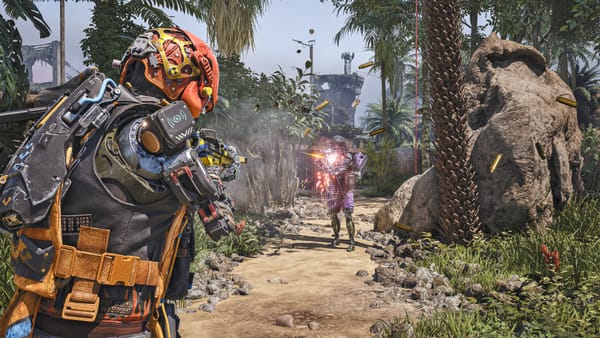
For all my German speaking readers, I may point to my new thought experiment which reads Arc Raiders as a hybrid multiplayer experiment where PvE and PvP mechanics intertwine to create constant tension between cooperation and betrayal. I focus on the “Downed State” as a crucial moment of lost agency that exposes the game’s moral and social dynamics. To intensify this fragility, I dare to propose a speculative “Last Spark” mechanic, allowing downed players a risky final act of resistance. The idea reframes defeat as conditional agency and reinforces the game’s core theme: survival shaped by uncertainty, trust, and strategic risk.
I hope, I do not have to repeat myself here.Please support Aftermath (not only for stories like this one): "Bluepoint Games, an American studio specialising in remakes like the God Of War Collection, the Ico & Shadow Of The Colossus bundle, Uncharted Collection and Demon's Souls, has been shut down by Sony after five years of ownership, during which time the company did not release a single remake, with Bloomberg reporting that "roughly 70 employees will lose their jobs" as a result."
... yeah, and this is ... funny, i guess?:"Nintendo executives reaffirmed that the upcoming controller will be awesome for about the same length as a few TikToks."
P l e a s e support my work in game research & culture, consider contributing via Buy Me a Coffee.
Rudolf Inderst is a Professor of Game Studies, Podcast Host of “Game Studies”, Newsletter Writer of “Game Studies Watchlist” , Video Essay Aficionado and Krav Maga Practioner.