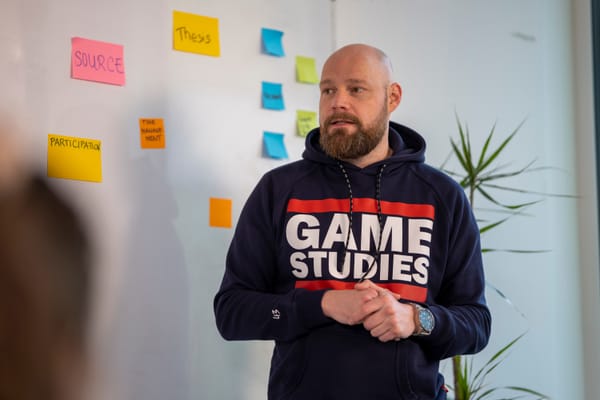
In Conversation With... Tymon Smektala
In his new ‘Update,’ brand and marketing expert Zoran Roso talks to Techland's Tymon Smektala about the strategic necessity of the systemic sandbox, the real ROI behind seven years of free post-launch support versus aggressive monetization, and the role of a modern Franchise Director.

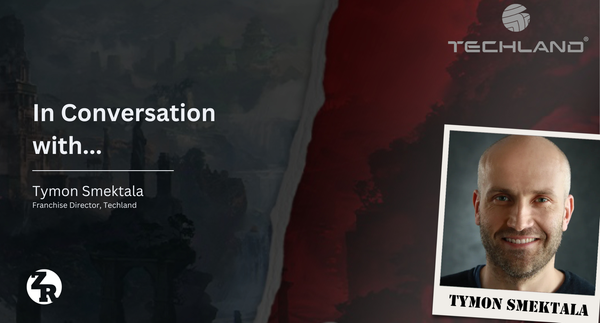
Hi Tymon and than your for taking the time to talk with me today, your certainly are a busy man! Let's get to know you a bit better… You spent over a decade as a critic and Editor-in-Chief before moving to the "other side" with Techland. In an era where AAA development is increasingly insulated from external critique, what specific 'journalist's instinct' has been most valuable in preventing "production tunnel vision" during the development of the Dying Light franchise?
Tymon Smektala: That’s a great question, and I’m glad we’re starting an interview with it.
Coming from a gaming media background gave me a unique skill that’s quite rare in game development: the ability to look at the industry from a very broad perspective, not just a “bird’s-eye view,” but also at a granular level. This has proven invaluable across all the roles I’ve held, from game design and direction to community management, marketing, and publishing.
As a journalist, I wasn’t just “playing everything”, I was also digging in and reporting on every drama, redemption arc, unexpected crisis, and breakthrough. That combination of high-level awareness and attention to detail helped me build an extensive internal book of industry knowledge: benchmarks, references, inspirations, pitfalls, and business cases. Since I can’t program or create art, I had to turn that into a meaningful asset for the studio.
When you strike gold with your first title, you need to deeply understand what made it work before moving to a sequel. Otherwise, you risk overlooking the very elements that really made the game special, and there are plenty of examples of that in recent gaming history.
When you joined Techland, the industry was moving from the retail-centric Xbox 360/PS3 era to the connected PS4/Xbox One era. Looking back at the launch of the original Dying Light, what was the most significant "lesson learned" regarding player retention that changed how you approached the sequel's production pipeline?
Tymon Smektala: This question is tricky as it assumes a modern, data-driven industry mindset that wasn’t that common back then; data-driven design based around player retention, churn analysis, multi-staged or behavioral tracking, we were barely doing anything of that 11 years ago and it was the changes, that were brought by the era of the connected-by-default console generation, that made us, and the whole game industry, to start approaching game production from a more professional, but also less swashbuckling, outlook.
I’m not sure if there were that many production lessons from the first Dying Light that we used in the sequel, especially that it was a very different game in terms of technology, scope and ambition, but the whole transition taught us something else: how important the little details are. When you strike gold with your first title, you need to deeply understand what made it work before moving to a sequel. Otherwise, you risk overlooking the very elements that really made the game special, and there are plenty of examples of that in recent gaming history.
Techland is frequently cited as the gold standard for long-term support, keeping the original Dying Light alive for seven years post-launch. From a B2B perspective, how do you justify the ROI of free content updates for a single-player-centric game to stakeholders when the industry trend is moving toward aggressive monetization and battle passes?
Tymon Smektala: It’s actually an easy sell once you accept that building a franchise requires thinking beyond short-term results. Today, success is often measured by launch peaks, first-month sales, or initial revenue spikes, and those matter. But long-term studio stability comes from longevity and sustained revenue.
Most players only buy one to three games at launch each year, and spend the majority of their time on titles they pick up later in their life cycles. By continuously supporting a game, you keep it relevant, increase its perceived value, and make late-cycle purchases more likely.
If your core gameplay holds up, as ours did, it becomes much easier. That’s why some of the titles I worked on performed just as well in year three or four as they did in year one.
You’ve spoken extensively about the "Systemic Sandbox." As production costs for cinematic AAA games skyrocket, do you view systemic, emergent gameplay as a strategic necessity for cost-effective content scaling, or is it purely a creative choice for the Dying Light IP?
Tymon Smektala: I don’t think a systemic sandbox is a necessity. Many games wouldn’t benefit from it or simply don’t have room for it. For us, it’s primarily a creative choice, it defines the kind of games we want to make.
That said, it also has strong production benefits. While these systems can be complex to build, they scale extremely well. A single mechanic can be reused across the game and generate a wide range of player experiences through emergent behavior, leveraging one of the medium’s strongest traits: unscripted interactivity.
When layered correctly, these systems create unpredictability and near-infinite variation, which not only drives longevity but also generates unique, shareable player stories, a key factor behind Dying Light’s word-of-mouth success.
Techland occupies a unique space, larger than "Indie" but historically more agile than the "Mega-Publishers." Now, with the strategic partnership with Tencent, how do you maintain that 'Wroclaw agility' while scaling up to meet the expectations of a global conglomerate?
Tymon Smektala: Tencent is a key player in the global games industry, but I’m honestly humbled and amazed by how well it handles the independence of its studios. This topic was discussed extensively before the merger, and we were assured that, with Tencent’s backing, we would be able to keep “our way” of doing things, while also benefiting from being part of a bigger network of studios and services whose potential and resources we could tap into.
All of these assurances came true, so in a way nothing has changed. The pipelines, the decision-making process, and the culture are exactly as they were before, but if we need to solve a complex rendering issue or get a second opinion on a go-to-market plan, we have access to the best specialists in the industry.
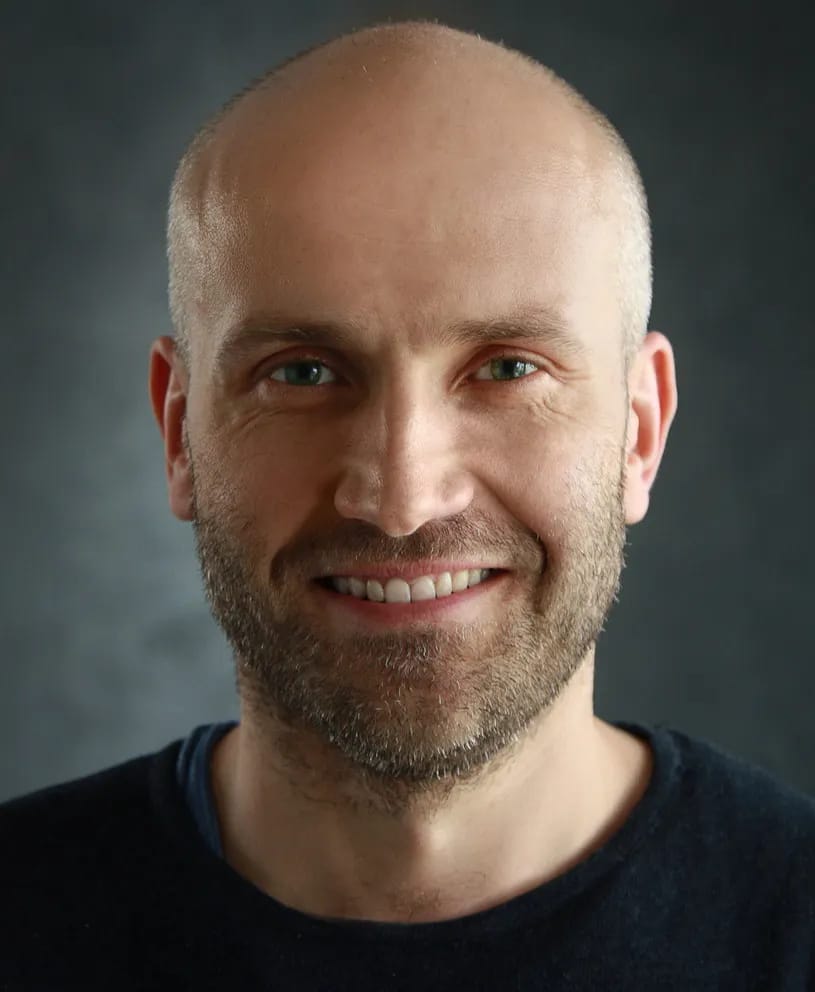
Even for established franchises, the "noise" on digital storefronts is deafening. In five years, do you believe the "Franchise Director" role will be more about game design or about "community ecosystem management"? Where does the battle for attention end and the game begin?
Tymon Smektala: It’s a transition I experience daily, as three years ago I was mostly thinking about design direction for the next cool feature that would excite players, and recently I’m mostly going through market trends and player surveys. Damn, I miss my game design days!
My role definitely requires a much more multifaceted outlook, something I hinted at when answering your first question. Even though I was a hands-on developer on Dying Light for a very long time, and spent quite a lot of time as the most senior member of the original team still with the franchise, at some point I had to learn to let go, stop focusing on the design of particular game elements, and start thinking bigger and more broadly.
“Community ecosystem management” might be the least exciting way to describe what a Franchise Director should do, but you’re absolutely right; it’s all about strategizing long-term IP visibility, community growth, and peak cadence.
The biggest lesson I’ve learned in the industry per se, especially after switching to game development and then publishing, is to always be open to sharing your knowledge.
Given Techland's focus on parkour and complex urban geometry, how do you see Generative AI affecting the level design workflow? Is the goal to reduce the "manhours" per square kilometer, or to create environments that react to players in real-time?
Tymon Smektala: Personally, I’m unashamedly AI-curious; it’s a relatively new technology that is the “new internet”, no matter what we think about it right now or how we develop it in the future, it will never go away. I believe in its potential, but I also think it’s currently undirected and not yet fully realized in terms of real effectiveness. It’s easy to get enamored with what we think AI can do, but a reasonable assessment doesn’t yet prove it is a solve-all solution to the challenges the games industry is facing; in fact, it seems that currently it adds more of them.
As an industry, we’re far from being able to meaningfully use AI for level design in games as complex as Dying Light, games where every misplaced object can break the parkour flow, and where players expect handcrafted immersion and believable environments.
If you could go back to your desk at CD-Action in 2005 and give your younger self one piece of advice about the "business" of games that you only learned after becoming a Director, what would it be?
Tymon Smektala: “There are two sides to every story,” most probably. But only because you suggested the angle of a game industry veteran talking to someone who reports on the industry. Games are “smoke & mirrors,” and sometimes this applies not only to the design and implementation of features, but also to everything that surrounds the game as a piece of electronic entertainment. Production, publishing, marketing communications, community management… sometimes what you see from the outside looks completely different on the inside.
But the biggest lesson I’ve learned in the industry per se, especially after switching to game development and then publishing, is to always be open to sharing your knowledge. Both developing and publishing games are quite difficult, and even though we sometimes compete with each other, if the industry grows against other forms of entertainment competing for players’ attention, we all benefit. I’ve learned a lot by listening to great people in the industry, and I’m always ready to share what I’ve learned and pass that knowledge forward.
Let’s have some fun with our last question! If you were given a blank check to acquire or partner with any "dead" or dormant IP from the 90s to give it the "Techland systemic treatment," which one are you picking?
Tymon Smektala: The options are numerous, for example I think we’d make a great Thief game, it’s something basically made for us. There was also a cool but sadly forgotten game called “Urban Chaos” that would work well with some of the ideas we had for Dying Light. I'm actually replaying it and can’t stop thinking about how we could turn that into something very, very cool. But why do that? There are so many ideas yet “un-had.” Let’s create new ones, imagine something no one has done before, and push the medium further, it deserves that.
About and contact to Zoran Roso
Zoran Roso stands as a highly influential veteran of the video game and entertainment industry, with a distinguished career spanning over 25 years in global publishing, marketing, and leadership roles. His professional journey includes serving in significant executive positions at some of the world's most recognizable gaming giants, including Rockstar Games/Take 2 Interactive, Activision Blizzard, and Sony PlayStation, where he was instrumental in the marketing and strategic positioning of flagship AAA franchises and brands. Most recently, he leveraged this extensive experience as the Global Publishing & Marketing Director at Tencent Games, a critical role focused on expanding the company's international reach and developing successful go-to-market strategies for its massive portfolio of internal and partner studios.
Now operating as the founder of ZR Consulting, Zoran continues to drive success in the industry by advising major global publishers and developers. His firm specializes in crafting winning strategies for international brand development, optimizing live service performance, and executing flawless launch plans across all major platforms, including console, PC, and mobile. An active figure in the global games community, his career is marked by a clear strategic vision and a successful track record in translating complex products into global commercial successes.
Contact details:
ZR Consulting
eMail: [email protected]
LinkedIn: https://www.linkedin.com/in/zoran-roso/
Written by