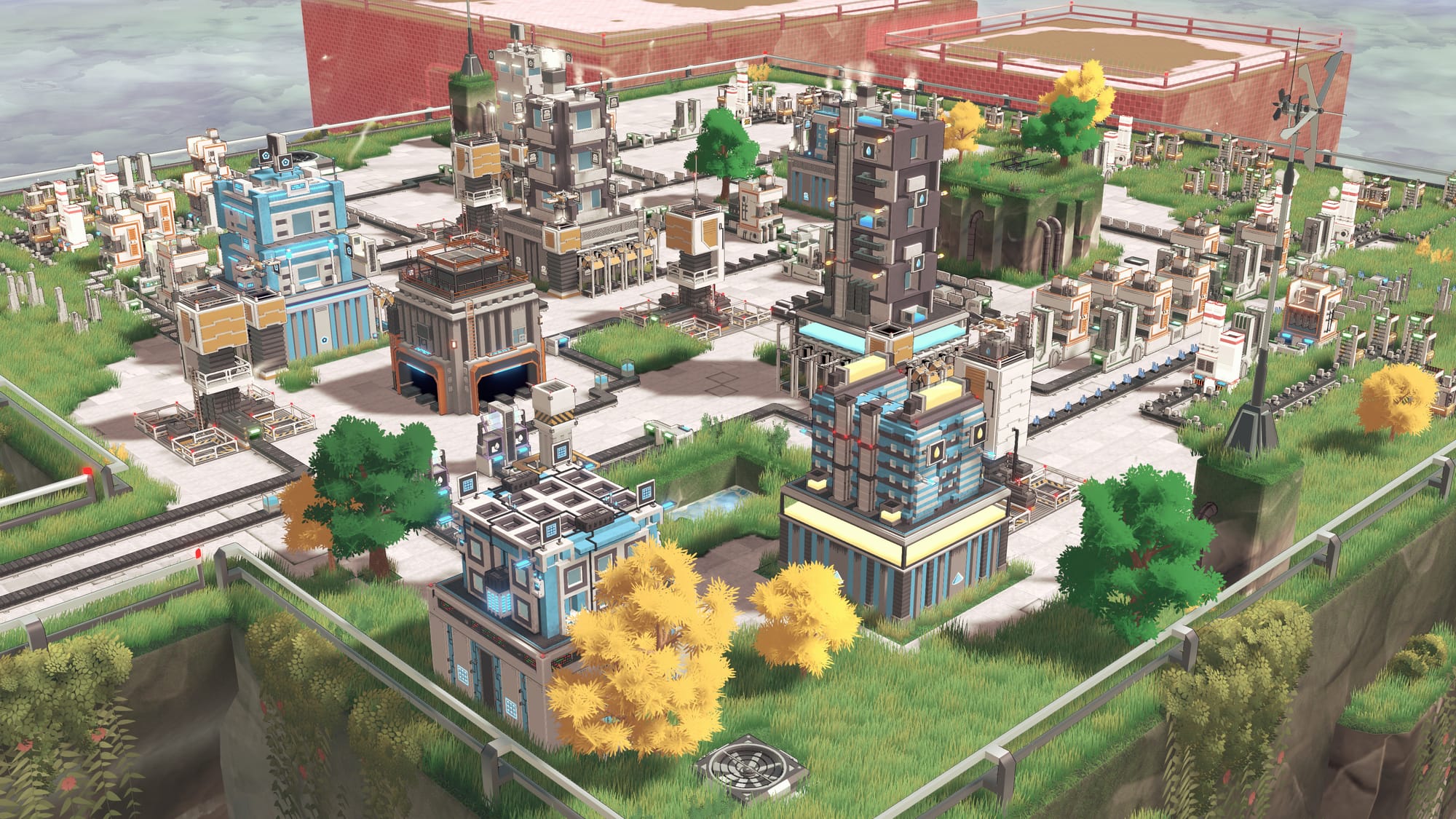
April is set to be a highlight month for fans of factory automation games. Shapez 2 is leaving Early Access, and Modulus has already been released. Modulus' creative aspects and coziness are what make it stand out.
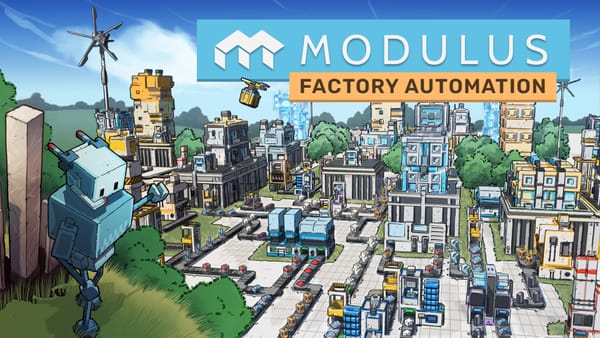
Modulus: Factory Automation is an automation game that, as the name suggests, differentiates itself from Factorio or Satisfactory through its highly modular and creative approach, leaning more towards shapez 2. At its core, the game involves mass-producing robot bots, which are essentially complex voxel constructs. Rather than simply assembling the necessary components from pre-made blueprints, players construct them themselves using 3D voxel building blocks. These building blocks, known as modules, are not just resources; they are the building blocks of the factory. In order to achieve production goals, players need to build structures, and each one is constructed from modules.
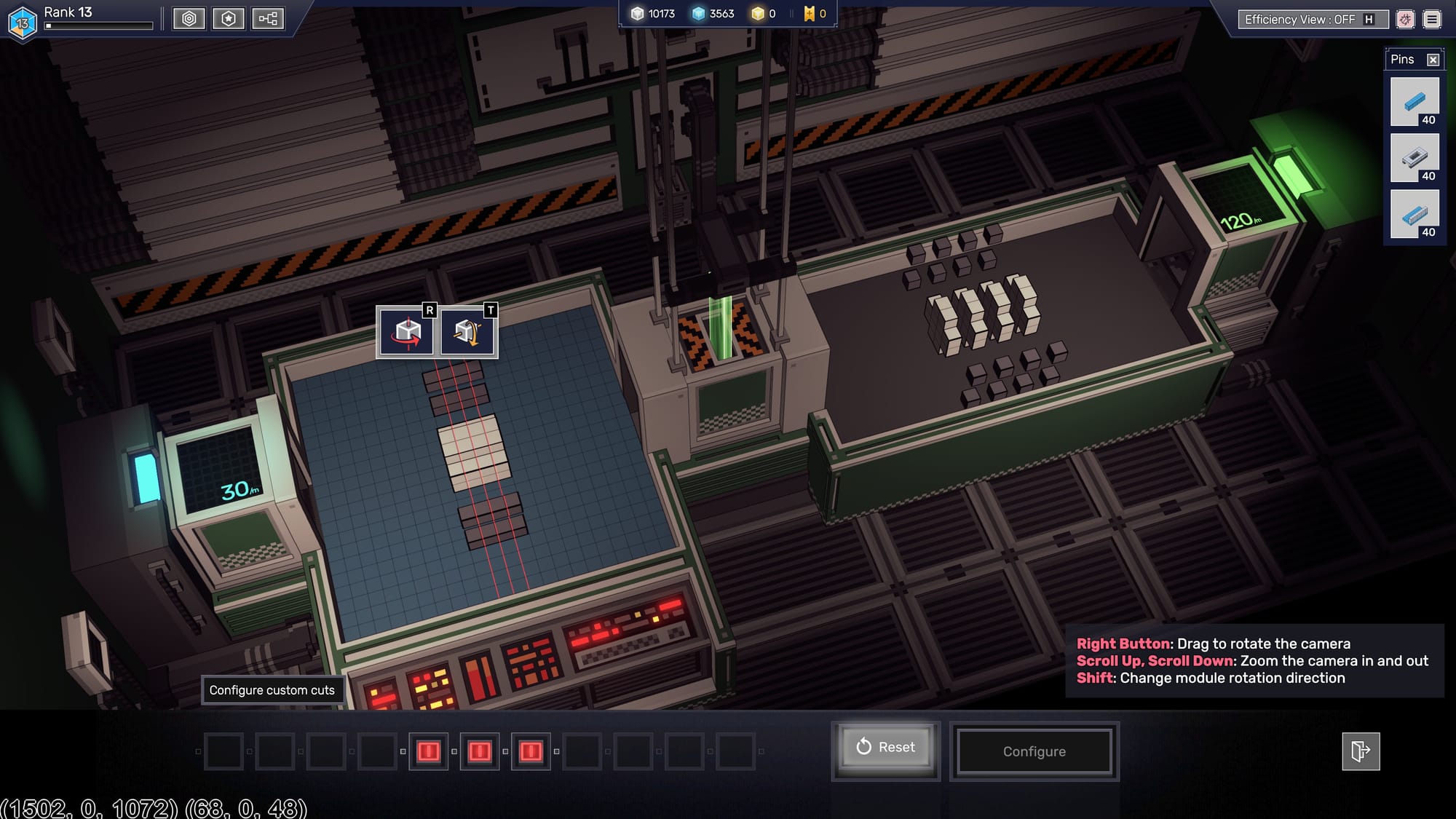
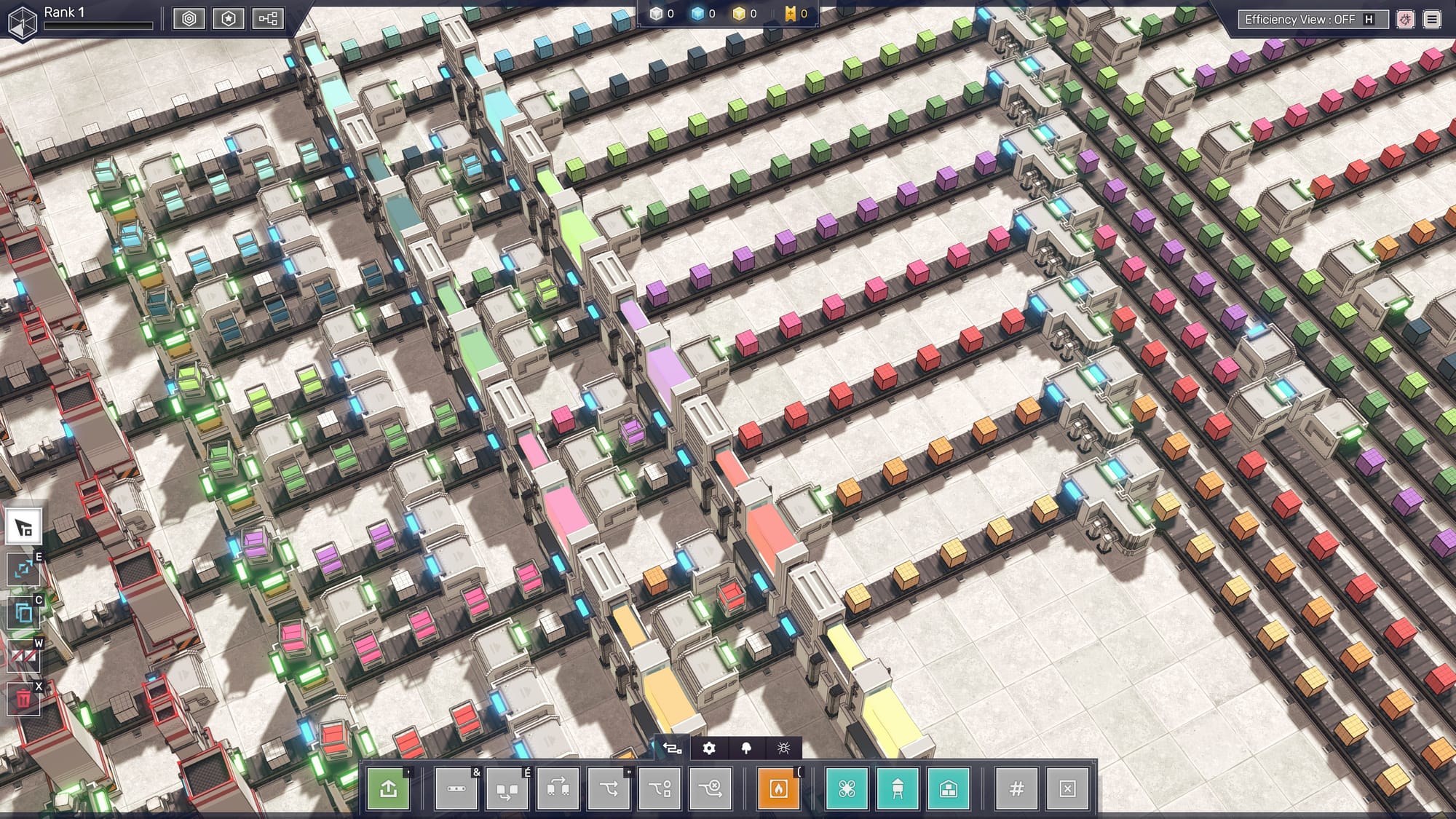
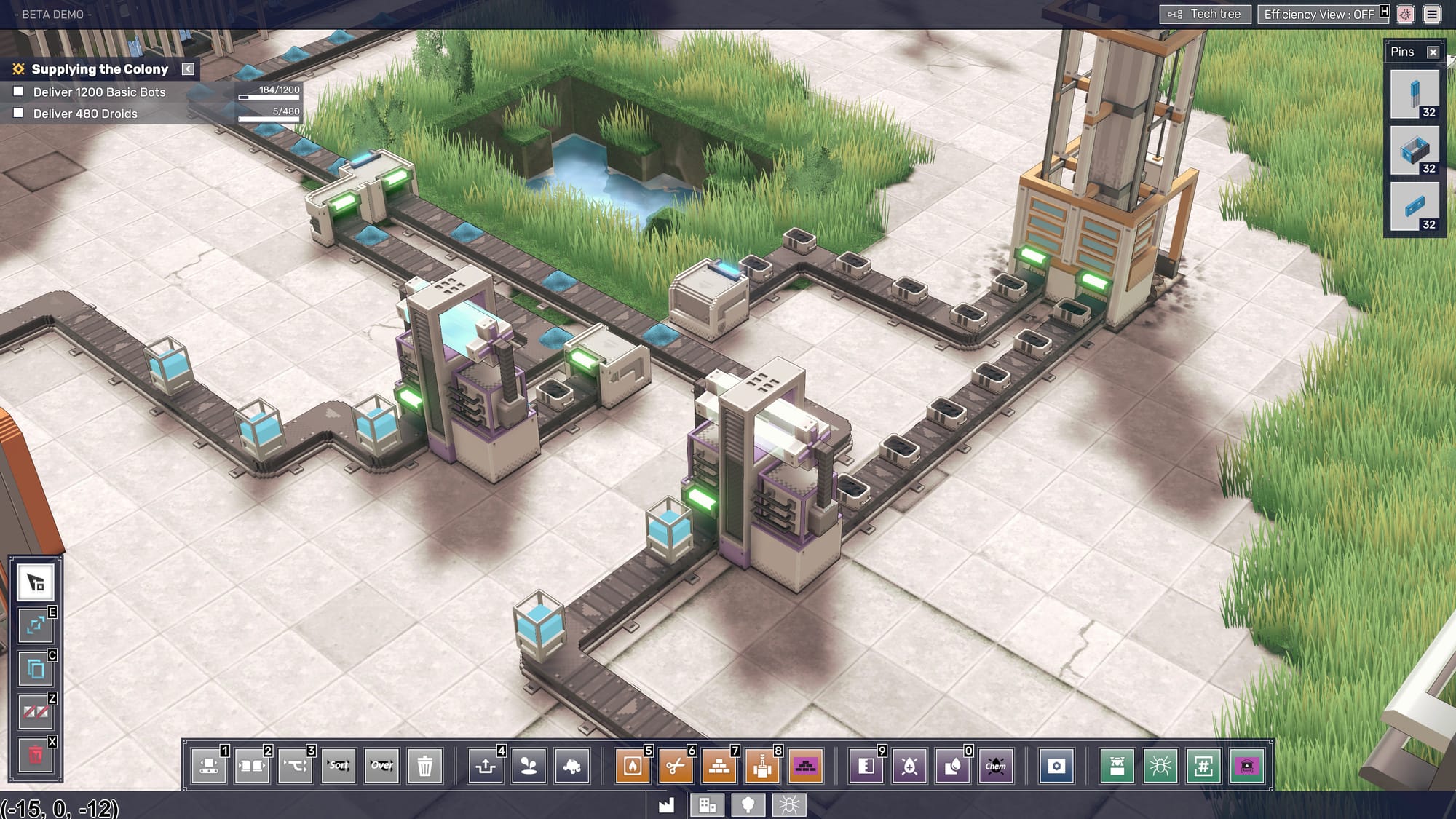
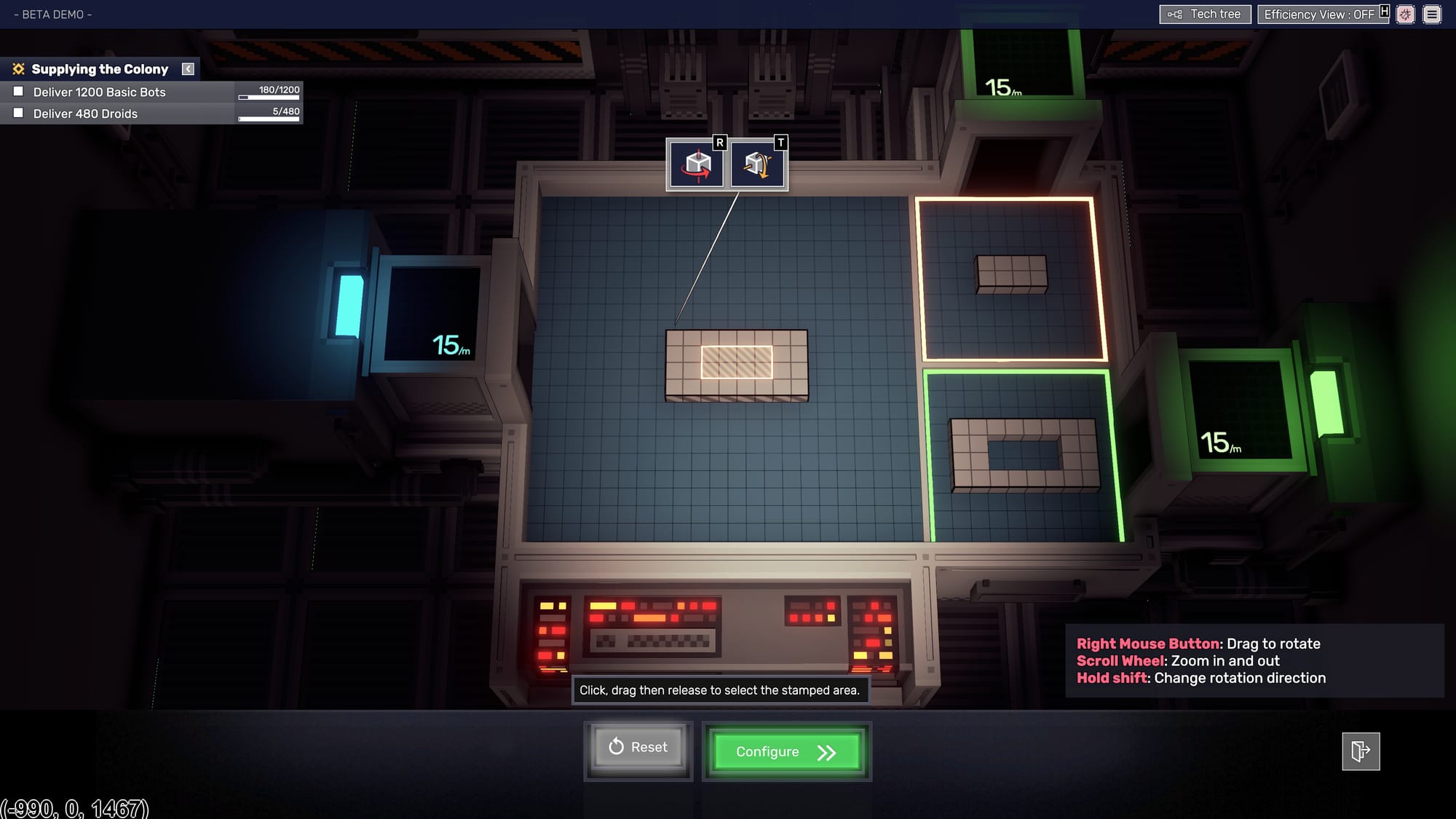
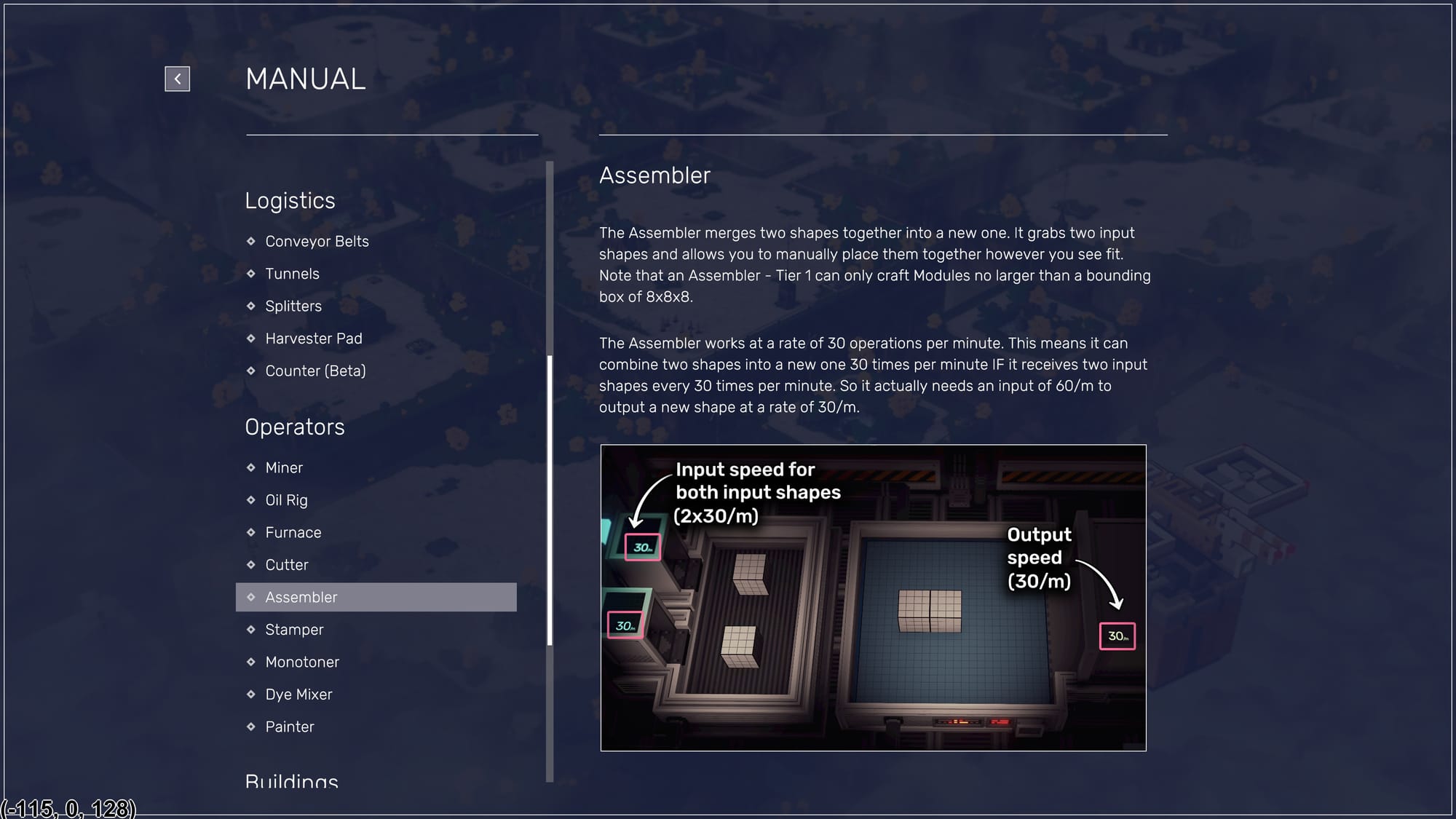
The process begins by placing mining machines on poly rock deposits, which then provide the basic blocks. These are then delivered to furnaces via conveyor belts, where they are processed into usable materials — namely, 4x4x4 voxel blocks. Cutters (which slice blocks into pieces) and Assemblers (which glue parts together into new shapes) then create the block shapes required for the buildings. These shapes can be constructed from varying numbers of the base cubes. Later, stampers (which modify the surface for more complex structures), as well as shaders and painters (which colour the objects), are added. What the operators do exactly can be configured for each device. The excellent thing here is that the operators clearly show how much goes in on one side and how much comes out at the end.
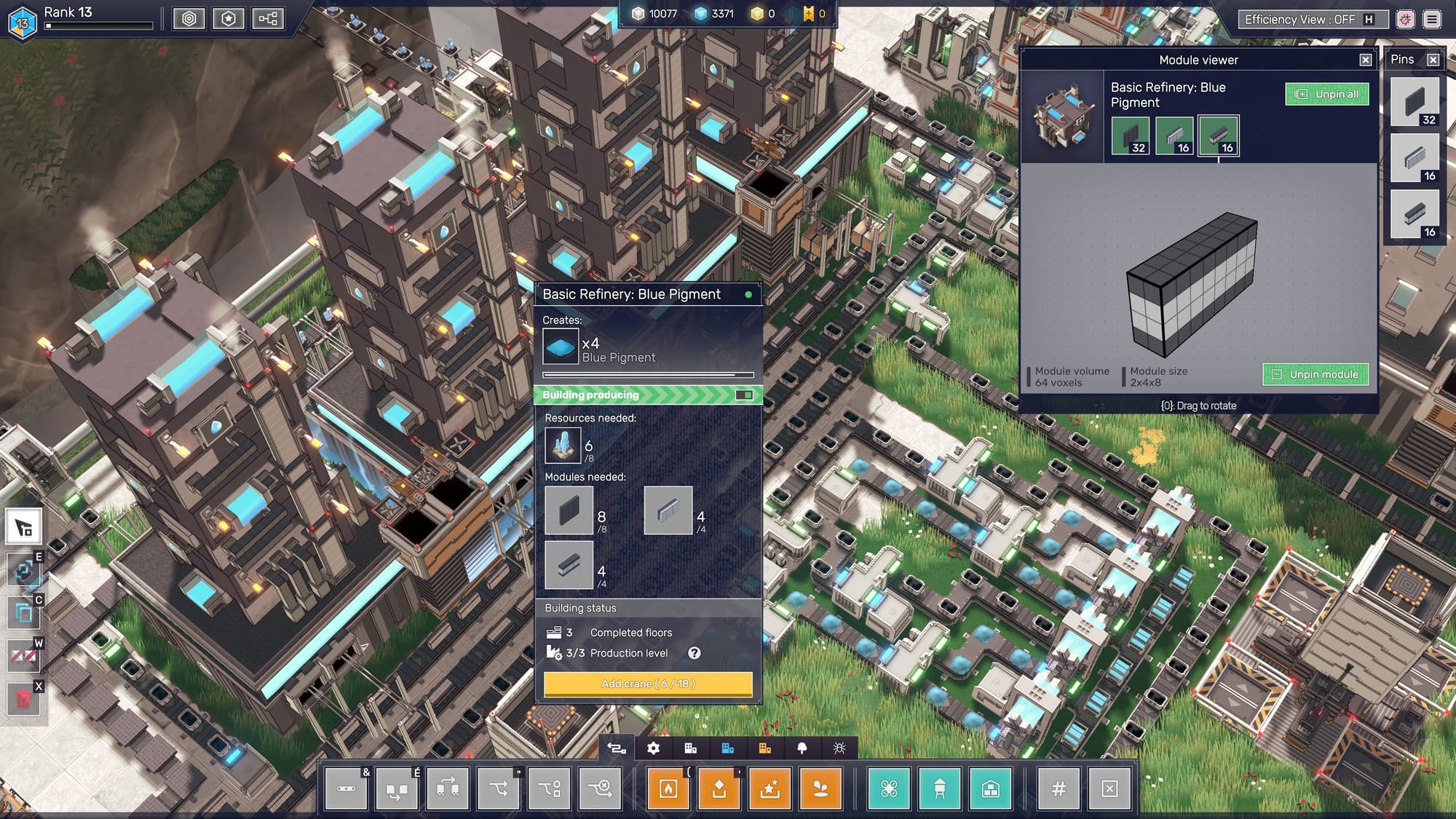
Players create custom modules by manually combining voxel cubes using cutters, assemblers and, later, stampers and painters. These components are then delivered via conveyor belts and other logistics options, such as splitters or tunnels, to buildings where cranes can be positioned to load the materials into these buildings. The cranes handle the building input, while collection platforms use flying drones to handle the building output.
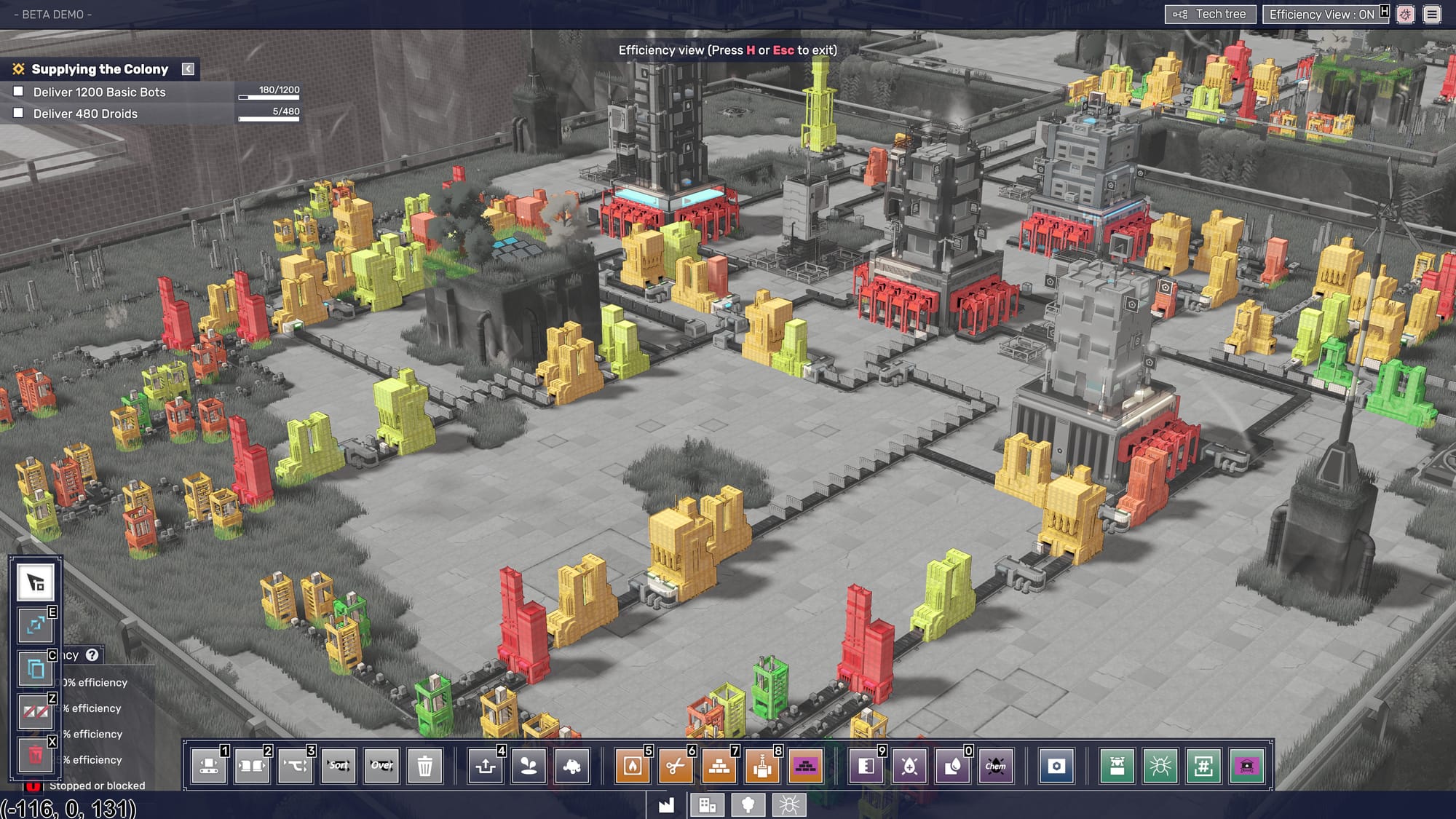
The goal is to design an efficient layout and material flow to maintain a constant production speed. After all, all buildings must be supplied with a steady stream of modules. The efficiency overlay is particularly helpful here as it uses colour coding to show where efficiency is lacking. By fulfilling the requested parts or delivery targets, players can advance in the technology tree, manufacture more complex objects and use additional platforms/islands as building sites. Later on, other minerals are added as raw materials, alongside oil and dyes. For instance, oil and blue dye are used in the paint mixer to produce blue paint for objects.
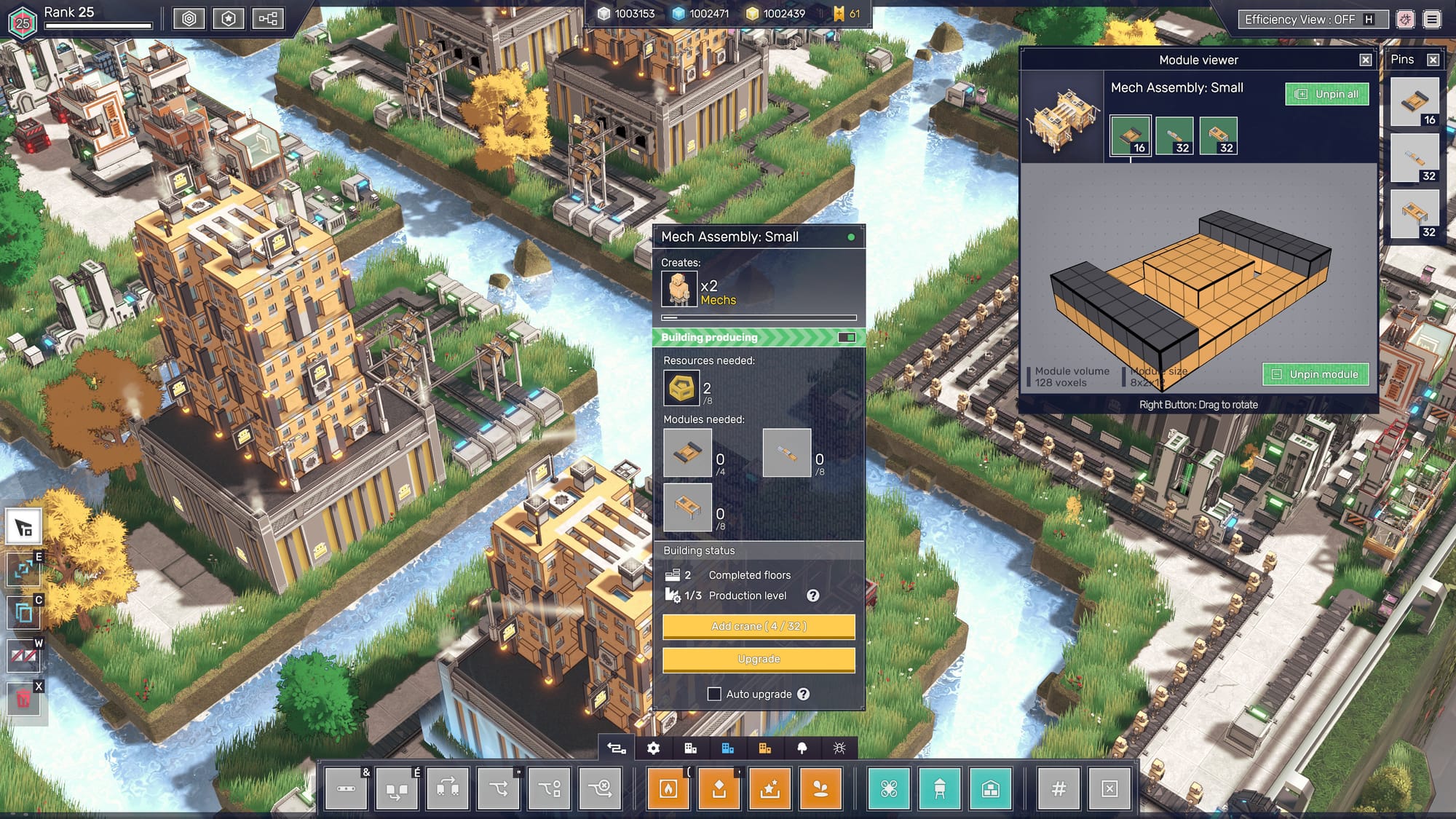
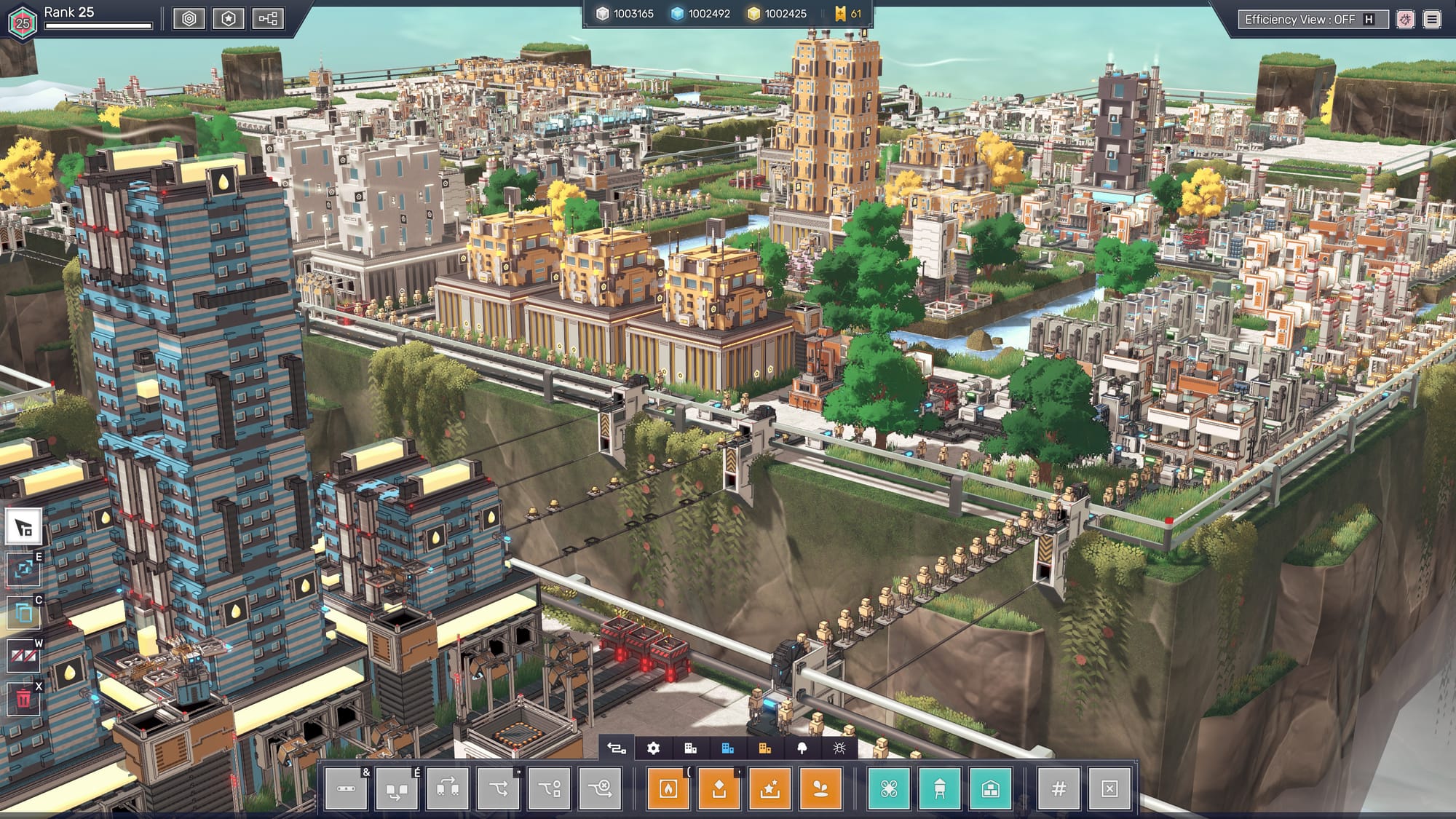
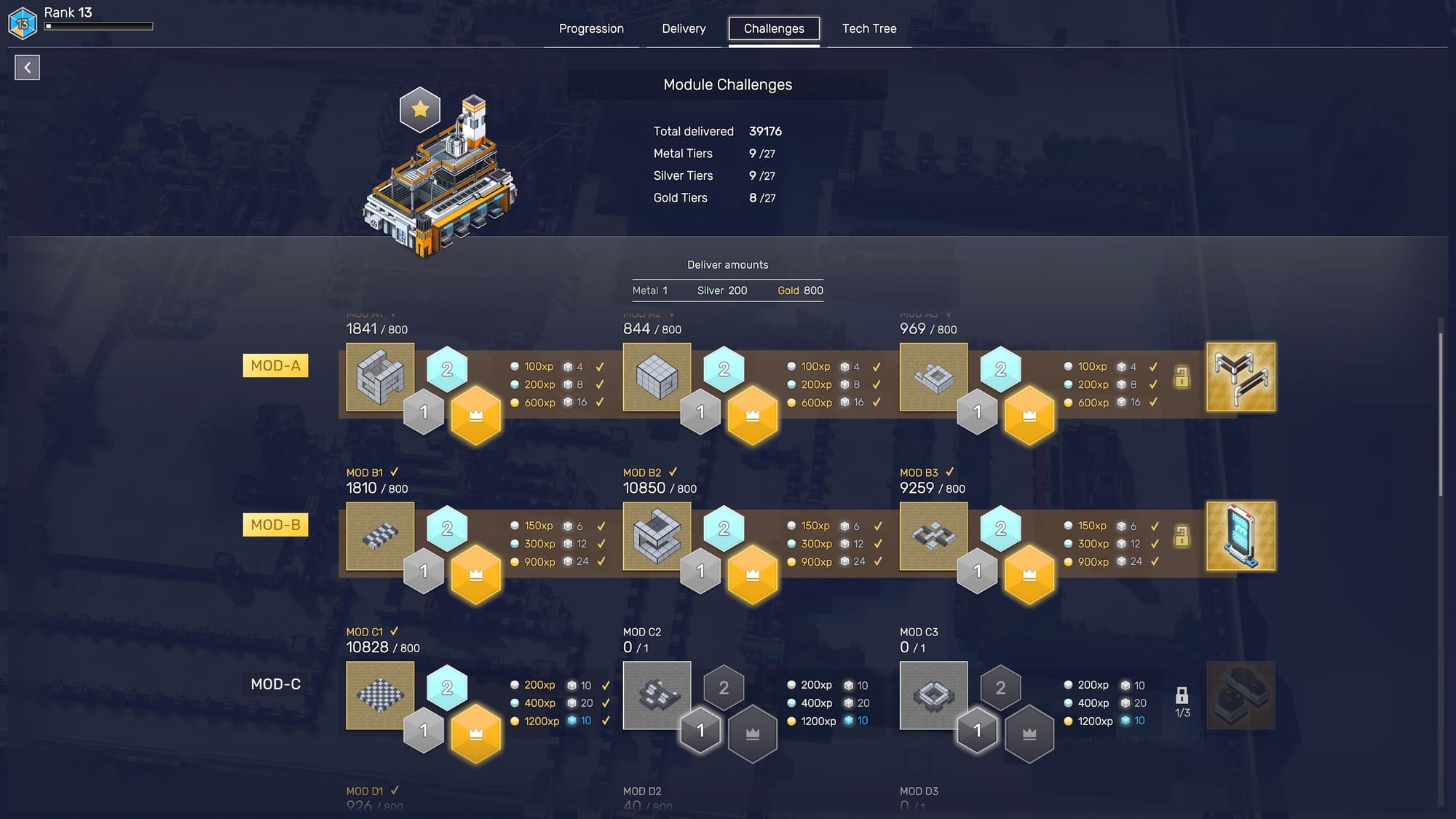
Blueprints can be used to replicate successful designs, simplifying complex production lines and eliminating the need for manual rebuilding of the facility. Every building starts as a single-storey structure, with materials delivered to the basement. Most buildings can be expanded a limited number of times by adding an additional floor. Adding additional levels unlocks a higher production tier, enabling the expanded building to produce more with the same input. This expansion requires Data Shards. Such upgrades are important because an upgraded building operates much more efficiently.
Modulus could be described as the '3D voxel cousin' of shapez 2, since both games focus purely on 'puzzling' with shapes — with no stress, timer, opponents or energy management, and unlimited resources. However, unlike shapez 2, Modulus is less abstract, as there is a more concrete goal — even if it is just producing blocks that later become robots (shapez 2 will also introduce a new mode with the 1.0 launch on 23 April). Ultimately, in Modulus: Factory Automation, disassembling and recombining cubes feels more like a 3D logic puzzle, albeit with a higher degree of customisation. Like shapez or Factorio, it relies on modularity. Once a system has been designed, it can easily be copied and replicated to increase throughput. The only real limiting factor is the available space on the building platforms, which can sometimes be restrictive.
However, players also spend a considerable amount of time in the menus of the processing machines (cutting/stamping), working on the design of individual parts and optimising production — but the interface is very well designed for this, especially when it comes to processing the blocks. However, players looking for logistical challenges involving the transportation of huge quantities of resources over long distances are better off with Factorio, shapez 2 or Satisfactory. In Modulus: Factory Automation, the challenge lies more in 3D routing within confined spaces, creative solutions and efficiency, but in a cozy way!
Team Happy Volcano has also responded to the first reactions from the community: in the coming weeks, they will add an option to choose between the Classic Map and the Free Build Map, which has larger islands, no terrain challenges, and a better Polyrock layout, to provide a more open, traditional factory experience.
Modulus: Factory Automation is being developed by Happy Volcano, a game studio based in Leuven, Belgium. The team consists of just 11 senior specialists who work remotely. Backed by Hiro Capital and Sir Ian Livingstone, the studio is known for its games You Suck at Parking (2022) and The Almost Gone (2020). The game has been published by Kwalee, a games publisher and developer based in Leamington Spa, UK. Kwalee has a catalogue of PC and console titles, including Wildmender, The Precinct, Town to City, Don't Stop Girlypop!, Grime II, and upcoming releases such as Hark the Ghoul, Call of the Elder Gods, Ground Zero, Lost Hellden, BPM Bitcrushed, Shift at Midnight, Welcome to Elderfield, and Lily's World XD. Founded by David Darling CBE, co-founder of Codemasters, the company has studios in the UK, India, and other remote locations worldwide.
Modulus: Factory Automation was released on 2 April 2026, priced at €24.50, on PC via Steam.
Conclusion
Modulus: Factory Automation provides a relaxed, low-pressure approach to factory automation, where experimentation, creativity and optimisation flourish.
Features
Creative building block system based on modules that provides creative solutions
The ultimate in coziness: no enemies, no combat, no pressure and no timers
Marcel Kleffmann is Chief of Content of GamesMarket and our B2B and B2C expert for hardware, market data, products and launch numbers with more than two decades of editorial experience. (marcelDOTkleffmannATgamesmarktDOTde)