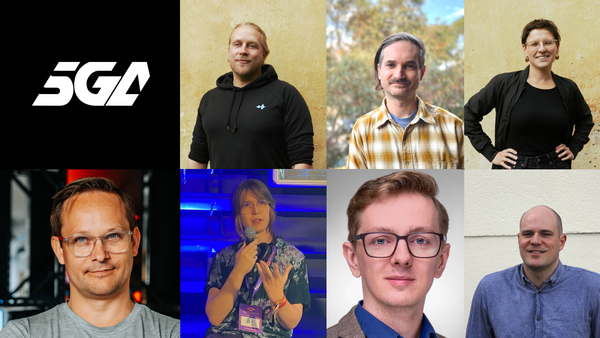
Developers from the Sustainable Games Alliance (SGA) have repeatedly emphasized in presentations that energy-saving measures are not only good for the planet, the battery life of devices, and thus gamers’ energy bills, but can also lead to performance improvements. This is likely why the community has developed plug-ins for three of the industry’s most important engines: Unreal Engine, Unity and Godot. The plug-ins were developed in collaboration between the SGA, the SGA Energy Efficiency Network, and the energy efficiency meetups. According to SGA companies including Microsoft, Unity, Ubisoft, Deck13 Interactive, Nitro Games, Bold Beetle Games and GOALS shared tools, case studies and optimization strategies during these sessions.
Ari Arnbjörnsson, Technical Developer Relations at Epic Games, said: “If you're not considering sustainability for our planet, your users' device battery life, or even their power bill, then you should at least consider it for your game's performance. Quicker frames just so happen to benefit all of these cases.”
“Sustainability in gaming isn't just about how we run our studios, but how our code behaves on millions of devices worldwide. By making these power-saving tools available across Unreal, Unity, and Godot, we’re helping the entire industry reduce its carbon footprint without compromising the high-fidelity experiences players expect.”, says Torbjörn Söderman, Technical Director of the SGA Energy Efficiency Network and Technical Director at GOALS.
Improved energy efficiency can bring a number of benefits for gamers. Not only does it extend the life of batteries, but it also reduces the heat generated by devices and, consequently, the noise from fans. Ultimately, this leads to lower energy consumption and, therefore, a reduction in carbon emissions.
According to SGA, the plugins detect when players become inactive and reduce the frame rate and resolution once thresholds predefined by the developers are reached. As soon as the player inputs a command again, the game immediately reverts to the original settings.
The Unreal Engine plugin was developed by Hauke Thießen of Deck13 Interactive, the Unity plugin by Oliver Stock of Walk the Frog, and the Godot plugin by Ashe Foltin of Bold Beetle Games.
GamesMarkt Daily Newsletter
Sign up to receive the free daily newsletter about the Games Industry in GSA, Europe and beyond.
No spam. Unsubscribe anytime.