With the appointment of Dr Fabian Mehring as Bavaria’s Minister for Digital Affairs, the Bavarian games industry has received a political boost unlike that seen in any other federal state. Much has already been achieved, but Mehring’s commitment remains strong.
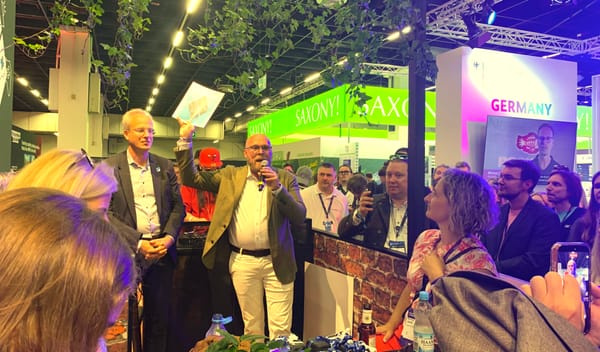
Bavaria's Minister for Digital Affairs, Dr. Fabian Mehrig, at the Bavarian reception at gamescom, which pushed the business booth's capacity to its limits and beyond
GamesMarkt: Dr Mehring, since you took office, you have been exceptionally committed to the gaming sector. How did this come about? Why are games and the games industry so close to your heart?
Fabian Mehring: As Bavaria’s Minister for Digital Affairs, it has been important to me from the very beginning to make the public aware of the importance of the games industry for Germany as a digital hub and for Bavaria in particular. Games are not only the entertainment medium of our time, they are also a powerful engine of digital innovation. Many technologies developed and tested in gaming, from GPU chips and visualization to AI applications and control systems, have gone on to benefit many other industries. The creative pixel pioneers of the gaming industry can test innovations directly with users, creating ideas that later drive progress far beyond gaming. Games also spark a passion for IT among many young people, making the industry an important source of future digital talent. That is why the gaming industry needs support, not opposition.
Games are also the cultural medium of the 21st century and an important economic asset. The German games market generates almost €10 billion in annual revenue, while the global market exceeds €200 billion and continues to grow. Yet German studios capture only a small share of this success. The real question is whether we want to remain spectators while others shape this cultural medium, or whether we finally recognize its cultural and economic potential and strengthen our own games industry. I have clearly chosen the latter.
Even in your first year, your department launched a huge number of projects and has since expanded them. Why was it important to get such a broad range of measures off the ground so quickly?
Fabian Mehring:
That’s right. Right after I took office in November 2023, we declared 2024 the “Year of Games.” I was genuinely surprised by how strongly this political signal resonated and how much momentum it created within the Bavarian games ecosystem. In 2024, we awarded a record €3.57 million in grants.
The number of visitors and guests at GG Bavaria doubled in 2024 and doubled again by 2026. We also opened the GAMEREI as a dedicated workspace and meeting place for the Bavarian games industry, and we brought the German Computer Game Awards back to Munich in 2024 and again in 2026. All of these initiatives were aimed at highlighting the creative and economic strength of Bavaria’s games industry.
GAMEREI, Level Up Accelerator, increased funding, a larger GG Bavaria and much more – from your personal perspective, what were the most important issues and why?
Fabian Mehring: I believe each of these measures is important in its own right. But together, they are pieces of a larger puzzle, or like the gears of a clockwork mechanism that only work when they mesh together. Strong, reliable funding is essential for the creative output of Bavarian studios. GG Bavaria strengthens the visibility and accessibility of the Bavarian games industry. Level Up helps develop the next generation of creative talent. GAMEREI provides a physical home where studios can work, connect, and collaborate.
Together, these initiatives create an ecosystem that enables the industry to thrive. The fact that this approach is recognized across Germany is reflected in Bavaria being named the country’s number one location for games.
Of course, it takes time for all these measures to bear fruit, but perhaps you can nevertheless draw some first conclusions. Are you satisfied with the development of the games industry in Bavaria over the two-and-a-half years? And what do you expect from the industry in the coming years?
Fabian Mehring:
You can be satisfied with what we have achieved, but I’m not. My ambition is for the Bavarian games industry not only to lead in Germany, but to compete in the European Champions League. We should secure a meaningful share of the global games market and use it to take value creation in this growth industry to a new level, here in Germany and especially in Bavaria. One clear ambition is to see a AA game developed in Bavaria and successfully launched on the global market.
At the same time, we must not lose sight of the regions. The future of the Bavarian games industry is not limited to Munich. Strong hubs such as Bayreuth, Nuremberg, Regensburg, and Munich are complemented by vibrant regional initiatives like LFG Con in Upper Franconia and LA-Play! in Lower Bavaria. They show that games are an important cultural asset throughout the state. But they also demonstrate the industry’s economic potential, because great games can be developed anywhere and create local value. That is why we are delighted when outstanding projects from across Bavaria receive funding. Together with our regional initiative Games/Bavaria and partners such as FFF Bayern and LfA Förderbank Bayern, we want to unlock even more of that potential.
We are currently in discussions with experts about establishing a “Bavarian Games Institute.
A key concept in the context of funding is spillover effects. In your view, which economic sectors are already benefiting from gaming today, and where is there still untapped potential?
Fabian Mehring: I have already mentioned a few examples, but I see much more potential ahead. Just look at the major topics of our time, such as AI and space technology. The visualization capabilities of games are incredibly diverse, and they can help research and test certain AI-driven behaviors, for example in robotics.
Space technology is another exciting field. There are already games developed in cooperation with ESA. At gamescom 2025, I saw a demonstration where players were helping to identify and mark lunar craters that could potentially support future ESA and NASA lunar missions. What makes this especially fascinating is that these contributions come from the gaming community itself, as players build their own bases on the moon within the game. Making science accessible through play while contributing to real-world research is a powerful combination.
Digitalisation is the task of our time, and not just for the economy. How can society, education and public administration also benefit from Bavaria as a strong gaming hub?
Fabian Mehring:
Games have a wide range of applications beyond entertainment. Gamification, in particular, offers valuable opportunities in areas such as education and public administration. Complex learning content can be made more accessible and easier to understand through visual and playful approaches. Games can also help young people develop basic programming skills and, when used responsibly in settings such as schools, strengthen media literacy.
In the age of AI, we cannot afford to ignore these developments. We need to engage with new technologies in a constructive and positive way. The same applies to public administration. Gamification can help explain complex processes more clearly and make interactions with authorities more user-friendly. Nobody needs to spin a wheel of fortune to get a new driver’s license, but a modern government can use game-based approaches to make public services simpler, more accessible, and more engaging.
From the very beginning, you have invited politicians from other ministries to gaming events in order to raise awareness of the games industry beyond the Ministry of Digital Affairs. Has this encouraged spillover effects, or is it perhaps even a requirement for realising the full potential of spillover effects?
Fabian Mehring: I think it’s both. Gaming companies have been collaborating with other industries, such as the automotive sector, for many years. That is one of the strengths of the games industry: companies can create entertainment products while also developing technologies and solutions that benefit traditional industries.
It is therefore important that policymakers across different fields recognize the role games can play in their areas of responsibility. This broader perspective raises awareness and often changes perceptions. A gaming expo is not just about playing games; it is also a place where companies like BMW or Infineon showcase their work and where new partnerships between industries are created.
The Minister-President is right to advocate for Bavaria’s technological leadership in the future. To maintain this position, we need to focus on key growth industries such as gaming, digitalization, AI, robotics, quantum computing, and space technologies, while creating the right political conditions for them to thrive.
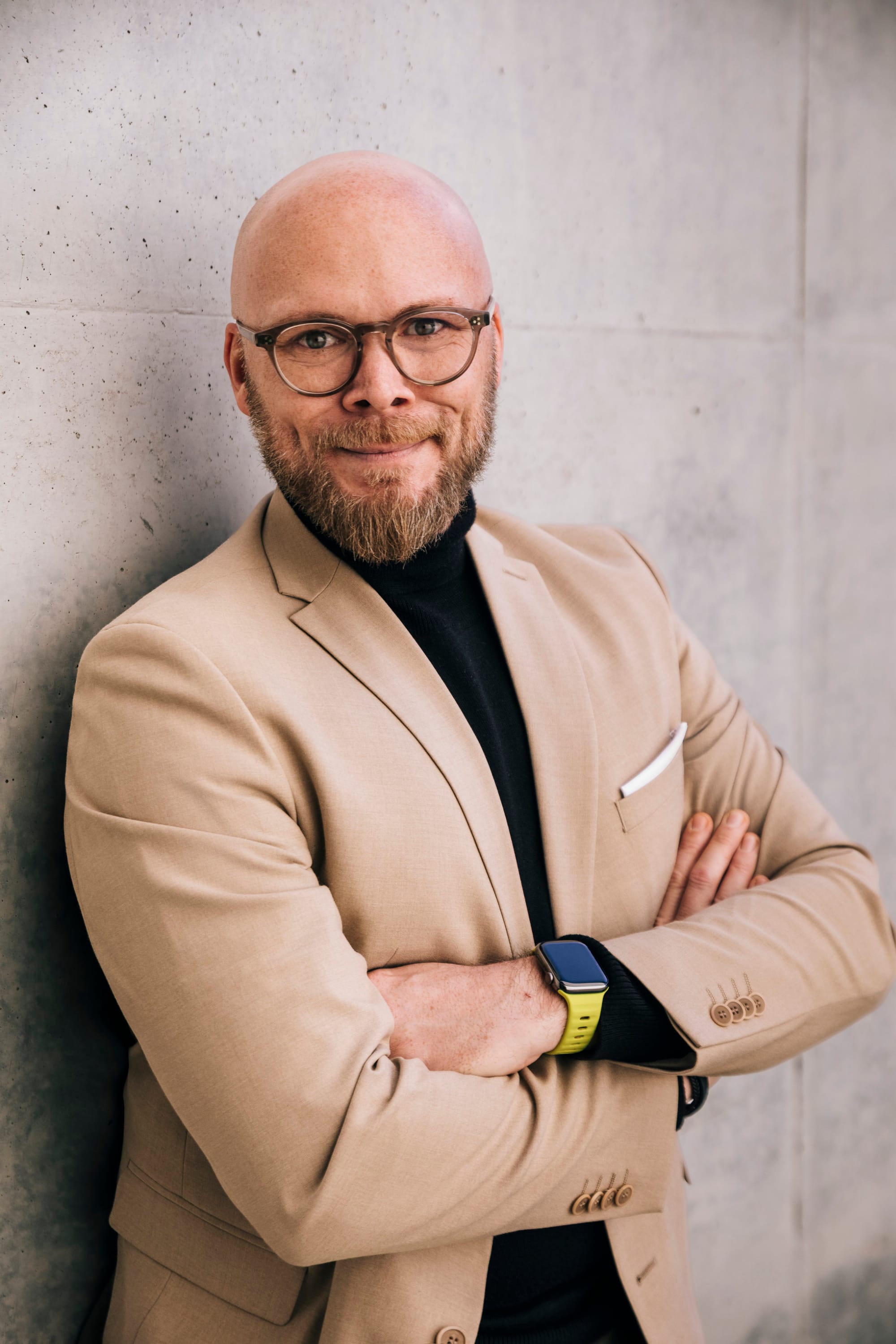
Dr Fabian Mehring (Picture: StMD/Anne Hufnagl)
At the DCP in Munich, the games industry encountered a Minister- President who was in good spirits and open to games. Is this evidence that games are also perceived at the highest level in Bavaria as a driving force behind digitalisation?
Fabian Mehring: I think so. I see him as a Minister-President who is willing to embrace new ideas and take innovative paths without losing sight of Bavaria’s traditions and strengths. He faced criticism at first, for example for his focus on space policy and his commitment to games and XR. But many of those critics are now recognizing the enormous potential of these technologies.
The Minister-President is right to advocate for Bavaria’s technological leadership in the future. To maintain this position, we need to focus on key growth industries such as gaming, digitalization, AI, robotics, quantum computing, and space technologies, while creating the right political conditions for them to thrive. At the same time, we must ensure that the value created in these sectors remains here and is not developed in Bavaria only to be commercialized elsewhere.
We need to keep looking ahead and stay open to new opportunities. Otherwise, we risk falling behind both China and the United States. Our past successes, including in the automotive sector, are important, but they cannot be the only foundation for our future. The world continues to move forward every single day.
In your view, how important is the Minister-President’s support, given that Bavaria is in – fortunately healthy – competition with Berlin, North Rhine-Westphalia and Hamburg, where gaming is often regarded as a political ‘top priority’?
Fabian Mehring: Signals like these from the highest level of government are extremely important. They also translate into concrete results, as we are currently seeing with the doubling of games funding.
We are also continuing our successful “success loan” program, reinvesting repaid funds into the funding pool so they can support the next generation of projects.
Looking at the international games market, German games hubs – much like the German industry as a whole – still have some catching up to do. This can certainly only be achieved through the federal government, but also through cooperation between the federal states. How well is Germany equipped to close the gap on the global leaders, and why are the conditions in Bavaria particularly favourable?
Fabian Mehring: That’s correct. Strong growth of the German games industry is only possible in cooperation with the federal government. At the same time, independent games funding at the state level remains essential. This became particularly clear during periods when federal funding applications were temporarily halted. Bavaria stood by its game studios during that time and continued to support game production.
The federal government has now significantly increased its funding and brought the process forward. It is now up to the studios to seize these opportunities and submit strong applications for outstanding projects at both the federal and state levels. Germany’s current funding framework already creates attractive opportunities for many developers. However, if we want to close the gap with international competitors, especially in the AA and AAA segments, we will also need tax-based funding at the federal level.
My colleague, Federal Minister Dorothee Bär, is working on this and is a strong advocate for the German games industry. Bavaria supports these efforts while continuing to offer excellent conditions for studios, not only through our quality of life and unique environment, but also through our digital ecosystem and our openness to new technologies and innovation.
Perhaps let’s return to the more specific topics. At gamescom 2026, Bavaria will be represented for the first time with two of its own booths. What do you expect from this dual presence in both the business and entertainment area?
Fabian Mehring: As the minister responsible for games, I am personally delighted that Bavaria will have a dual presence at gamescom 2026. Our participation in the Business Area will help create important connections for future collaborations, research projects, and investments. At the same time, our own booth in the Entertainment Area will allow us to showcase the creative and technological achievements of Bavarian game developers directly to the public.
It is especially important to me that we have Games/Bavaria as a strong partner at our side. With its deep understanding of the industry, it is the ideal platform to represent both the economic strength and cultural importance of Bavaria’s games ecosystem.
We should secure a meaningful share of the global games market and use it to take value creation in this growth industry to a new level, here in Germany and especially in Bavaria.
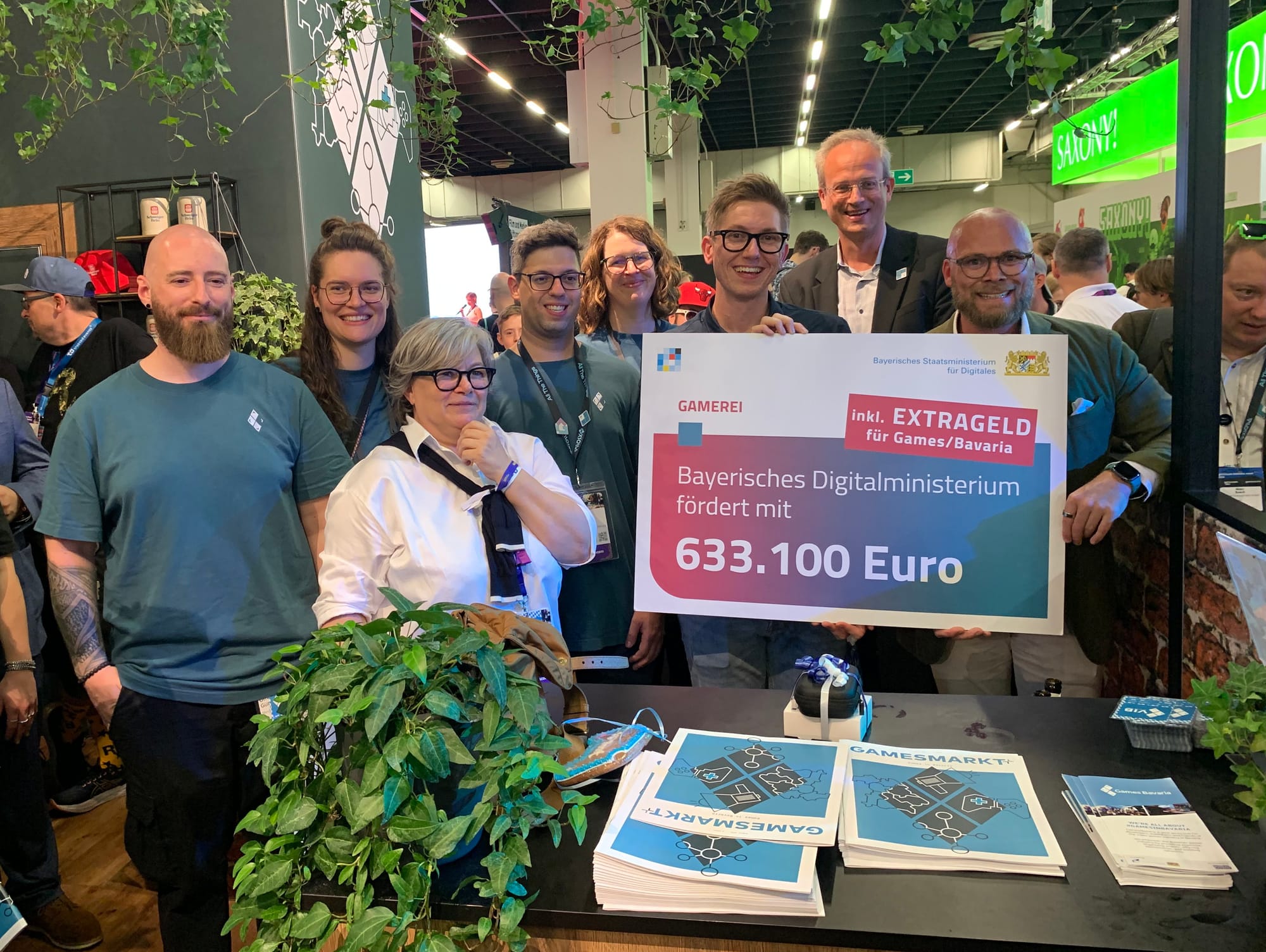
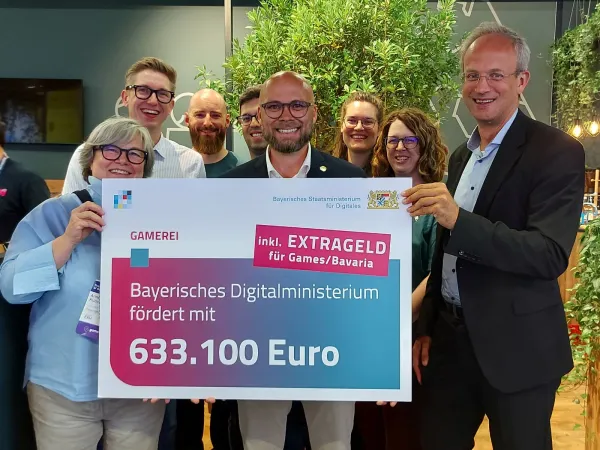
Dr Fabian Mehring presents a check at gamescom to the team of Games/Bavaria to provide further funding for the Bavarian gaming facility DIE GAMEREI
And what plans, goals, projects and expectations in the gaming sector do you and your ministry have in store for 2026 and the two following years?
Fabian Mehring: We have recently updated our game funding guidelines and, at the same time, doubled the available funding. This allows us to further support the professionalization of the Bavarian games industry, enable higher-budget prototype development, and ease the financial burden on young companies by reducing the required share of their own funding.
We are also continuing our successful “success loan” program, reinvesting repaid funds into the funding pool so they can support the next generation of projects. The current example of Spaceflower from Nuremberg shows how this approach can work in practice.
At the same time, we have received valuable insights from the latest study on the Bavarian games industry, which we will analyze in detail and use to develop recommendations together with the industry. As mentioned before, strengthening regional ecosystems will remain an important focus. This is an exciting challenge that we want to tackle together.
Looking ahead to our ambition of seeing at least one AA-tier game developed in Bavaria, we have already taken the first steps in our new guidelines. For the first time, they include the possibility of supporting projects with international participation if they make a significant contribution to strengthening the competitiveness of Bavaria’s production sector. Together with the industry, we will now define the criteria for this new funding approach. Furthermore, it is important for us to strengthen not only games education at Bavarian universities and universities of applied sciences, but also games-related research and development at these institutions. To this end, we are currently in discussions with experts about establishing a “Bavarian Games Institute.”
Stephan Steininger is Director of Operations and Editor-in-Chief of GamesMarket. As part of the magazine since its inception in 2001, he knows the GSA games industry by heart.
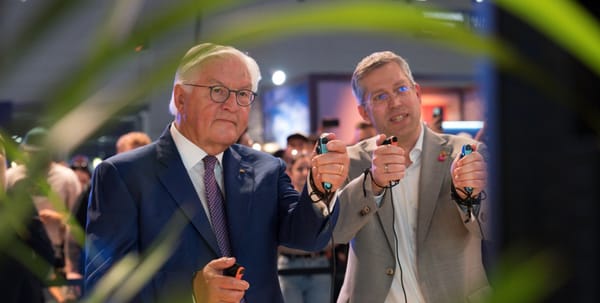
Frank-Walter Steinmeier, President of the Federal Republic of Germany, and Clemens Mayer-Wegelin, Managing Director General Counsel Europe Nintendo of Europe and Chairman of the Board at Video Games Europe at gamescom 2026. (Picture: Koelnmesse GmbH, Uwe Weiser)