DAK Study: Problematic Video Game Use Continues to Decline in Germany
The latest edition of the DAK study issues a stark warning about the increasing use of chatbots, which is exacerbating problematic social media use. Gaming, on the other hand, is on the decline, even though the proportion of pathological gaming behaviour is rising again.


The DAK (German Employees’ Health Insurance Fund) has published the latest edition of its study on media addiction and has called for the swift introduction of age restrictions on social media. “To ensure that initial measures take effect as early as the coming school year, we should act independently of any EU-wide solution,” says DAK CEO Andreas Storm. “The growing trend in chatbot use shows that we are dealing with a new dimension of digital media. This makes it all the more important to teach media literacy in schools at an early stage.”
It is the growing use of chatbots in particular that is causing concern among the study’s researchers. Up to around ten per cent of young people turn to chatbots to distract themselves from negative feelings, alleviate loneliness or discuss private matters.
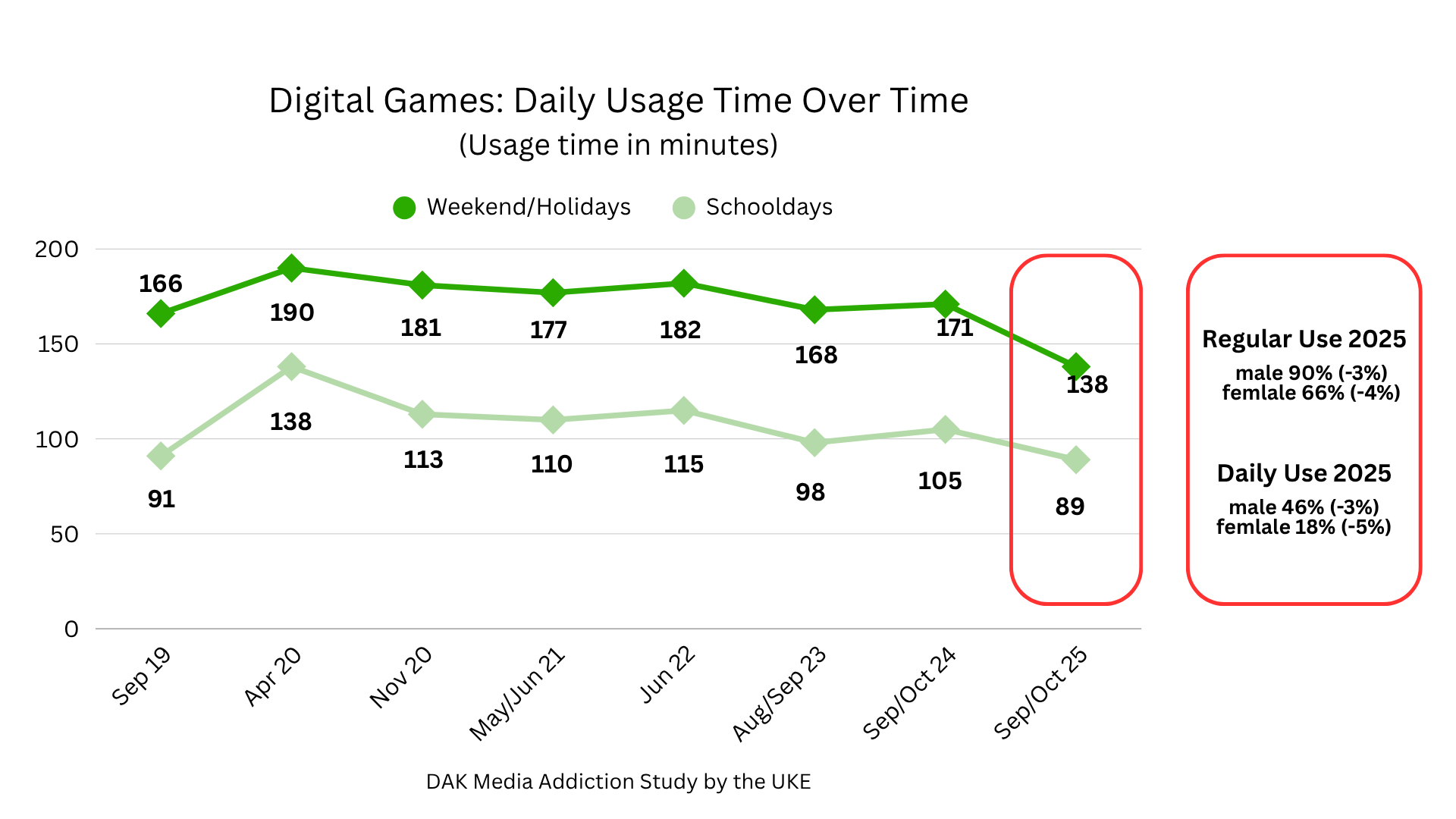
Unlike in previous years, when they were barely mentioned, digital games are highlighted in the press release, and their use is also examined. This reveals a continuing downward trend, which is hardly likely to make for negative headlines. The use of digital games on school days fell to 89 minutes and to 138 minutes on weekends or during holidays. In both cases, the figures are thus below the 2019 result for the first time – that is, from before the pandemic, when the use of games shot up significantly. For comparison: according to the DAK study, the duration of social media use is 201 minutes at weekends and 146 minutes on school days. The duration of online video use is 151 minutes at weekends and 108 minutes on school days.
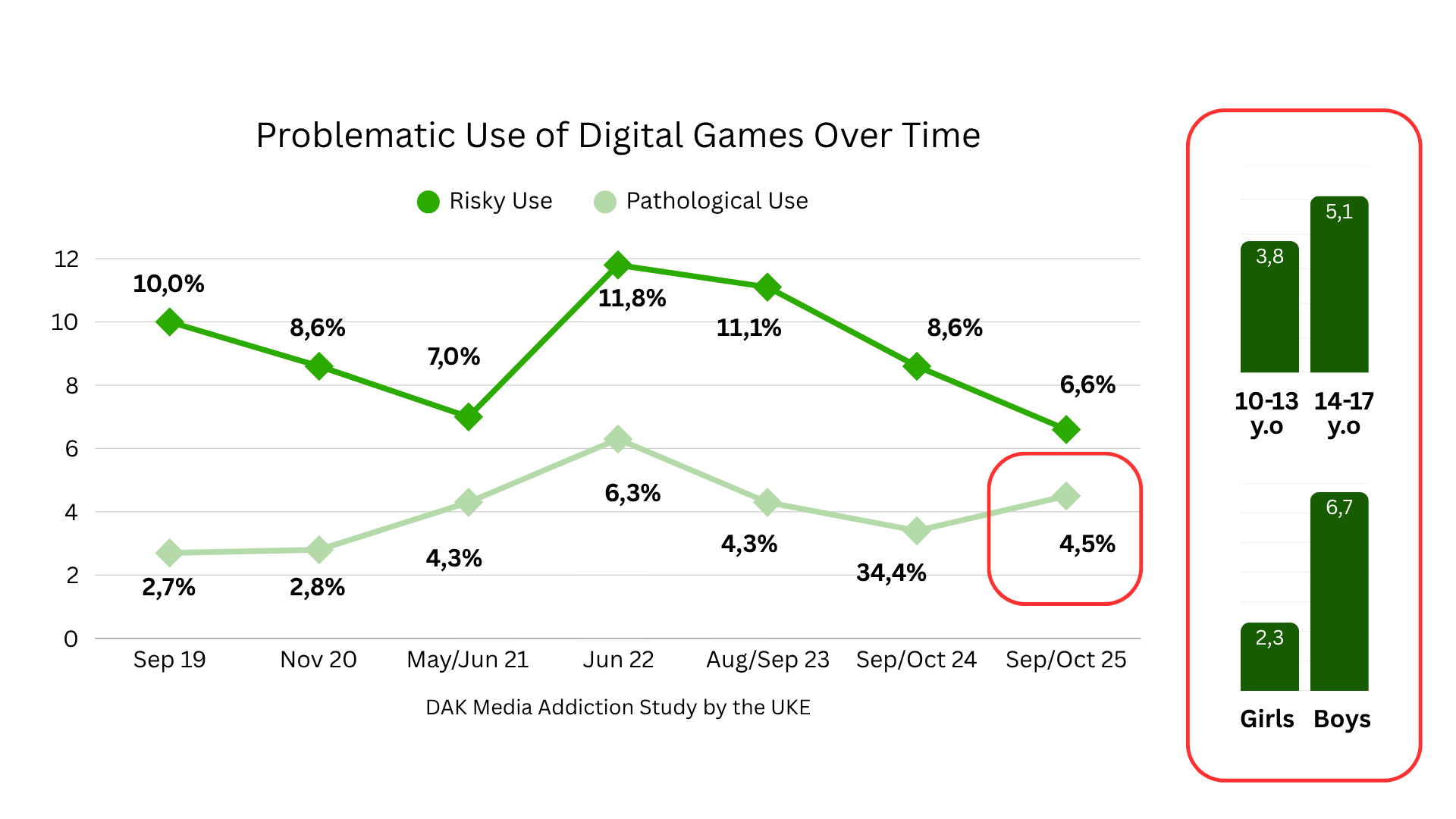
It is interesting to note that the percentage of gaming use classified as ‘at-risk’ according to the ICD-11 criteria continues to fall, and significantly so. It currently stands at just 6.6%. This, too, is the lowest figure since the survey began in September 2019. Contrary to this trend, however, the proportion of pathological use rose from 3.4% to 4.5%. According to the study, boys in particular are prone to pathological gaming. In its 11th edition of the International Classification of Diseases (ICD), the WHO classified gaming disorder as an addiction and established criteria for identifying problematic and pathological gaming behaviour.
It is, however, highly likely that the studies, which have been conducted since 2019, will continue. As the DAK reports, the study – which is being carried out in collaboration with the German Centre for Addiction Issues in Childhood and Adolescence at the University Medical Centre Hamburg-Eppendorf (UKE) – has been known by the acronym OTTER since 2016. This stands for Observing Kids’ and Teens’ Technology Engagement and Risks.
Written by