Nvidia and Microsoft Collaborate on Neural Shading Support and RTX Remix Launched

– 2 min read


Ahead of GDC, Nvidia announced a collaboration with Microsoft on neural shading support for DirectX. While DLSS 4 is fast becoming Nvidia's most rapidly adopted gaming technology, Nvidia RTX Remix has also come out of beta.
Nvidia has announced ahead of the Game Developers Conference (GDC) that it has partnered with Microsoft to bring neural shading support to the Microsoft DirectX preview in April. This will give developers access to AI tensor cores in Nvidia GeForce RTX GPUs to accelerate neural networks within a game's graphics pipeline. "Microsoft is adding cooperative vector support to DirectX and HLSL, starting with a preview this April," said Shawn Hargreaves, Direct3D development manager at Microsoft. "This will advance the future of graphics programming by enabling neural rendering across the gaming industry. Unlocking Tensor Cores on NVIDIA RTX will allow developers to fully leverage RTX Neural Shaders for richer, more immersive experiences on Windows." At CES, Nvidia will showcase neural rendering capabilities through its "Zorah" technology demo. In addition, the Nvidia RTX Kit is receiving updates with Unreal Engine 5 support for the RTX Mega Geometry and RTX Hair features (NvRTX branch of Unreal Engine 5).
In addition, Nvidia RTX Remix has left the beta phase - with DLSS 4 and Multi Frame Generation. This is a modding platform for remastering a catalogue of fixed-function DirectX 8 and 9 games. A year ago, Nvidia RTX Remix was launched in beta, enabling remasters of classic games with fully ray-traced lighting, improved materials, and the latest RTX technologies. Since then, more than 30,000 modders have used the platform to mod hundreds of classic titles, and more than 1 million gamers have played RTX Remix mods such as Nvidia Lightspeed Studios' Portal with RTX and the modder-made Portal: Prelude RTX.
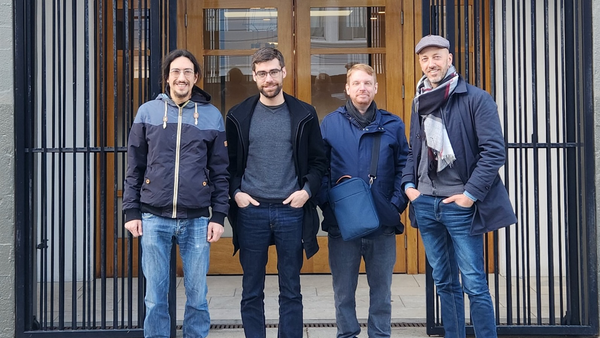
Half-Life 2 owners can experience the capabilities of RTX Remix in the environments of Ravenholm and Nova Prospekt by downloading a free Half-Life 2 RTX demo from Steam on 18 March. The remaster is being developed by four of Half-Life 2's mod teams working together under the banner of Orbifold Studios. Half-Life 2 RTX features full ray tracing, remastered assets, DLSS 4, Nvidia Reflex, RTX Neural Radiance Cache, RTX Skin and RTX Volumetrics.
Finally, DLSS 4, introduced with the release of the GeForce RTX 50-series GPUs, is now supported in over 100 games and applications, reaching this milestone two years faster than DLSS 3, making it the fastest adopted Nvidia gaming technology of all time, according to the company. Lost Soul Aside, Mecha Break, Phantom Blade Zero, Stellar Blade, Tides of Annihilation and Wild Assault will launch with DLSS 4.