The Game Studies Watchlist newsletter, curated by Prof. Dr Rudolf Inderst, is published weekly on GamesMarkt. This week's topics include the ecologies of indie games, CBC and the university of Malta.
AHOI there, game studies operators!"[T]his is (hopefully) the first in a series of many, many nerdy science-related video game videos, where i cover the biomes of the world and how they show up in some of our favorite indies." Yes, I know! Of course I know! And I know that you know! I could never have ignored such a sentence in the description box under a video essay. It draws me in like magic! I HAD to act. So today, I present nocaps' thoughts!
This video essay explores how indie games depict real-world ecological biomes,borrowing the concept familiar from games like Minecraft. It highlights titles that thoughtfully translate environmental science into interactive worlds. Beginning with ecology-focused games such as Terra Nil and Horticular, which center on restoring ecosystems, the essay then moves through major biome types: tropical forests (e.g., Gibbon: Beyond the Trees, Call of the Sea, Tchia), deserts (Journey, Sable), Mediterranean landscapes (Alba: A Wildlife Adventure), temperate forests (Pacific Drive, The Long Dark, Firewatch), boreal regions, and tundra environments (Shelter 2). Across these examples, nocap argues that many indie developers treat environment as a central character, designing ecosystems, geography, and climate that shape gameplay and storytelling, while also demonstrating how games can function as informal introductions to ecological thinking and environmental awareness.
For us game scholars and researchers, examining how games represent biomes and ecosystems matters because environmental design is not merely aesthetic but fundamentally shapes mechanics, narrative, and player experience. Many indie titles use ecology, climate, terrain, flora, fauna, and resource flows, as a system that structures exploration, movement, survival, and storytelling, effectively turning the environment into an active agent rather than a passive backdrop. Studying these representations helps us understand how games model complex natural systems, communicate ideas about biodiversity and environmental change, and foster forms of ecological awareness through play. At the same time, comparing different biome depictions across games highlights how developers translate real-world geography into interactive rules and affordances, making digital environments a productive site for analyzing the intersection of simulation, environmental imagination, and cultural attitudes toward nature.
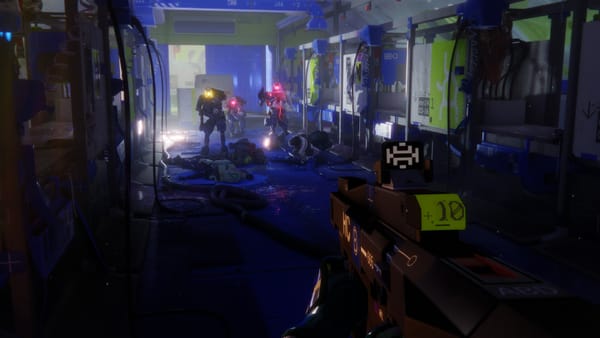
This reminds me that I still don't have an in-game photo mode on my Xbox when I'm exploring the surface of Ark Raiders ... what's wrong with the developers??? ;)
On CBC, reporter Linus Mulherin, explains to me: "Acadia Centre for Critical Play asks questions about how video games shape our culture, world"! In German we'd add a "REDE!" behind that sentence. The Acadia Centre for Critical Play is a newly opened centre at the university which aims to allow academics and students to study our favorite child. Kudos to Prof. Jon Saklofske and academic librarian Mike Beazley! https://www.cbc.ca/news/canada/nova-scotia/acadia-centre-video-game-research-9.7069676
"Did you know we had a newsletter?" Actually, no, Institute of Digital Games - University of Malta! #sadpuppy But thanks for letting me (and all my readers know)! I am sure that your "updates about events, published research, short-form articles covering #gamedesign #gamestudies and #gameAI" will be a rich part of my media diet from now on. https://preview.mailerlite.io/preview/931492/emails/177213394810570721
I had the great pleasure to talk to Victor Navarro-Remesal about his new book Zen and Slow Games on my podcast show Game Studies. Please tune in and enjoy! https://megaphone.link/NBNK1716576384
The Science MashUp is a dynamic, research‑oriented highlight of the annual Lange Nacht der Computerspiele symposium at HTWK Leipzig. Blending short academic talks with fast‑paced Pecha Kucha presentations, the format has been exploring current trends and diverse perspectives in gaming culture since 2020 in an engaging and entertaining way. Their call for participation is now online! https://computerspielenacht.htwk-leipzig.de/nav/startseite-computerspielenacht/der-science-mashup-1
I also just came across this on Kotaku by Zack Zwiezen: Just five days after the United States joined Israel in airstrikes on Iran that have claimed hundreds of lives, the official White House Twitter account posted a video featuring a killstreak animation from Call of Duty: Modern Warfare 3. This marks yet another instance of President Donald Trump and his administration exploiting gamer culture and memes in official government content, turning deadly international conflict into a spectacle reminiscent of a video game. https://kotaku.com/trump-white-house-uses-call-of-duty-modern-warfare-kill-streak-to-celebrate-killing-people-in-iran-2000675983
... last but certainly not least, I’m thrilled to share that I’ve officially received the invitation to my PhD disputatio! So, Transformers, roll out, and Avengers, assemble on March 18th at the University of Vechta (a charming town in northwestern Germany, home to a surprisingly impressive first-division basketball team)!
P l e a s e support my work in game research & culture, consider contributing via Buy Me a Coffee.
Rudolf Inderst is a Professor of Game Studies, Podcast Host of “Game Studies”, Newsletter Writer of “Game Studies Watchlist” , Video Essay Aficionado and Krav Maga Practioner.