With the fame of open source engine Godot came new and bigger events – but also novel challenges. GamesMarkt spoke to the organisers of the brand new GodotFest in Munich and interviewed Emilio Coppola, head of the non-profit Godot Foundation, about the rise of an engine.
Not least the Battlefield 6 integration of their user-generated content APK Portal with Godot this year has put the engine into the spotlight once again. For years now, GodotCon has brought together developers in North America and Europe. GodotFest, held on 11 and 12 November 2025 in Munich, was the first under the name, while still being the official GodotCon Europe 2025. In fact, the same team that has organised GodotFest in 2025 had made GodotCon 2023 in Munich possible, namely a host of core team members and plenty of volunteers around Benjamin Vehling, Johannes Ebner, Kerstin Pfaffinger, Raffaele Picca and Senad Hrnjadovic in the form of GameDev Events Munich.
Course for the next year has also been set already: GodotFest Munich will return in November 2026, the organisers of GameDev Events Munich have stated. Ebner says: “GodotFest 25 – the first GodotFest ever – has been a massive success. We brought together over 350 attendees from across the globe, including Japan and Brazil, with professionals from PlayStation, AAA studios, and headline sponsor JetBrains.”
While the Godot Foundation, non-profit keeper of the engine’s main branch, was not involved in the organisation, it was on site in the form of headline speaker and the Foundation’s Executive Director Emilio Coppola. We sat down with Coppola to talk the engine’s last two years, the troubles of game development and what open source engines like Godot can do for developers in those countries that are not regularly in the spotlight as game development hubs.
GamesMarkt: First of all, what’s the start of Godot, how did it come to exist?
Emilio Coppola: Godot started in Argentina in 2001. It started as some internal engine for a studio that Juan Linietsky and Ariel Manzur were working on. They used many versions of that for a long time, and then considered if they should publish the engine and make a business out of it or if they should make it open source. At that time Unity was already very big, and they decided to make it open source in 2014, so whoever wanted to use it could, and whoever wanted to contribute could as well. After that a lot more people got involved, you saw the community grow. But it was always something that got developed specifically for making games in a real environment. That’s why I feel many people like it, because our goal was always to make the studios’ lives easier. In South America, the prices of these kinds of engine software are very expensive, often unaffordable, and depending on where you are located you cannot use it even all the time, maybe because your country is in conflict with another country and gets cut off, or maybe because your internet connection is bad. These kinds of marginal developer communities around the world needed something like this. I don’t think Godot would ever have gotten as big as it is now if it wasn’t open source. That history is still very relevant to us. In many communities today still, developers don’t have access to the internet all the time, they cannot always use online software, or they don’t have the most powerful computers to run it. And Godot always tries to be always offline, running on any platform, and you can use it independently of where you are from.
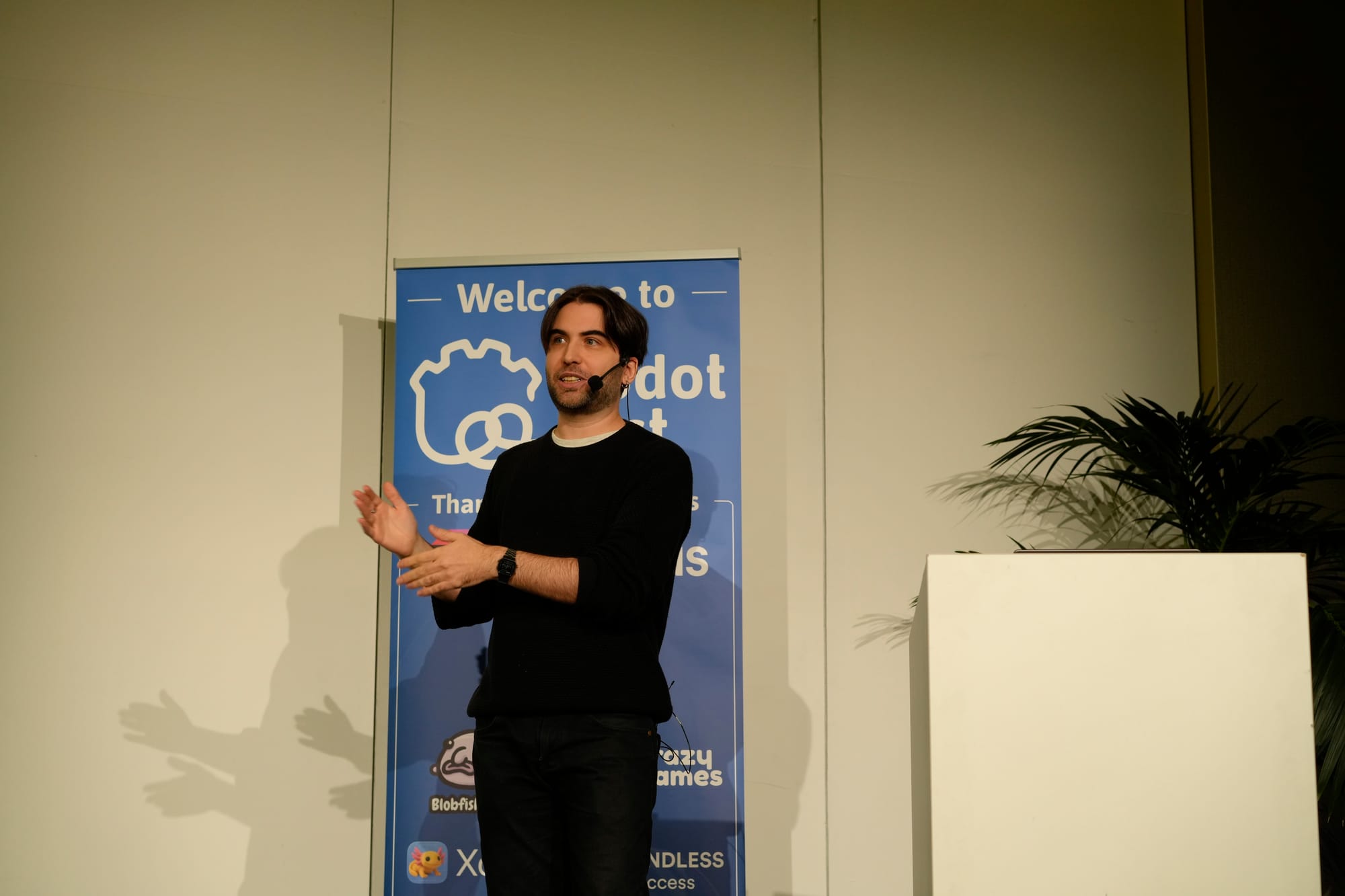
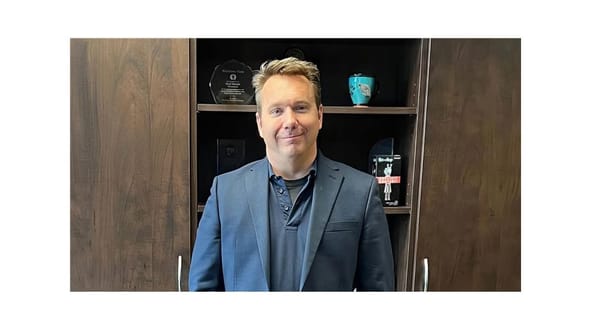
Emilio Coppola is ED of Godot Foundation. He held the keynote at GodotFest 2025 (André Buse, GodotFest)
What happened to Godot when it came into the spotlight after Unity’s blunder in 2023?
People were kind of expecting to find a 1:1 replacement for Unity. Which we are not. So there were a lot of expectations by a lot of people who are usually not part of the game dev community, saying “You should try Godot”. But we always wanted to stay true to our core product and our mission. But we still needed to adapt. With a lot of new users, we needed to accommodate a lot of their new expectations. We did add some things a Unity user might expect, like the ability to run the game inside the editor. We improved many of those things people wanted. I think we managed to not get ourselves into the trap of trying to be Unity. We still keep the community in the centre and focus on whatever the community wants. It was very interesting seeing bigger studios using Godot suddenly as well. We went from small teams from 1-10 people to teams from 20 to hundreds of people and they have different needs. They found things that up until that time we were not aware of or not as pressured to fix. We now try to accommodate this new audience and make a comfortable home for them but still keep the Godot way of doing things and the Godot ethos in the middle. We are not compromising on our vision.
So you saw a big influence of new people coming from Unity?
Yes, when the news hit, we doubled the amount of donations we had at that point. But also we saw a huge spike of traffic. That decreased a bit over time of course, but it made the community way bigger than it was before. And the trend has stayed that way. In a way, the Unity situation was getting us two or three years ahead of where we would have been otherwise.
What is the Godot Foundation?
When you start any open source project, it is usually a group of volunteers doing code because they like it. When there is enough momentum, when more people want to contribute in different ways, one way to do that is to donate money. That means you need to have a legal entity that can receive the money and hold the licenses. That is how foundations start in most of these cases. The Godot Foundation in this case is registered in the Netherlands. Our board members are mostly from European countries, from Argentina and one from Canada.
And the foundation also serves as a way of trying to be the voice of those people interested in the project. In a regular company, you have the shareholders deciding what the direction of the company is because they want to make a profit. In a foundation it is the people who are donating and the users who are telling the team what the project should be focusing on. You need to create an entity that manages all this, because you also need to hire people to work on the engine when it starts growing enough. And also if you are going after sponsorships and things like that, the partners need to have an organisation to sign NDAs and all the regular things a company would do in a contractual agreement. We don’t have anyone that we need to make happy other than the users. We might not have as much money as a private for-profit company, but we always get where we need to go, even if it takes a long time because we are under-resourced. And even if we move slower than other engines, as long as we listen to and implement what the community wants, we end up at a point where we are competitive with other companies that are just trying to make more money.
W4 Games is called the studio behind Godot, but they are not the Foundation. What is the relation there?
W4 Games is a separate organisation, but you will see many people there have been part of the Foundation before. For instance, one of our founders, Rémi Verschelde, is also part of W4 Games. Their goal was to fill the gap in the business side of things, like if you are a big company that needs some kind of service that the foundation was not able to provide, because it would not be for the immediate development of Godot for everyone, or it is not a priority for our community. W4 Games has more visibility because they have many prominent people working in the company, but we as the Foundation are a separate entity from them. One of the things they tried to solve was the console porting, which we could not do so easily. Because as the foundation, we would need to develop the open source versions of the console exports in a way that was public for everybody. But you cannot publish that sort of code without breaking the terms and conditions of the console makers. And we wouldn’t even have had the funds to tackle that problem. And when you look at our users, the majority of them are not publishing to consoles, before the Unity stuff at least, so it would have been very hard to justify allocating the resources. But for a private company, it’s possible to raise funds to develop ports as a product. That’s the big difference. And W4 is not the only company doing this.
But you are working together?
Yeah. Most of them contribute outright to our efforts. At the end of the day, if they make the engine better, they want to contribute it to everybody else, because that is a win-win situation.
So is Godot especially big in South America?
It is quite big, and the fact that it started there also attracted a lot of people. We generally have a lot of users in, and I hate that term but I don’t have a better word for it, the “Global South”. Also in an educational context: If you are in a community that doesn’t have good access to the internet but you want to teach kids how to program, Godot is a really good program. It even works on a ChromeBook, which most students can get access to, and you can do whatever you want with it. So yeah, it is quite big in communities like these, but now that we have seen these commercial successes with Godot, we can say that actually Europe is the biggest area of use. The US and China are first and second in terms of site visits, but if you start aggregating the different European countries, you get another picture. In terms of contributions the foundation is actually mostly European. We think it is a culture thing: Here in Europe, people are more community-oriented and software developers are into the open source mentality. If you check our contributors, the most active ones are all from Europe. And that happened almost immediately when Godot went open source. Our biggest events were also in Europe, like the one in Munich in 2023, organised by the same team as GodotFest in 2025, and the even bigger one in Berlin 2024. The reason why we do them here is that there is a very active community of users who want to connect with other developers.
Now that everybody is talking more about tech sovereignty, a lot of studios are investing their entire studio architecture into software services that are based in the US. You don’t know what is going to happen there at any time, politically. Imagine that they apply tariffs to services like, your entire studio is at risk. What open source offers is that sovereignty. Even if we would suddenly disappear, the code is still yours, you can do whatever you want with it, you can hire people to keep improving it and so on. That’s always going to stay with you, that is not something anyone can ever take away. And we see that Europe has now decided to go that route more, with open source in general, Linux, Libre Office and so on. And in games, it should be incentivised even more.
What is coming for the Foundation and for Godot in the future?
At the moment we are dealing with all those things I mentioned that fell through the cracks before and that users want improved: Better Mobile support, better C# support and other stuff. We will still be reactive to the community of course, because even if we have an idea what we want the engine to be, its is up the users and we don’t know what will happen in the future that needs addressing. For example, between developers there is a lot of theorising at the moment that Android becomes more and more of a closed system, and that might incentivise people to make an alternative operating system for phones. If that happens, people will want to develop games for that and we should be able to provide that. You cannot really anticipate those things until they happen. We have ideas, and that is what the priority list is for, but we will adapt to what the users want. The good thing is that we do not need to promise anything. We are not into AI at the moment at all, because none of our users care about that. Neither they nor we see any use for it, so why should we invest? If we were a private company, we probably had to do that.
So it’s hard to make a long-term plan in these kinds of conditions, because you don’t know what the status of the industry and the needs of our users might be. But in general: Better stability for the engine, fixing the stuff that needs work instead of adding new unstable things, is our priority.
Lastly, what do you wish for in the open source space in the future?
I really want to see other open source engines get more popular. I encourage more people to try them out. Look at games like Balatro built in Love2D. There are many other open source engines apart from Godot, and I hope for the future there are even more options. Godot will never be a multi-purpose tool for absolutely everything. And if there are more specialised engines for high-end graphics, for 2D games and so on, we still have a place in the middle, and everybody profits from the variety. We don’t want to be in the place of being the only alternative. There are so many projects online that you can contribute to, Godot or otherwise. And if you are interested in getting involved in any of those, please do!