South Korean publisher Krafton reported annual revenue of KRW 3.3266 trillion (~€1.91 billion) and an operating profit of KRW 1.0544 trillion (~€610 million) for 2025, based on consolidated financial statements prepared in accordance with Korean International Financial Reporting Standards (K-IFRS). This represents an increase in annual revenue of +22.8% year-on-year, surpassing KRW 3 trillion for the first time in the company's history and marking a new record high. Annual operating profit also exceeded KRW 1 trillion for the second consecutive year. The annual revenue recorded by business segment was as follows: KRW 1.1846 trillion from PC (~€680m), KRW 1.7407 trillion from mobile (~€1b), KRW 42.8 billion from consoles (~€25,) and KRW 358.5 billion from other sources (~€206m).
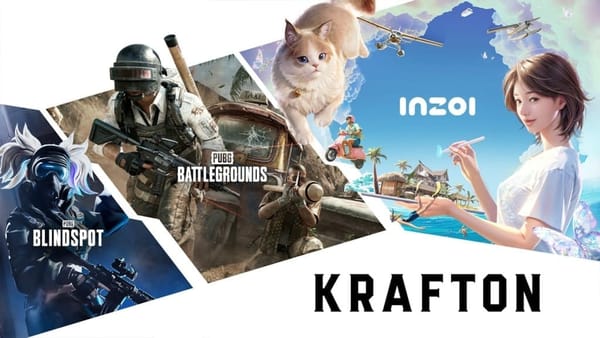
On PC, PUBG: Battlegrounds achieved its highest annual revenue, recording 16% year-on-year growth. User engagement and traffic increased thanks to the incorporation of cultural elements into gameplay via major collaborations with global artists and luxury brands, such as Porsche, as well as the introduction of diverse game modes. InZOI and Mimesis also contributed to revenue growth, having both surpassed one million units sold since their launches in March and October, respectively.
On mobile, PUBG Mobile continued to grow steadily by expanding its core fanbase with new themed modes and World of Wonder UGC updates. Additional growth was supported by cross-platform collaborations with PUBG PC and console versions of the game. Battlegrounds Mobile India (BGMI) also performed consistently well. Compared to 2024, the number of paying PUBG Mobile users increased by 5%, while the number of paying BGMI users increased by 27%.
Building on its core gaming business, Krafton has outlined a strategic vision focused on expanding its IP franchises with long-term product life cycles and AI innovation. The PUBG IP franchise will continue to deliver double-digit growth, the publisher states. Meanwhile, PUBG will evolve into a PUBG 2.0 gameplay platform driven by an upgrade to Unreal Engine 5, expanded game modes and UGC updates. The company will also continue to diversify its genres and platforms, targeting wider generations and regions with new titles based on the PUBG IP. Key projects include the extraction shooter Black Budget, the top-down tactical shooter PUBG: Blindspot, and the console battle royale Valor.
As part of its mid- to long-term strategy centred on major franchise IPs, Krafton is allocating resources to developing titles into long-term PLC franchises. InZOI, Last Epoch and Mimesis are intended to become leading IPs in their respective genres. To secure new "Big Franchise IPs", Krafton will explore large-scale M&A opportunities to generate immediate financial performance. The company will also pursue small- to mid-scale M&A transactions to secure IPs with high growth potential and boost value. The company is also making strategic equity investments and entering into second-party publishing agreements with teams whose projects are nearing release or who have demonstrated development capabilities.
Regarding first-party production, Krafton is developing 15 new projects, supported by newly recruited, small-scale teams. In line with this strategy, new titles such as Subnautica 2, Palworld Mobile, Dinkum Together and No Law are being prepared for release.
Krafton: "Moreover, Krafton plans to expand its business scope and boost its fundamental competitiveness by leveraging its accumulated expertise and assets from its gaming business. The company will focus on delivering new gameplay experiences powered by AI and innovation across production and live service operations, as part of its 'AI for Games' initiative. Over the mid- to long-term, Krafton will consider opportunities to extend into new frontiers such as physical AI under its 'Game for AI' initiative, building on its capabilities and technologies in gaming. (...) At the same time, Krafton will explore adjacent new business areas based on gaming synergy. With ADK, Krafton aims to maximize IP PLCs by linking games and animations, while improving marketing efficiency in the Japanese market. Neptune will leverage its advertising technology to expand Krafton's influence in India and use traffic from core titles such as BGMI to unfold India-focused advertising business opportunities."
On 9 February 2026, Krafton's Board of Directors authorized a Shareholder Return Program for 2026-2028, under which a minimum of KRW 1 trillion will be returned to shareholders over the next three years. This is more than a 44% increase compared to the previous three-year program.
CEO CH Kim: "This Shareholder Return Program reflects Krafton's firm commitment to boosting shareholder value. While continuing to develop unique games and pursuing strategic investments in global markets, we will leverage our capital and stable operating cash flow to create sustainable long-term value through shareholder returns."
It will be carried out in two streams: 1) Dividend payouts, and 2) Share repurchases and cancelations. Krafton is implementing dividend payouts for the first time in its history. A total of KRW 300 billion will be returned over three years via KRW 100 billion annual payouts. And Krafton will repurchase at least KRW 700 billion worth of shares, all of which will be canceled. The company will commence the first phase of share repurchases on a scale of KRW 200 billion beginning February 10.
GamesMarkt Daily Newsletter
Sign up to receive the free daily newsletter about the Games Industry in GSA, Europe and beyond.
No spam. Unsubscribe anytime.