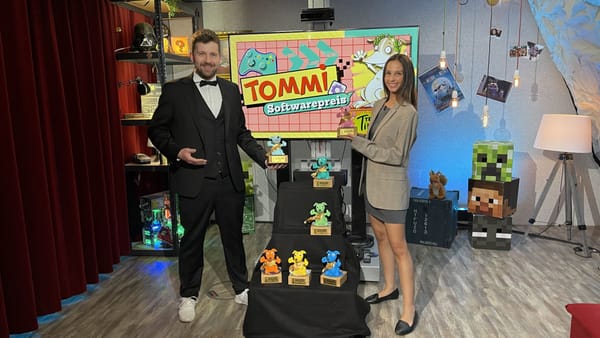
Yesterday, the 2025 TOMMI Awards for excellence in games for children have been given out by organiser feibel.de and partners Biblioplay!, biblio}suisse, Dein Spiegel, Deutscher Bibliotheksverband e.V. (dbv), Deutschlandfunk Kultur, Familie & Co, Game Verband, Gaming ohne Grenzen, KiKA, Kita-Onlinekongress, und das ZDF.
One of the winners are Megagon Industries with their Lonely Mountains sequel Snow Riders, who went home empty from the German Developer Award two weeks before despite being nominated for several awards. The same is true for Rascal’s Escape by the Good Evil, who won the Education TOMMI.
The winners in the different categories are:
- Apps: Lazuli Buttons, funline Media GmbH
- PC: Lonely Mountains: Snow Riders, Megagon Industries
- Console: Mario Kart World – Nintendo
- Youth Award Games: Split Fiction, Electronic Arts
- Education: Rascal’s Escape – Frechdachs auf Reisen, the Good Evil GmbH
- Youth Award Education: The Feed, Landesanstalt für Kommunikation Baden-Württemberg (LFK)
- Electronic Toys: Flipslide, Moose Games
- Best family game for daycare centers: Edurino – Words and Sentences, Edurino
“Every year, the TOMMI award demonstrates how valuable the perspective of children and young people is,” says Karin Prien, Federal Minister for Education, Family, Seniors, Women, and Youth and patron of the award. "The children's jury reviews the digital offerings themselves, compares, evaluates, and decides. When young people contribute their perspectives, it creates space for self-realization, creativity, and genuine participation. Public libraries play a central role in this: they offer access to all children and are also safe places where media literacy is strengthened. The award highlights how important the perspective of children and young people is for the quality of digital education and gaming offerings – and how libraries are becoming central locations for digital participation and media literacy." KiKA editor Anne Reichenbach adds: “TOMMI also gives smaller games a stage and lets children decide for themselves what they really like. Testing and evaluating the games together is fun, strengthens their media literacy, and shows that they can actively shape the digital world.”
The games are tested by children in over 40 public libraries around GSA.The initiative “Gaming ohne Grenzen” accompanied and validated the process for the fourth time, ensuring that children from different backgrounds could participate on an equal footing.