GamesMarkt: What is your verdict as you look back on 2025?
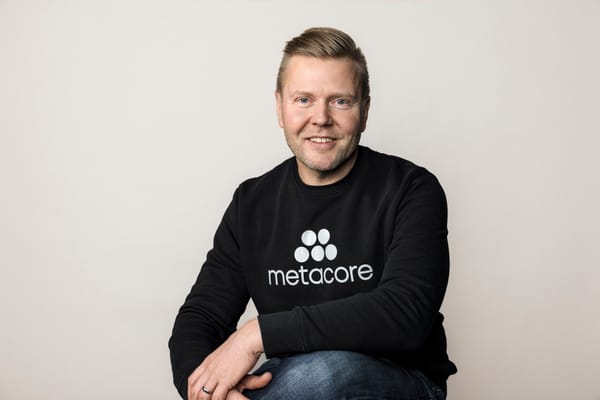
Mika Tammenkoski: "Looking back at the industry in 2025, this year feels like it was the final chapter in a multi-year correction cycle. After more than a decade of uninterrupted growth, the mobile games market experienced its first meaningful decline. While many expected this to be a temporary blip, it doesn’t seem like one. The industry has been forced to adjust to structural changes, like privacy shifts, rising user acquisition costs, maturing genres, and the collapse of many playbooks that worked reliably for years. It’s been a testing period for almost all of us, which has led to competition intensifying and predictability declining. While shock events dominated headlines – a hit game out of nowhere, a new regulatory ruling, or a breakout ad format – in reality, it's been the long and slow-moving forces that have continued to quietly reshape the industry: Apple's App Tracking Transparency (ATT), generative AI, hybrid monetisation and the consolidation of ad networks. The companies that have survived all of these changes aren’t necessarily the biggest, but the ones that have adapted the fastest.
And speaking of adapting: 2025 was also a big year for platform changes, driven by regulatory pressure by the EU and continued legal action from Epic. Apple and Google still own the attention layer, but they no longer fully own the transaction layer – web stores, third-party marketplaces, and alternative billing finally became real options, not just theoretical workarounds. It seems that for the first time in mobile gaming’s history, developers may gain actual leverage in how they price, package, and distribute content. The long-term implications of this shift could be profound.
One of the most encouraging developments I’m personally very excited about has been the return to growth in the broader casual category. What’s growing now is a new form of casual: deeper, more stylised, more hybrid in design, more ad-monetised, and more data-driven. Merge, decoration, lifestyle simulations, and light puzzle hybrids are gaining momentum again. This new casual is less about simplicity and more about accessibility combined with depth. It has become the training ground for the next generation of long-running franchises.
Looking at individual studios, perhaps the most visible power shift of 2025 was the emergence of Chinese publishers like Microfun and Century Games, who built games specifically for Western audiences. These companies brought a new level of speed, operational intensity and hybrid design sensibility, building global products from day one. Their rise shouldn’t just be a challenge to Western studios, but above all, an inspiration: they remind our industry that ambition, crisp execution, and sharp creative instincts can move the needle dramatically.
In a similar fashion, a specific company that raised its profile this year was Roblox, evolving far beyond a children’s UGC sandbox. In 2025, Roblox became one of the most important platforms for reaching younger audiences globally. Now major brands, studios, and even experienced game teams treat Roblox as a meaningful part of their portfolio strategy. Roblox is teaching a whole generation to think of mobile not just as a device, but as a platform for expression and creation. This has long-term implications for talent, expectations, and the meaning of “content”.
So although it can sometimes feel like our industry is very mature, 2025 was a strong reminder that mobile games as a business are only about 15 years old. We lack the stable frameworks, norms, or predictable operating environments that older entertainment industries enjoy. At the same time, our supply chain runs through two app stores with immense power, our discovery is algorithmic, and our production methods still reinvent themselves every few years. Moreover, we’re still figuring out platform economics, creative risk, long-term franchise building, and even what 'quality' means on mobile. Personally, I feel like this is what makes our industry such an exciting one."
GamesMarkt: What are your predictions for the gaming industry in 2026?
Mika Tammenkoski: "Overall, 2026 will be another step toward a more mature mobile games industry. The volatility of the past few years has forced teams to become more disciplined about operations, more thoughtful in portfolio strategy, and more intentional about long-term value creation. I anticipate we’ll see fewer “accidental hits” and more studios building around solid systems, repeatable processes, and a stronger understanding of player economics. Mobile is still young compared to console and PC, but in 2026, it will increasingly start to resemble a mature entertainment sector: meaning clearer segment definitions, more predictable production patterns, and more emphasis on durable franchises.
As part of this growth process, the role of IP and brand will evolve. Successful companies will treat IP not just as an asset, but as a long-term relationship with their audience: something built consistently through world-building, storytelling, tone, and emotional connection. The breakout value will come from teams willing to invest early in something new and nurture it over time.
While 2025 introduced major shifts in UA, these efforts will be scaled dramatically in 2026. AI-generated creatives will move from novelty to foundational capability, and teams will be producing not dozens but hundreds of variations daily, allowing micro-segmented creative strategies that adapt in real time. The more profound transformation is that game design, UA testing, and creative development will begin to merge. The boundary between “the game” and “the ad” will become blurrier – prototypes will be informed by ad performance, and ads will increasingly resemble lightweight playable slices of the future game itself. Speed will become a key competitive advantage.
There will be two winning paths for publishers in 2026: either doubling down on existing genres with superior execution, where small but meaningful improvements in core mechanics, tuning and onboarding can dramatically shift lifetime value, or pursuing radical innovation, where new genres emerge from unexpected combinations of mechanics, motivations or formats, often inspired by rapid creative and UA testing cycles. Both paths will require a deep, almost scientific understanding of how game mechanics influence behavior. This signals that the industry is moving away from intuition-driven design to evidence-based, principle-driven design. The teams that can articulate why a mechanic works – not just copy one that works – will have a disproportionate advantage.
Finally, if Grand Theft Auto VI truly launches in 2026, it will be the most consequential release of the decade. A game of that cultural magnitude shifts player expectations across all platforms. It resets the bar for world-building, narrative ambition, social presence, and cross-media impact. Even mobile will feel the tremor: the game will re-anchor what premium feels like, influence design aspirations, and force a re-evaluation of how audiences allocate time across devices. Every few years, a single title redefines the conversation – and 2026 may well be one of those years."
GamesMarkt: How is Metacore positioned for 2026?
Mika Tammenkoski: "Looking at all the recent shifts in the industry – both the shock events and more subtle signs of maturing – it’s an exciting and inspiring time to be building mobile games. While this also means that competition in casual and merge-2 categories has intensified and will no doubt continue to grow, it’s above all a positive challenge for us at Metacore.
We see that there’s real potential for us to unlock, both with Merge Mansion and our new games under development. Our goal in 2026 is to regain our leading position in merge 2 category and continue pushing the category even further. With this goal clear in our minds, our teams across Helsinki and Berlin are ready to roll up our sleeves and see what 2026 brings us."
Metacore is a mobile games company with offices in Helsinki and Berlin. Since the launch of its first live game, Merge Mansion in 2020, the game has been downloaded over 60 million times. In 2024, Metacore generated €154 million in revenue, becoming profitable in the process, and expanded its team to over 280 professionals. Metacore has raised €180 million in funding from Supercell and is one of their portfolio companies.