Paweł Kopiński: "Time and Attention Have Become the Scarcest Currency, and Everyone Is Fighting for Them"
Techland is one of the pioneers of the Polish video games industry. We spoke to Paweł Kopiński, Head of Live Products, about the reasons for the strength of the industry, its current challenges, government support, and Poland's neighbouring European countries.
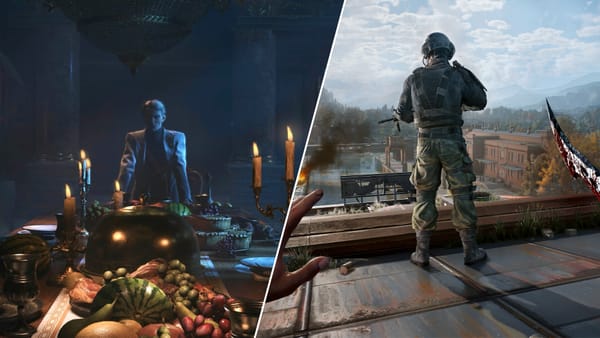
Paweł Kopiński is Head of Live Products at Techland, one of Poland's largest studios. The company employs almost 500 people across its studios in Wrocław and Warsaw. Founded in 1991, the company began as a distributor of foreign software, translating and publishing programmes and dictionaries. In the mid-1990s, it moved into in-house software and early games, before fully entering the game development sector at the turn of the millennium. Tencent has held a majority stake in the company since 2024. Techland is known not only for Chrome, Xpand Rally and Call of Juarez, but also for one thing in particular: Dying Light, a first-person zombie survival franchise. To date, the series has been played by tens of millions of players - with the latest instalment, Dying Light: The Beast. They have remained committed to their IP and to supporting our games in the long term rather than moving from one project to the next.
GamesMarket: The Polish games industry is one of the most important in Europe. What has caused the strong growth of the Polish industry?
Paweł Kopiński: "I think it comes down to a few things that reinforced each other over time.
The foundation is people. Poland has strong technical and art education, and it produces programmers and artists who can genuinely compete at a global level. That talent base is the thing everything else is built on, and it is still our biggest asset today.
The second part is cultural. Poles have loved games for a very long time. Many of us grew up playing them, often on whatever hardware we could get our hands on, and that passion turned into a natural pull toward making them, not just playing them. When a whole generation treats games as something worth dedicating a career to, you get a deep, motivated pool of developers.
There are three more things I would point to.
First, timing and grit: the early Polish studios succeeded through sheer determination, with far fewer resources than the big Western publishers, and they proved it could be done from here. That gave everyone who came after a reason to believe.
Second, those early successes created a real ecosystem, experienced people who moved between studios, mentored others, and raised the bar for everyone.
And third, ambition: Polish studios have consistently tried to punch above their weight and compete with the biggest games in the world, rather than settling for safe, small projects.
So it is not one single cause. It is good education and real talent, a genuine and long-standing passion for games, and a generation that was stubborn and ambitious enough to build a world-class industry from the ground up."
GamesMarket: What role does your company play in the Polish market, and how is it positioned there?