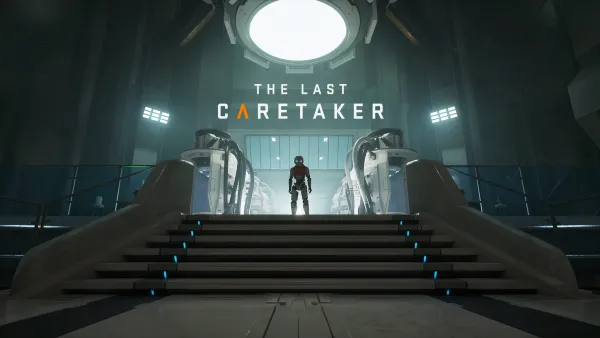
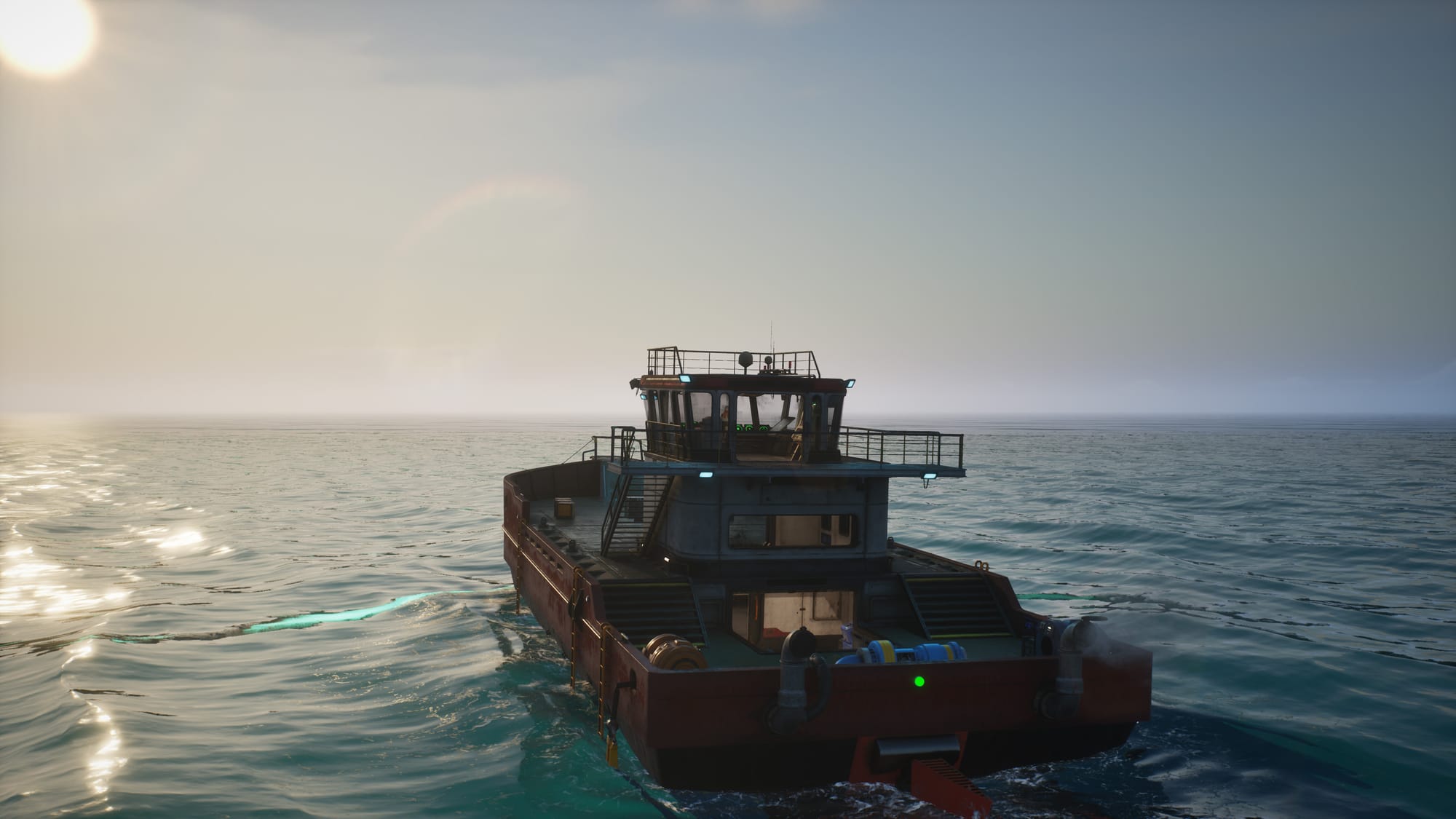
The nine-person Finnish studio Channel37 has made a name for itself in the crowded survival crafting genre with The Last Caretaker. This is not only due to the human-free water world, aka Earth, but also thanks to the excellent crafting system.
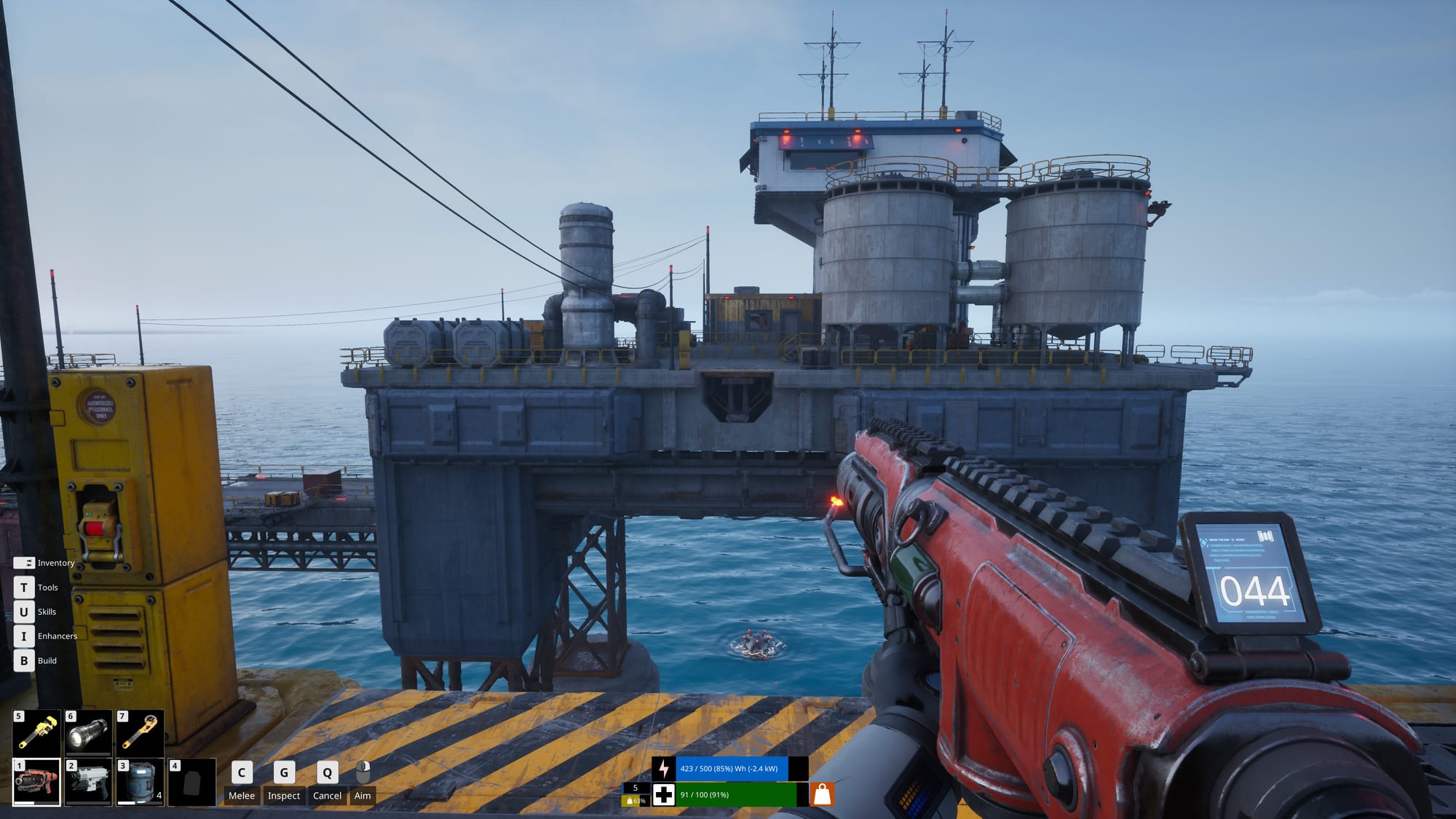
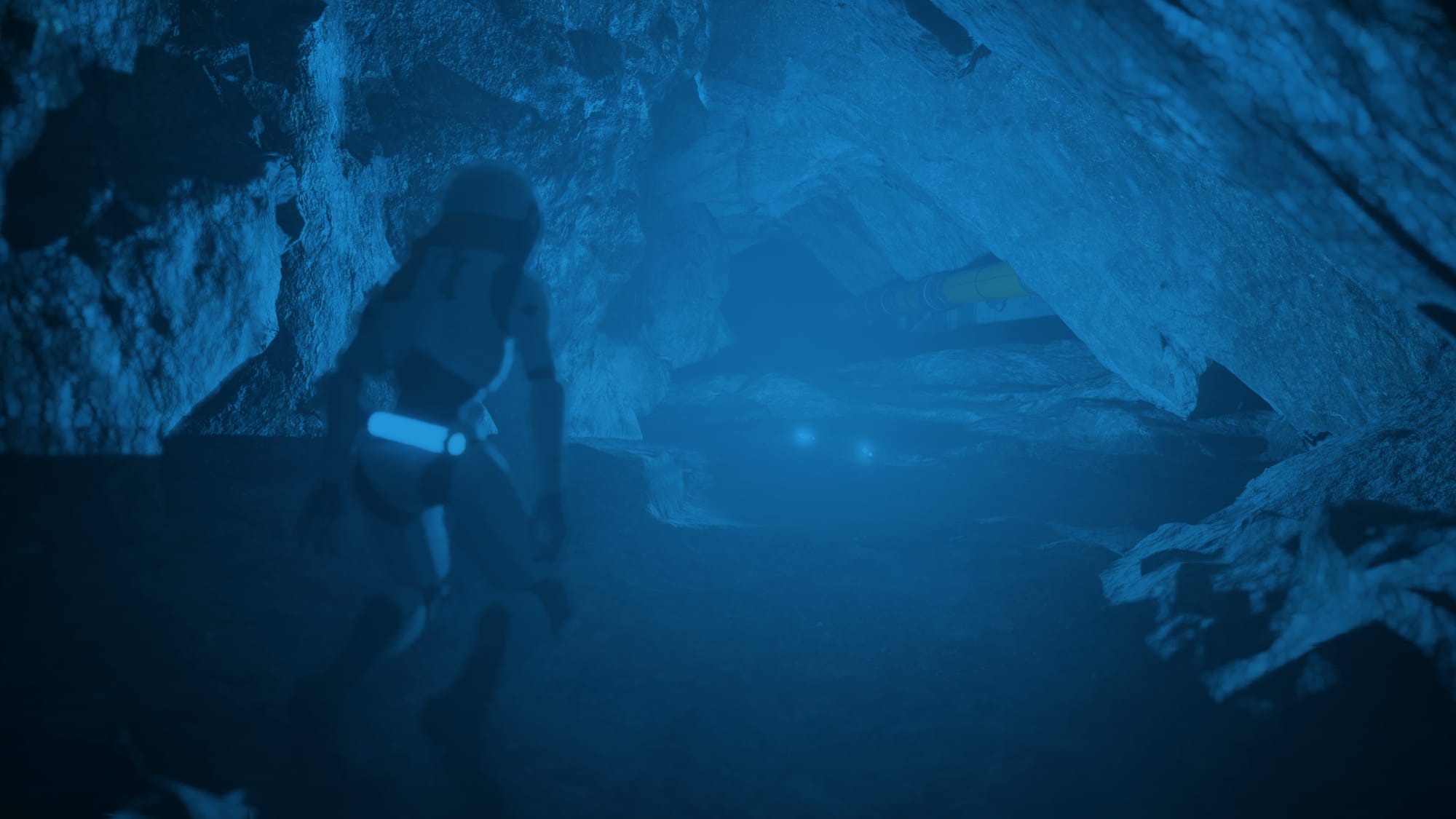
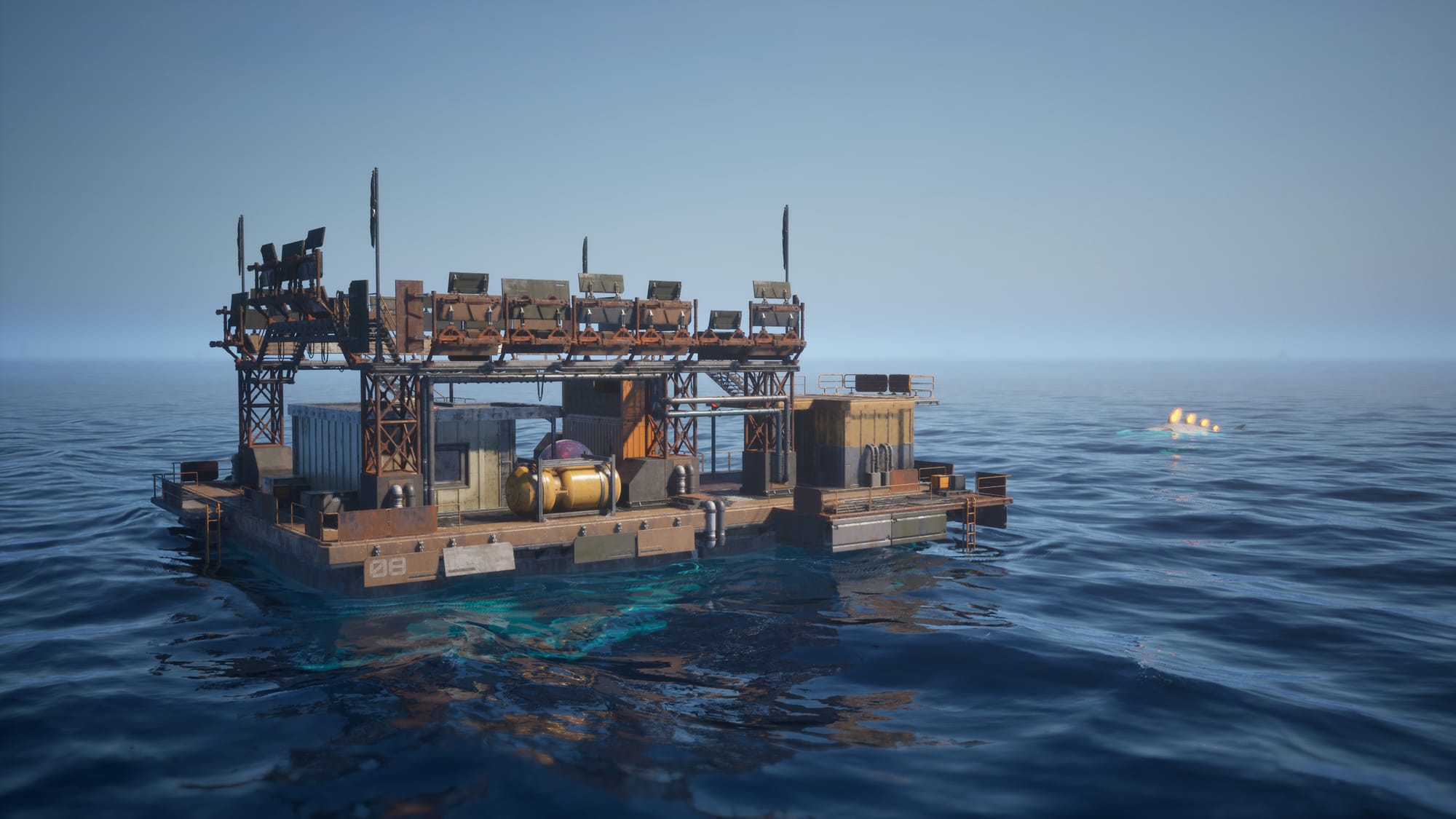
The Last Caretaker is a first-person survival crafting adventure game. Players control a robot that awakens in a flooded, post-human world of vast oceans dotted with decaying megastructures and the remains of humanity, including abandoned buildings and mysterious laboratories. The robot's mission is to scavenge for resources, reactivate systems, and most importantly of all, nurture human seed embryos and launch them towards humanity's final space settlement. Rogue machines and other weird creatures also inhabit the world and players will encounter them while exploring. However, it is the loneliness, the associated tasks and the vast underwater world that make the game stand out from the rest—especially since it cannot be played in co-op multiplayer mode. This is normally an important feature for games of this genre, but it would contradict the idea of loneliness.
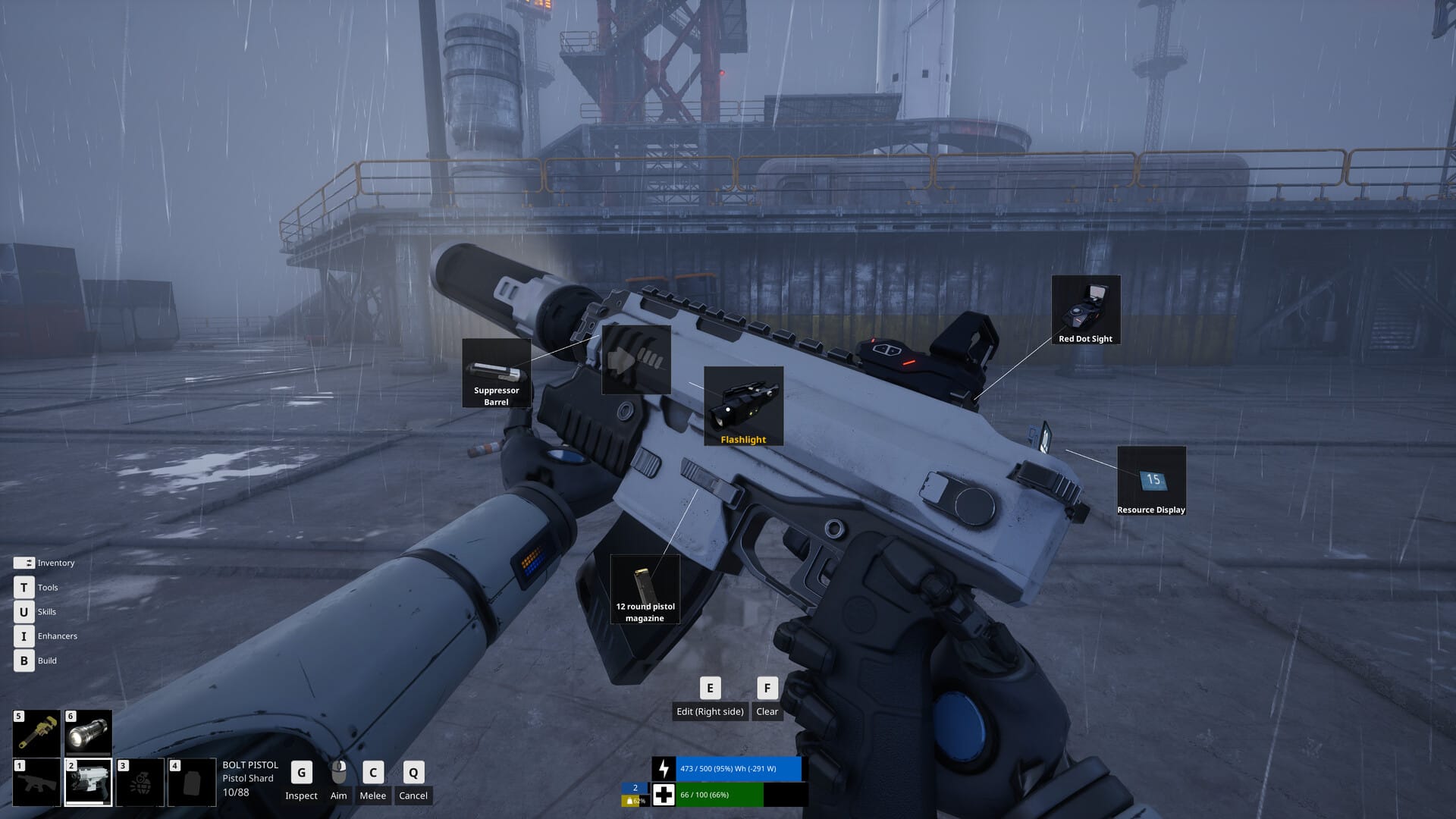
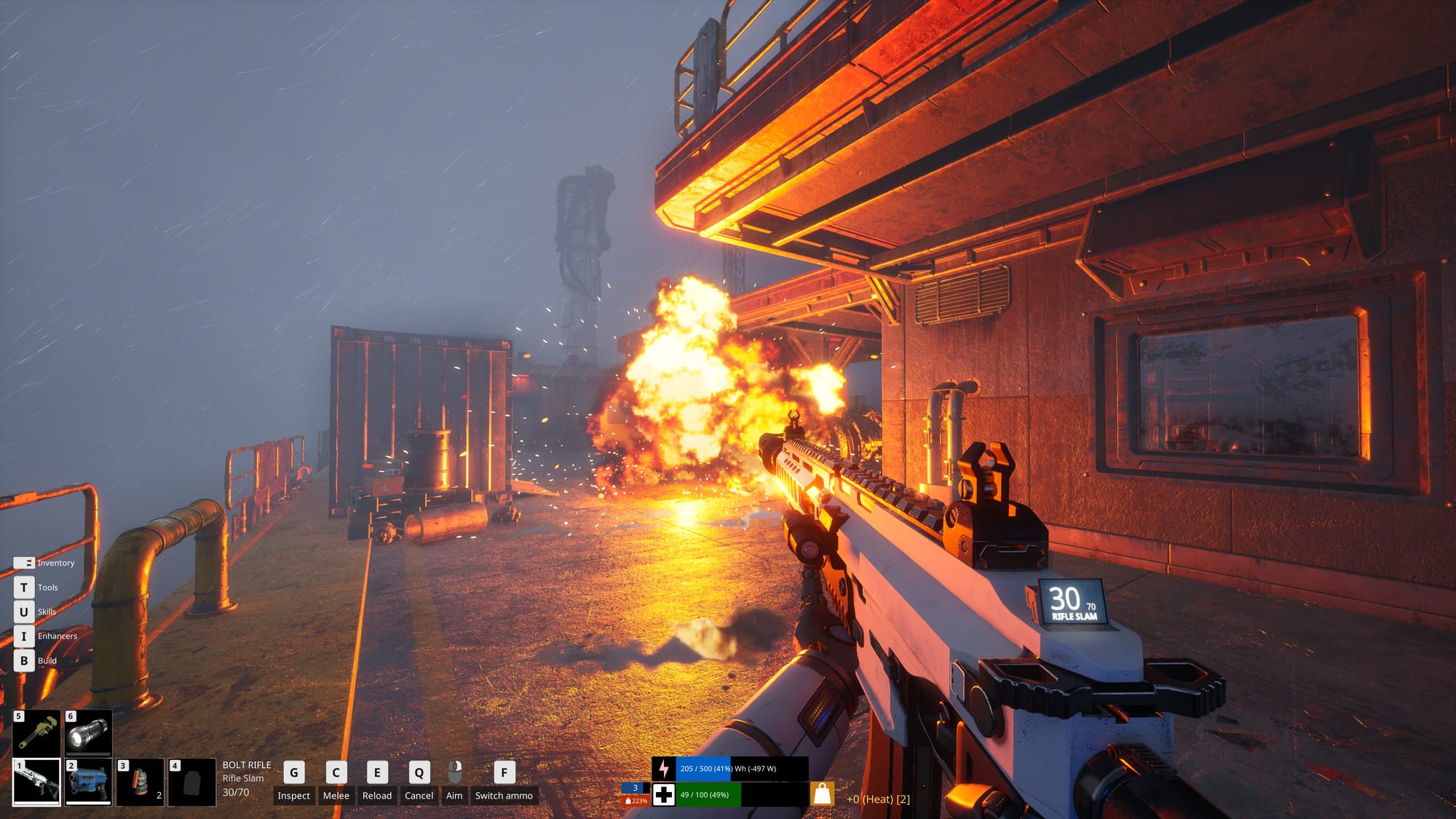
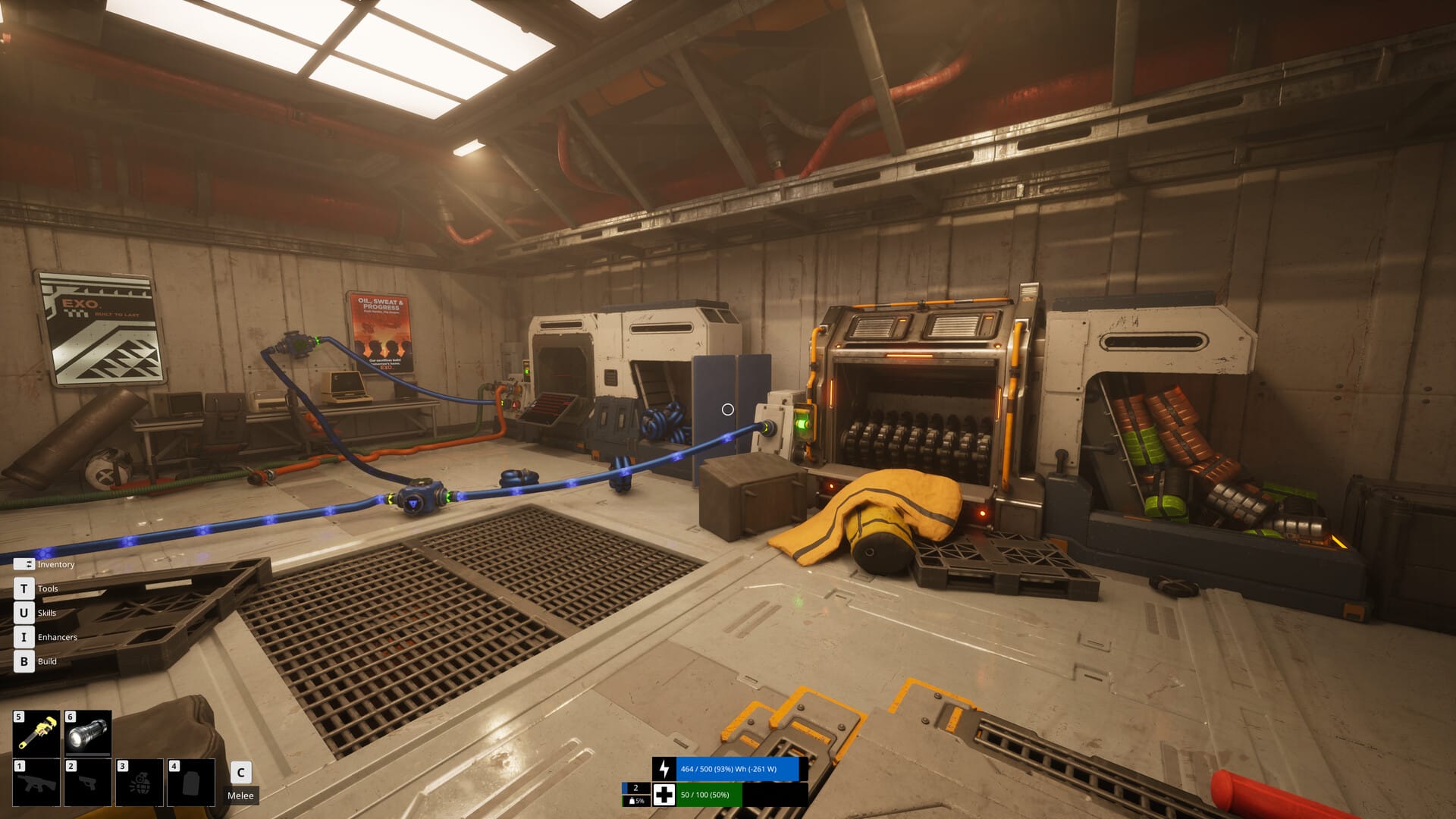
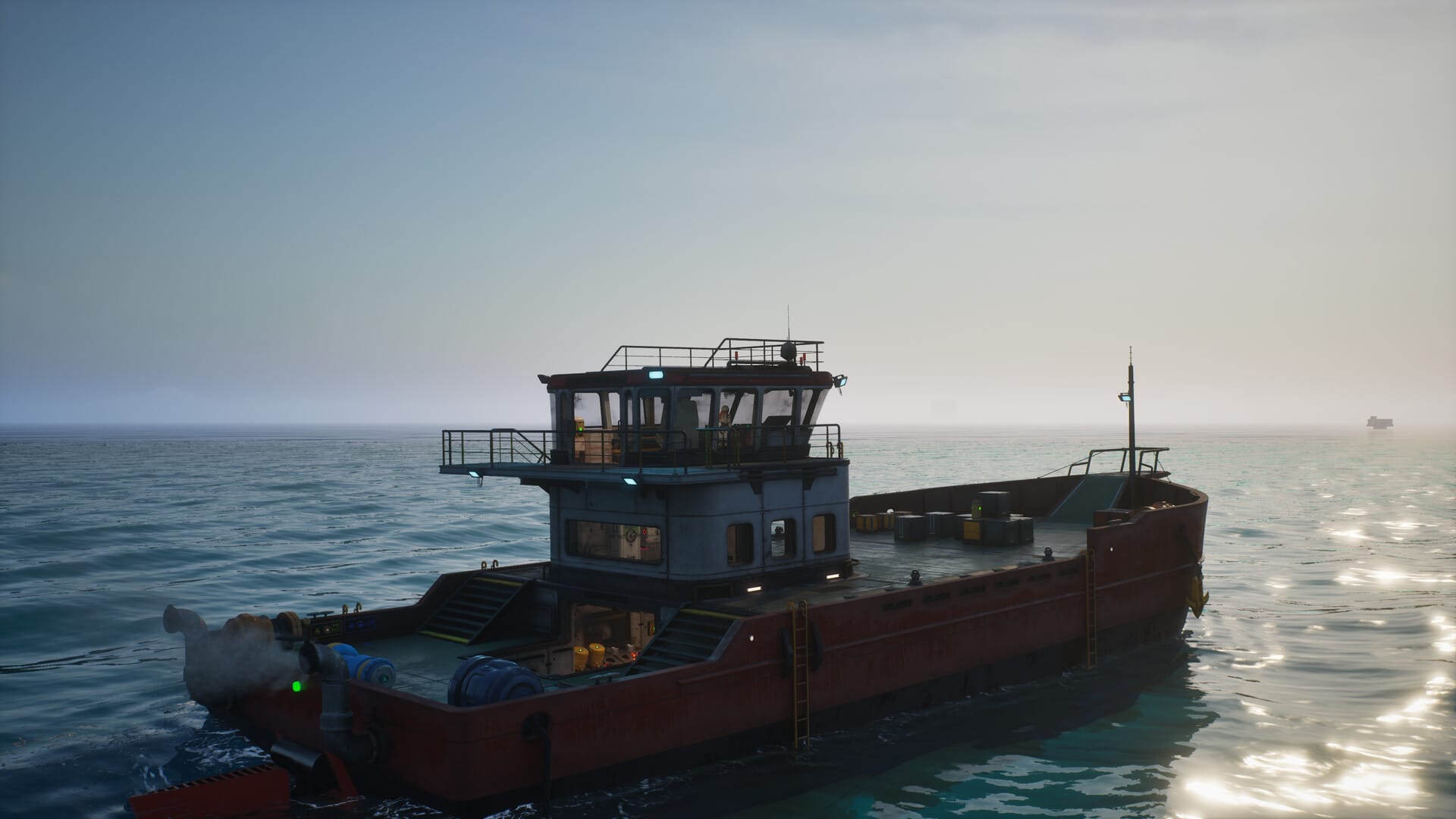
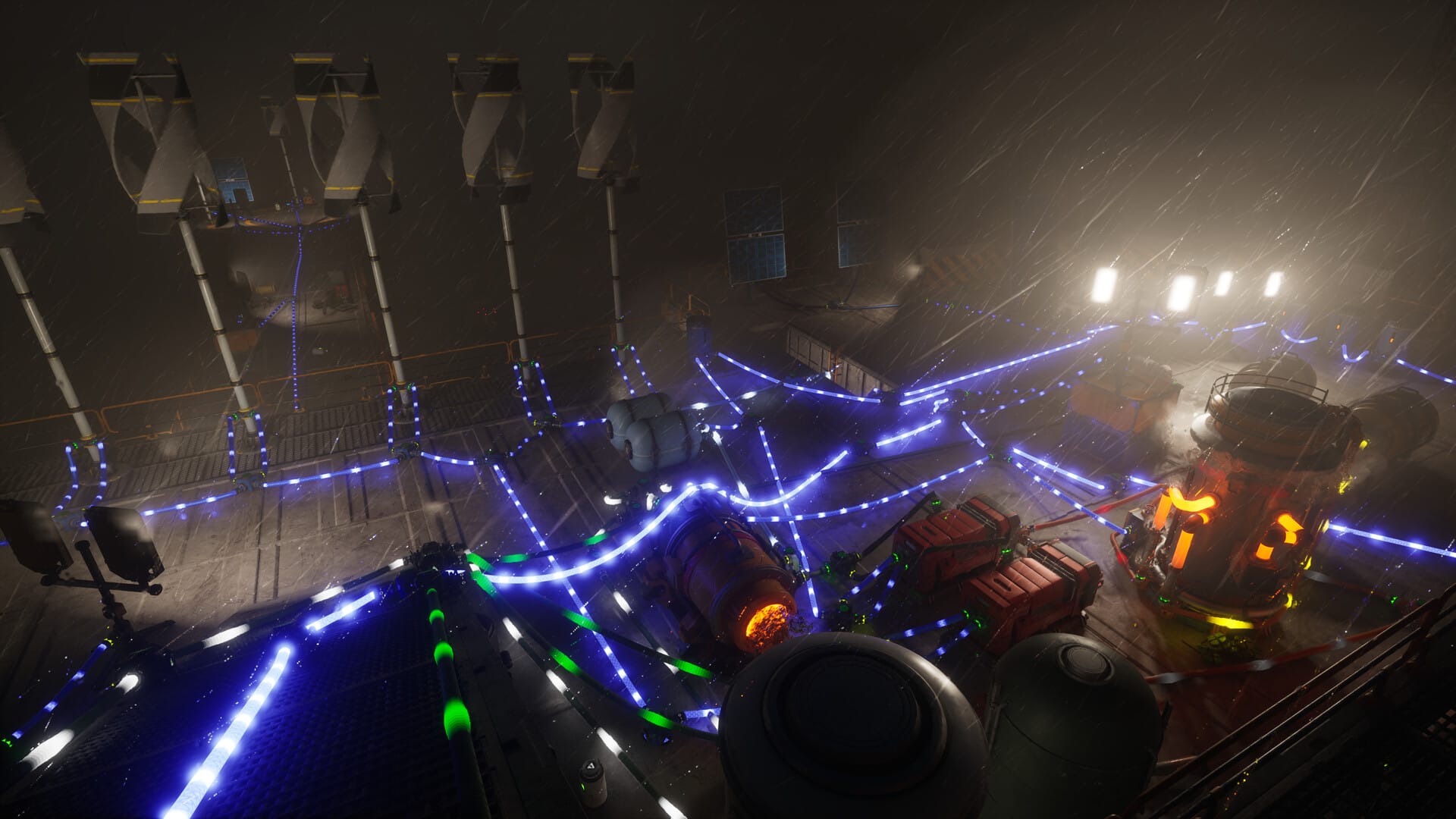
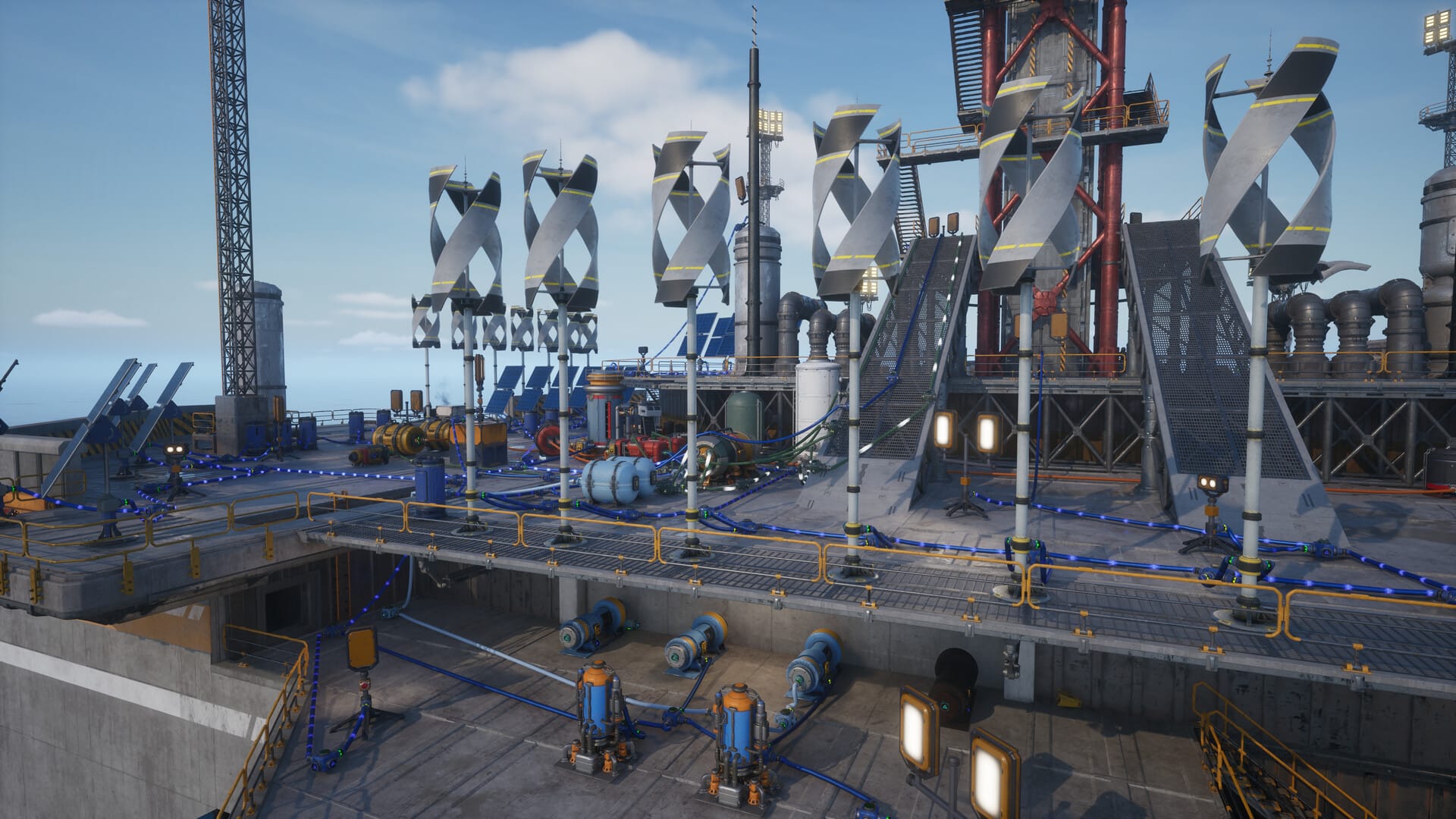
The game blends elements of exploration, building and survival reminiscent of Raft or Subnautica, but with a focus on purposeful actions and decisions. Players can dismantle items and machinery found in the environment and then decide what to carry to the recycler in order to craft tools, weapons and upgrades for the boat (with which players actively explore the world), as well as power grids. Electricity is everything, because without electricity, nothing works, not even the player's robot. Then it's all about exploring the world, gathering materials and improving the robot — as well as fighting. Players must also choose whether to craft offensive weapons or save materials for an easy escape from mechanical foes.
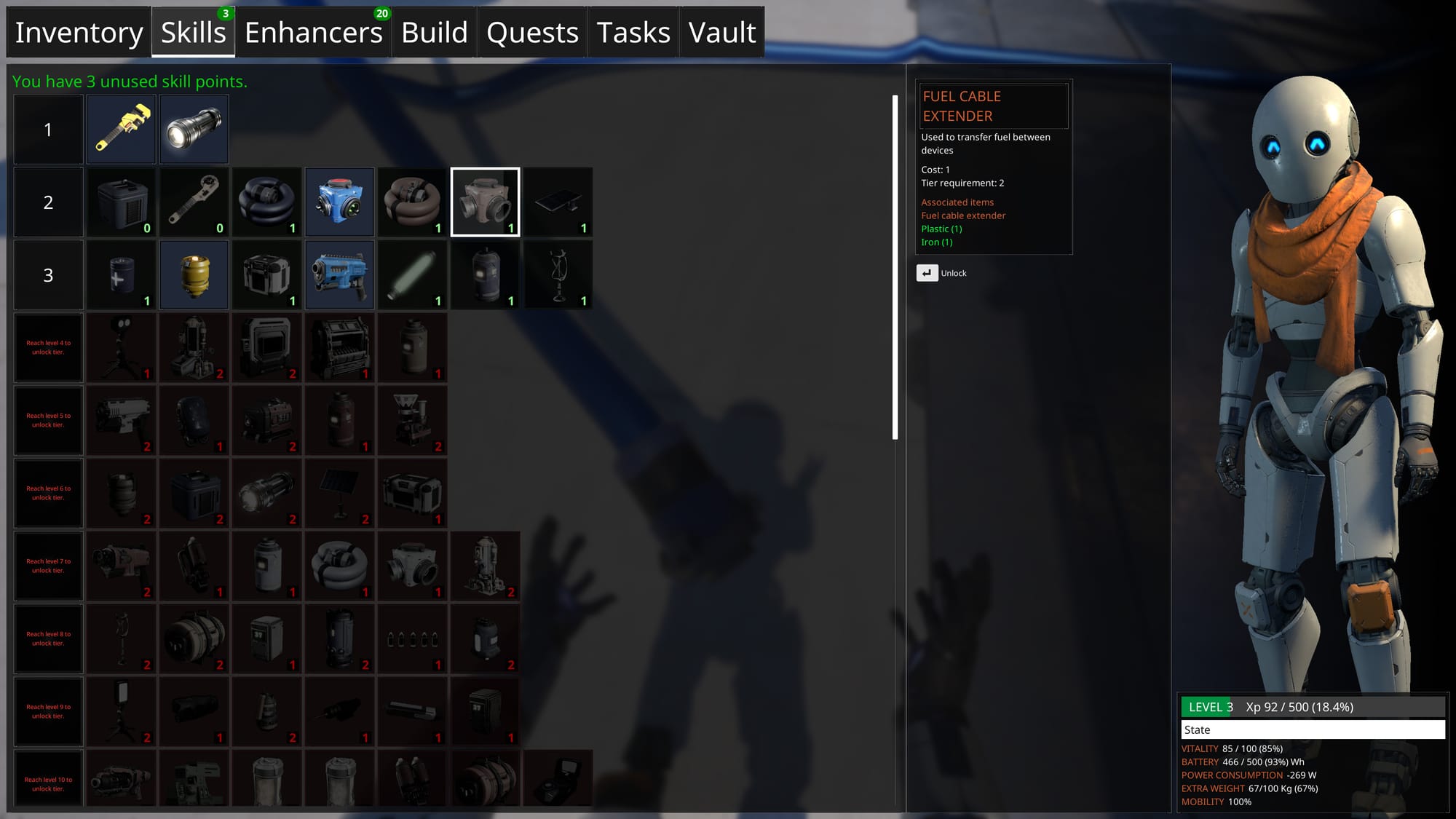
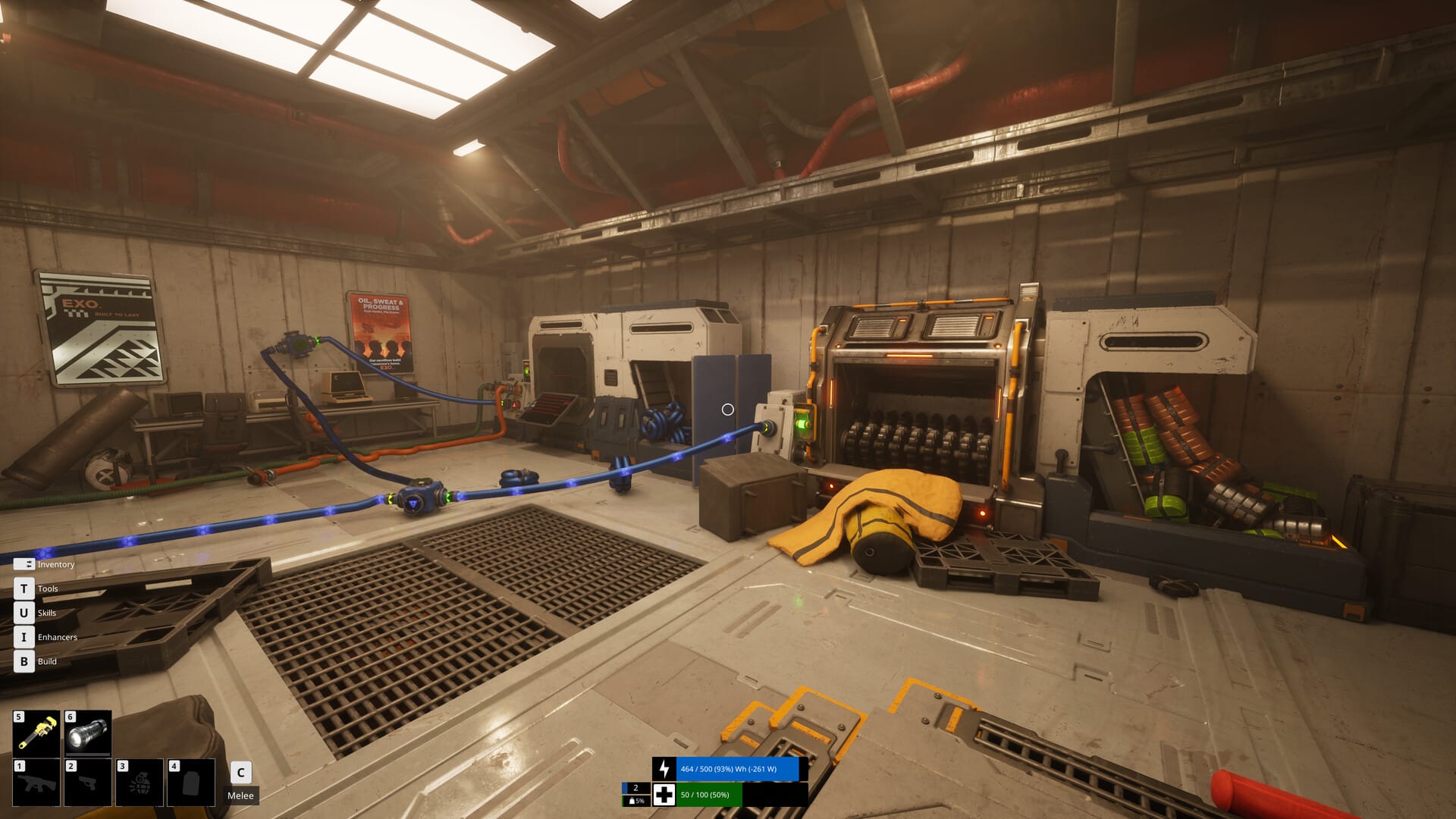
Crafting essentially involves a cycle of dismantling, processing and manufacturing, whereby resources are scarce. Rather than finding any "finished" items, players dismantle almost everything they find into its components using recyclers/processing stations. These components can then be used to create new equipment, parts and machines. Progressing through level-ups and a skill tree unlocks new blueprints and increases efficiency.
However, the robot has a limited carrying capacity and each material, weapon and piece of ammunition has its own weight. This forces players to constantly consider what is important enough to take with them and what to leave behind. Many recipes, including those for weapons, more efficient energy sources and supply facilities, must first be unlocked in the skill tree. The power infrastructure is the most important thing to prioritise initially. Players also receive upgrade points that directly improve their android's stats, such as battery capacity, power management, load capacity and diving pressure resistance. It is only with better equipment, weapons and ammunition that later missions and tougher enemies become feasible.
The crafting system and skill progression are in-depth and complex. The website www.thelastcaretakergame.org is a useful resource for planning efficient systems and power grids, including cable routing, generator placement, and solar panel positioning. However, it does not originate from the developers.
To experience the full story, which unfolds step by step, revealing the story behind the awakening, and the ultimate question of what it truly means to be human, it will probably be necessary to wait until the game leaves Early Access. Currently, the game mainly focuses on the highly engaging core loop of exploration and crafting, but players can find story elements through logs and terminals. In any case, the game has a very strong foundation on which to build.
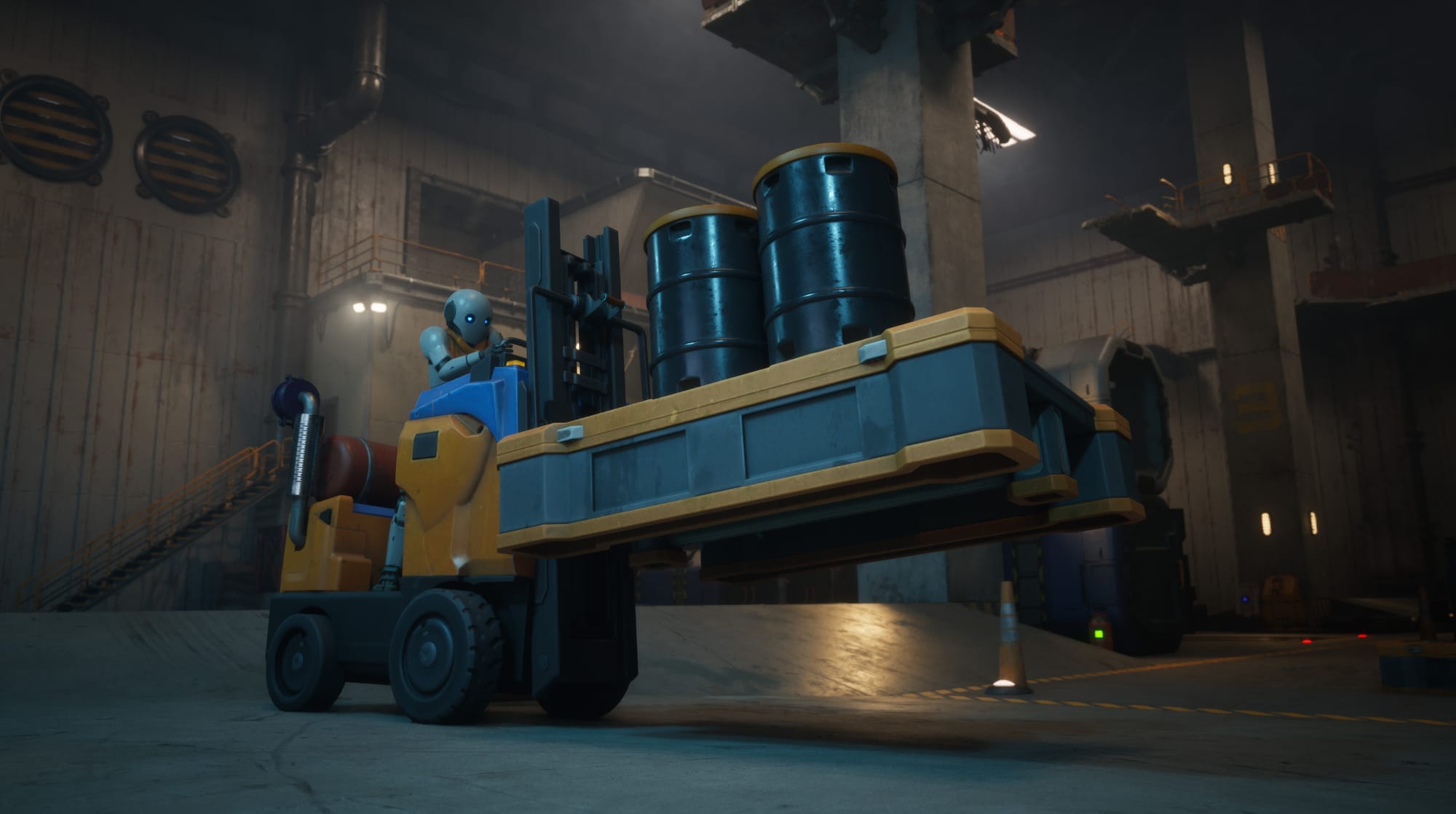
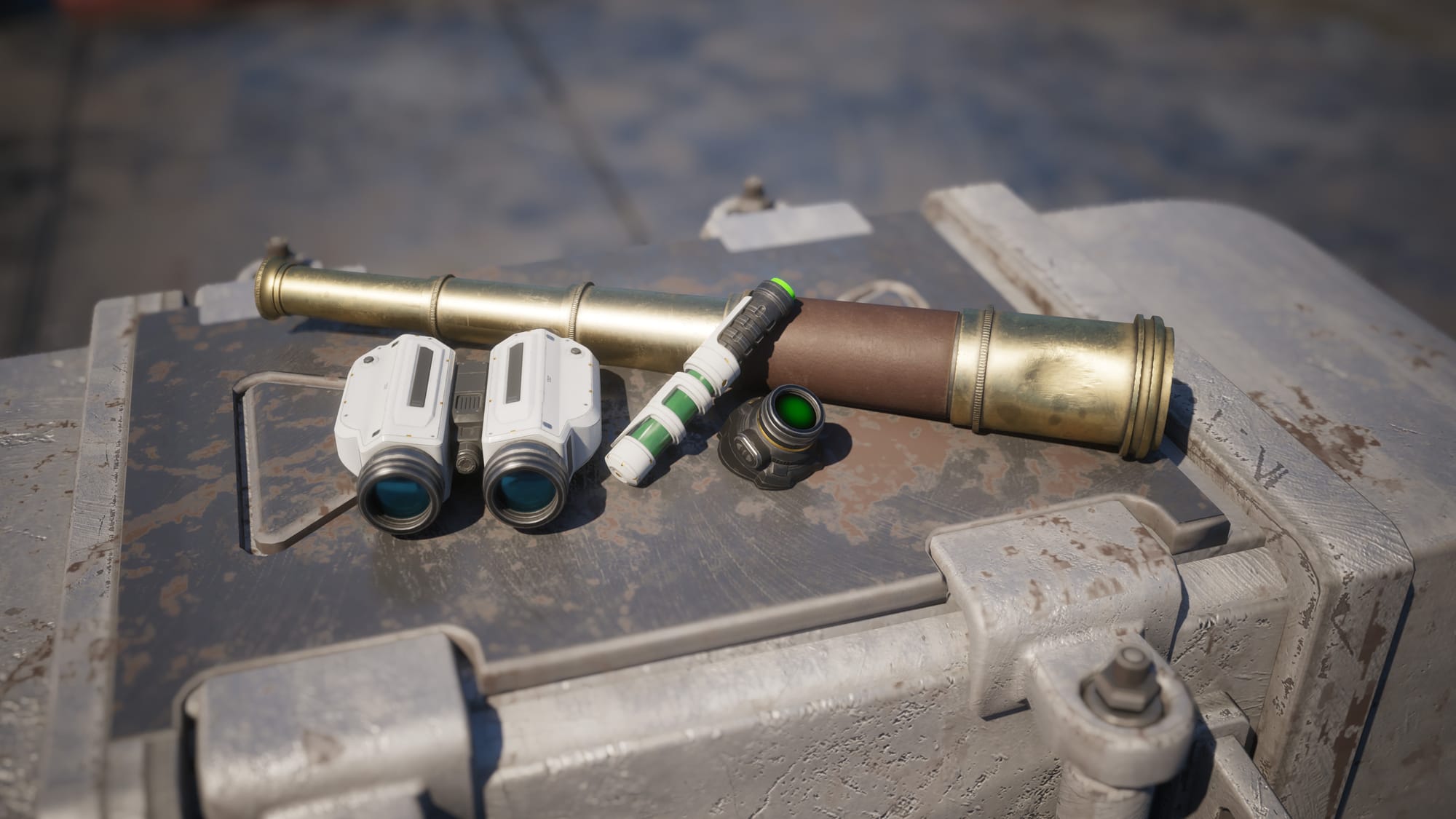
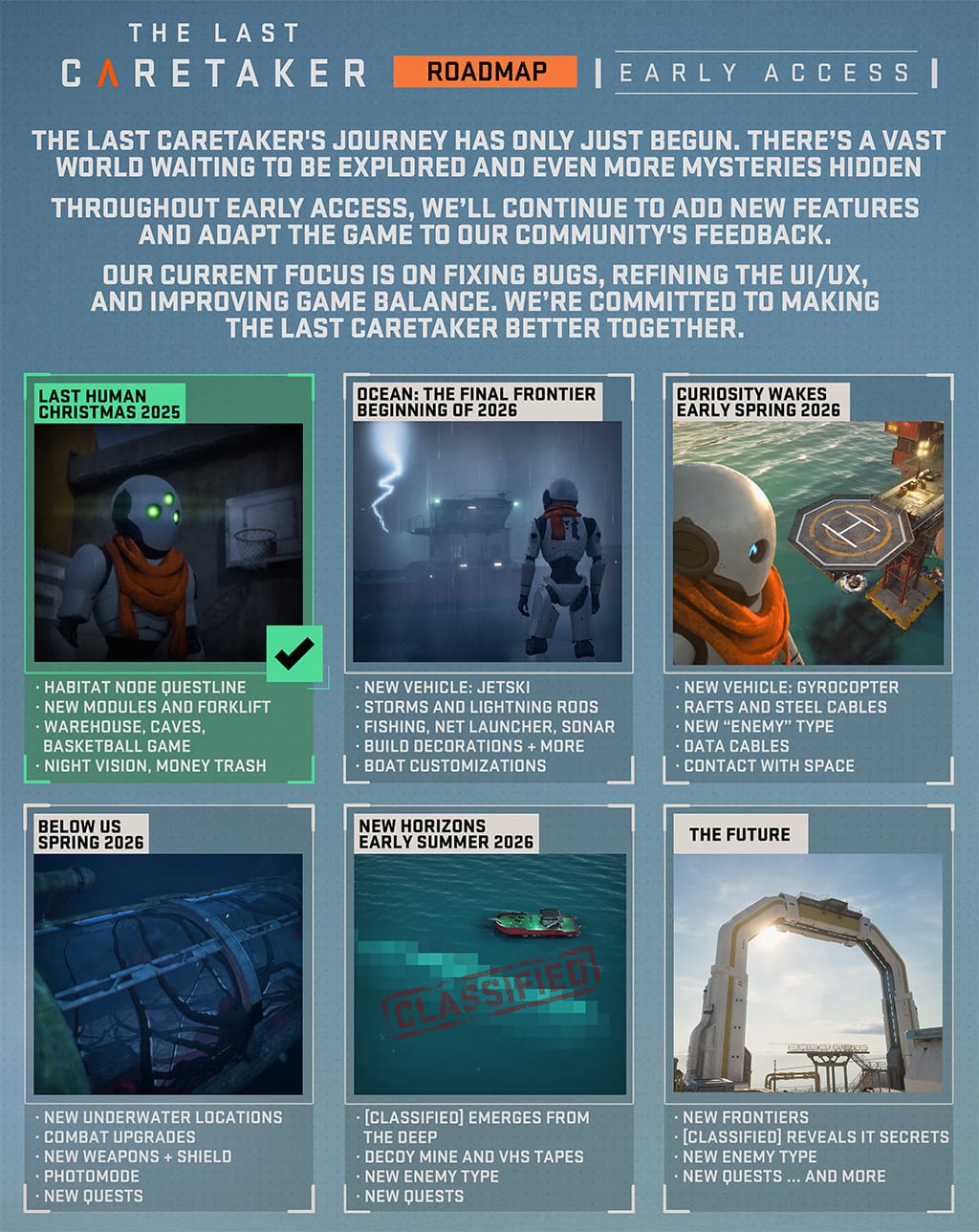
Speaking of Early Access, the first update, 'Last Humans,' was released before Christmas in 2025. The first in a series of Early Access roadmap updates includes three new questlines that unlock new locations and stories, as well as a basketball mini-game, a drivable forklift, night vision goggles, and a speaker system. Additionally, performance improvements have been implemented across physics systems, rendering and the UI following direct feedback from the community. The next update, Ocean: The Final Frontier, is due to launch in early 2026. It will feature a jet ski, storms and lightning rods, as well as a fishing and salvage update and boat customisation.
The Last Caretaker is being developed by Channel37, founded in Helsinki, Finland, in 2021. This boutique studio comprises a team of nine, including CEO and co-founder Miika Aulio, and co-founders Vesa Halonen, Antti Ilvessuo and Sami Saarinen. The team collectively has many decades of experience in the gaming industry and has released major PC and console titles. The Last Caretaker is Channel37's debut game. It is being published by the Finnish studio itself.
The Last Caretaker was released on 6 November 2025 via Early Access on Steam and the Epic Games Store, priced at $34.99 / €29.99 / £26.99. The developers intend to keep the game in Early Access for at least 12 months. The exact timeframe will depend on the progress of the development and the feedback of the players.
Conclusion
Even though the genre is already quite crowded, Channel37 has created a unique survival crafting adventure game with The Last Caretaker. Above all, it impresses with its exploration and crafting elements, and it still has room to grow in Early Access.
Marcel Kleffmann is Chief of Content of GamesMarket and our B2B and B2C expert for hardware, market data, products and launch numbers with more than two decades of editorial experience.