The Creative Director behind Sable has expanded: Not into a publishing scheme or PR, but into games culture journalism. Eteo Archetypes is an ongoing collection of writing by some of the best culture authors in gaming. We talked to head of Eteo, Gregorios Kythreotis, about it.
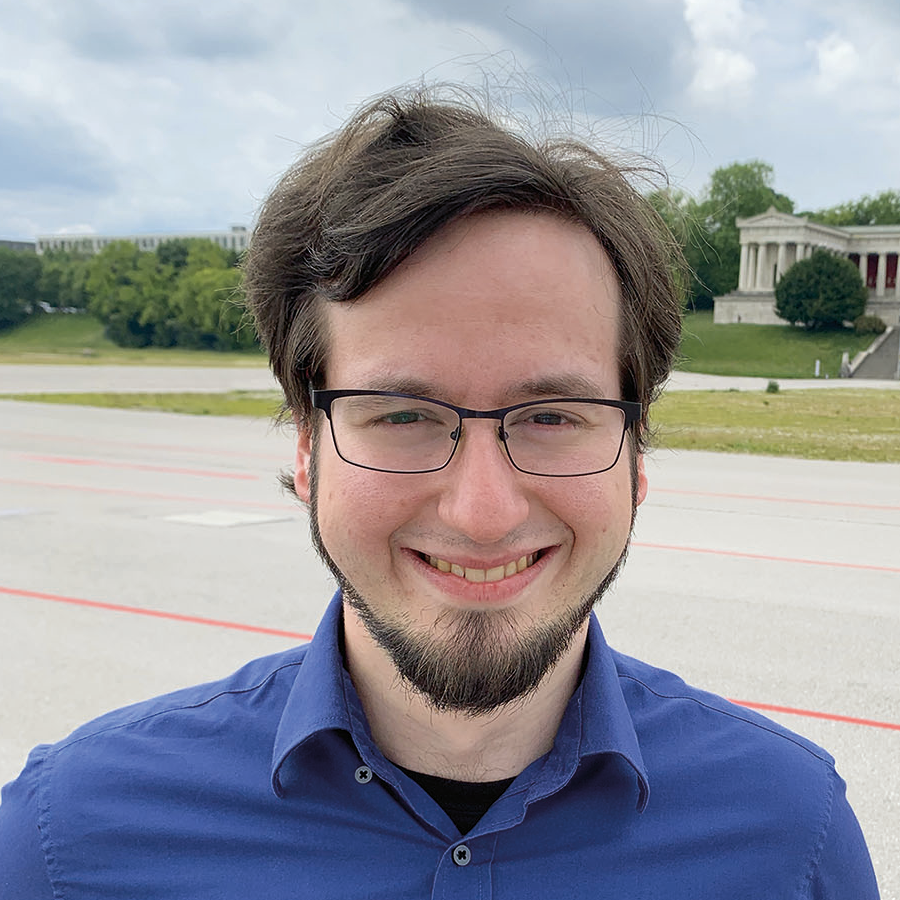
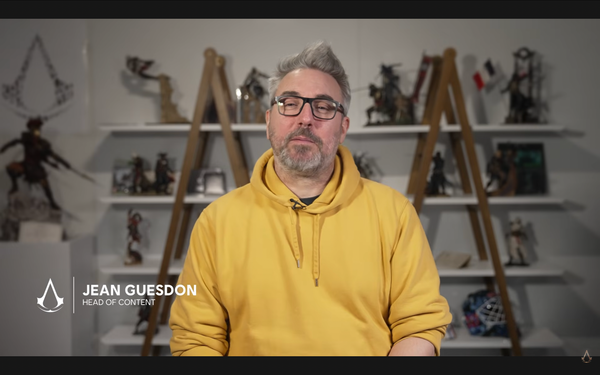
Gregorios Kythreotis is founder of Eteo Games and editor of Eteo Archetypes (Eteo)
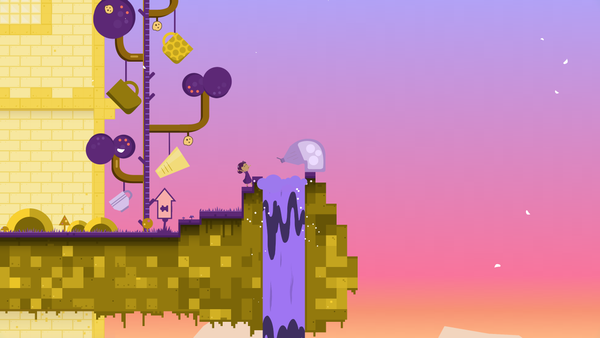
He's been the force behind Sable, a truly artful and lovely game experience: Gregorios Kythreotis, former Creative Director at Shedworks, since September 2024 founder of Eteo Games, a London studio. And while the team of ten people is working on a new game, Kythreotis has started quite a different side gig: Eteo has begun publishing games culture stories in 2025, with their own online magazine called Eteo Archetypes.
But what brings a game studio to dive into games culture journalism? What is the interconnection between community outreach for a game studio and editing a games journalism newsletter? We talked to Kythreotis about it.
Who are you? Who are Eteo Games, and what did you do before?
Eteo Games is my new studio, I'm currently working with a few collaborators on a new game project. It's quite a small team, around 5 full time and fewer than 10 in total - but the number fluctuates day to day based on the production schedule. Before Eteo, I cofounded a game studio called Shedworks, and was the Creative Director of the game Sable.
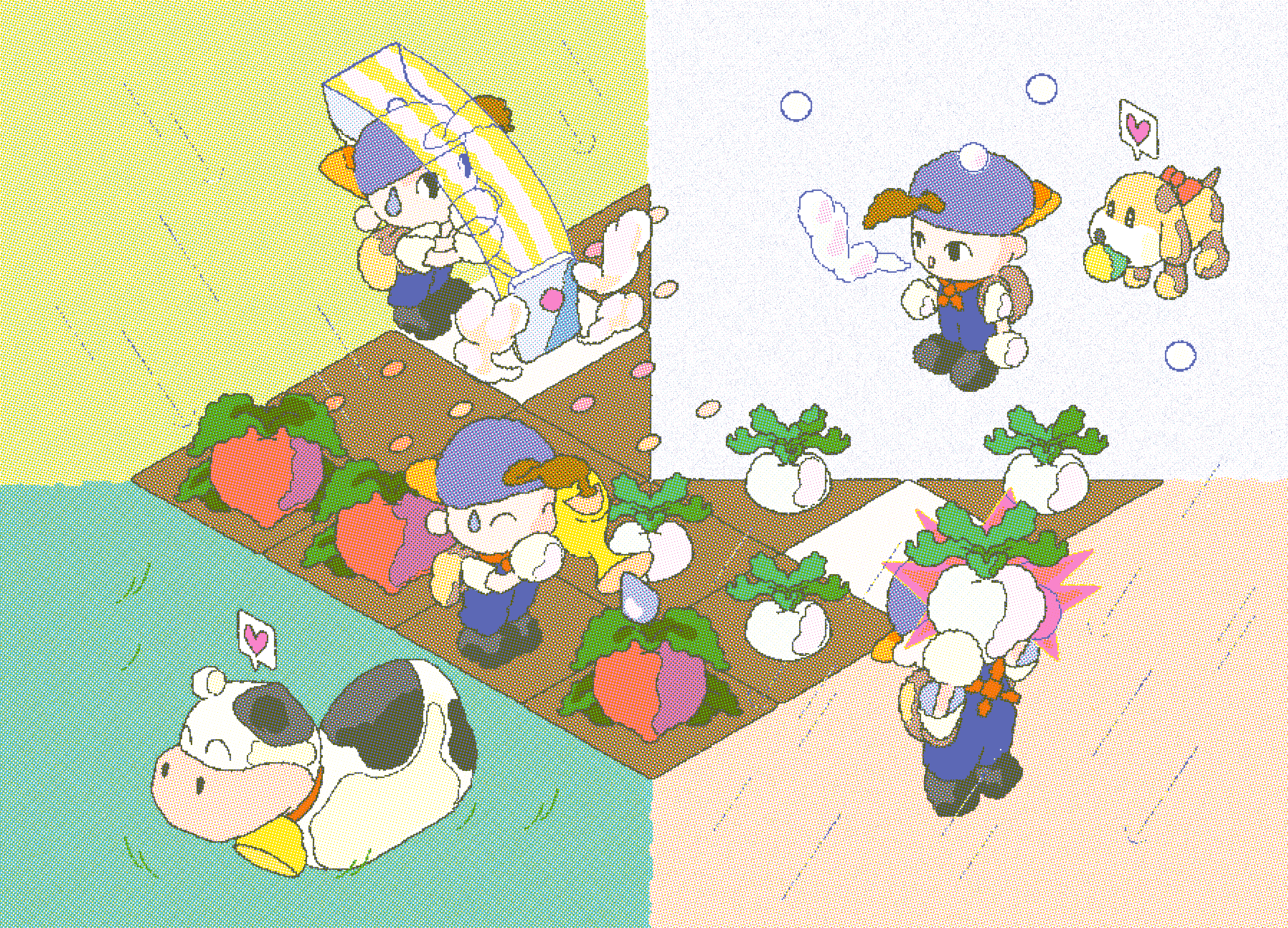
The second Archetype on the topic of Season was illustrated by Hel Covell. Here: The cover of Winter and Death in Harvest Moon by Holly Nielsen.
Why does a game dev studio start a games culture publication?
So with Sable, we announced the game very early and that had a bit of a mixed impact. It helped build hype but it also brought its own form of pressure onto the project - it was too early to announce the new game project but I wanted to introduce the studio to the world, so this was something that allowed us to do that. I've wanted to create some kind of written zine or project for a long time, I can find notes about it from around a decade ago, but it never felt like the opportunity to push that really presented itself. So with that in the back of my mind, tried to come up with a structure that would allow me to either write stuff or get people to write stuff about games in a way I found interesting. When I studied Architecture, I always felt like there was a strong overlap between Academia and Practise, perhaps this is a natural result of the way you become an Architect but part of me wanted to find a way to engage with that a bit in games too.
What is the aim of Eteo Archetypes? What are your goals with it?
With Archetypes I really wanted to examine the full kaleidoscopic nature of game development and concepts that make up games. It's such an incredibly multi-faceted medium and so by looking at a set of three games through different lenses, it gave a structure to celebrate and explore many different aspects of different games. I think at first I thought I would be the person doing it, but with game development absorbing so much of my time I realised it could be a lot of fun to get other people on board too. Archetypes is the studios newsletter, so it gives us a way of talking to our audience in a way that isn't through social media and I find that really exciting too. Part of it is cultivating an audience around the studio, an audience that is engaged in games as a medium in the same way we are, that are excited by games and the minutiae of them.
Archetypes is the studios newsletter, so it gives us a way of talking to our audience in a way that isn't through social media and I find that really exciting too.
How big is the interconnection between Archetypes and your game development efforts?
There's definitely a relationship, there are concepts in there I've been thinking a lot about. That's what is part of the fun of being able to get external voices to write about subjects, I'm getting to see different perspectives on things I've been ruminating on for a while. There are some clues in there.
Archetypes are structured in volumes and those further into topics. How long do you plan a volume to run?
Volumes are broken up into 6 Archetypes, and 1 Archetype per month - so 6 months per Volume. We try to get everything written before we kick a Volume off, we wanted this to be as uncomplicated and unstressful for us as possible.
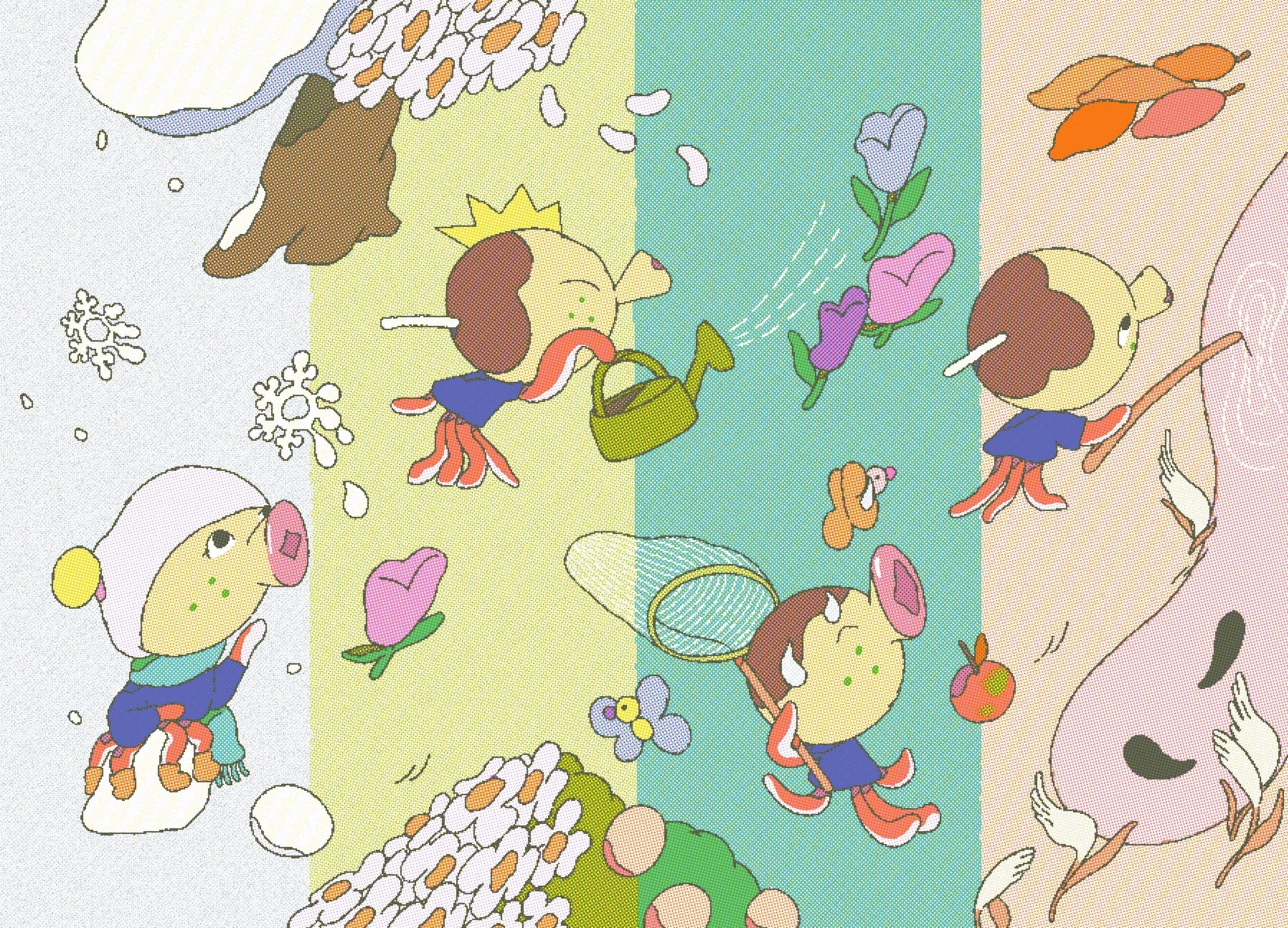
The cover of Rhythms of the Everyday in Animal Crossing by Jay Castello. (Hel Covell)
How do you find your authors? I've never seen a call for submissions, and your selection so far has been top notch.
So far we've set out our Archetypes and games we think might be interesting to look at, and then we think about who is writing stuff that might overlap nicely and try to match people up before we reach out to them. We usually reach out with a suggestion, but we also are happy to work with authors if they have their own proposal in response to our suggestion. We're pretty relaxed about it beyond that, we keep the word count fairly tight because it's a newsletter and I want people to read it over a cup of tea or coffee. It makes it easier to edit when it's shorter too.
Do you earn anything from Archetypes? I've seen that the artwork (sometimes) is made by an artist, so I assume you have costs because of the publication.
I earn nothing from Archetypes, I'm mostly just doing it because I want it to exist and I think it's cool. We did want to get different artists to illustrate each piece but the logistical work for it became a bit burdensome so we left it for Volume 1. We might revisit that at some point!
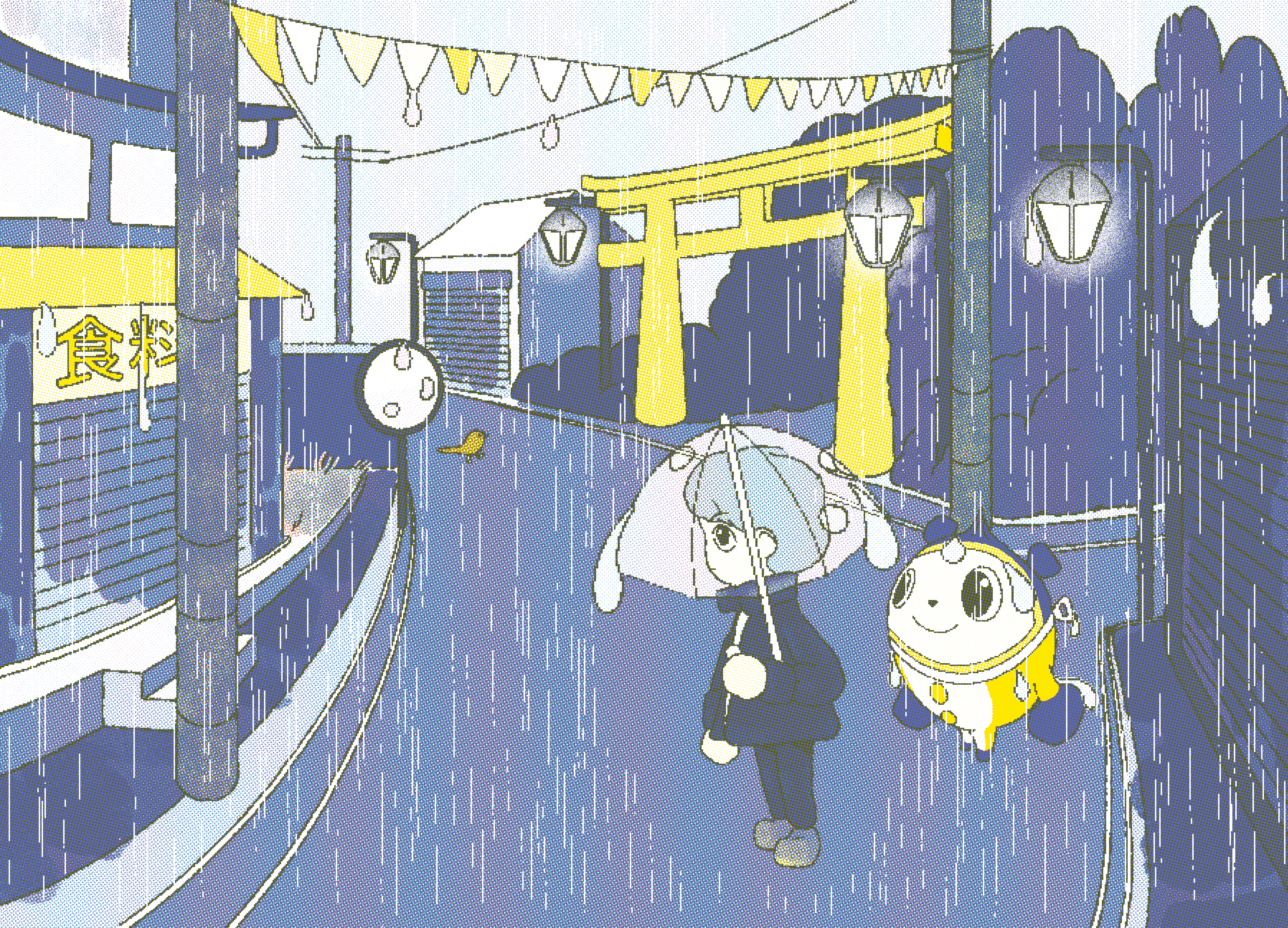
The cover of Passing Time in Persona 4's Tourist Town by Emily Price. (Hel Covell)
What is next for Eteo - Studio and Archetypes?
Well, we need to finish Volume 1 on Archetypes, I'm really happy with the response so it's something I'd like to keep going. For Eteo, we're just working on the game for now! I'm really curious to see how the new project lands with people when we do announce it. With Sable, we had shown and announced it so early in development, so it was much easier to gauge people's interest.