In their weekly interview series Womenize! features inspirational, diverse people who work in the games and tech industry, to share their experiences, give valuable advice and talk about their projects. In cooperation with Womenize! and Madeleine Egger, GamesMarkt is republishing these inspirations.
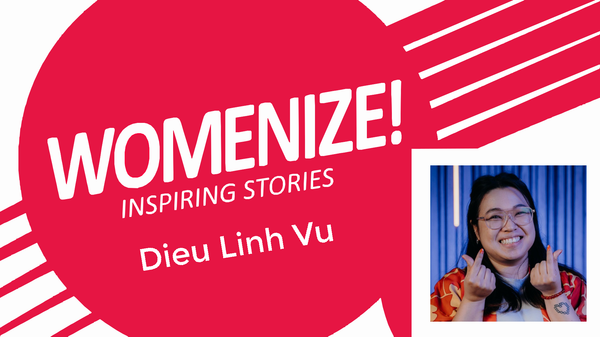
Womenize! – Inspiring Stories is our weekly series featuring inspirational individuals from games and tech. For this edition, we talked to Dieu Linh Vu, CEO & Co-Founder of Polynormal Games. She speaks how navigating uncertainty, prioritizing people-centered leadership, and embracing inclusivity led her to found a game studio focused on building a supportive and intentional work culture. Read more about Linh here:
Hi Linh! Your journey into the games industry began with cultural studies at the University of Hamburg, followed by roles in QA, product management, and release management. Looking back, were there moments when the path felt uncertain and what helped you trust that these diverse experiences were actually preparing you for something bigger?
There were many moments where the path felt uncertain. Starting in QA and moving between companies and projects every few years made it clear early on that the games industry is fast-paced and often unstable. Roles aren’t always long-term, and I think that reality is even harsher today than it was when I started 15 years ago. Learning to live with that uncertainty wasn’t easy.
What kept me grounded, though, were the people. Across QA, product, and release management, I was consistently surrounded by thoughtful, talented, and supportive colleagues. Many of those connections turned into lasting friendships. Being part of such diverse and passionate teams gradually shifted my focus. I didn’t just want to do my job well, I wanted to improve the environment we were all working in. That started with small, practical changes: having QA and dev sit on the same floor to improve direct communication instead of talking only through chat, or advocating for better tools for release managers. It also extended to things that are often overlooked but deeply important, like pushing for more inclusive workplaces, whether that meant better policies or something as simple as vegan options during team events or ensuring free period products were available.
When I stepped into my first leadership role, I was looking for guidance myself, specifically from a female POC mentor who could help me navigate that space. But I realized there wasn’t anyone like that in my immediate circle. That absence became a turning point. Instead of waiting, I asked myself: why not become that person? Why not build the kind of company my younger self would have needed, and be the mentor I was missing?
Looking back, all those experiences were actually preparing me to think more holistically about how teams function and what people need to thrive. I was fortunate to meet Lars Bönsch (they/them), who shares many of these values, and together we founded Polynormal Games in 2025 with the goal of proving that a company built on care, intention, and inclusivity can also be successful and sustainable.
When I stepped into my first leadership role, I was looking for guidance myself, specifically from a female POC mentor who could help me navigate that space. But I realized there wasn’t anyone like that in my immediate circle. That absence became a turning point.
Before founding Polynormal Games, you coordinated releases across many teams and stakeholders in large publishing environments. How did those experiences shape your understanding of leadership, and how are you applying those lessons now when building a studio culture from the ground up?
Coordinating releases across multiple teams and stakeholders, often across different cultures, time zones, and priorities, taught me a lot about structure. I became strong in time management, long-term planning, and developed a solid understanding of the full game development pipeline. Those technical and organizational skills are valuable, and I still rely on them today.
But stepping into my first leadership role made me realize that those “hard” skills are only one part of the picture, and probably not the most important one. What really defines good leadership are the soft skills: understanding people, knowing when to support and when to step back, creating clarity in moments of stress, and building trust across very different perspectives. That shift, from focusing on processes to focusing on people, shaped my understanding of leadership more than anything else. I also faced a number of challenges as a female POC in those environments, and each of those experiences clarified what kind of leader I want to be, and just as importantly, what kind of company I want to build. I became very intentional about creating spaces where people don’t have to fight to be seen or heard.
At Polynormal Games, we’re trying to build that kind of environment from the ground up. We want minorities and queer people to feel not just safe, but genuinely welcome. We talk openly about mental health and disabilities, and we try to plan work in a way that reflects those realities instead of ignoring them. Transparency is also a big pillar for us, whether it’s about the company’s current situation, long-term plans, or potential financial challenges, so everyone has the information they need to make decisions for themselves.
My co-founder and I also believe that culture isn’t something you just talk about, it’s something you model. So we actively try to live the work-life balance we encourage, rather than treating it as an abstract value. Even if we still fail sometimes, building a company is a process after all.
There are also ideas and principles that matter deeply to us that we can’t fully implement yet because we’re still a startup. For example, we think a lot about what “fair payment” really means in practice and how to build a system around it that is sustainable and equitable. Or how should we interact with AI tools? It’s nearly impossible to avoid them, since most tools have an AI assistant. We agree that we won’t use it to create music or art but can it help us organize better? Write better Jira tickets or create better meeting notes or should we avoid it completely? We don’t have all the answers yet, but we’re committed to asking the right questions and growing into them.
Moving from a stable role in the industry to starting your own studio is a bold step. What inner shift or realization gave you the confidence to become a founder and what advice would you give to others who feel the urge to build something of their own but hesitate to take the leap?
I have had the wish to start a studio for over 10 years now. A few years ago at a Woman in Games meetup at Gamescom I talked to Linda Kruse, founder of the Good Evil GmbH and shared with her that I was unsure if I am ready to start a studio yet and she gave me the advice that I will probably never feel ready and the biggest step I can take is just to start. Which is great advice.
It still took me a few more years to find the confidence to follow it. The biggest shift I had was after becoming team lead. Up until that point, my focus had been on helping ship projects, hitting milestones, and delivering outcomes. But stepping into that role changed my perspective: I found more meaning in helping people grow than just pushing releases out the door. Seeing others develop, gain confidence, and do their best work made me realize that building an environment where that can happen is just as impactful as the work itself. That was the moment I started thinking less like a contributor within a system and more like someone who could shape the system.
At the same time, I won’t pretend this is a “perfect moment” to start their own studio. There has been a huge increase in indie-studios the last two years and the competition is growing even more. The reality is that times are uncertain, and starting a studio now is undeniably risky. But honestly, it always is. I hate to use a very finance-bro saying, but it holds up: the best time to start was yesterday, and the second best time is today. Waiting for certainty can easily turn into never starting at all, so take the leap. I have to add this is a very privileged way of saying trust yourself and start. I had family and friends support me through the financially hard times and I understand not everybody can do that. If that is your reason for hesitation, please do smaller steps. Work on your project part time, reach out to mentors, research and apply for financial aids either in your own country or community. Polynormal Games greatly benefited from EU grants to start and fund the company, without them it wouldn’t have been possible. Start small if you need to, test your ideas, build momentum. But don’t wait for permission or perfect conditions, they rarely come.