EGDF President Lesser Identifies 3 Strategic Priorities for 2026 and Appeals to Policy Makers
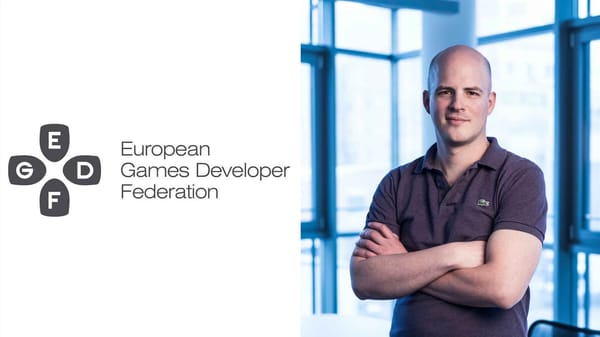
As in 2025, Hendrik Lesser, President of the European Games Developer Federation, summarised the internal discussions within the association and identified three strategic priorities for the industry in 2026. He calls on politicians for support and recognition.
As in the previous year, Hendrik Lesser summarises in his article on the EDGF website the discussion that took place within the association as part of a State of the Industry Call. ‘It is time to look forward, stand up, and push European technological and cultural sovereignty,’ Lesser summarises.
Specifically, Lesser identifies three strategic priorities for the games industry in Europe for 2026:
1. Ensuring human leadership on Artificial Intelligence (AI)
Artificial intelligence is changing game development in three areas: generative tools for content creation, coding support, and workflow management. When properly integrated in the game development process, artificial intelligence offers significant potential to increase productivity, accelerate innovation, and strengthen the global competitiveness of the European industry. However, AI must remain an assistant, not a director. European developers must maintain a "director's mindset" and ensure that human decisions remain at the centre of development.
2. Fighting for fair market conditions for game developers.
European businesses, especially small and medium-sized enterprises (SMEs), are facing increasing structural challenges in European game markets. These include unfair platform payment practices in which euros paid by European players are converted into dollars for European game developers; if needed, regulators must step in to ensure fair and transparent platform payment conditions. Furthermore, the industry must establish constructive dialogue with policymakers to ensure that European policies reflect the European game industry debate about the responsibilities that come with making games.
3. Ensuring European technological and cultural sovereignty.
In a changing geopolitical environment, Europe must strengthen its digital and technological sovereignty, including support for European technology infrastructure and service providers. At the same time, ensuring European cultural sovereignty is no less important. European games are a powerful expression of European identity, creativity, and values. Games are where technology and culture meet. If Europe plays its winning cards right, games don't just defend Europe; they will build it.
In his article, Lesse also addresses other topics, such as funding. Although this is essential for high-risk experimental projects, the industry should not be overly reliant on it.
The EDDF President also makes a clear appeal to policymakers: “Support the conditions that let European creators compete globally. Protect our ability to tell authentic European stories. Ensure fair market conditions. And recognise that games are not just entertainment – they are culture, technology, and a strategic asset for Europe.”
GamesMarkt Daily Newsletter
Sign up to receive the free daily newsletter about the Games Industry in GSA, Europe and beyond.
Stephan Steininger is Director of Operations and Editor-in-Chief of GamesMarket. As part of the magazine since its inception in 2001, he knows the GSA games industry by heart.
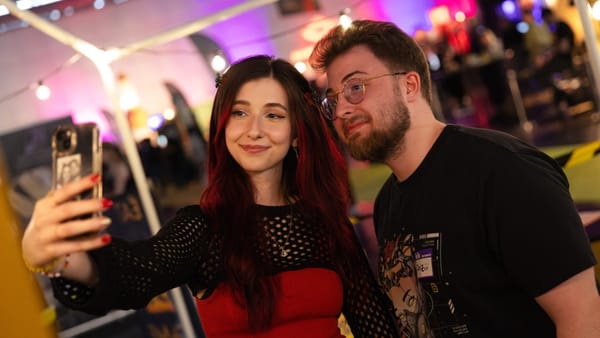
Creator Baso (left) is marketing the caggtus 2026 as ambassador. (Leipziger Messe / Niclas Schmidt)
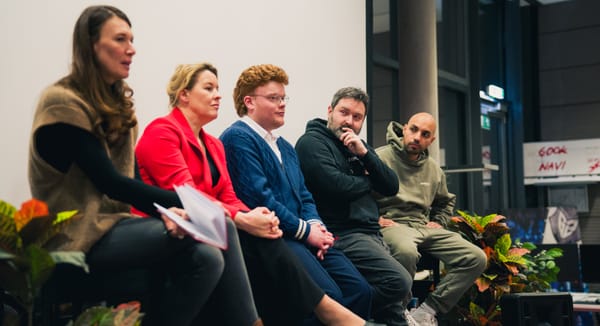
Sabrina Ratih (COO G2) moderated the Panel with Franziska Giffey (Berlin’s Senator for Economic Affairs, Energy and Public Enterprises), Julius Althof (Managing Director Esports Player Foundation), Alban Dechelotte (CEO G2) and Mo Auba (FIFA World Champion/Content Creator) | Picture by G2
Sabrina Ratih (COO G2) moderated the Panel with Franziska Giffey (Berlin’s Senator for Economic Affairs, Energy and Public Enterprises), Julius Althof (Managing Director Esports Player Foundation), Alban Dechelotte (CEO G2) and Mo Auba (FIFA World Champion/Content Creator) | Picture by G2