Google Revamps Android Ecosystem, Reduces Fees and Ends Dispute With Epic Games
Google has announced major changes to the Android ecosystem. These include more billing options, a programme for registered third-party app stores and lower fees for its own services. Additionally, the dispute with Epic Games has been resolved. Xsolla also welcomes this development.
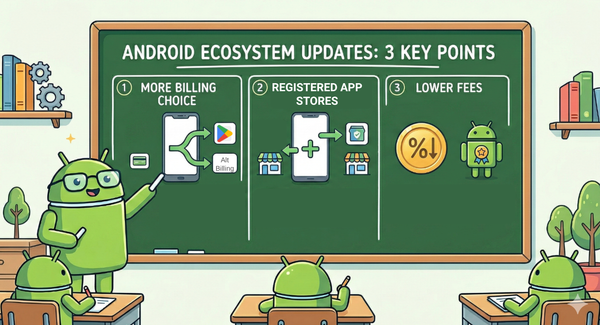
Google has announced major changes to the Android ecosystem to promote interoperability and flexibility. These include offering more payment options, launching an official programme for alternative app stores and reducing/restructuring fees for developers. These initiatives aim to strengthen data protection and ensure compliance with EU regulatory requirements, such as the Digital Markets Act.
In addition to Google Play Billing, developers can offer their own payment system within their apps. Users should then be able to choose between these two options. Developers can also redirect users from the app to their website to make purchases or subscriptions (e.g. for cheaper prices or their own bundles). Google's goal is to provide users with more flexibility and choice without compromising on security.
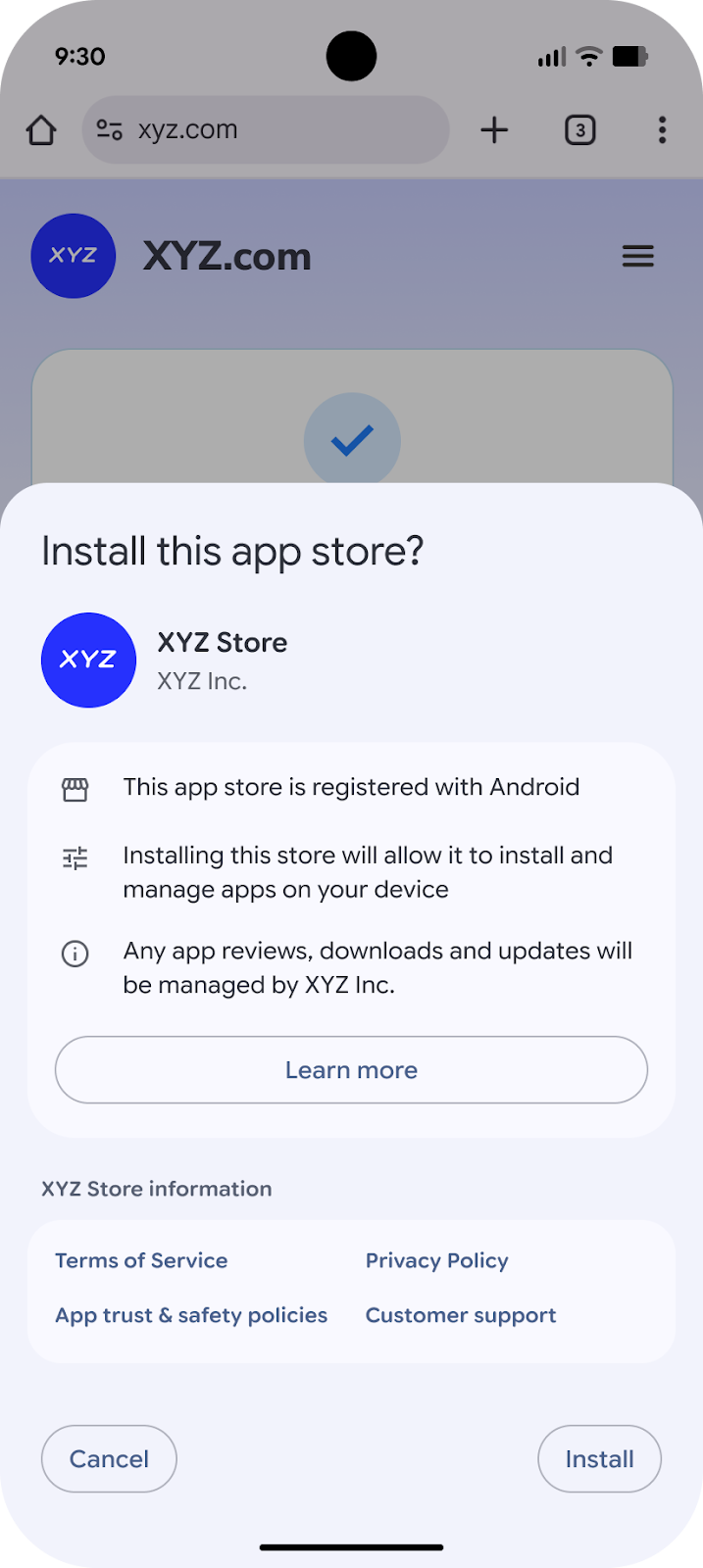
Google is also introducing a 'Registered App Store' programme. This will allow other app stores (e.g. those from third-party providers such as Epic Games) to officially register and gain the technical capabilities required to securely distribute and update apps. The Registered App Store programme will first be introduced outside of the US, and if approved by the courts, it will also be made available in the US.
Sameer Samat, President of Android Ecosystem: "Once this change has rolled out, app stores that choose to participate in this optional program will have registered with us and so users who sideload them will have a more simplified installation flow (...) If a store chooses not to participate, nothing changes for them and they retain the same experience as any other sideloaded app on Android."
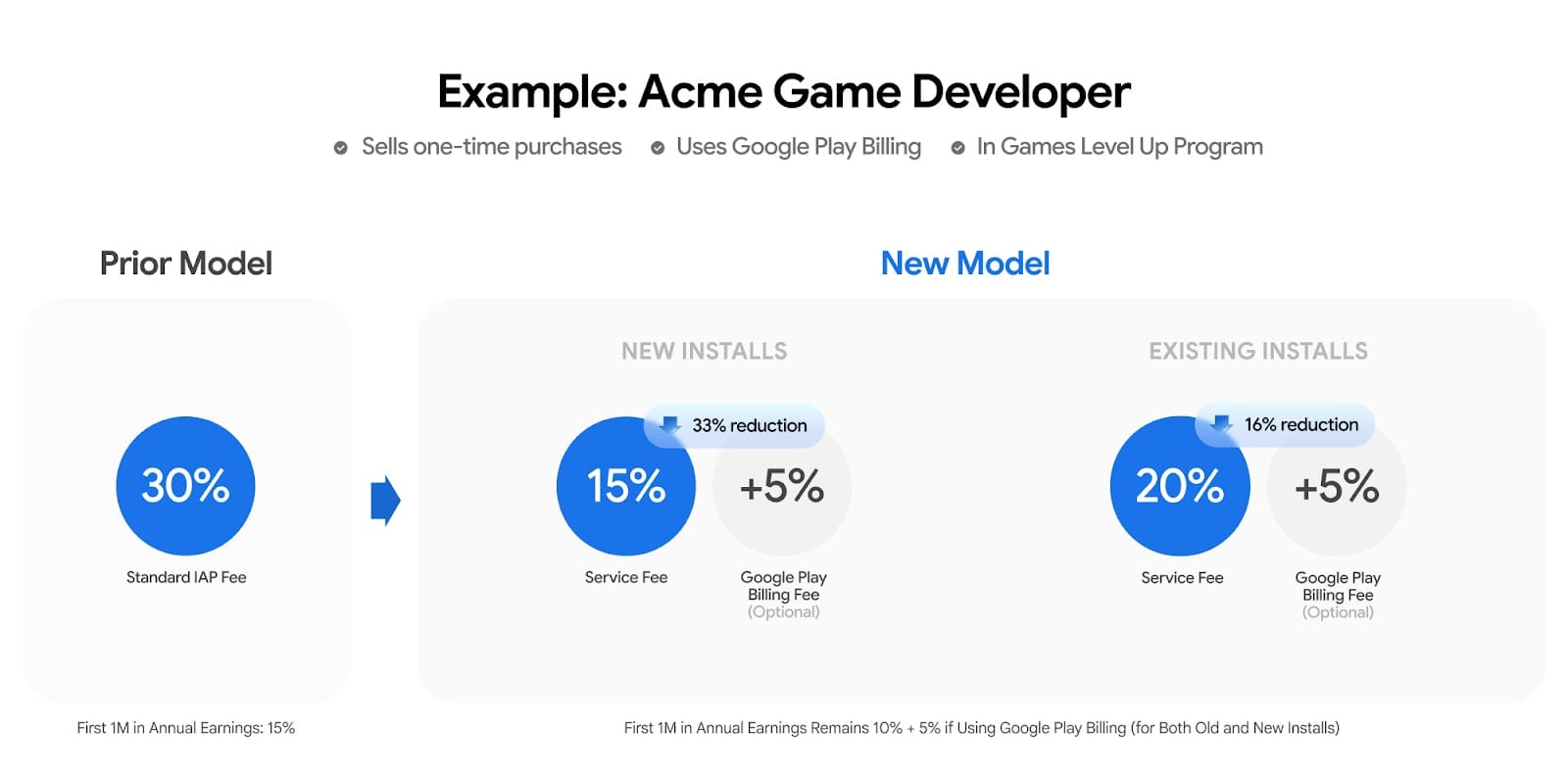
There are also significant changes to the fees. Going forward, Google will separate the fee for using the Google Play payment system from the general distribution/platform service fee. For new installations, the service fee for in-app purchases will be reduced to 20% (down from 30% in most cases), although details will depend on the exact category/programme.
Google's new fee model looks like this:
Billing: For those developers who choose to use Google Play’s billing system, they will be charged a market-specific rate separate from the service fee. In the European Economic Area (EEA), UK, and US that rate will be 5%.
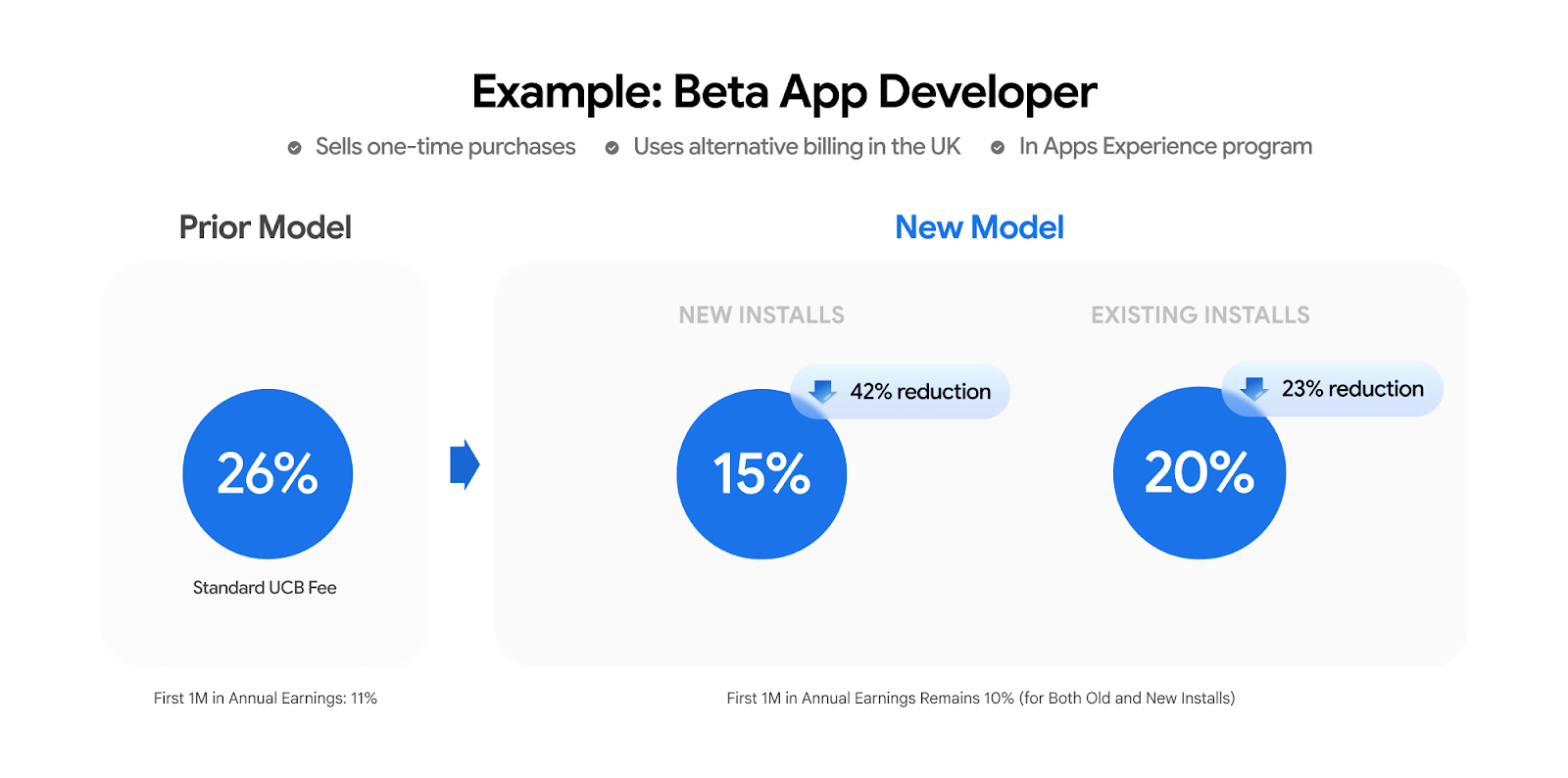
Service Fees: a) For new installs (first time installs from users after the new fees are launched in a region), we are reducing the in-app purchase (IAP) service fee to 20%.
b) We are launching an Apps Experience Program and revamping our Google Play Games Level Up program to incentivize building great software experiences across Android form factors associated with clear quality benchmarks and enhanced user benefits. Those developers who choose to participate in these programs will have even lower rates. Participating IAP developers will have a 20% service fee for transactions from existing installs and a 15% fee on transactions from new app installs.
c) Our service fee for recurring subscriptions will be 10%.
The plans will be implemented on the following staggered schedule: by 30 June in the European Economic Area (EEA), the United Kingdom and the US; by 30 September in Australia; by 31 December in Korea and Japan; and by 30 September 2027 in the rest of the world.
Sameer Samat, President of Android Ecosystem: "We will also launch the updated Google Play Games Level Up program and new App Experience program by September 30 for EEA, UK, US, and Australia and then it will roll out in line with the rest of the schedule above. We plan to launch Registered App Stores with a version of a major Android release by the end of the year."
Last but not least, Google has also resolved its worldwide disputes with Epic Games.
On X, Tim Sweeney, CEO of Epic Games, writes: "Google is opening up Android all the way with robust support for competing stores, competing payments, and a better deal for all developers. So, we've settled all of our disputes worldwide. THANKS GOOGLE! Fortnite will return to Google Play Store worldwide soon. Epic Games Store continues supporting Android worldwide alongside Windows and Mac, and installation on Android will become much easier later in 2026."
Chris Hewish, President of Xsolla, has provided the following commentary on this development: "The development marks a structural shift in how the game industry operates. With Google's proposal to the federal court for a reduction in Play Store commissions and the allowance of alternative billing and rival app stores, we're now seeing the beginnings of a more open environment. This new environment enables developers to have greater control, optionality, and diversification over how they reach players, build their businesses, and manage payments."
"For developers running live-service titles built around in-app purchases, lower fees could improve margins and expand distribution options beyond the Google Play Store. It could also accelerate the adoption of direct-to-consumer web shops, which many publishers favor for higher margins, stronger relationships with players, and greater control over promotions and monetization. At Xsolla, we've been preparing for this transition for years, building all the things that allow developers to operate their games how they want." - Chris Hewish, President of Xsolla
Marcel Kleffmann is Chief of Content of GamesMarket and our B2B and B2C expert for hardware, market data, products and launch numbers with more than two decades of editorial experience.