How Many Dudes?
How Many Dudes? from Butterscotch Shenanigans sold over 100,000 copies in just 50 hours. It's the studio's fastest-selling game to date. But what exactly is this roguelike autobattler all about?

– 3 min read

How Many Dudes? from Butterscotch Shenanigans sold over 100,000 copies in just 50 hours. It's the studio's fastest-selling game to date. But what exactly is this roguelike autobattler all about?
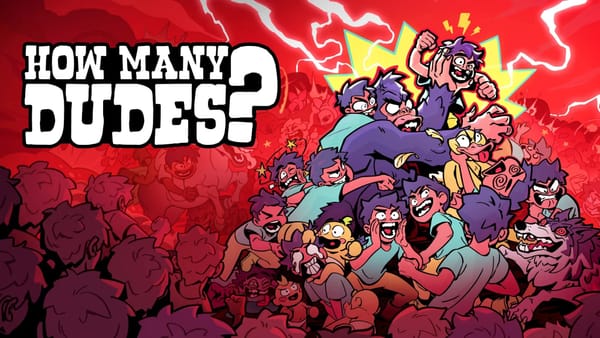
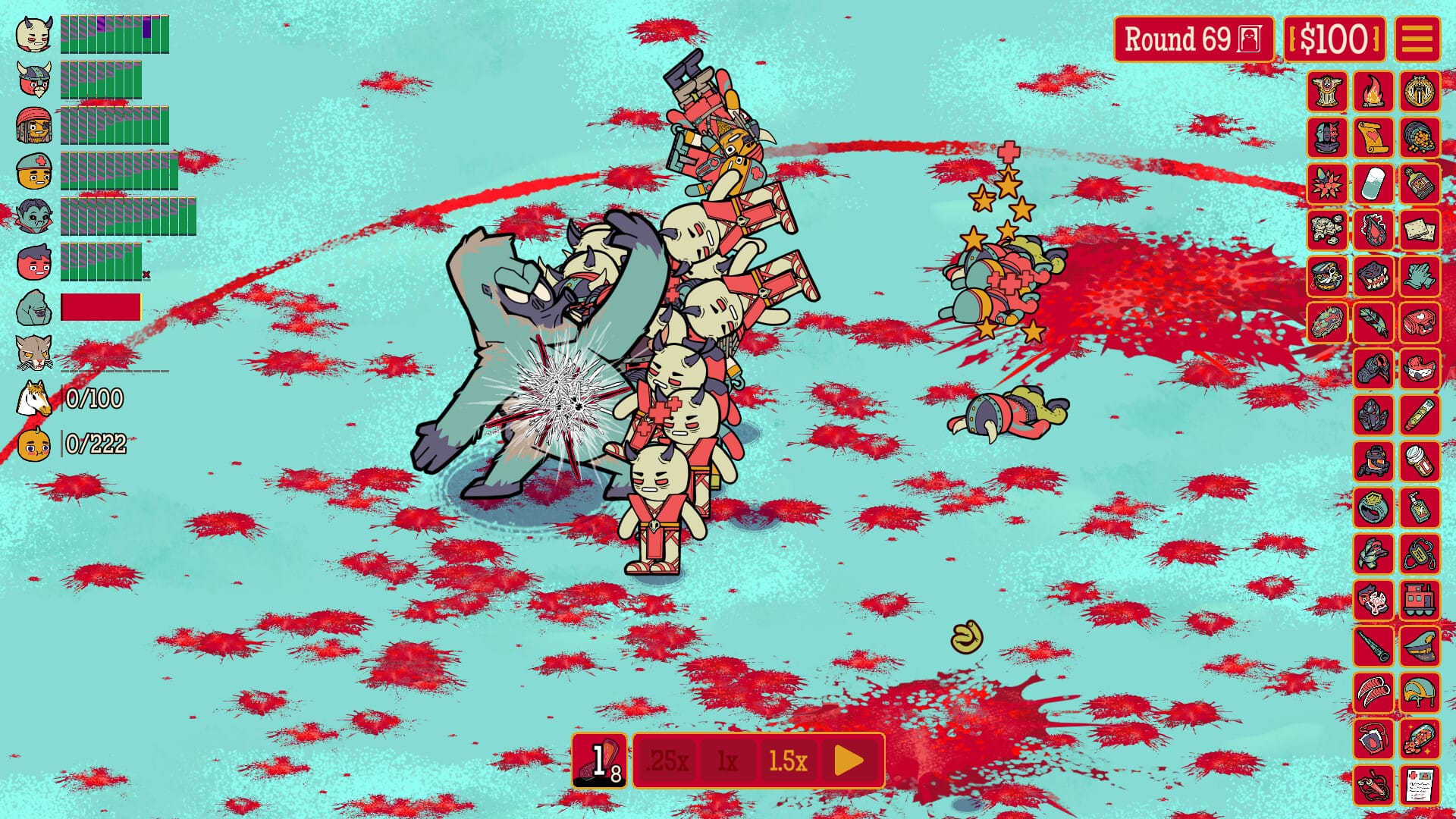
How Many Dudes is a roguelike autobattler game inspired by viral debates such as '100 men vs 1 gorilla', in which players can pit absurd groups against each other in combat. Since the demo was released in December 2025, the game has reached over 480,000 players and generated more than 200,000 wishlist entries. It was one of the top-performing demos during Steam Next Fest, with a median playtime of just under two hours. Creator coverage across YouTube and Twitch has generated over 7 million views in the same period, further accelerating visibility. The principle is so intuitive that it can be explained in very short clips.
How Many Dudes? © Butterscotch Shenanigans
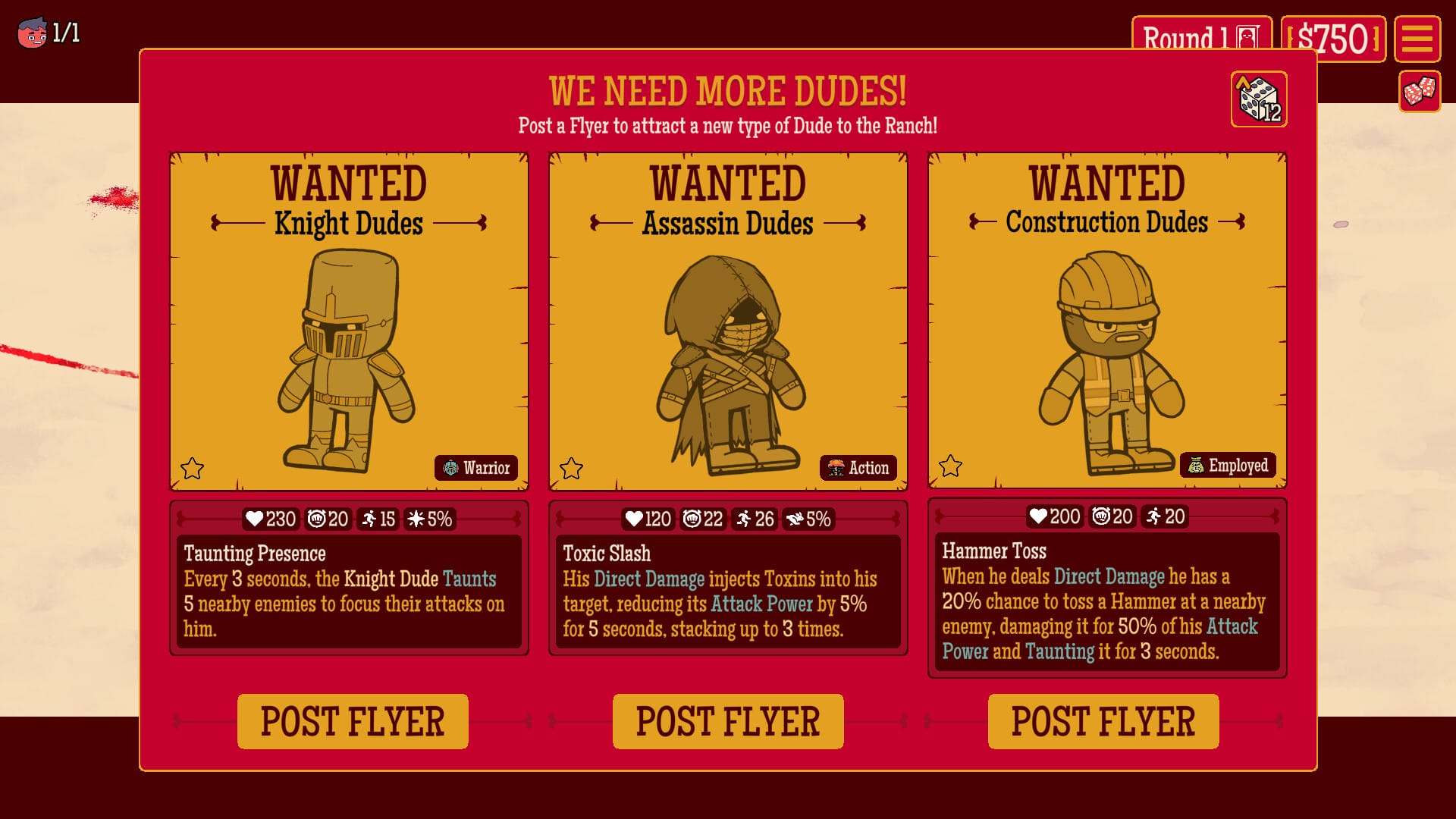
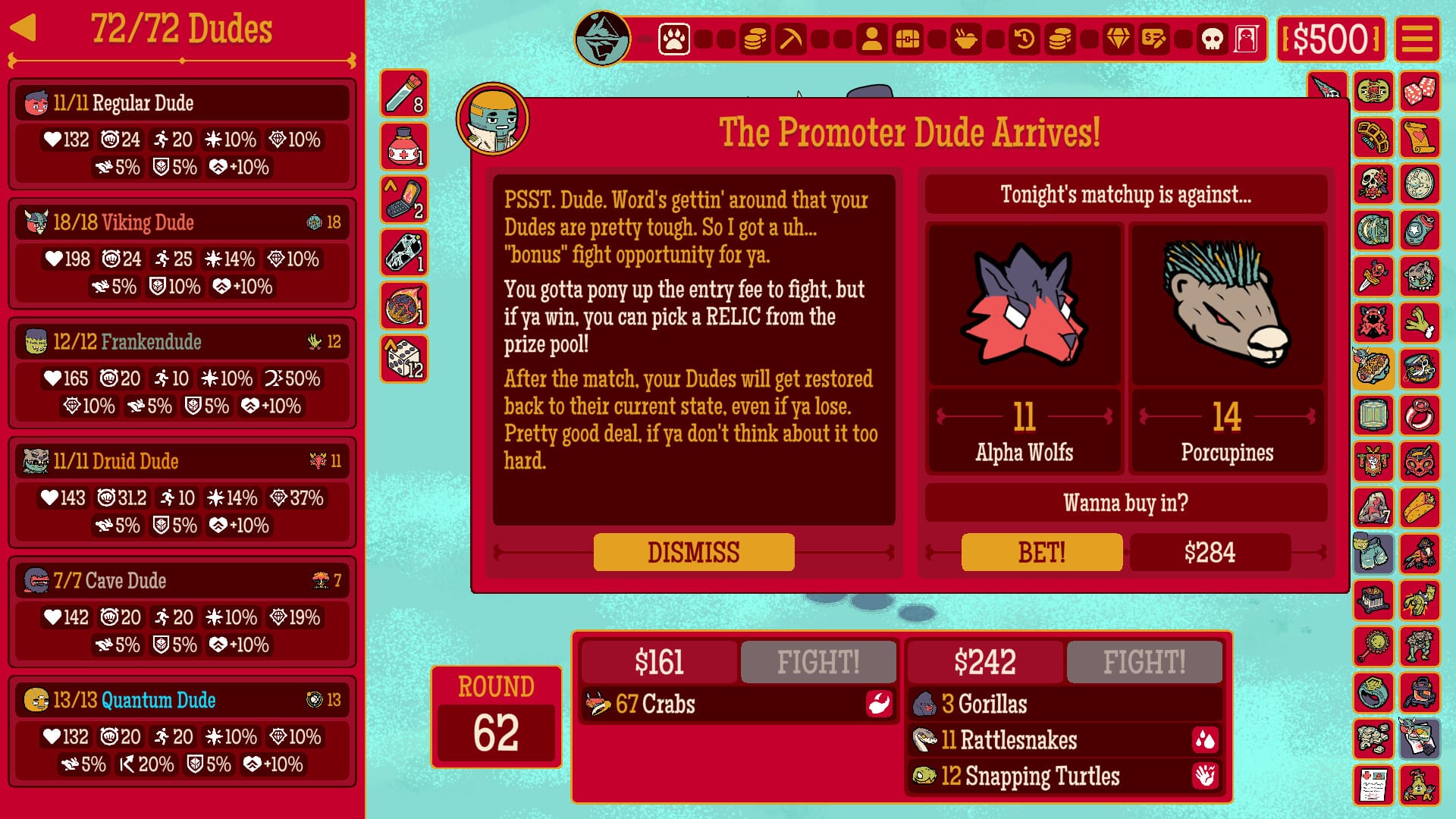
In this roguelike autobattler, also known as a 'Dude Builder', players build an ever-growing army of different Dudes at the Dude Ranch with each run. They can choose from a cast of 42 Dudes spanning six Dude Families: Undead, Employed, Warrior, Fantasy, Sci-Fi and Action. In German, they are aptly named 'Brudis'. Players can mix and match Dude types to create powerful synergies, such as Ninja Dudes who attack with a barrage of shuriken, or Cowboy Dudes who rescue other Dudes with their lassos. According to the developers, there are more than 850,000 possible team compositions, so there are plenty of strategies and powerful combinations to discover. The main goal is to create extremely powerful combos (or synergies) to defeat opponents in the fight arena. These include toddlers, teddy bears, gorillas, horse-sized ducks, geese, pumas, wolves and unicorns, as well as other absurd creatures.
How Many Dudes? © Butterscotch Shenanigans
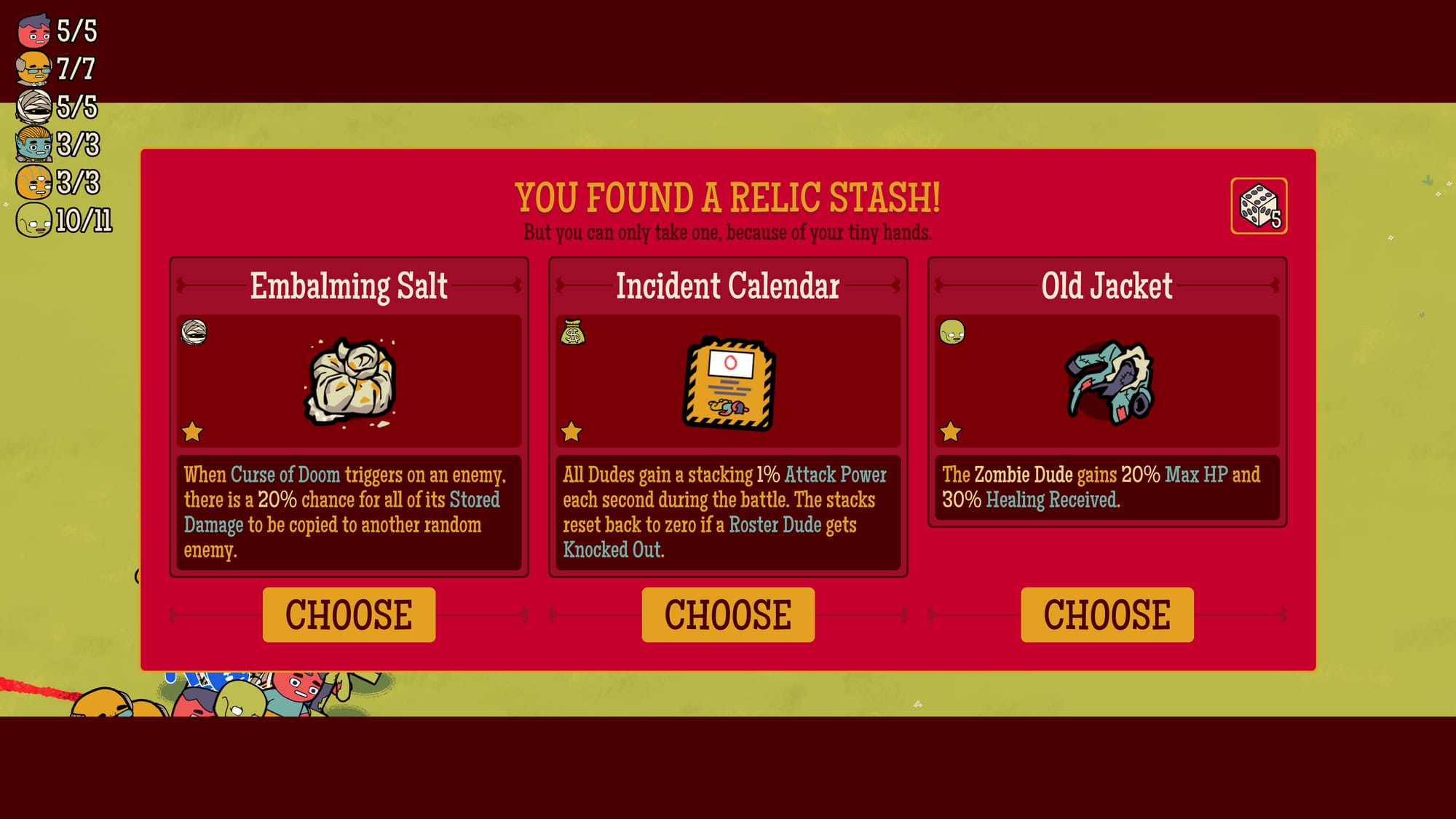
During a run, players collect hundreds of relics and trinkets that can completely transform the abilities of the Dudes. Special Dude Events introduce new characters and choices with a big impact that shape each run. The goal here, too, is to select and mix the Dudes and their upgrades strategically, and to strike the right balance between offence, defence and support. The battles then take place automatically and players can watch them unfold. However, they can also use items to heal Dudes during combat or influence the outcome of the battle. Defeated Dudes can be revived with items between runs, which can be purchased in the shop with money earned by winning battles. As the player progresses and completes or loses runs, they unlock starting bonuses via the Collections feature and game modes such as 'The Daily Dude', which features a predetermined set of characters, and 'Ensemble Mode', where you plan your ideal team in advance. There are also three challenge levels, including Endless Mode. Runs that have already started can be paused at any time and resumed later. However, the runs themselves are a bit too long and easy; the developers could have made the runs a bit shorter and tougher.
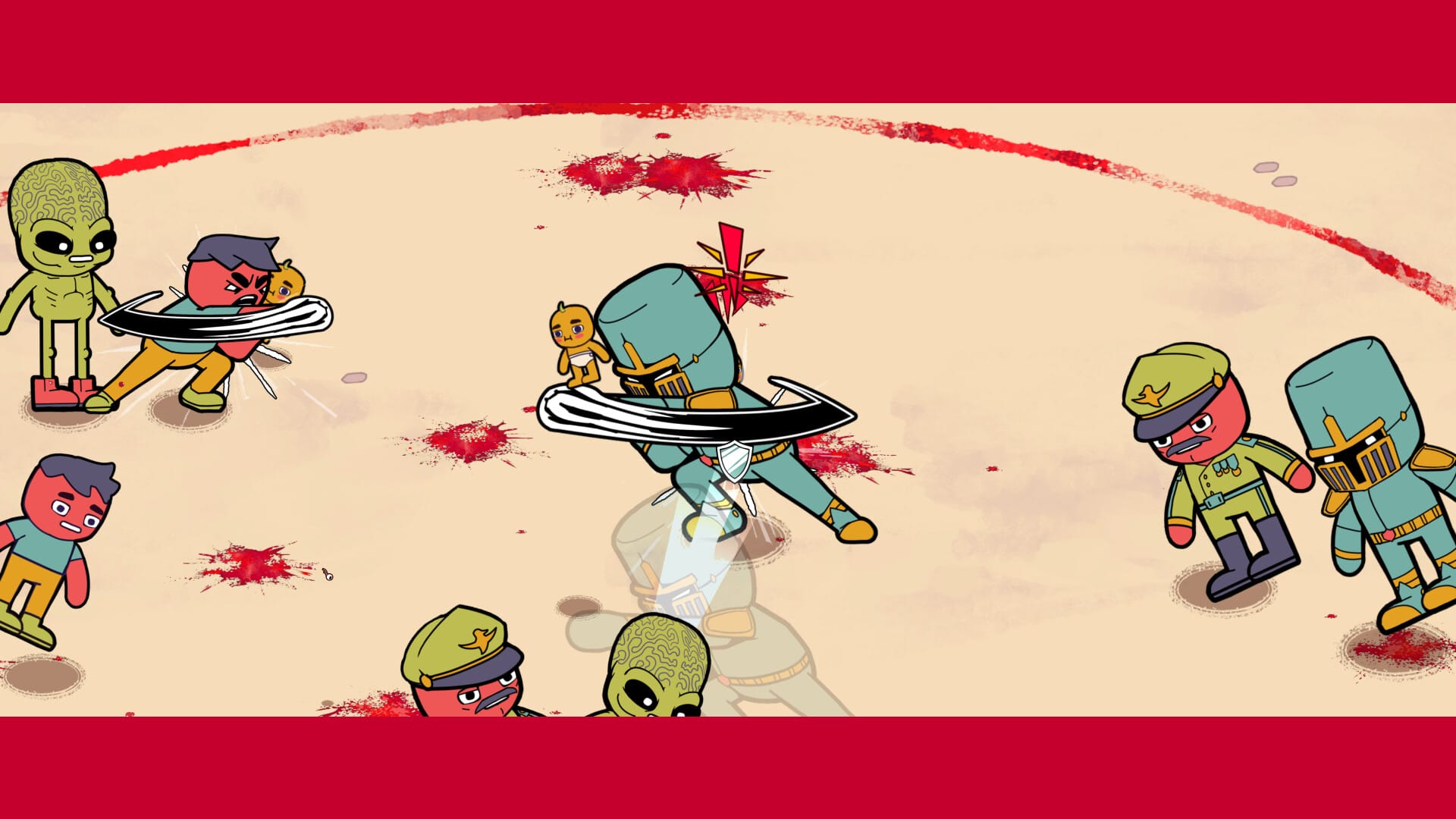
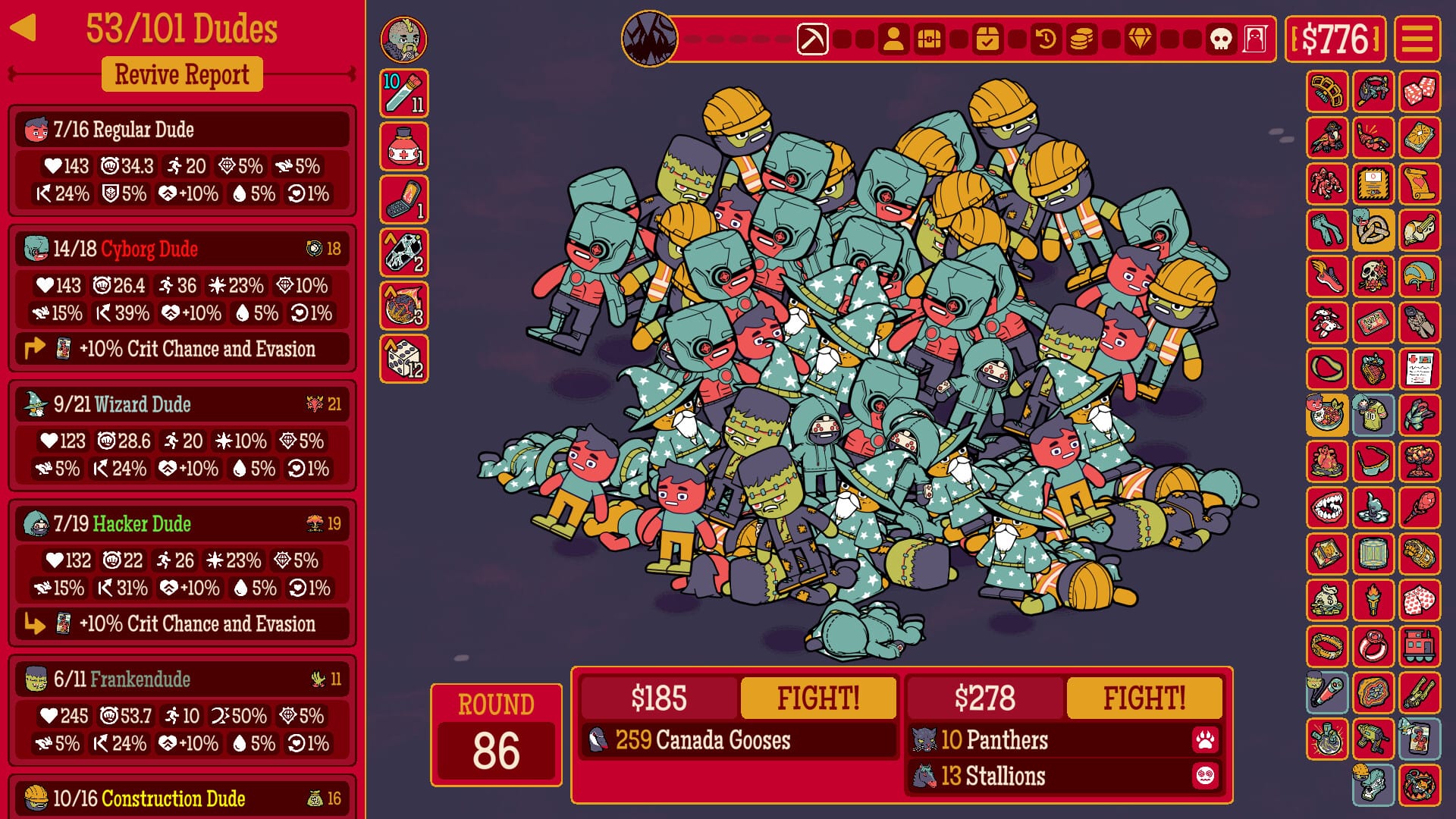
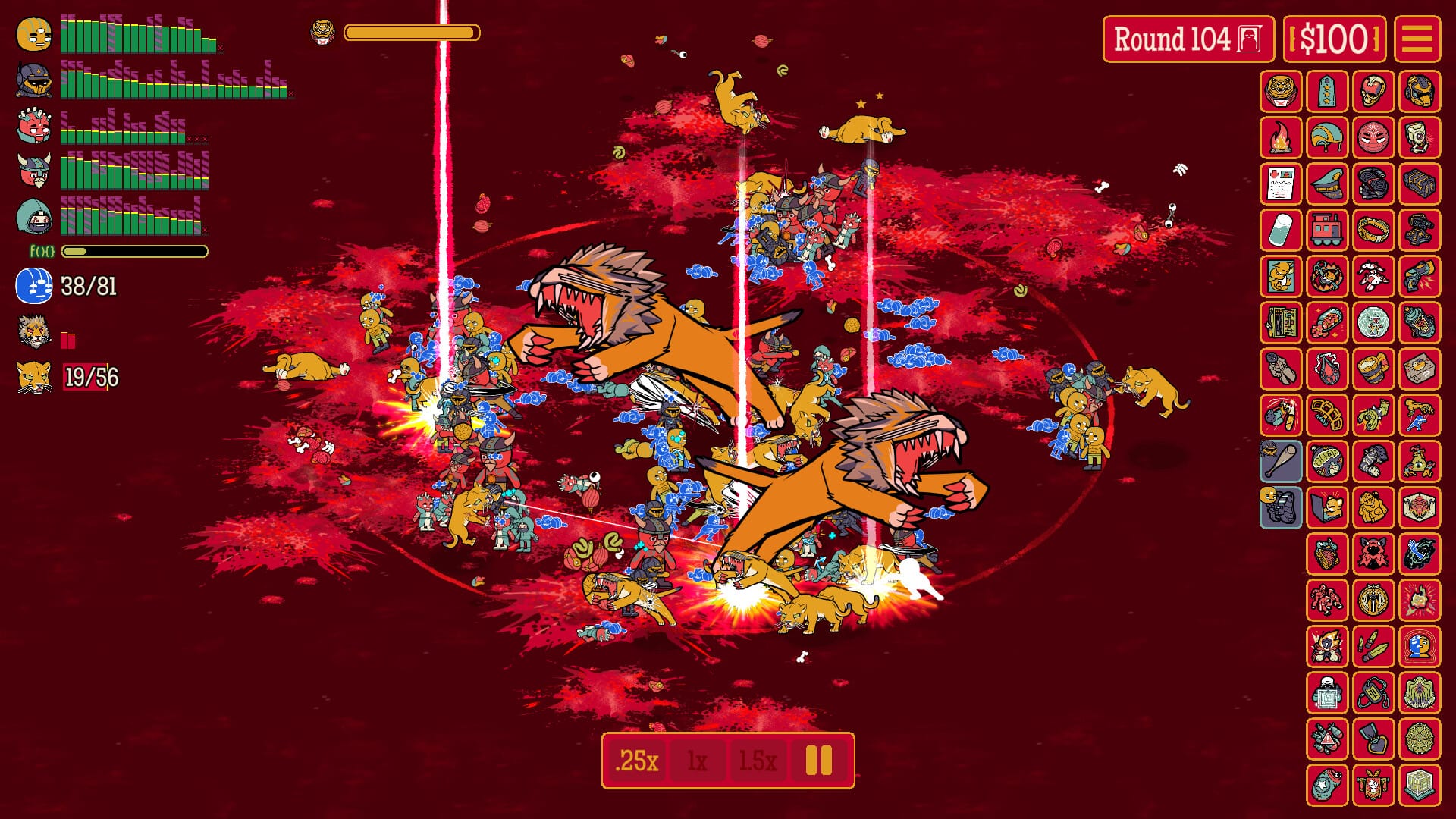
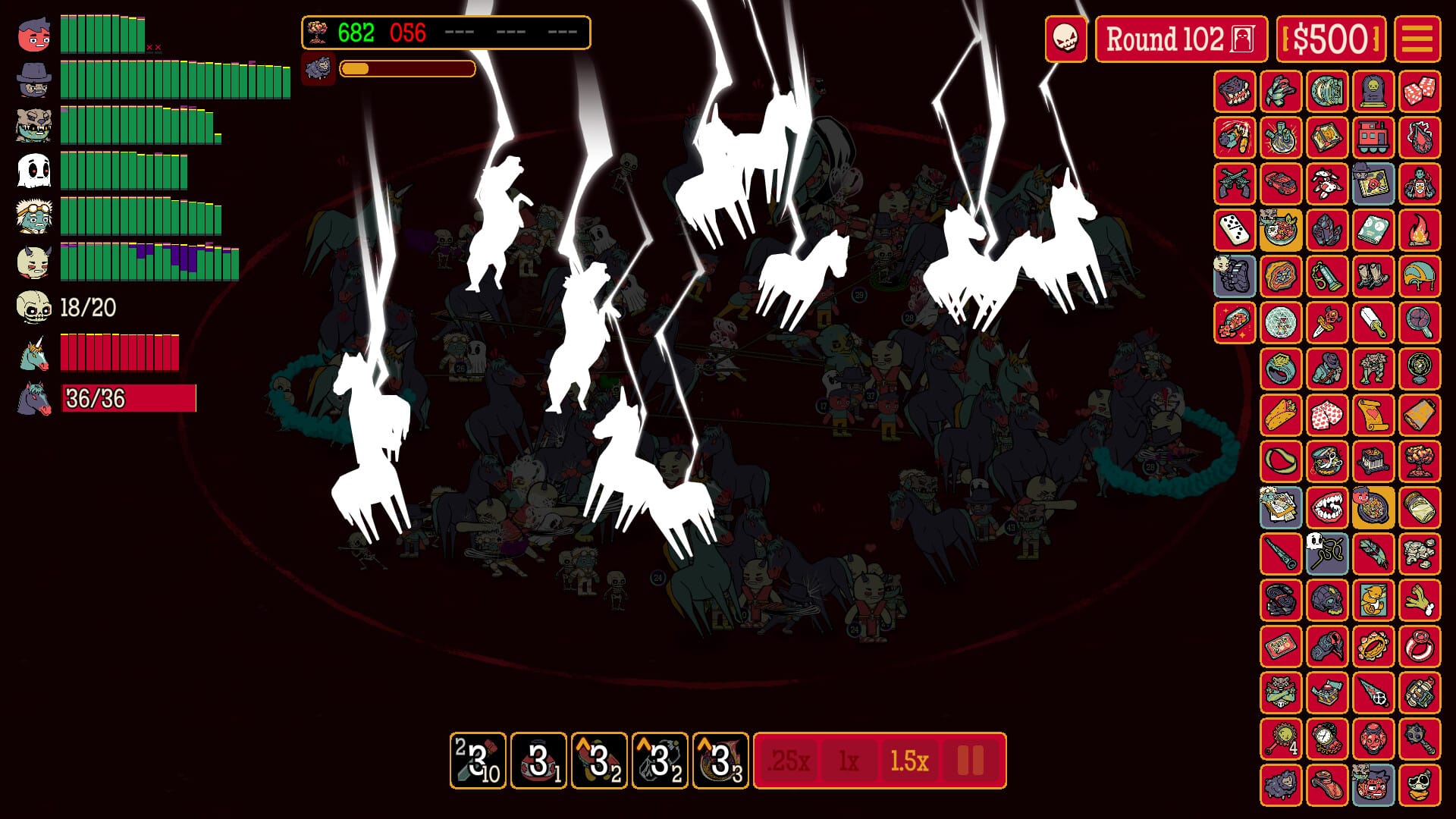
How Many Dudes? © Butterscotch Shenanigans
The game is being developed by Butterscotch Shenanigans, a US video game studio founded in 2012 by three brothers: Seth, Sam and Adam Coster. The studio's portfolio includes Crashlands, Levelhead, Quadropus Rampage, Towelfight 2, Flop Rocket and Roid Rage. They turned to Rekoup for support with PR, publishing and marketing.
How Many Dudes? was released on 30 July 2026 for PC, iOS and Android. The PC version costs €15.49, while the mobile versions are available for €9.99.
How Many Dudes? is a creative playground for trying out lots of escalating builds in a quirky setting, though its runs are a bit too long.