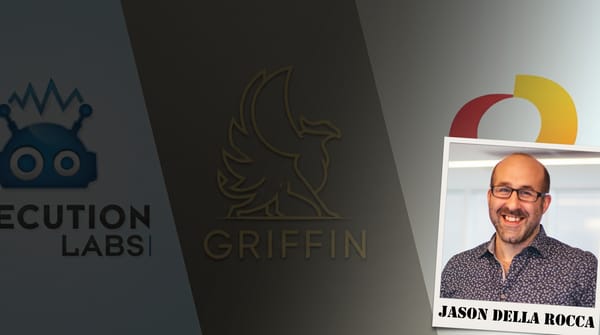
You spent nearly a decade leading the IGDA, focused on community and advocacy, before co-founding Execution Labs, which required a shift to hard ROI and business viability. Looking at the "Indiepocalypse" narrative we see today, what is the single hardest lesson you learned when you switched from cheering for developers to having to tell them their business model was potentially broken?
Jason Della Rocca: The reality is that there’s no difference. I’ve always been focused on developer success, which includes some degree of economic success and sustainability. In my IGDA role, I never hesitated to tell developers what was or was not viable. All of it comes from a place of care and a desire to see people succeed and advance the art form and business of games.
Sure, my tools, structures, formats, etc, have evolved over the years… but the mindset has largely stayed consistent.
Like, how big of a tax credit would California need to introduce to make their wages competitive with Brazil, Romania or Vietnam?!?
Just cheering to make people feel good is a waste of time. If I’m not helping people improve, advance, and achieve their goals… there’s nothing to cheer about. For context, I never let my kids take home their participation medals ;)
When Execution Labs started, the concept of a game incubator was relatively novel. Now, we see accelerators and regional hubs globally. In your view, has the incubator model actually succeeded in creating sustainable studios, or did it primarily just prolong the inevitable for teams that weren't market-ready?
Oh my, this is a big can of worms. The results have been quite variable over the years. In general, having all of these incubators, accelerators, and related indie/startup hubs and support programs has been a net positive for the industry. They are pretty good at giving folks a leg up, providing guidance and mentorship, and sharing wisdom.
The people who run each program make a huge difference, particularly in terms of their level of expertise and connections. The degree to which programs are funded (or not) has a big impact on their ability to truly make a difference for teams.
The main differentiator is to what extent a program is process focused (usually a non-profit entity) versus results focused (usually a for-profit entity).
The process oriented programs tend to focus on filling cohorts, filling up mentoring classes and workshops, graduating teams… rinse/repeat. Their KPIs tend to be focused on input/output of teams and bums on seats. Often these are government funded programs, or linked to academic institutions. Your mileage will vary dramatically, as program leaders are just pumping teams and projects in and out, and not really focused on any one project’s actual success.
The results oriented programs tend to be the ones that are profit-driven and privately funded, so they care deeply about the outcomes of each project. They tend to be much harder to get into, as they are trying to only select true potential winners.
Execution Labs was privately funded and profit driven. Over the past decade, we were one of the few programs that pumped out true winners among the studios we backed, generating millions in game sales (eg, Tribes of Midgard, Outward, Tuber Simulator, Boyfriend Dungeon, etc).
All that said, there is critical ecosystem value with the bums in seats approach. So, in parallel to Execution Labs, we had created GamePlay Space, which was a government backed non-profit co-working space and platform for indie/startup support in Montreal. It was all very complimentary.
The most basic mistake from younger developers is the lack of business case [...] The more serious mistake from mature teams is the lack of traction.
We are seeing a massive retraction in VC risk appetite and a consolidation of publisher portfolios. For the mid-sized indie studio (the "Triple-I" aspirant) looking for $2M–$5M in funding, the door seems shut. Is this a temporary market correction, or is that specific tier of development financially unviable in the current market structure?
All doors remain open to the extent you can provide real evidence that success is likely. While your above statement is all true, it is an oversimplification to say investors have simply stopped spending money. More precisely, what investors and publishers have done in the last couple of years is shift the burden of proof (that success is likely) onto developers. That means that game studios need to take all of the initial risk in building a prototype, creating a teaser trailer, putting up a Steam page, announcing their game, building a community, collecting wishlists, scoring viral posts, etc…. Essentially to generate a market signal (aka traction) that can give confidence to the people with the money to jump in and open their checkbook.
I call it “inception publishing”: You need to start the marketing and publishing process in order to demonstrate that your game can be published successfully in order to convince a publisher to jump on board and publish it.
As such, the real market gap is that no one is funding (ie, taking the risk on) prototypes and the evidence generation phase. It would be interesting to see new funding schemes designed specifically to take that risk… like an option on a proto, contingent on market traction.
You consult with governments worldwide on building game clusters. A common failure mode is a region throwing tax credits at the wall without building talent density. Aside from tax incentives, what is the one non-negotiable "infrastructure" element a region needs to actually retain IP, rather than just becoming a service farm for foreign publishers?
Despite all the success Canada has had with tax credits, they are rarely the best tool to develop an ecosystem.
In short, a tax credit reduces the cost of labor. This only matters if your labor was costly to begin with (very true in developed hubs like California or UK, for example). This is usually less relevant in emerging economies or more exotic regions with nascent industries. Conversely, if your labor is so costly and the tax credit doesn’t reduce it enough, there’s very little benefit! Like, how big of a tax credit would California need to introduce to make their wages competitive with Brazil, Romania or Vietnam?!?
More critically, tax credits are a post-spend incentive. Meaning, a studio would need to have a million dollars, spend that million dollars on wages, file its annual corporate tax return, and then wait 6-9 months to get its credit. So, if we’re looking to start something new today, the fact that we can get 30% of our wages refunded in 18-24 months doesn’t really help us right now.
Of course, there’s a lot more to it…
What regions really need to solve is enabling talent on the ground to create original IP for global success. This requires some mixture of deliberate effort on education and talent pipeline development, funding schemes focused on new IP creation, and programs to support global commercialization.
Investing in your talent and their ability to generate successful new IP is the most direct path to ecosystem growth and sustainability.
You probably see dozens if not hundreds of pitches a year. In 2025, with user acquisition costs skyrocketing and organic discovery in many ways dead, what is the most dangerous delusion you still see in pitch decks from otherwise talented creative teams?
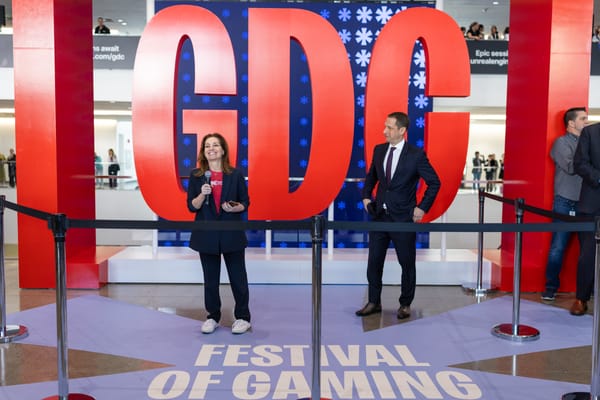
Try thousands! I help run several pitch competitions, including GDC Pitch…. Those alone bring a deluge of pitch decks, nevermind all the direct pitches, meeting requests, etc.
The most basic mistake from younger developers is the lack of business case. Usually the deck only has info about the game (story, mechanics, art, tech, etc). That’s it. Like, “here’s our cool game, what do you think?” style of pitch. No ask, no budget, no timeline, no competitive analysis.
The more serious mistake from mature teams is the lack of traction. As noted above, the burden of proof now falls on the developer. There needs to be a slide with your social media reach/virality, your wishlists if PC, your key engagement KPIs (particularly prototype/demo playtime) and so on. Yes, this takes a significant level of risk and investment on the part of developers… but that’s the new reality.
I still get pitches from folks cozy in their day job at a big studio, with their idea for a cool new game, and they just need $5million so they can quit their job and go indie. This simply doesn’t fly anymore (and mostly never did). You always need to be the first investor in your ideas!
We could be standing on the precipice of AI lowering the production barrier to zero, likely resulting in a store flooded with high-fidelity "noise." In 3 years, does the role of the Publisher shift entirely to being a "Verification Filter" for quality, or will they become irrelevant as platform algorithms take over curation completely?
Oh, this is too big of a topic! For now, I’ll just say that the role of publishers is evolving dramatically. And, more and more developers will shift to self-publishing. If you build up the skills to conduct inception publishing, you are very close to being able to simply self-publish successfully ;)
More precisely, what investors and publishers have done in the last couple of years is shift the burden of proof (that success is likely) onto developers.
The real key is going to be about audience aggregation and community. Building a fanbase, and delighting those fans with your games over time will be the only path to sustainable success. Today, publishers that are more genre/audience specific are having tremendous success (eg, Hooded Horse with strategy). Those with more random/eclectic portfolios are struggling to resonate consistently.
Studios that target a specific audience (eg, SciFi nerds) and consistently deliver games to their audience will see ongoing success.
To close things out, a hypothetical fun question. If you were given absolute authority to change one standard industry business practice, be it the 30% store cut, the publisher recoupment model, or exclusivity clauses, which one would you alter to immediately improve the health of the global ecosystem?
Ha! I’d decouple project funding from publishing services. This would mean that all publishers split in two: a project fund and an agency with go-to-market services. This implies that all developers would shift to self-publishing, critically building and owning a direct relationship with their audience and fanbase. They would get funding from the various project funds, and then use those funds to engage whatever additional support services needed.
This would maximize enterprise value for indie studios and create true long-term sustainability. Now that’s something I could really cheer for!
Zoran Roso stands as a highly influential veteran of the video game and entertainment industry, with a distinguished career spanning over 25 years in global publishing, marketing, and leadership roles. His professional journey includes serving in significant executive positions at some of the world's most recognizable gaming giants, including Rockstar Games/Take 2 Interactive, Activision Blizzard, and Sony PlayStation, where he was instrumental in the marketing and strategic positioning of flagship AAA franchises and brands. Most recently, he leveraged this extensive experience as the Global Publishing & Marketing Director at Tencent Games, a critical role focused on expanding the company's international reach and developing successful go-to-market strategies for its massive portfolio of internal and partner studios.
Now operating as the founder of ZR Consulting, Zoran continues to drive success in the industry by advising major global publishers and developers. His firm specializes in crafting winning strategies for international brand development, optimizing live service performance, and executing flawless launch plans across all major platforms, including console, PC, and mobile. An active figure in the global games community, his career is marked by a clear strategic vision and a successful track record in translating complex products into global commercial successes.
Contact details:
ZR Consulting
eMail: [email protected]
LinkedIn: https://www.linkedin.com/in/zoran-roso/