Interview: Coherence 2.0 and 'The Democratisation of Multiplayer Development'
Coherence 2.0, the next major release of coherence's multiplayer engine and hosting platform, was released late last year. We spoke to Dino Patti, the company's CEO and co-founder, about the democratisation of multiplayer development, engine integration, and the importance of multiplayer in general.
GamesMarkt: Could you start by giving us a brief overview of how coherence has developed since the company was founded in 2018?
Dino Patti: "coherence was founded in 2018 with the goal of democratizing multiplayer game development, essentially making it vastly easier for any studio to build connected games. In the early years, we invested heavily in R&D to create a new kind of networking engine from scratch. By 2019 we had a working prototype, and over the next few years we fine-tuned the technology through iterative testing and early-access releases. We launched our first public version around mid-2023, and it's been steadily evolving since."
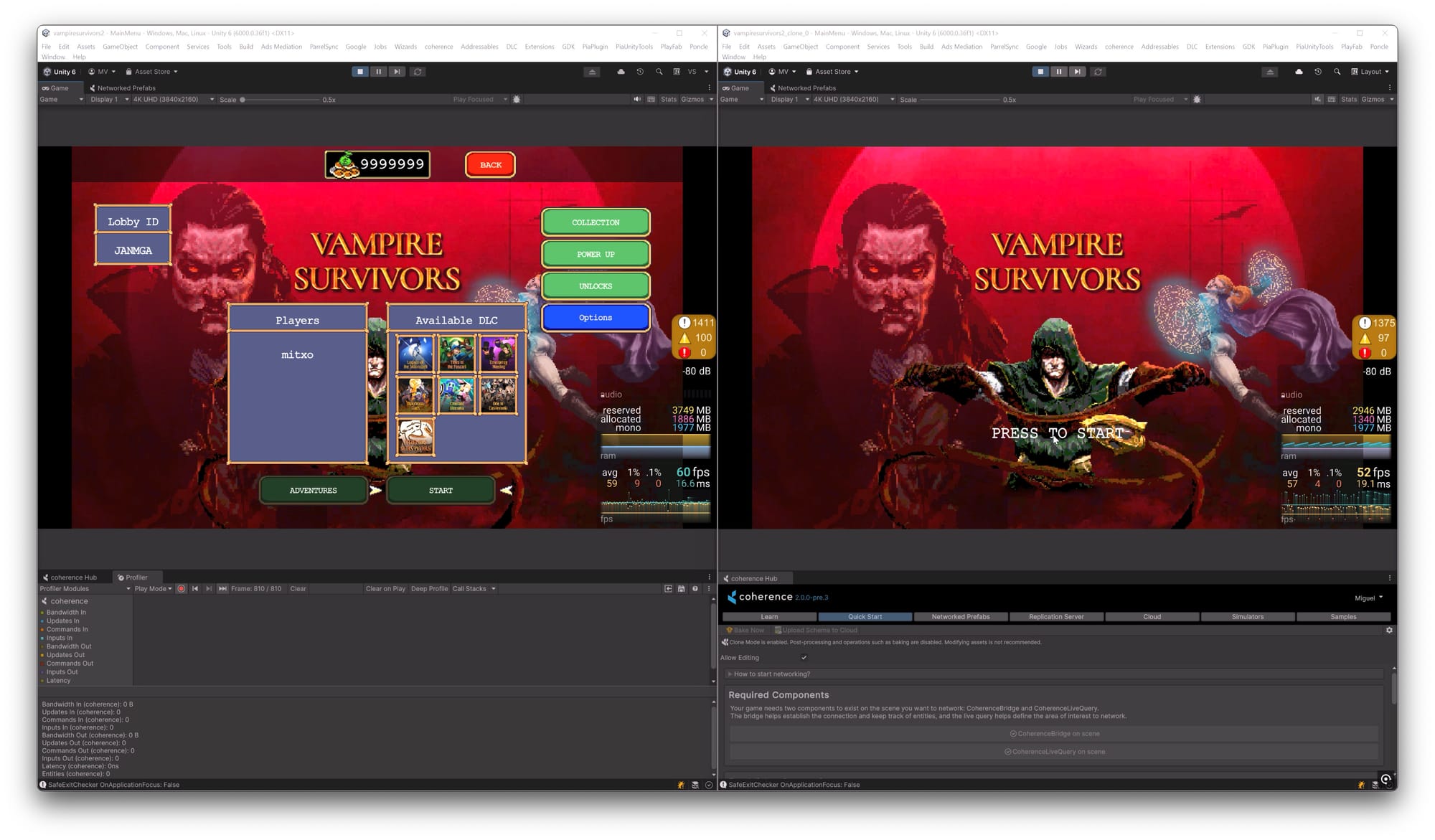
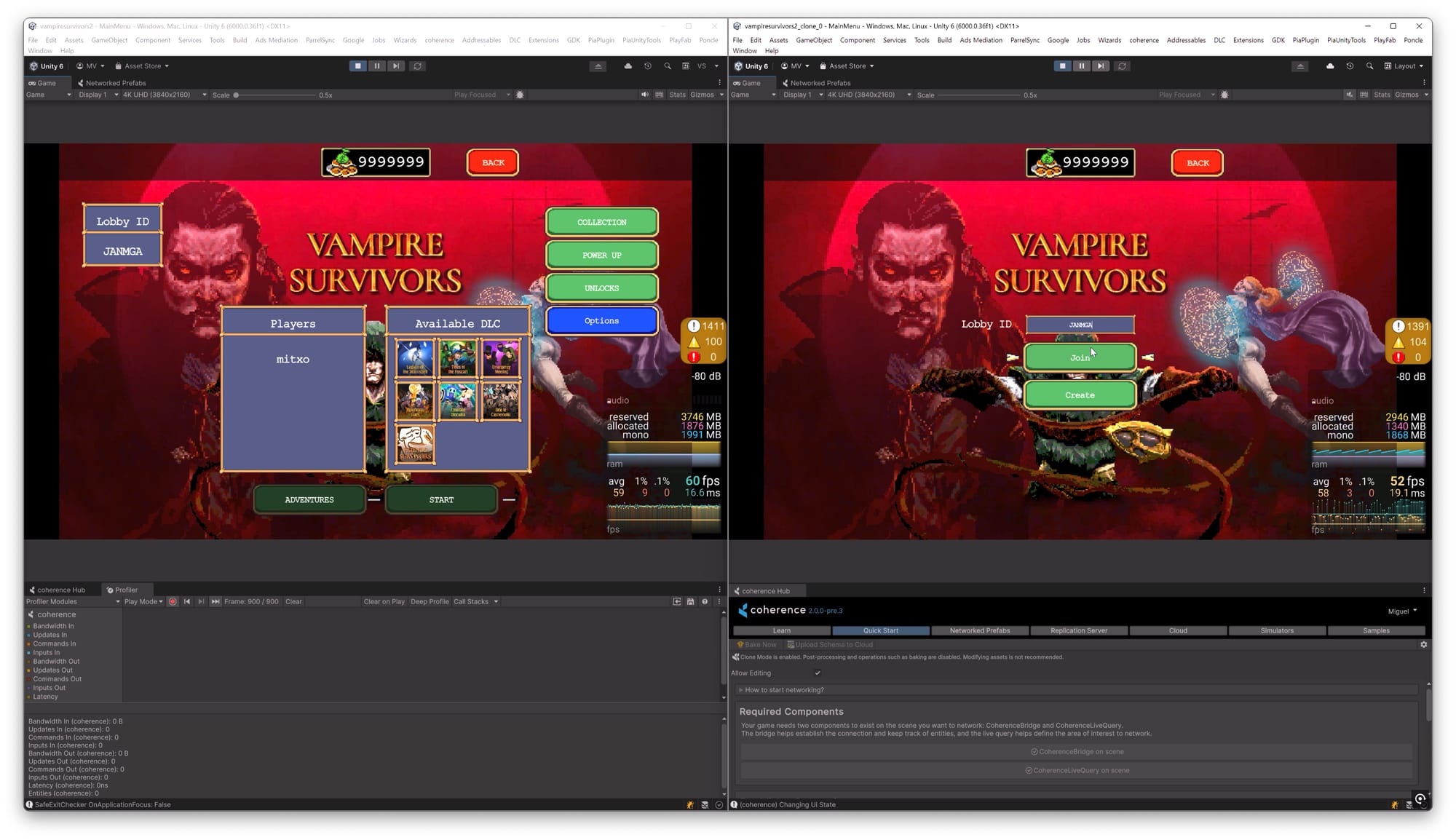
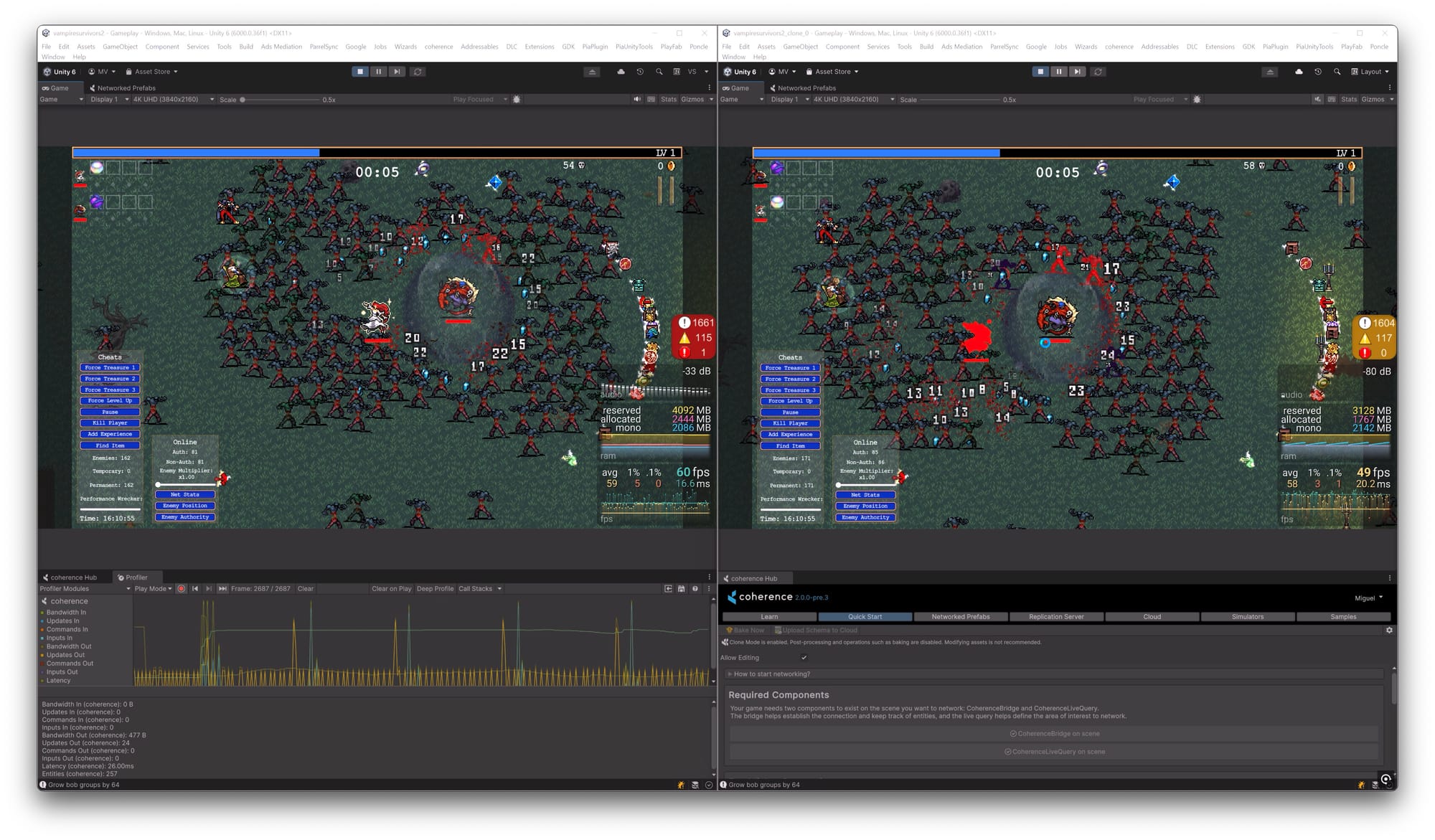
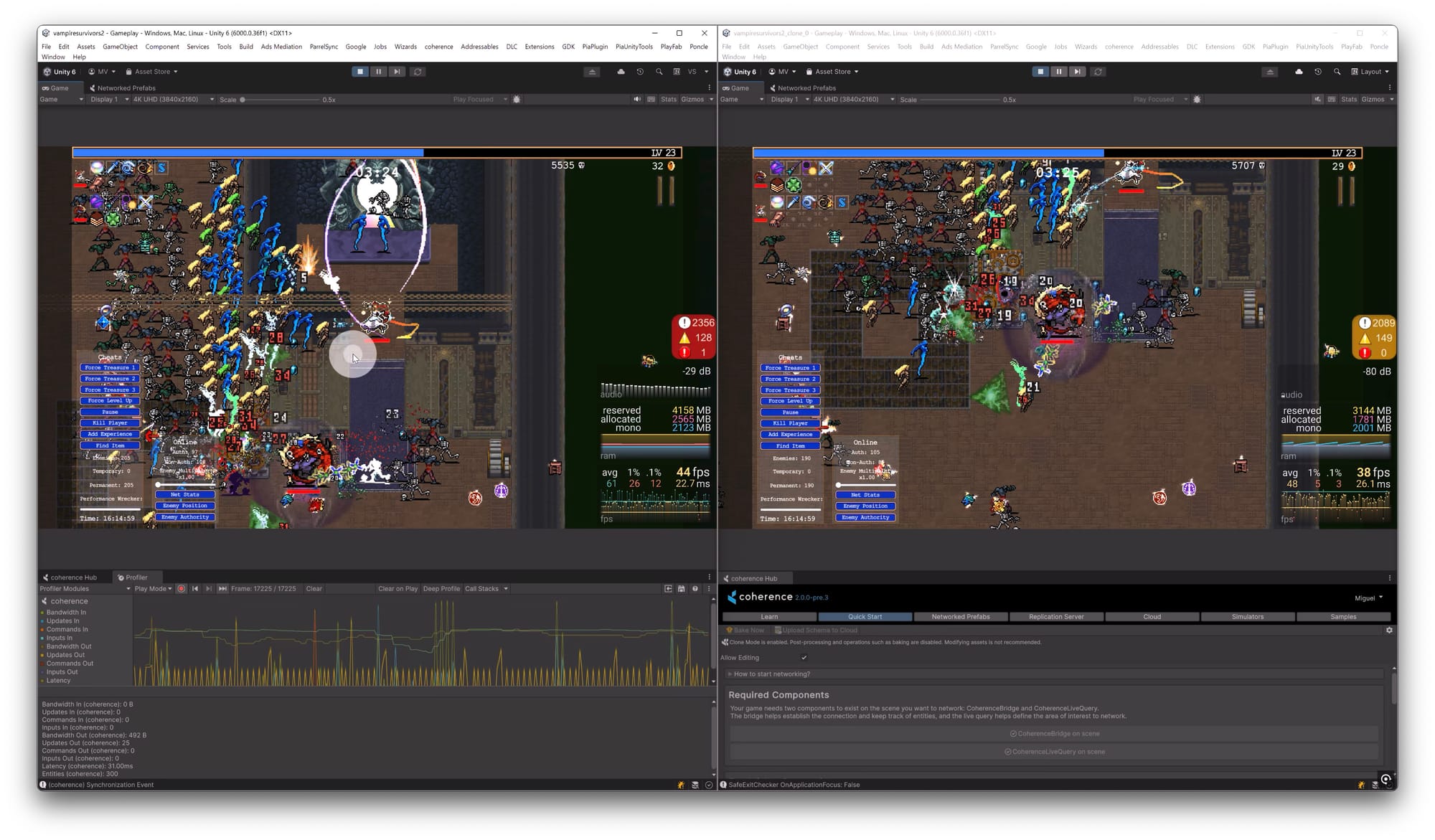
"A major validation came when Poncle used coherence to power the online co-op mode of Vampire Survivors, proving that our architecture could deliver a smooth multiplayer experience even for a hugely popular title. This production experience fed directly into our development cycle. We gathered real-world feedback and scaled up the platform's capabilities in response."
"Today, coherence has just released version 2.0, which is the culmination of everything we've learned so far through our production work with Poncle and other studios. From our early startup mentality, we've grown into a highly focused team of experts that's big enough to tackle ambitious problems yet lean enough to stay agile."
"The company is still relatively small, on the order of just around 23 people. We stay lean and hire only the best developers, wherever they happen to be in the world. We're headquartered in Malmö, Sweden, and our team is spread across several countries, reflecting the global nature of game development. That size and spread gives us a good balance: we have a tight-knit core of multiplayer experts and developers, and we can draw on diverse perspectives worldwide as we continue to refine the technology."
The idea for coherence emerged from conversations that the company's founder and CEO, Dino Patti, had with other veteran developers at games industry events. Coherence is a comprehensive toolkit designed to enable multiplayer functionality in Unity projects. "Our Multiplayer-as-a-Service platform empowers game developers to create, test, and scale multiplayer through our Unity SDK, Network Engine, and flexible hosting. coherence also offers full co-development services, providing multiplayer production from prototype to live launch and beyond," the company states. The online multiplayer mode of Vampire Survivors (Unity engine) was realised with coherence.
GamesMarkt: One of coherence's ambitions, both then and now, was to democratise multiplayer development. What has worked well so far, and what hasn't?
Dino Patti: "Our mission has always been to level the playing field for creating multiplayer games to remove the technical and economic hurdles that traditionally stop smaller teams from implementing online features. In terms of what's worked well, we've seen a lot of success in making complex networking more accessible. Developers with little to no prior networking experience have been able to get multiplayer prototypes running in minutes using coherence."
"For example, during various game jams, even solo developers managed to build functional multiplayer demos over a weekend using our tools, something that would've been unthinkable for many of them before. This ease-of-use and quick iteration cycle has really validated our 'democratization' approach. It proves that if you give creators the right tools, they can unleash a ton of creativity in multiplayer design. We've also had positive feedback on our Unity integration and editor workflows: by offering coherence as a Unity Verified Solution, we made it feel like a natural extension of a developer's existing toolkit. That familiar workflow, like being able to click a button to upload a web build and instantly playtest with others, has been a big win in lowering the barrier to entry."
"As for what hasn't worked so perfectly yet, I'd say we've learned a few lessons along the way. One challenge has been that 'democratizing' multiplayer is not just a tech problem but also an educational one. Even with good tools, some developers are initially intimidated by the whole idea of networking. Early on, we realized that we needed better documentation, tutorials, and examples to help people get over that mental hurdle. We've improved a lot in those areas, and it's something we continue to work on."
"Another area we refined significantly was our business model. Initially, our pricing and hosting options weren't as straightforward as they could be, which may have deterred some smaller studios. We know that being forced into unclear costs for servers and hosting can be intimidating and, frankly, scary. Nobody likes big, unexpected bills. On top of that, we know that studios and publishers are often forced into difficult situations where they have to shut down games due to those ongoing costs, and we want to make sure developers have an option that lets them avoid that."
"So, after listening to feedback and we've introduced a much simpler, developer-first pricing model (with a free tier for indies, for instance) to align with our mission of accessibility. Indies will be able to start using coherence for free and, if they launch their game using our Client Hosting model, they only have to pay if their game becomes financially successful. Then, when the game isn't making money anymore, the developer can leave the game running since Client Hosting doesn't require dedicated servers, and therefore no ongoing costs to the developer. It's a huge win-win: fair pricing when they're making money, and players can play forever, no matter what. Games don’t need to die."
"In short, the vision has held up well and we're achieving it step by step, but we've had to iterate not only on the tech but also on how we support and engage with developers. The journey has taught us to address both the technical barriers and the practical concerns (like cost and learning curve) that come with multiplayer development. Coming out of the Unite conference, in Barcelona, we’ve received truly great feedback from Unity developers on the ease of use of our tech as well as the pricing model. Developers are excited to have a better option for multiplayer and we’re proud to deliver that." - Dino Patti, CEO and co-founder of coherence
GamesMarkt: Could you provide figures on how often coherence is used, or at least give some examples of where it is used apart from Poncle?