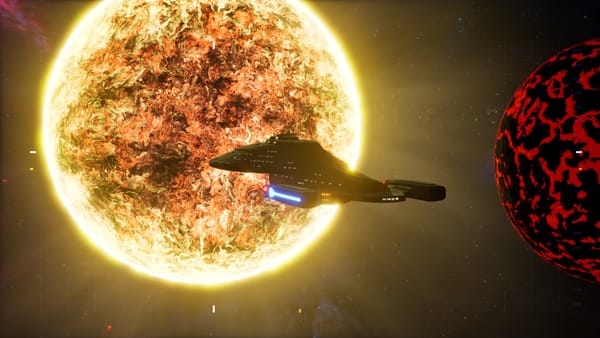
A Star Trek game from Germany? Yes, exactly. Developed by gameXcite and Daedalic Entertainment, Star Trek: Voyager – Across the Unknown is a narrative adventure and base management game in which players embark on the starship's journey to the Alpha Quadrant.
Games based on the Star Trek licence, and more specifically on the TV series Star Trek: Voyager (1995–2001), are truly rare – they are over 20 years old, while the series itself premiered over 30 years ago. The Voyager games include the shooters Star Trek: Voyager - Elite Force (2000) and Star Trek: Voyager - Elite Force II (2003), as well as the arcade game Star Trek: Voyager – The Arcade Game (2002). At least some of the characters and the ship were available in Star Trek: Encounters (2006). No other games were released centring on Voyager, but this is set to change with Star Trek: Voyager – Across the Unknown, developed by the German team gameXcite and published by Daedalic Entertainment.
In Star Trek: Voyager – Across the Unknown, players can relive and, more importantly, redefine the U.S.S. Voyager's journey back to Earth. They will traverse 12 sectors of the unexplored Delta Quadrant. The game blends narrative adventure with base management — specifically, exploration, ship and resource management, roguelite elements and meaningful choices. However, some elements will be familiar to fans of other science fiction games, such as FTL, Frostpunk and the XCOM series. Player decisions shape the fate of the crew and the configuration of the U.S.S. Voyager itself, with the question "What if?" always at the forefront. What if Captain Janeway had made different decisions, or if a key crew member had taken a different path? With each playthrough, the ship becomes a different version of itself, re-engineered and reimagined based on the path taken through the quadrant and the command decisions made along the way. While there are fixed cornerstones in the story that will be encountered on each iteration of the journey, the outcome is up to the player.
"Our game spans all seven seasons of the TV show, meaning players relive the entire journey home. You will experience all major plot points and encounter the key characters and species, so the short answer is yes to all of the above. At the same time, we put a strong emphasis on branching narratives and open up many 'what if' scenarios that meaningfully alter the story. What if you manage to control Kes' psychic abilities but decide to space Seven of Nine instead of freeing her from the Borg? What if you decide not to split Tuvix and offer amnesty to Seska? Many of these outcomes are tied to your specific ship build, where certain technologies, crew compositions or sheer force are required to change the course of events." Patrick Streppel, Founder and CEO, gameXcite GmbH and Chief Product Officer, Jumpgate AB
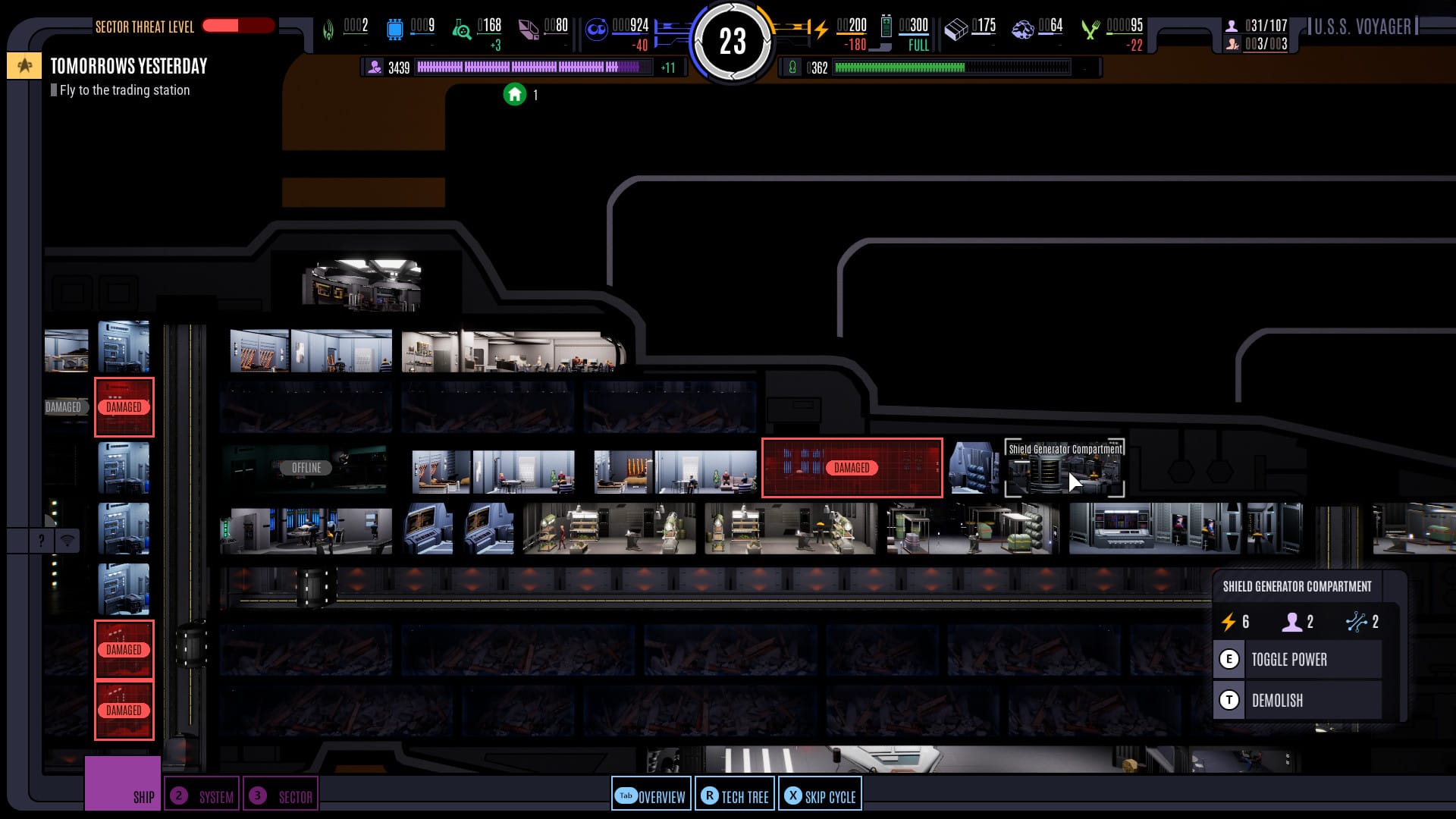
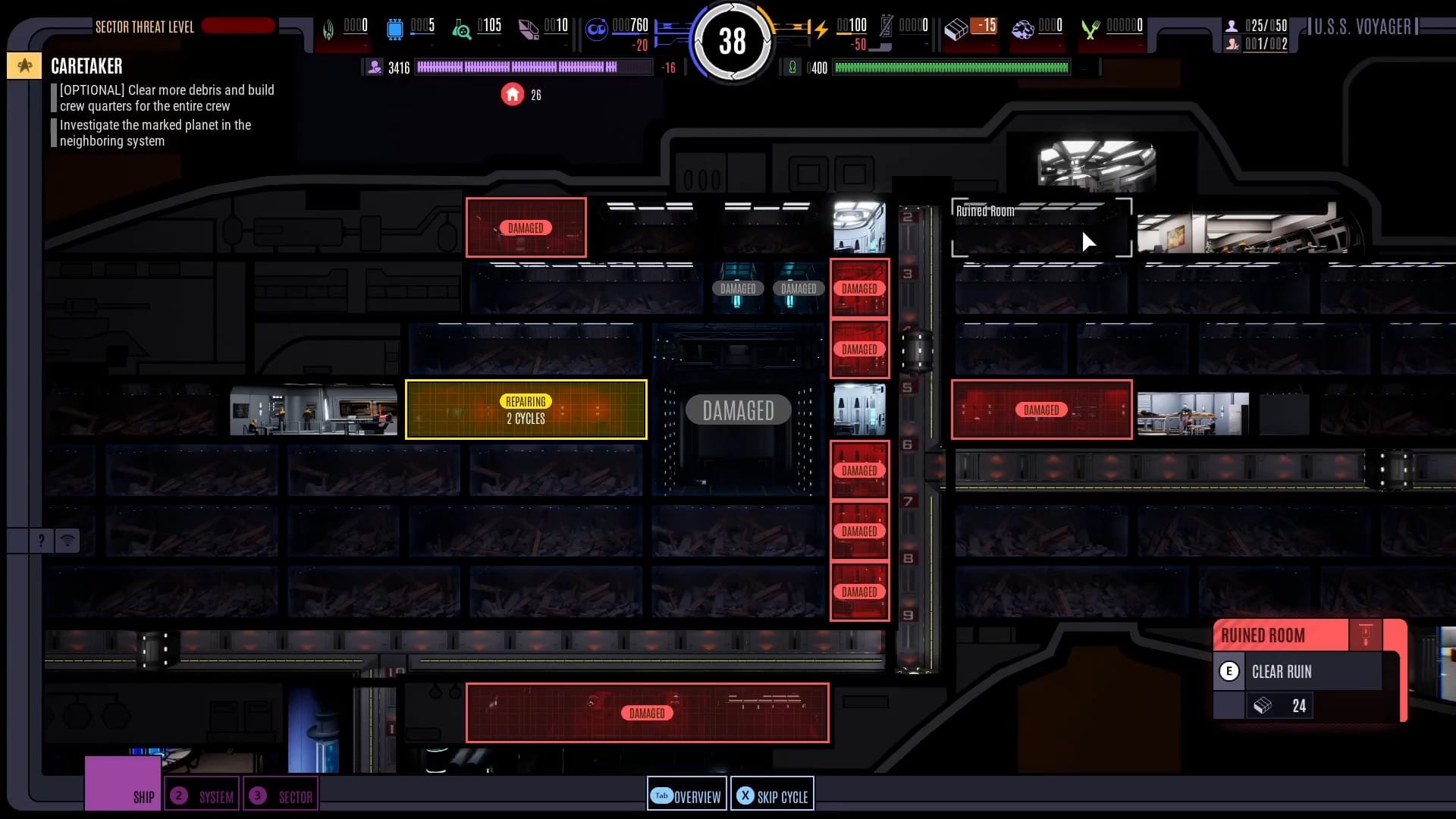
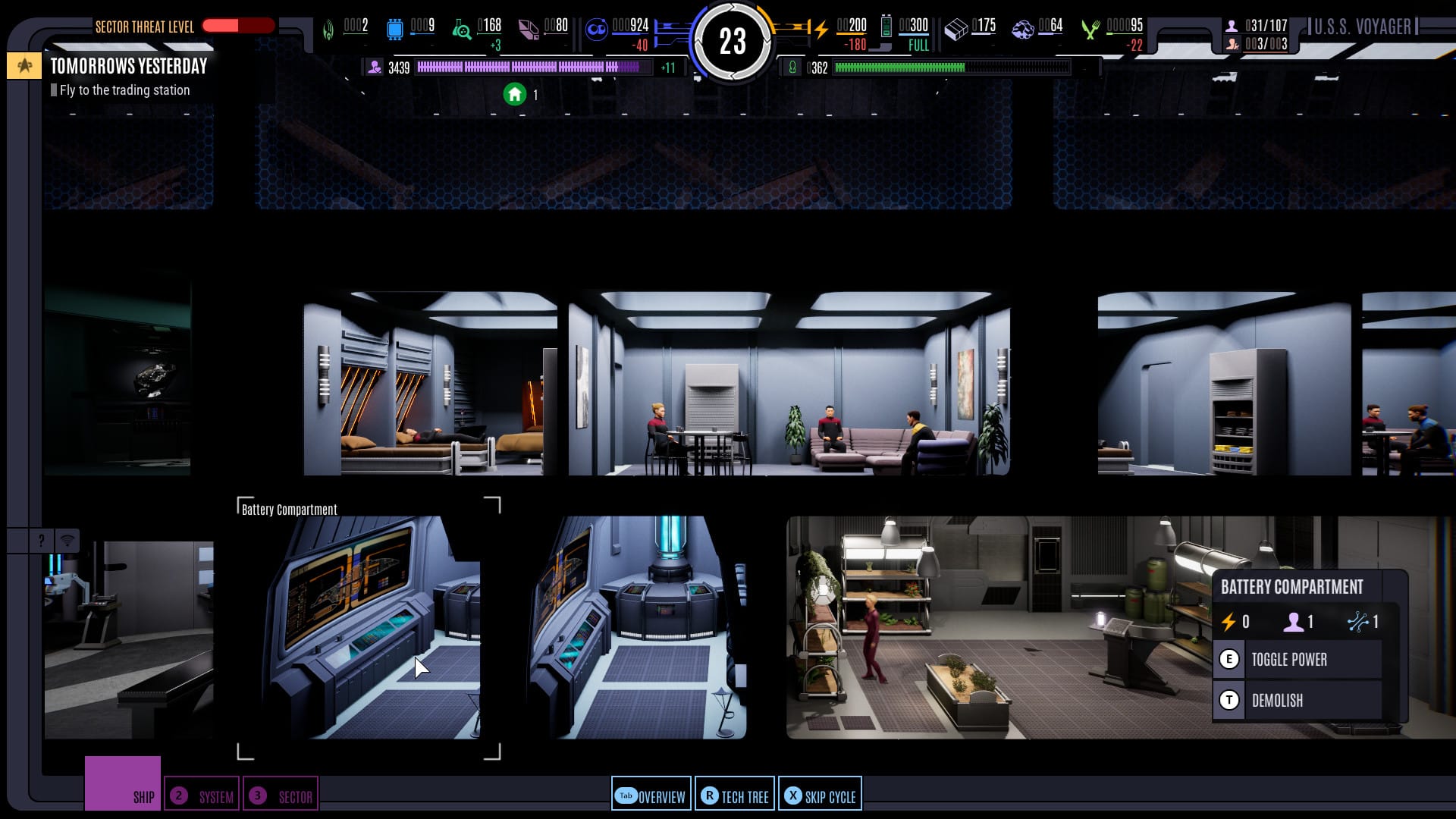
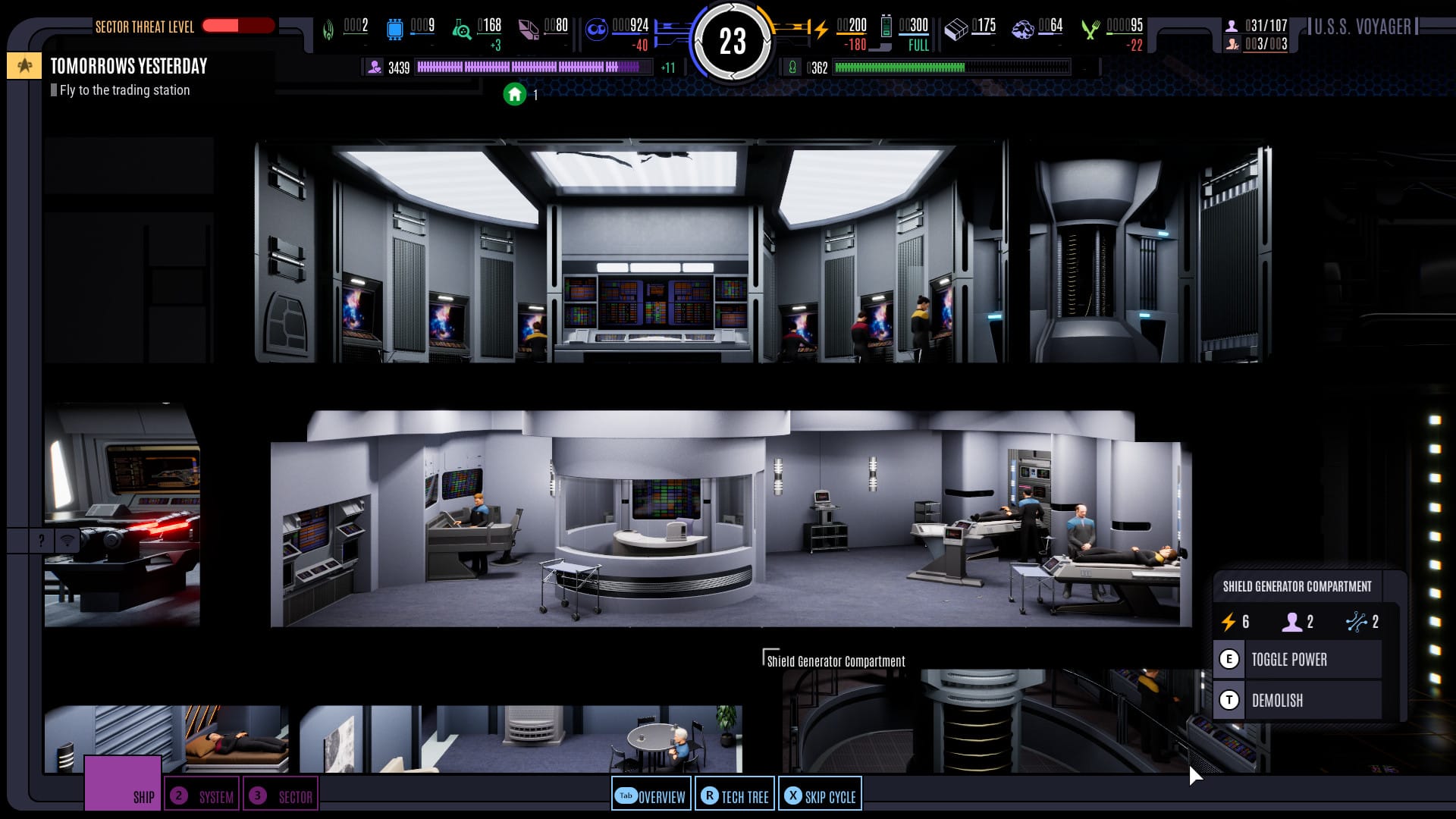
And this begins right from the outset. After being 'relocated' to the Delta Quadrant, the USS Voyager ends up severely damaged. Players must decide what to repair or build (ship systems, life support, crew quarters, industrial and research facilities etc.), and when, to ensure the ship has everything it needs for the journey — this is all about managing scarce resources. Players can also conduct research into different fields. New technologies and improved layouts will strengthen the ship and boost the crew's morale. Exotic and dangerous research areas, such as Borg technology, are also available. As captain, players must decide whether to embrace it for its potential or avoid it because of the dangers it presents. Once again, decisions are what matter most.
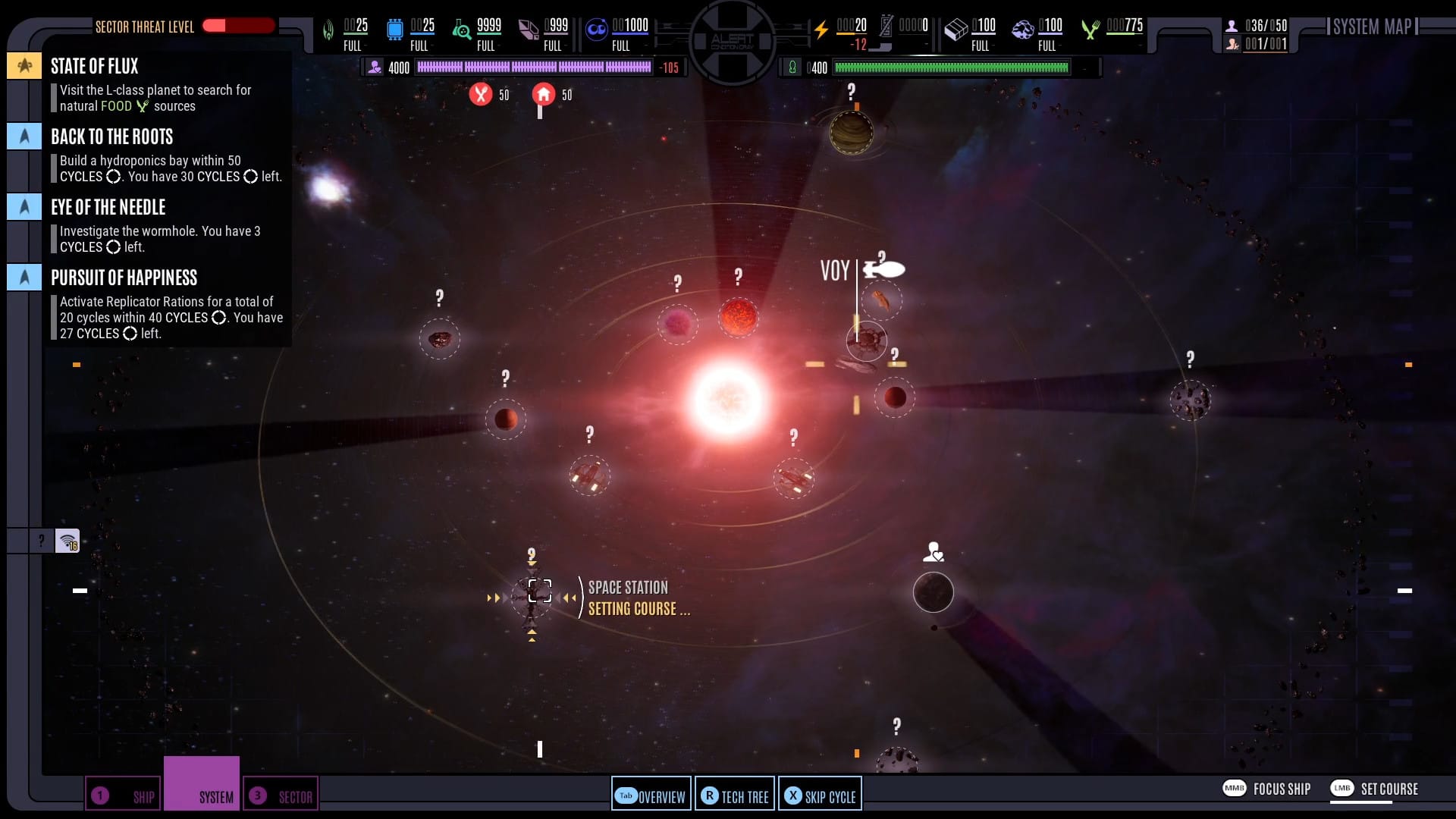
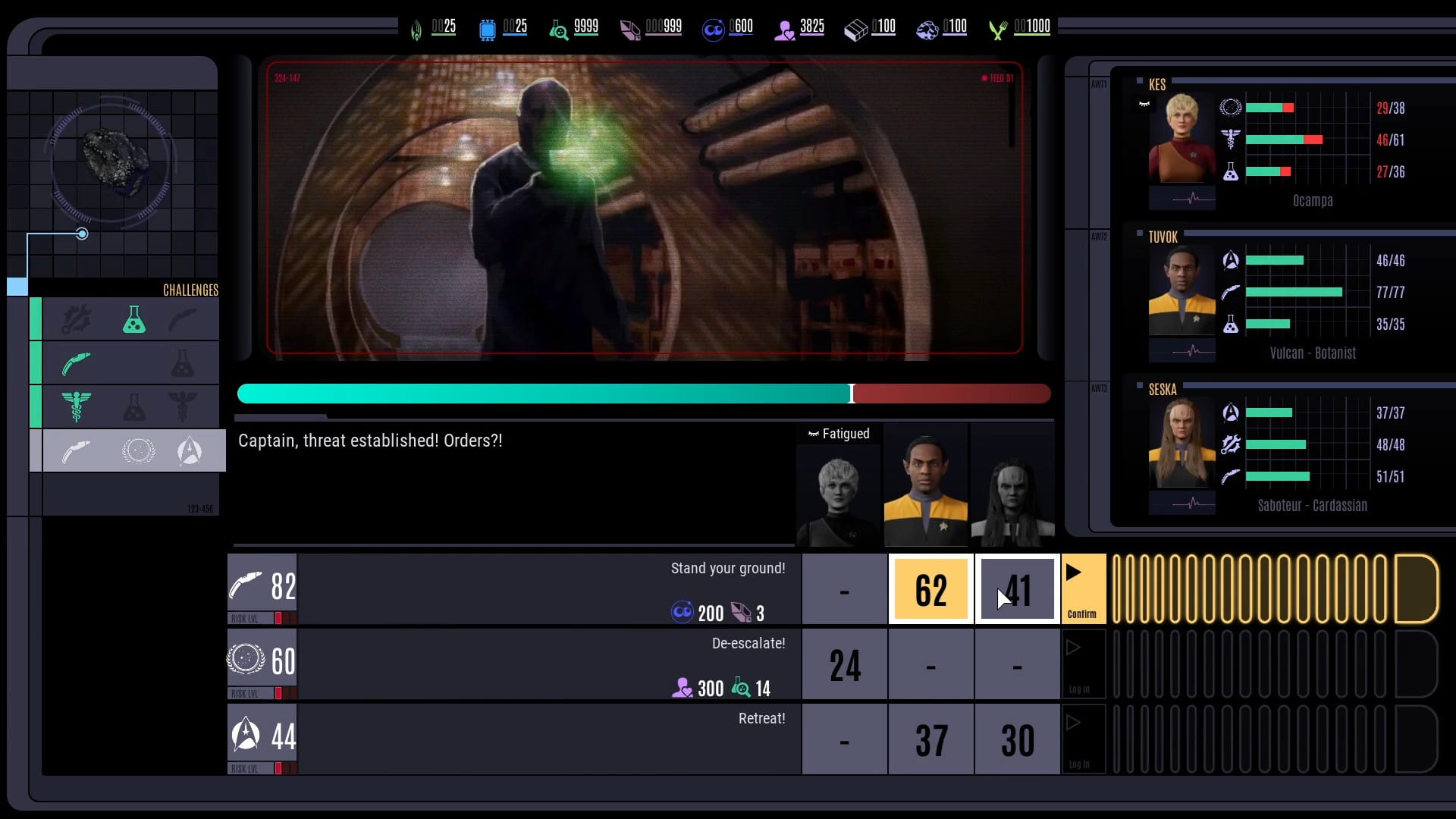
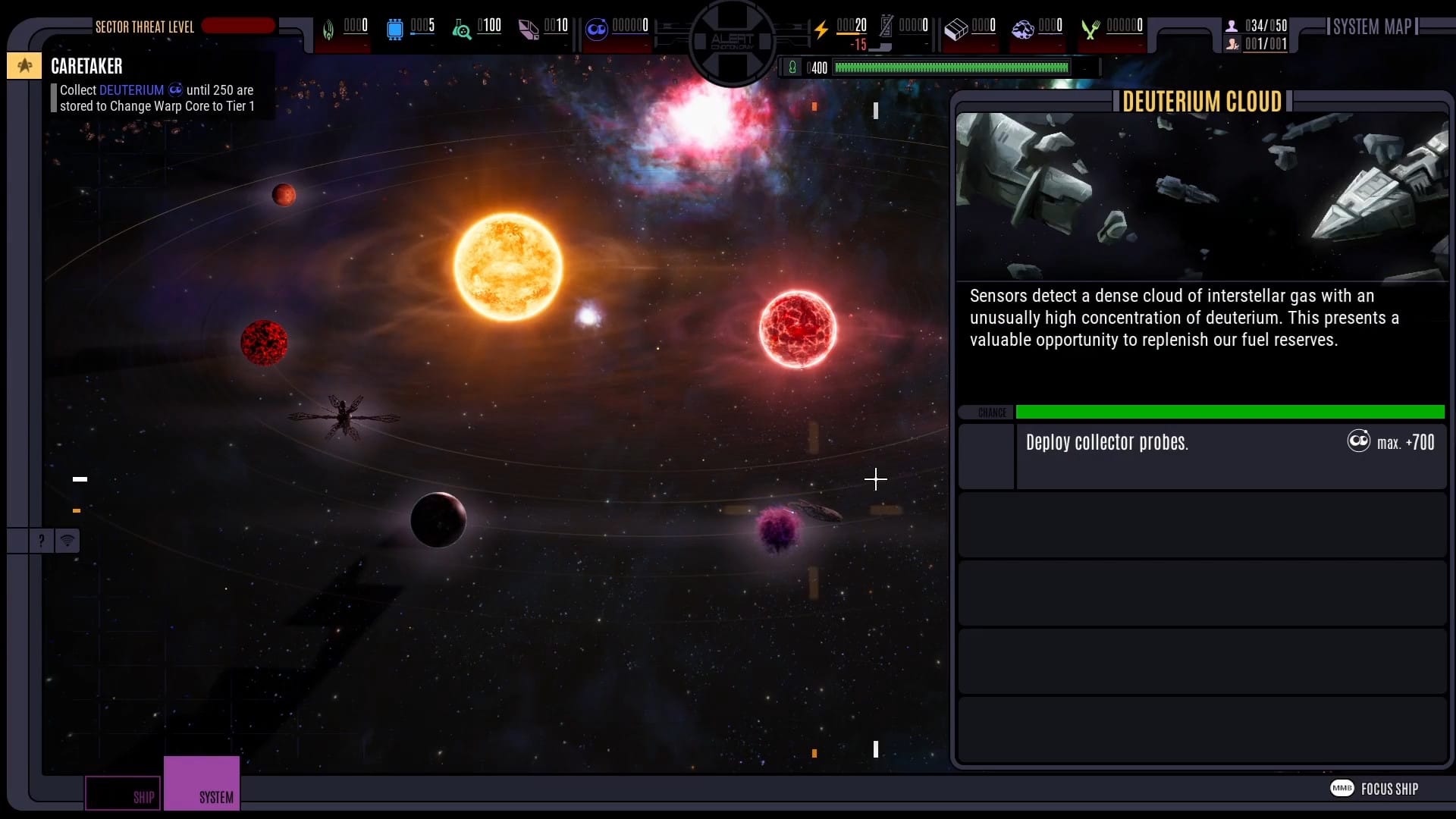
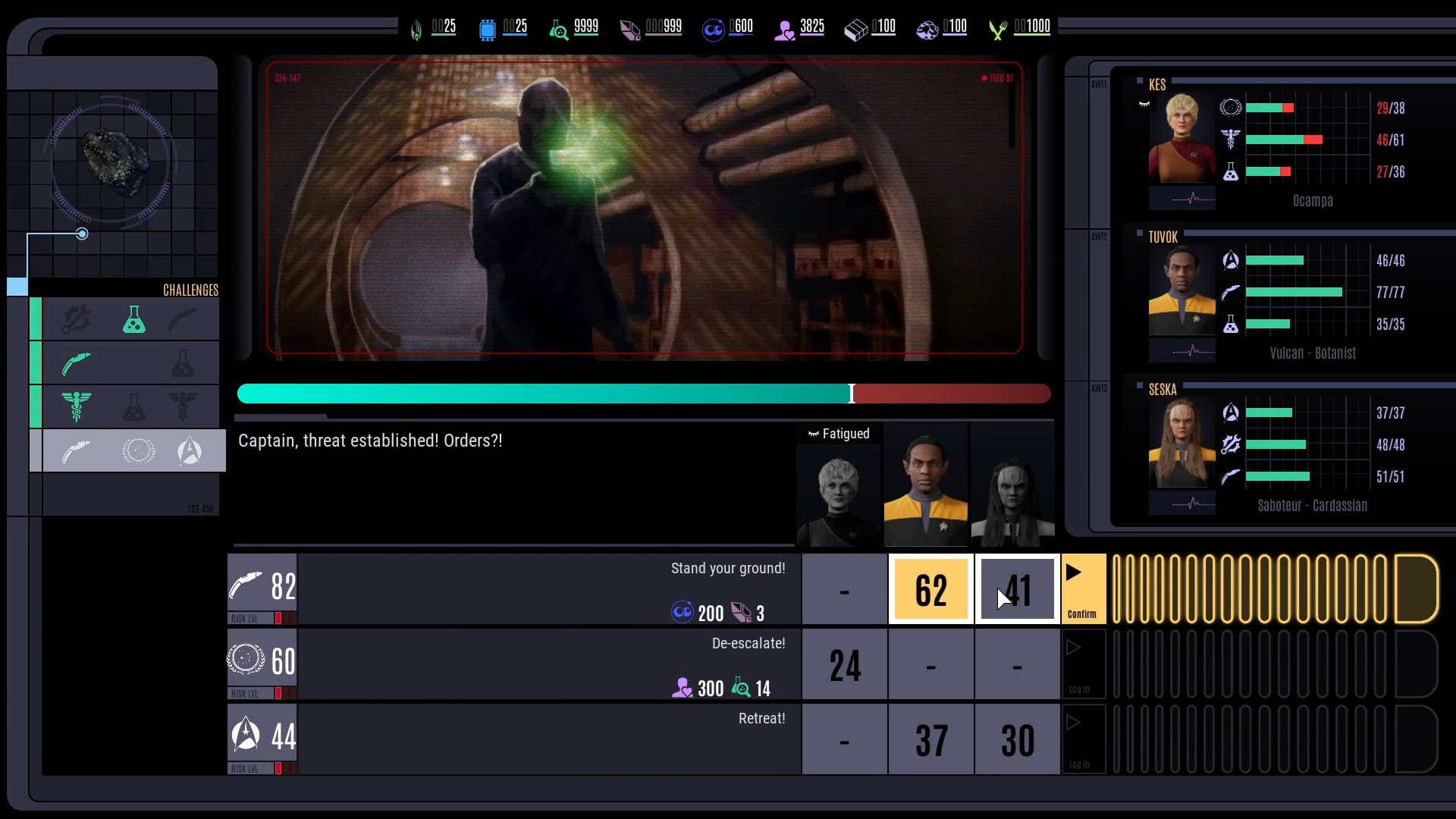
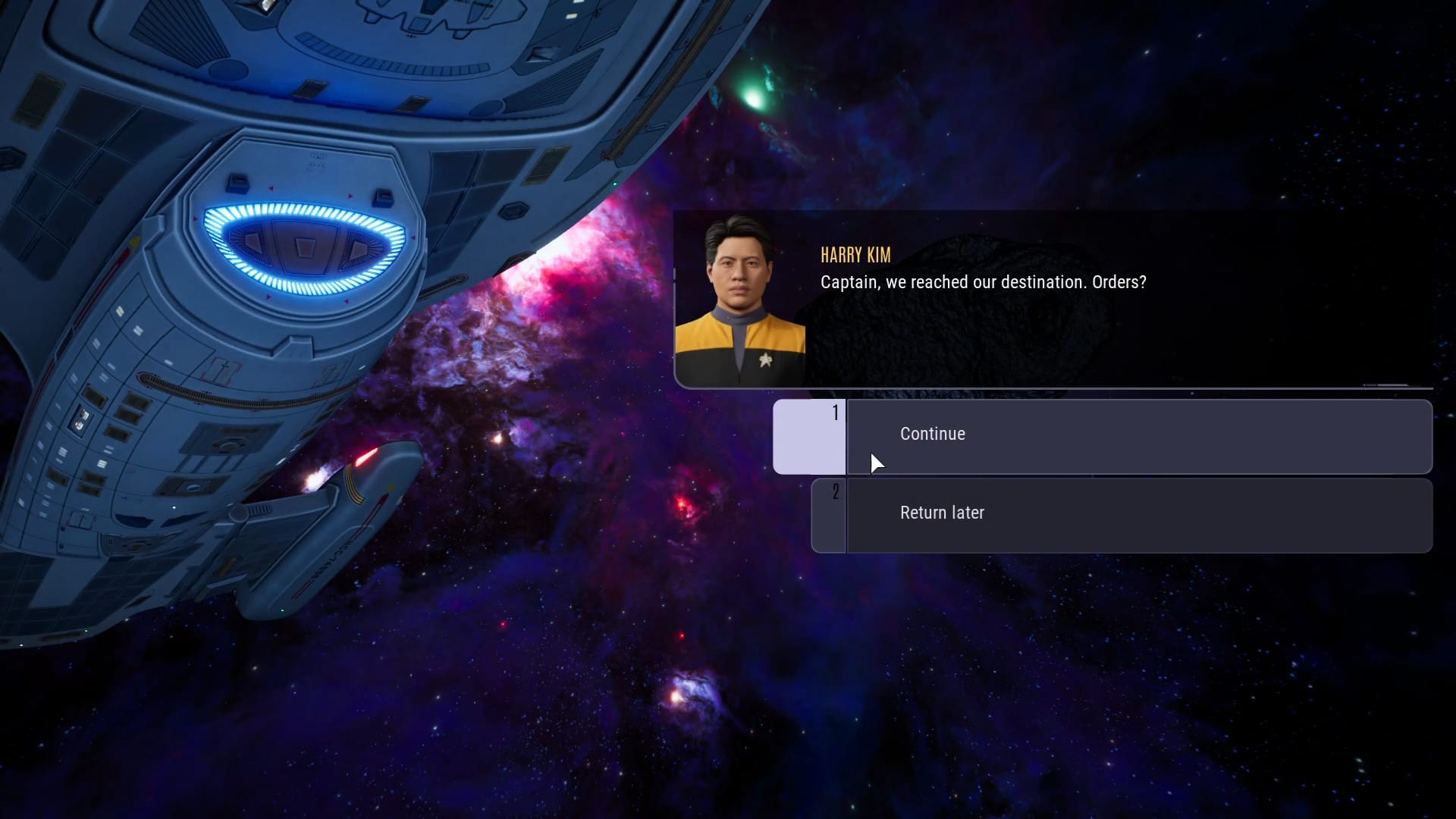
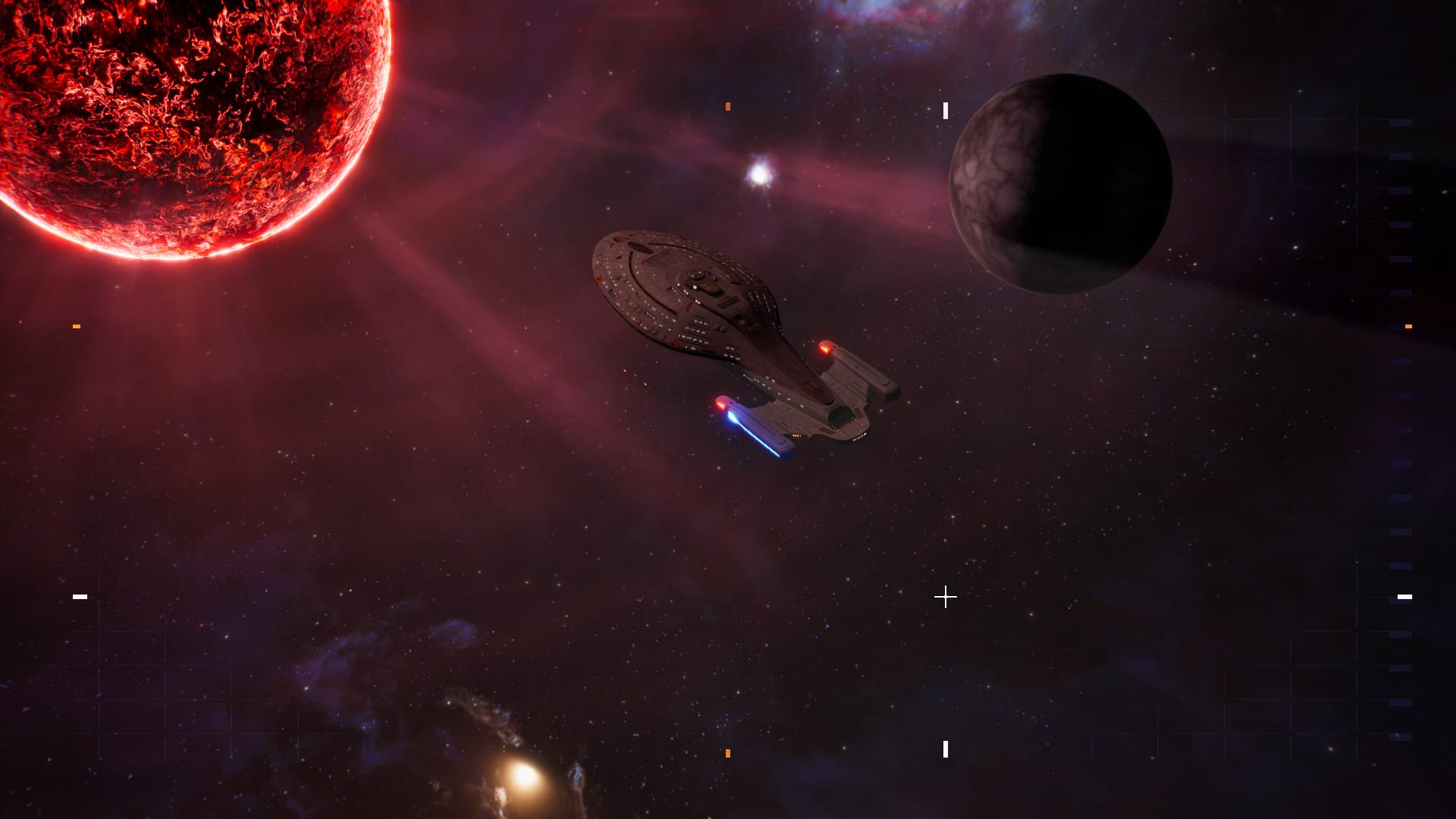
During the long journey back, the crew makes all kinds of discoveries and gathers resources. Players scan celestial bodies to find the resources needed to fuel the journey. They find points of interest and oddities along the way, but they must proceed with caution. The U.S.S. Voyager's journey would not be possible without away missions to planets or space facilities, nor without combat between ships. For away missions, players must assemble a team based on their crew members' talents. A team whose skills complement each other may be best suited to the task, minimising the risk to team members. These away missions are narrative mini-adventures that strongly resemble tabletop role-playing games - like the nautical adventures in Anno 1800. Players often have the choice of a scientific, stealthy or aggressive approach. These missions are essential for gathering resources such as deuterium and food, which are necessary for the Voyager's survival in the Delta Quadrant.
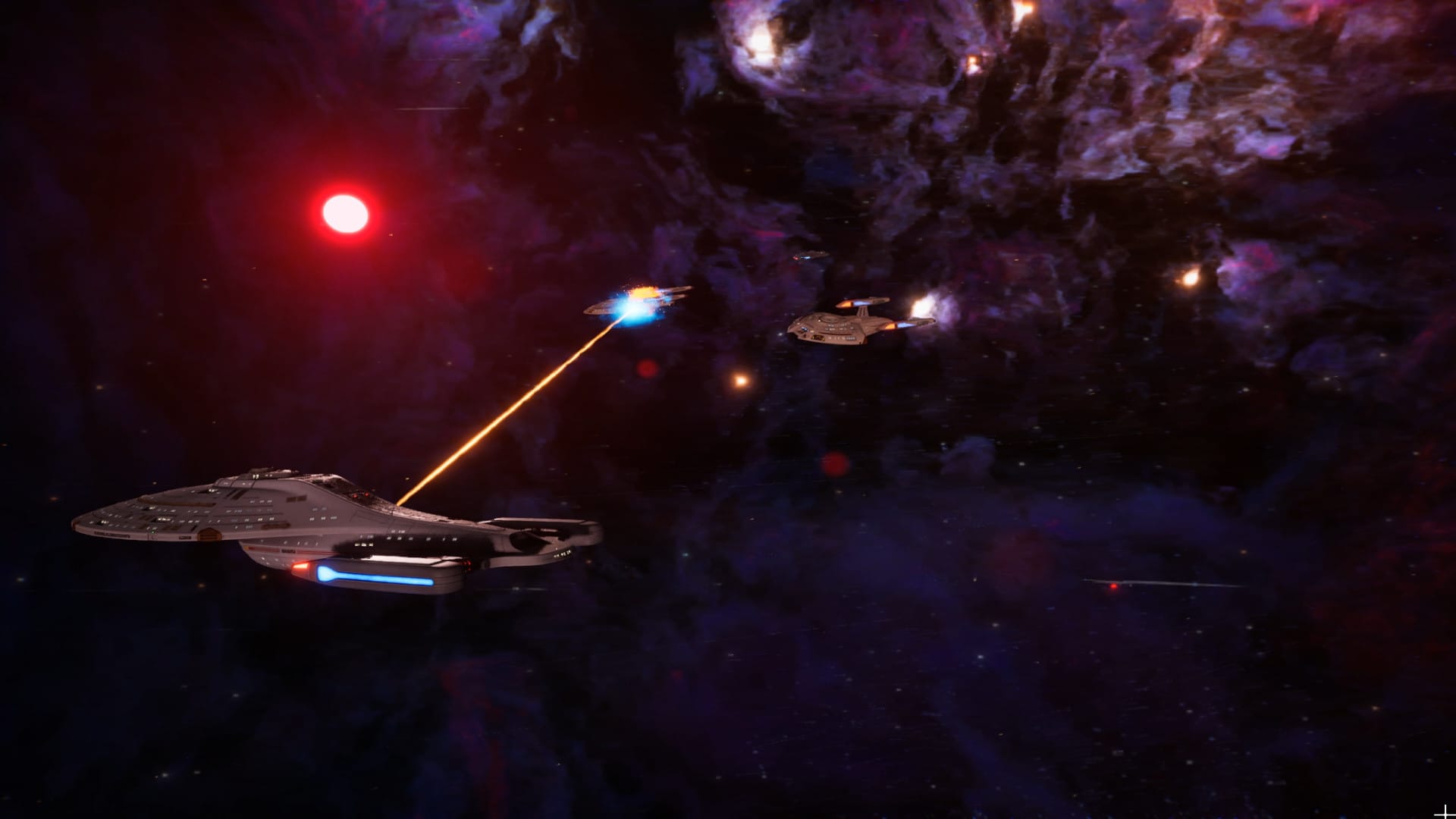
When diplomacy fails, the U.S.S. Voyager and its crew are ready to engage in ship-to-ship combat. From the bridge, players can issue orders for offensive and defensive manoeuvres (no direct ship control), target enemy ship systems and use special weaponry. Even during ship combat, the individual skills of your crew members are crucial. Players assign battle stations to crew members who contribute valuable skills and activate them at critical moments to maximise combat effectiveness. However, combat is not really the game's strong point; it is just one aspect among many, and is rather lacking.
Players can adopt a diplomatic approach, let their phasers do the talking, or research technologies that the crew rejected. However, there are consequences for all of these actions. As the game features roguelike elements, each run will be different, and even iconic characters may meet an early end if you don't react accordingly. However, unlike typical roguelike games, the sessions are much, much longer. There are also three difficulty levels, each of which affects four aspects: resource availability, combat, dialogue & away missions and homesickness.
Several weeks before its release, a demo was made available on PC and consoles, and feedback from the community was used to make improvements to several aspects of the game. These include a clearer UI, enhanced ship control feedback, refined combat pacing, additional guidance during key decision-making moments and more. "Following the demo release, we've taken lots of valuable player feedback on board. This valuable input allows us to refine core gameplay systems even further, polish localization, and add meaningful details - ensuring the journey through the Delta Quadrant will shine when the game launches (...)," says Daniel Bernard, Game Director at gameXcite.
Many players of the demo also missed the voice-overs of familiar Star Trek: Voyager characters. Shortly before the game's release, it was announced that Tuvok and Tom Paris would have voice logs in English and German at the beginning of each sector. These logs would recap recent events and set the scene for the mission ahead, helping to ground each mission in the ongoing journey of the Voyager crew. The original actors, Tim Russ and Robert Duncan McNeill, as well as their German voice actors, Christian Toberentz and Erich Räuker, can be heard. However, most of the text is not voiced.
Star Trek: Voyager – Across the Unknown was developed by gameXcite. Founded in 2015, the company creates mobile, PC and console games based on well-known brands such as Asterix & Friends: Remastered (2021), Idle Asterix (2022) and Asterix Heroes (2023). Based in Hamburg, gameXcite is a subsidiary of Jumpgate AB, which is listed on the NGM Nordic SME in Stockholm under the ticker GATE. Star Trek: Voyager - Across the Unknown is one of the studio's largest projects. gameXcite received funding of €1,163,249 for the production of 'Galactic Journey' (presumably the working title of the game) from the German Federal Ministry for Economic Affairs and Climate Action and the German Federal Ministry of Research, Technology, and Space. This funding is specified as running until 14 February 2025. The project had already received €98,116 in federal funding, but this only lasted four months. A third grant for 'Galactic Journey Switch 2 Porting with Expansion' totalling €142,775 was later added and will run until 28 February 2026.
"As lifelong fans of Star Trek, we're thrilled to contribute to this iconic universe. This game isn't just about nostalgia - it's about giving players the conn and letting them chart their own course through the unknown." Daniel Bernard, Game Director at gameXcite bei der gamescom 2025
The publisher is Daedalic Entertainment, which is also based in Hamburg. Its games portfolio covers a wide range of genres, with a focus on storytelling, strategy, co-operative games, and wholesome games. Daedalic's international team of around 45 people is currently working with several development studios on projects including Bloodgrounds (Exordium Games), The Occultist (Daloar), Woodo (Tiny Monks Tales), the Barotrauma Home & Harbour expansion (FakeFish and Undertow Games) and Surviving Deponia (Daedalic Entertainment and Atomic Torch Studio). Since April 2022, Daedalic Entertainment has been a subsidiary of the French publishing house Nacon.
"Star Trek Voyager: Across the Unknown is a project driven by passion—both for storytelling and for the legacy of Star Trek. We're excited to bring the U.S.S. Voyager crew back into the spotlight in a way that feels true to canon while offering new narrative frontiers to explore." Jonas Hüsges, COO at Daedalic Entertainment bei der gamescom 2025
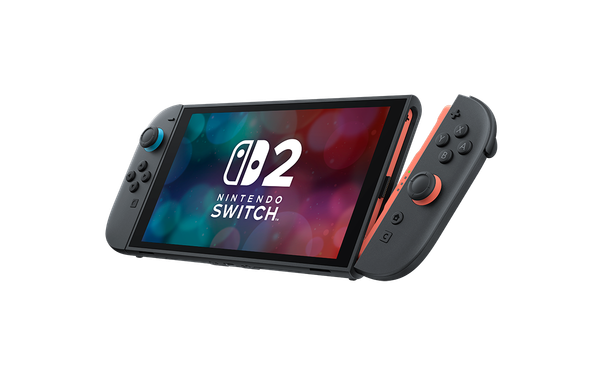
Star Trek: Voyager - Across the Unknown is set to be released on 18 February 2026 for PC, PlayStation 5, Switch 2 and Xbox Series X|S. Alongside the standard edition, a digital deluxe version is available, containing five additional missions, two new recruitable heroes, and three new technologies. This expanded content integrates directly into the campaign.
Conclusion
Star Trek: Voyager - Across the Unknown is a unique blend of narrative adventure and base management, featuring engaging 'what if' scenarios and an adequate, albeit rather basic, presentation.
Features
Narrative adventure game with base management, set in the Star Trek: Voyager universe
Marcel Kleffmann is Chief of Content of GamesMarket and our B2B and B2C expert for hardware, market data, products and launch numbers with more than two decades of editorial experience.
Sabrina Ratih (COO G2) moderated the Panel with Franziska Giffey (Berlin’s Senator for Economic Affairs, Energy and Public Enterprises), Julius Althof (Managing Director Esports Player Foundation), Alban Dechelotte (CEO G2) and Mo Auba (FIFA World Champion/Content Creator) | Picture by G2