The Great Age-Gate Shake-up: Is 2026 the Year Gaming Grows Up?
In this week’s “Update”, Zoran Roso looks at the changes to the PEGI system and the potential implications for companies’ global marketing strategies if games are given completely different age ratings in the US compared to Europe in future.
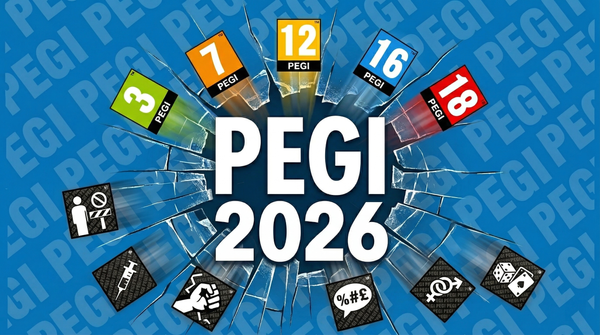
Soon you might be noticing a sudden "16+" sticker on your favorite sports sim or a "12+" on a cozy mobile title. We are currently witnessing the most significant overhaul of the Pan-European Game Information (PEGI) system since its inception.
From June 2026, the "wild west" of in-game monetization and psychological loops will officially be hitting a regulatory wall. Here is the breakdown of what is changing, why Germany is to thank (or blame), and why the Atlantic divide between PEGI and the ESRB just became a canyon.
The USK Blueprint
This shift didn't happen in a vacuum. It was heavily inspired by the German USK (Unterhaltungssoftware Selbstkontrolle) reforms of 2023. Germany’s updated Youth Protection Act began factoring "interactive risks", like loot boxes and dark patterns, directly into the age rating, rather than just keeping them as side notes.
The data from Germany was a wake-up call: roughly 30% of games submitted under the new rules received higher age ratings. PEGI watched, learned, and has now decided to harmonize.
What’s Changing?
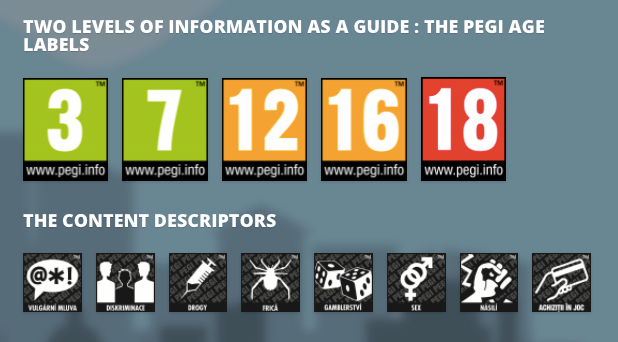
Starting this summer, it’s no longer just about blood, guts, and bad language. PEGI is now rating the mechanics of the game.
Any game featuring paid random items (loot boxes, card packs, gacha) now defaults to a PEGI 16 rating. This is a massive blow to "all-ages" titles like EA Sports FC, which could jump from a PEGI 3 to a 16 overnight.
The "Fear of Missing Out" (FOMO) Factor, where paid battle passes with countdown timers now trigger a minimum PEGI 12.
Login streaks and daily quests are now rated PEGI 7. However, if a game punishes you for not returning (like losing progress or wilting crops), it bumps to PEGI 12.
Games with NFTs or blockchain elements are an automatic PEGI 18. Similarly, if your game has a chat function without robust reporting/blocking tools? That’s also a PEGI 18.
A Transatlantic Divorce
While Europe is doubling down on "Safety by Design," the North American ESRB has politely declined to follow suit.
In a statement earlier this month, the ESRB argued that mixing monetization with content ratings would be "confusing" for parents. They are sticking to their system: an age rating for content (violence/sex) and separate labels for "Interactive Elements."
The consequence? We are entering an era of "Rating Arbitrage." A game could be marketed as "E for Everyone" in New York but restricted to 16-year-olds in Paris. This creates a massive headache for global marketing teams and a confusing landscape for parents.
The Developer Dilemma: Pivoting for the All-Ages Market
Developers wishing to maintain access to the massive "all-ages" market (PEGI 3/7) must now consciously design away from coercive mechanics. Here is how teams are adapting:
Transparent Purchases >> Replace random loot boxes with direct-purchase stores. If players can see exactly what they are buying, the "gambling" trigger is removed. Example: Moving from 'Card Packs' to 'Item Shops'.
Deterministic Progression >> Ensure battle passes or rewards have clear, non-expiring paths. If a player earns something through skill or playtime, they cannot lose it due to a missed log-in.
Removing Negative Reinforcement >> Transition daily rewards from "punishment" models (e.g., losing a streak) to purely "bonus" models. A player who returns after a week should find their progress intact.
Skill-Based Monetization >> Shift monetization from psychological manipulation to skill-based challenges or aesthetic-only customizations (skins, emotes) that do not affect gameplay balance or trigger FOMO.
Developers who make this pivot gain a massive competitive advantage: Trust! Parents are increasingly favoring transparent monetization, and a clean PEGI rating could become a powerful marketing tool.
The Consumer Backlash
This regulatory push is colliding head-on with a very frustrated consumer base. The recent Discord age verification saga is the perfect example.
After announcing mandatory global age assurance (including facial scans and ID uploads), Discord faced such a fierce privacy backlash that they’ve had to delay the rollout to the second half of 2026. Users are fleeing to alternatives, citing "biometric overreach."
Consumers are increasingly supportive of protecting kids from gambling mechanics (the "loot box" hate is real), but they are deeply suspicious of the methods used to prove age.
The gaming industry is being forced to choose: monetization or reach. If you want that "PEGI 3" badge and the massive audience that comes with it, you can no longer rely on psychological "hooks" or randomized spending. The era of "Gambling-Lite" for kids is effectively over in Europe.
About and contact to Zoran Roso
Zoran Roso stands as a highly influential veteran of the video game and entertainment industry, with a distinguished career spanning over 25 years in global publishing, marketing, and leadership roles. His professional journey includes serving in significant executive positions at some of the world's most recognizable gaming giants, including Rockstar Games/Take 2 Interactive, Activision Blizzard, and Sony PlayStation, where he was instrumental in the marketing and strategic positioning of flagship AAA franchises and brands. Most recently, he leveraged this extensive experience as the Global Publishing & Marketing Director at Tencent Games, a critical role focused on expanding the company's international reach and developing successful go-to-market strategies for its massive portfolio of internal and partner studios.
Now operating as the founder of ZR Consulting, Zoran continues to drive success in the industry by advising major global publishers and developers. His firm specializes in crafting winning strategies for international brand development, optimizing live service performance, and executing flawless launch plans across all major platforms, including console, PC, and mobile. An active figure in the global games community, his career is marked by a clear strategic vision and a successful track record in translating complex products into global commercial successes.
Zoran Roso, founder of ZR Consulting, brings 25+ years of global gaming marketing experience. Formerly Global Publishing/Marketing Director at Tencent Games, he has held leadership roles at Sony PlayStation, Activision Blizzard, and Rockstar Games.