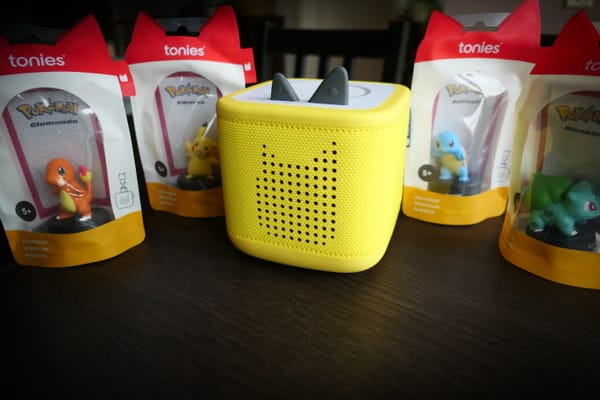
For the first gaming cooperation between tonies GmbH and The Pokémon Company, we sat down and tested the Toniebox 2 audio device for children and the Pokémon Tonies that rival Nintendo's own amiibos in quality.
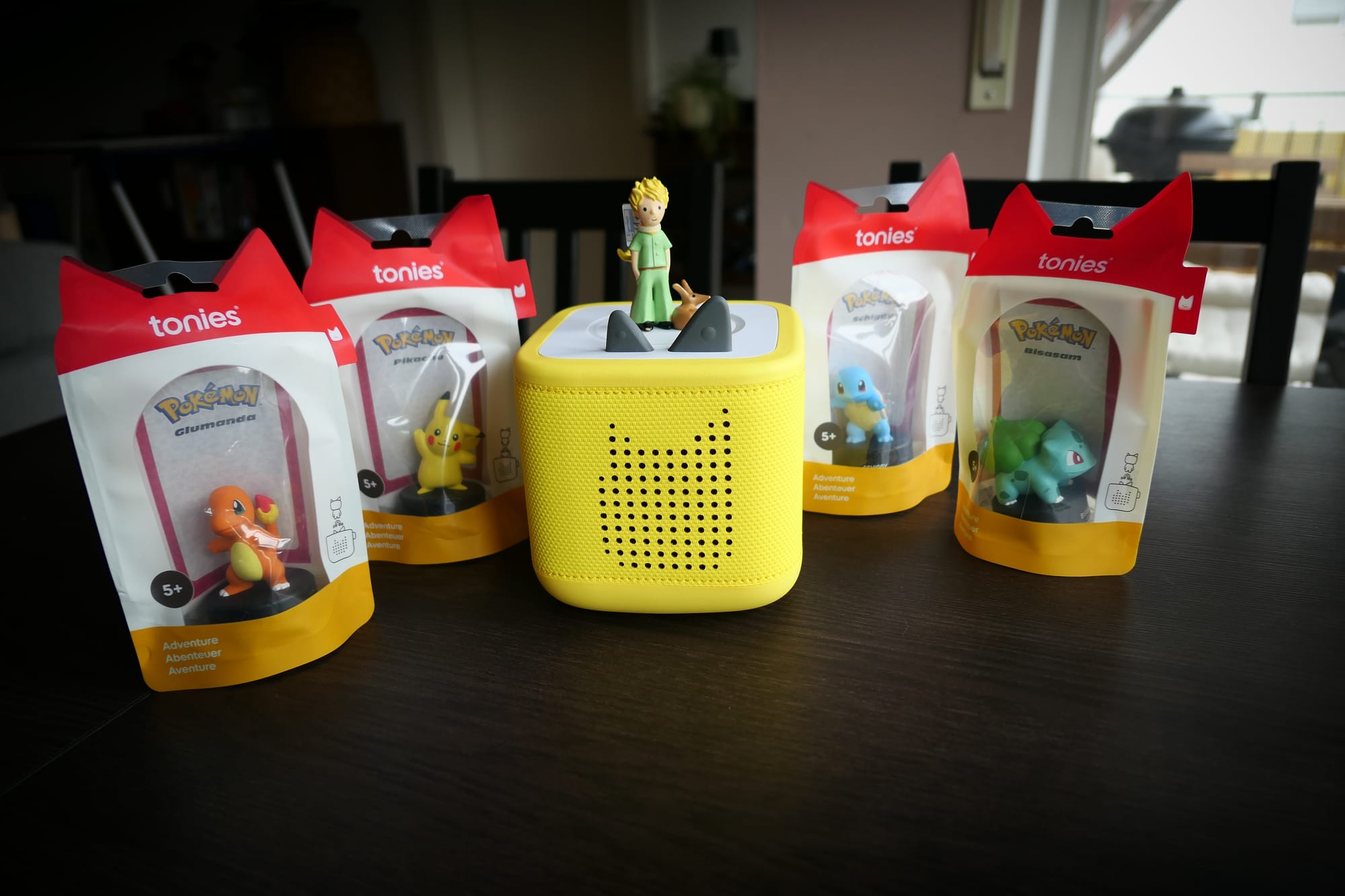
The Pokémon Toniebox 2 and the four corresponding Tonies. (GM, PW)
For the first gaming cooperation it has ever done, we have sat down with tonies GmbH's audio device for kids, Toniebox. In a test of their current version Toniebox 2, we have not only checked out the device but said cooperation as well: A special Pokémon version as the device as well as four collectable Tonies in Pokémon designs. Here's what we thought of the device that is aimed at small children, and of the cooperation that manages not only to entice these children, but the parents as well.
What is a Toniebox?
The Toniebox systems are proprietary audio play systems that are specifically design so that toddlers and small children can easily learn to use them and then utilise them without help. Playing an audiobook generally works by putting a figure with a specific RFID chip, a so-called Tonie, on top; the audiobook starts right away. The Tonies are designed so they show right away what story they bring with them (although the data is not stored on the Tonie, but will be downloaded onto the Toniebox when a Tonie unlock it by being put on the box).
Tipping the box and throwing it around a bit is not only possible, but necessary (GM, PW)
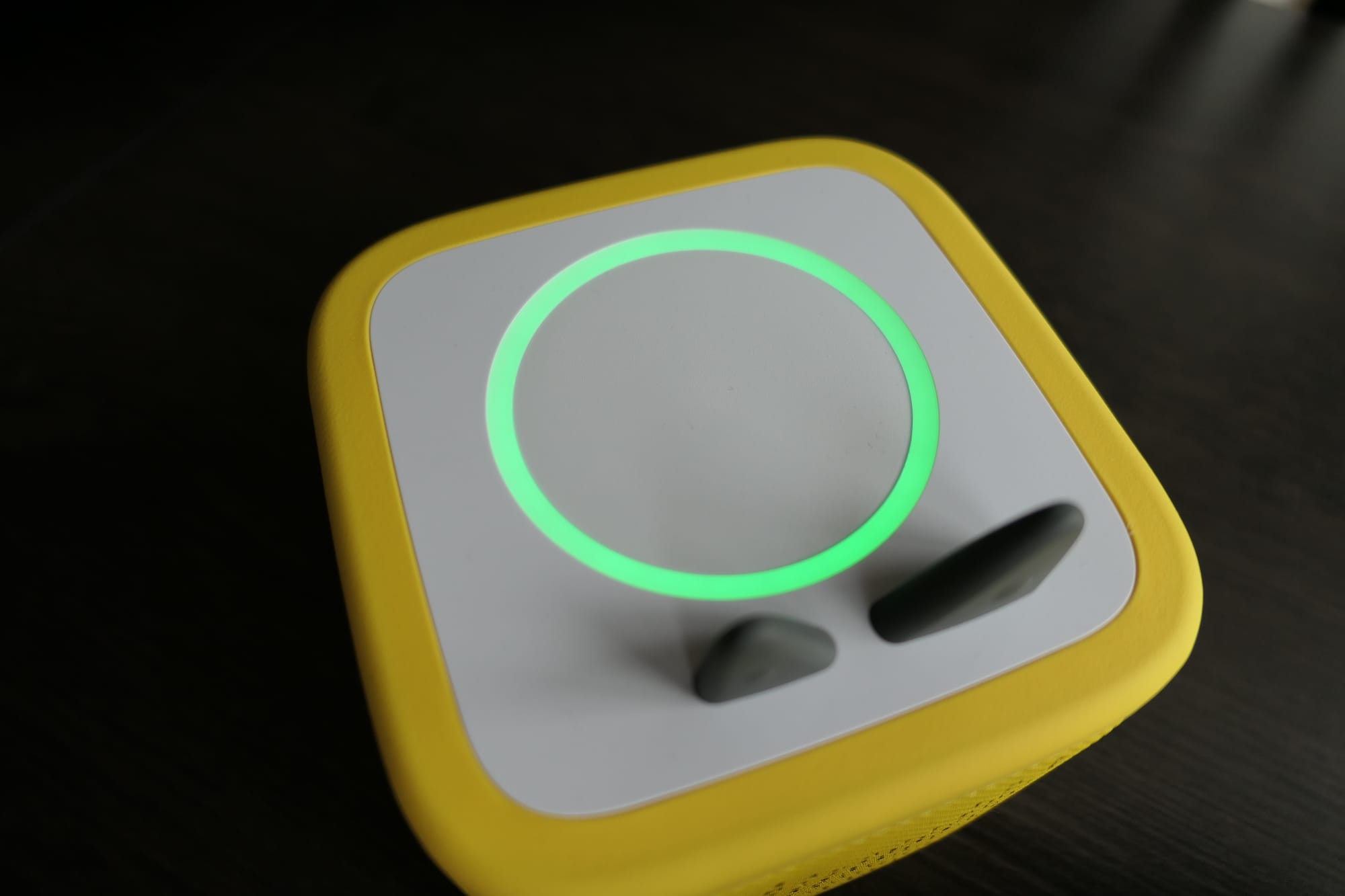
The whole box only has two buttons, shaped like ears; the small ear lowers the volume, the big one raises it, and pressing any one wakes up the box. All other functions are steered by very intuitive motion controls: hitting the box (which is padded and can take quite a beating) on the left and right skips to a track or chapter before or after, respectively. Leaning the box to the left rewinds, leaning it to the right fast-forwards. The box is very tactile, it's pleasing to touch and handle it, and it is a lovely tool to bring children to learn their first media competency and confidence to touch and try out electronic objects. Crucially, the Toniebox comes without a screen, which probably makes it more appealing to many parents. A coloured light ring on the top shows different settings, like the volume or if the box is in standy or ready to use. All things that require a screen, like setting up the internet connection to download new audio, is done through a parent's smartphone.
The ring on top shows were Tonies are put, and signifies different functions such as volume control (GM, PW)
The Toniebox 2, which was tested here in the Pikachu version, brings with it additional functionalities like the ability to play screenless games by putting specific play disks on top along with the Tonies.
An Expensive, but Rewarding Ecosystem
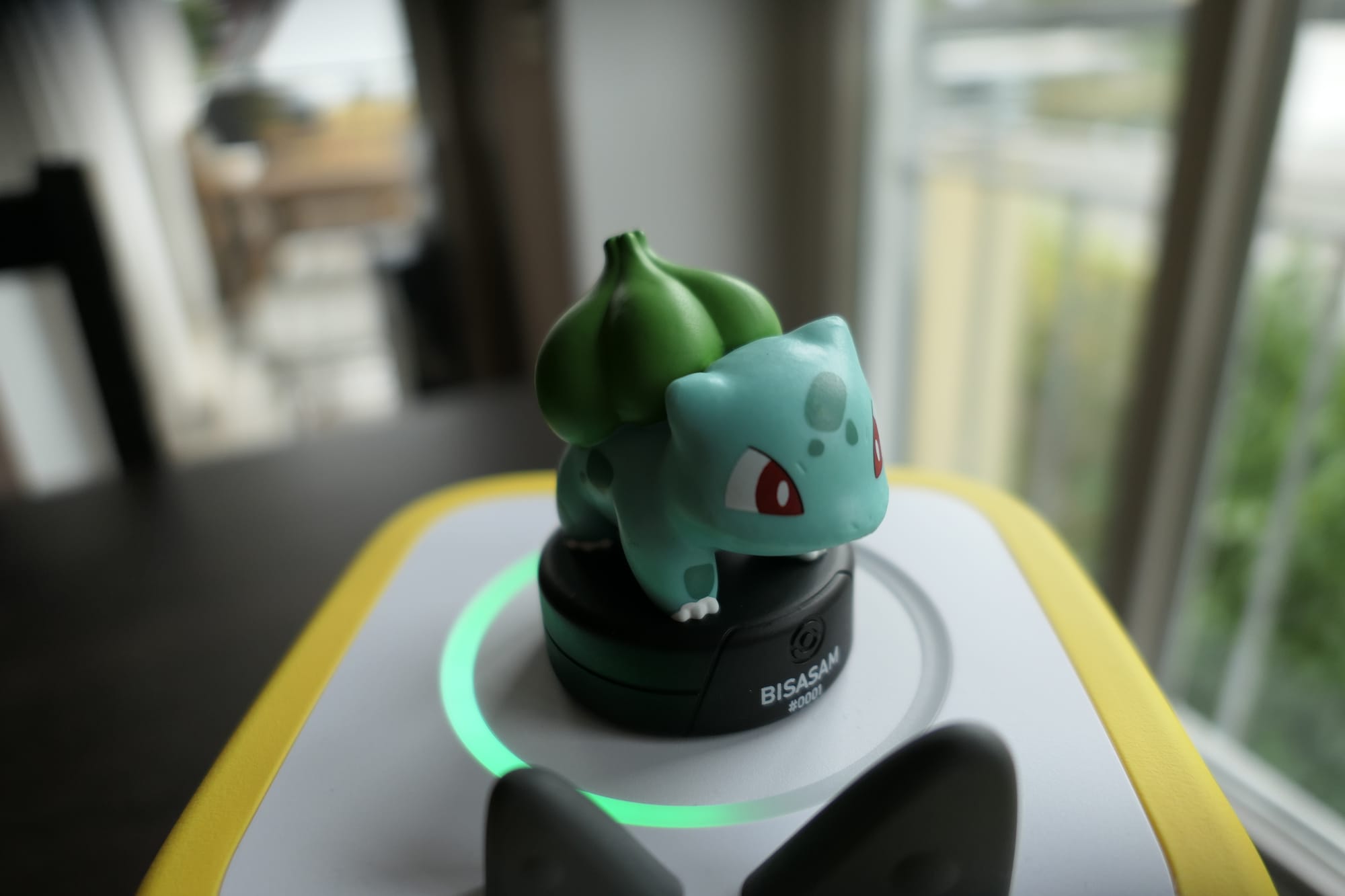
The downside to this easy of use and the pleasant to look at Tonies is of course the proprietary system: No other audio data will work with the Toniebox, and Tonies run for 16,99€ MSRP a piece, making building up a library for your child very expensive. The tonies GmbH alleviates this a bit through so-called Creative Tonies, which can be filled with your own audio data, whether its public domain audiobooks or even recordings you made yourself, but that one has of course to be bought as well. What brings people to really invest into the Tonies ecosystem, along with the ease of use for children of course, is the collectability and playfulness of the Tonies: The figures are generally well-made, although some more than others; the Little Prince Tonie I checked out of my public library to test with was rather simple, while the Pokémon Tonies feature incredible details, down to the Pokédex numbers on the base. Collaborations with different brands, like Teenage Mutant Ninja Turtles, make the Tonies collectibles for adults as well, which is of course good for the company, but not so great for the children who want a Tonie that is out of production; the second market for Tonies is very expensive.
The Pokémon Tonies are extraordinarily well made, doubling as collector objects (GM, PW)
How does the Setup work?
Setting up the Toniebox 2 is easy, but required access to a wifi network (you need to have the password ready), as well as a smartphone with Bluetooth functionality. The Toniebox 2 comes pre-charged, and is awakened from its initial standby mode by putting a charger in. The charging port is hidden in a deep crevice within the padding, and requires a bit of force to put in or take out the charger. This is intentional, because it acts as one of the childproof systems: Parents can enable a "1+ Year mode" for small toddlers, in which the Toniebox 2 cannot be used by the child while it is charging.
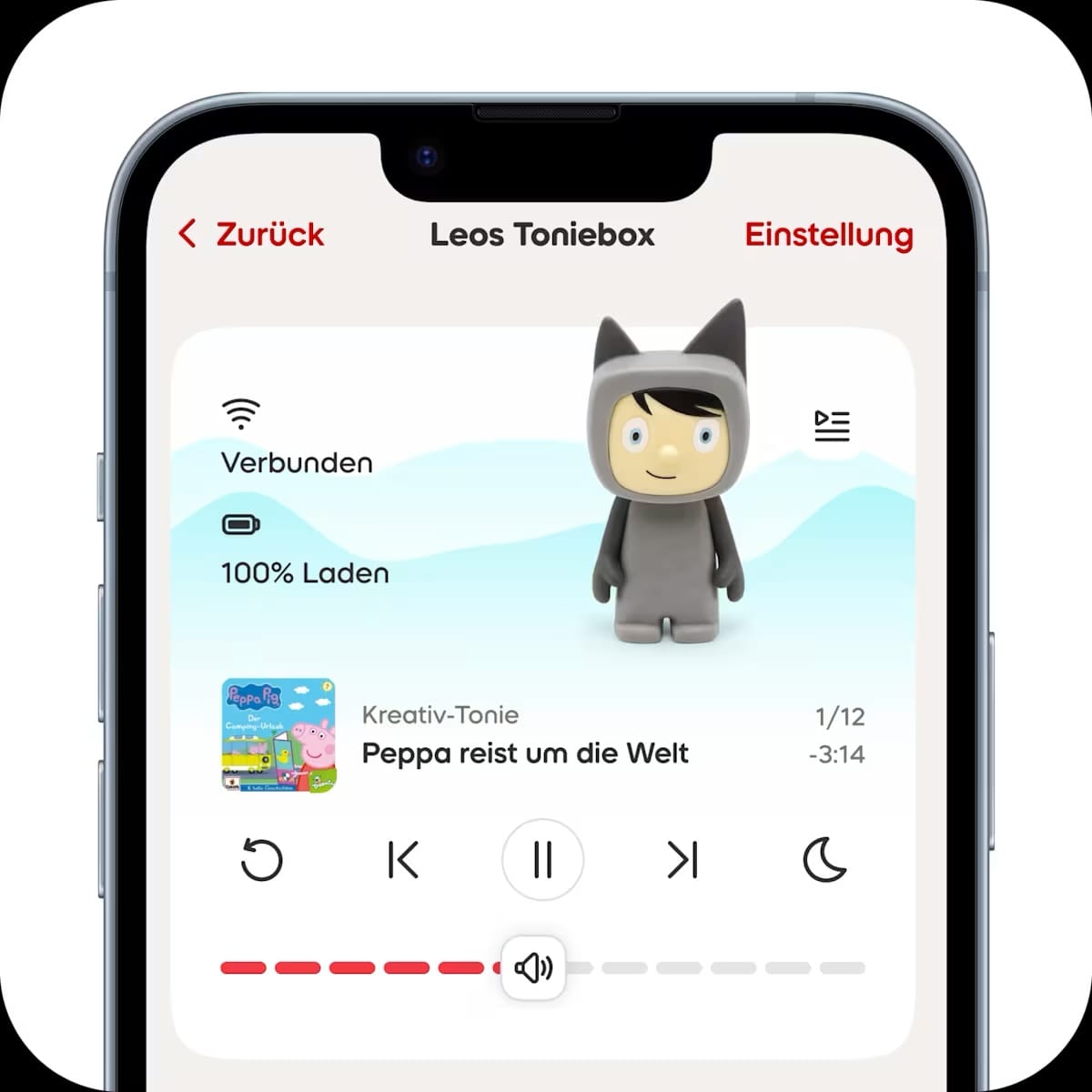
When first starting the box, parents need to download the tonies app into their smartphone and connect it the box via Bluetooth, then connect the box to the internet by entering the wifi password through the app. This is not only used for system updates, but is needed for the core functionality, the audio and games: Putting a Tonie on the box does not transfer audio data from the Tonie to the Toniebox. Instead, it unlocks a download that the Toniebox pulls from the servers.
The tonies app is used to setup the device and to control the settings, including all child protection functions (tonies)
After this setup and putting at least one Tonie on the box, it is ready to use for the children.
How does the Pokémon Cooperation Work?
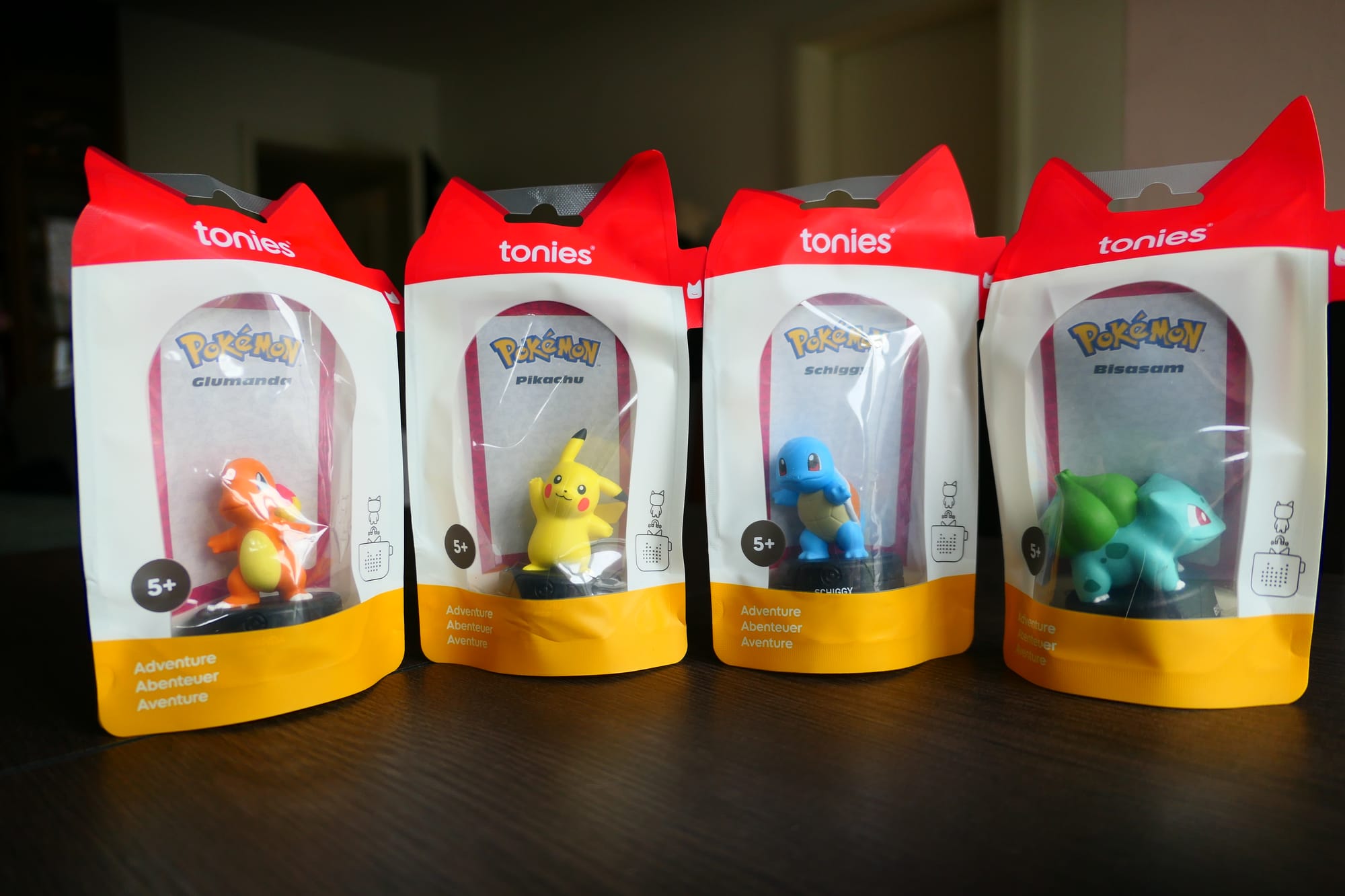
The cooperation between tonies GmbH and The Pokémon Company takes the form of five products: The core of them being the four Pokémon Tonies depicting Bulbasaur, Squirtle, Charmander and Pikachu. Each of them comes with a German audiobook focused on the Pokémon depicted. These are expertly done; professional speakers take several roles in the stories, the Pokémon itself gets to make its signature sounds as well of course and special effects like the Pokémon's attacks are included as well, depending on the story. The Tonies themselves are beautifully made, easily on a level with Nintendo's own amiibos and feature a satisfying weight due to the base that is included below the Pokémon. They will make for attractive collector items as well.
All four Pokémon Tonies in their original packaging (GM, PW)
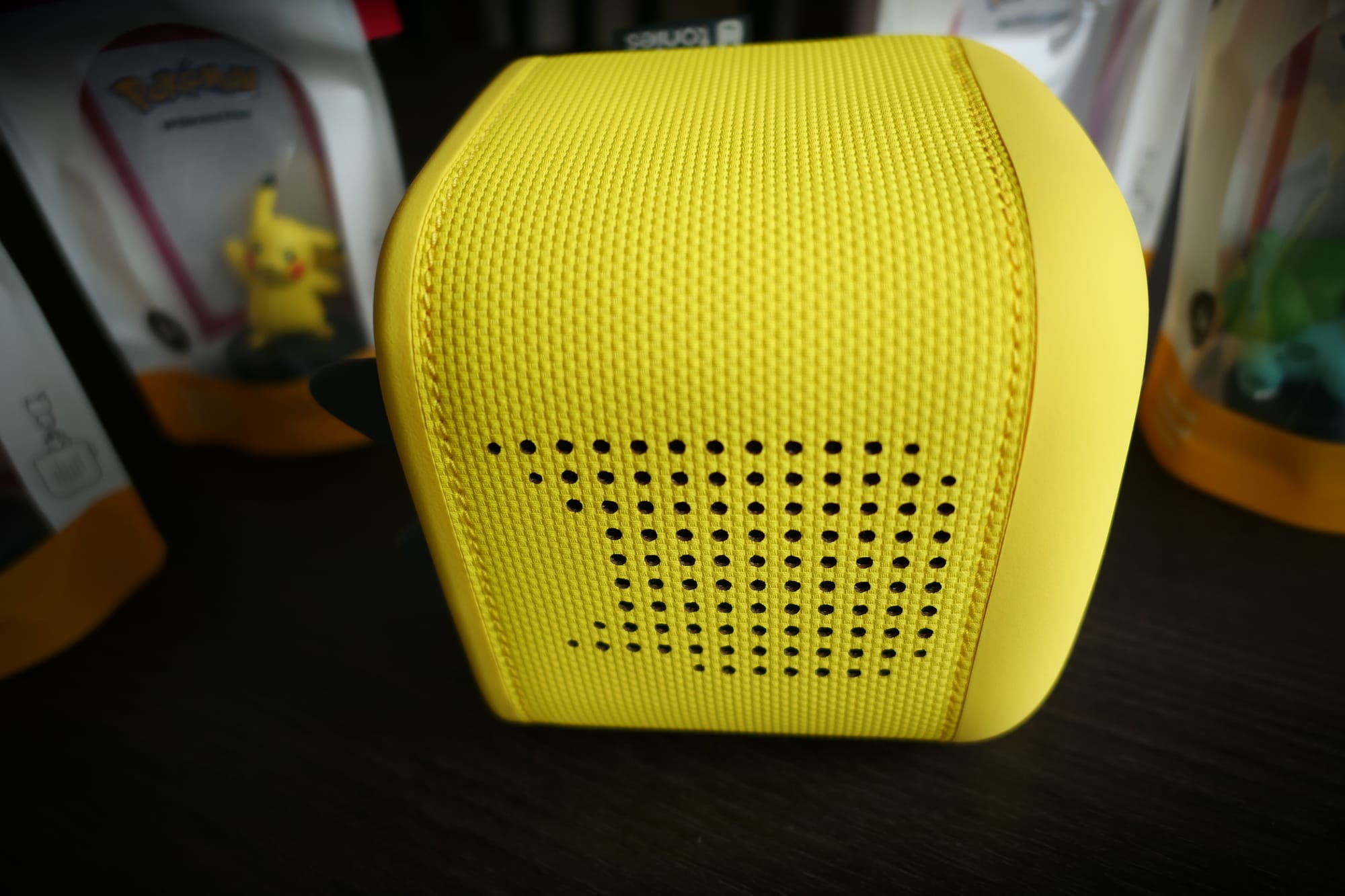
The Toniebox 2 itself in a special colour is the fifth cooperation item: It comes in 'Lightning Yellow', the colour of Pikachu. Apart from the colour, the box has no different features; the speaker pattern on the front is in fact not a pixelated Pikachu sprite as I had thought in the beginning, but the regular Tonie pattern depicting a cute creature with the box's button ears. While a regular Toniebox 2 costs 119.99€ MSRP, the Lightning Yellow one is only available in a combination bundle with the Pikachu Tonie, together running for 134.99€ MSRP, which roughly equals the price of a box plus one Tonie anyway. The other three Pokémon Tonies cost the same as all other regular Tonies (16.99€ MSRP), which nice.
Conclusion
Being in the Tonies ecosystem is expensive, there is no way around it. Parents will not only have to pay for the proprietary Tonies their children might want, but will be tempted more and more to collect Tonies themselves as well when they come in such good quality as the Pokémon ones. At least the children's needs can be alleviated a bit by trips to local libraries; many have hundreds of Tonies in their repertoire.
The Pikachu Toniebox 2 can of course play all other tonies, like this one from the Munich public library, but naturally remains in the Tonies ecosystem (GM, PW)
And the overall costs come with a massive benefit: This is a device that one-year old children can learn and three-year olds can master. It's screenless, it fits into a common niche (audiobooks) that children love and most parents accept, and the haptics are very pleasing, so it doubles as a touching toy as well. As a child's first device, the Toniebox does very well, and it can be used to teach a child's first media and appliance competency steps.
A review version of the Lightning Yellow Toniebox 2 along with all four Pokémon Tonies was provided for this test by the PR agency responsible.