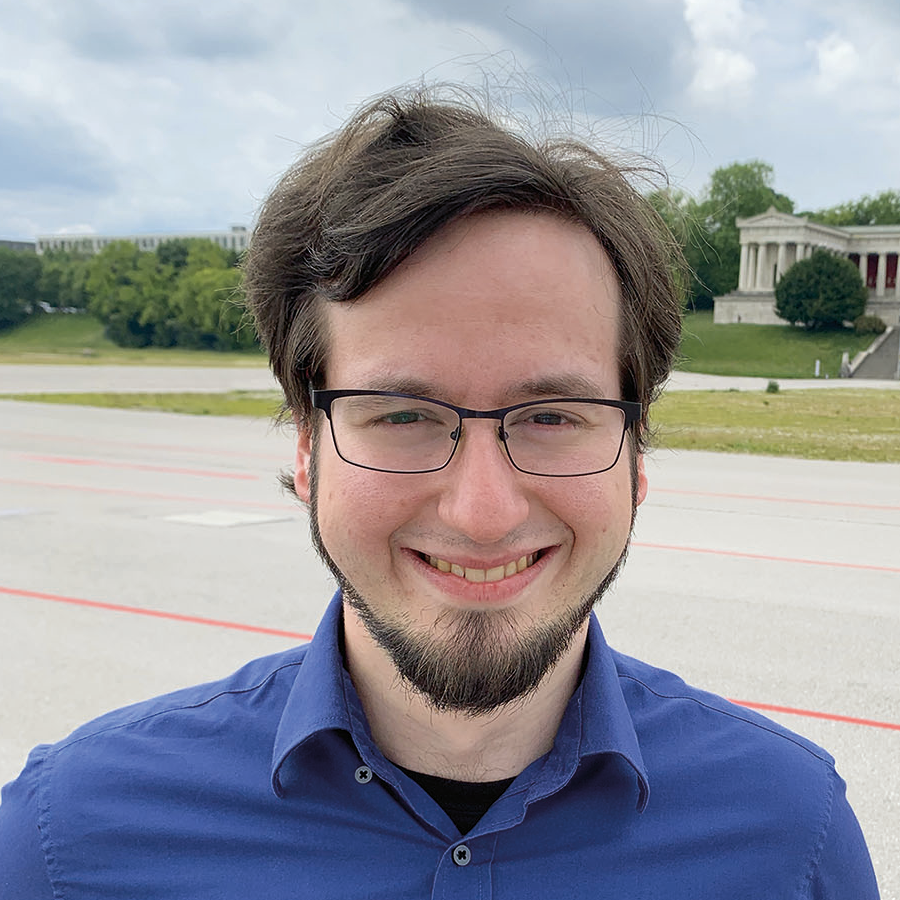
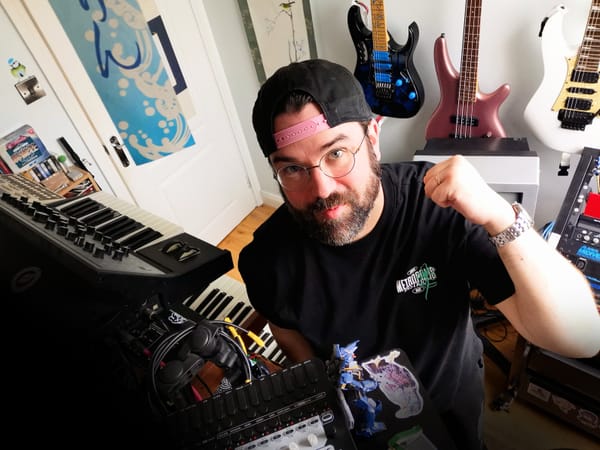
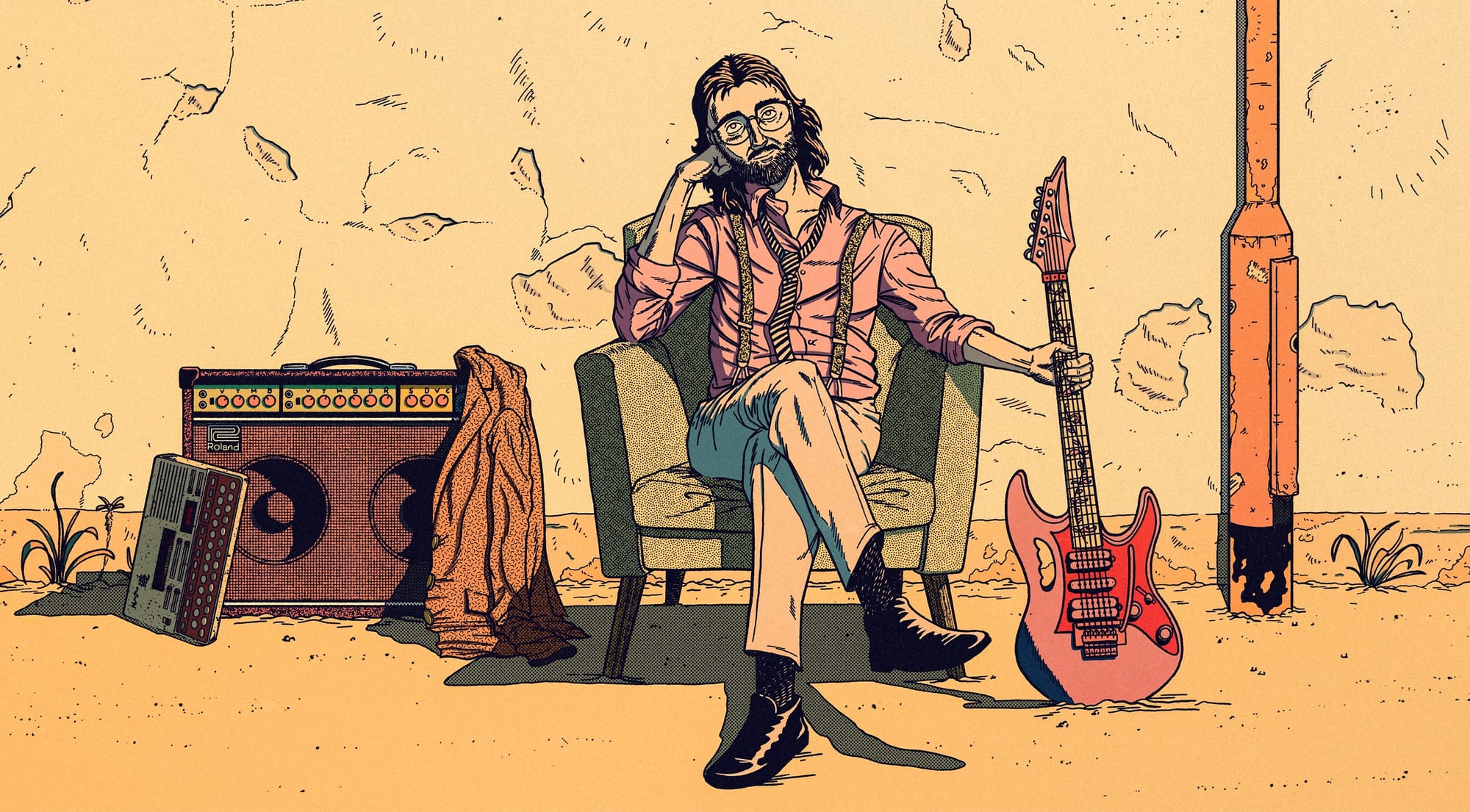
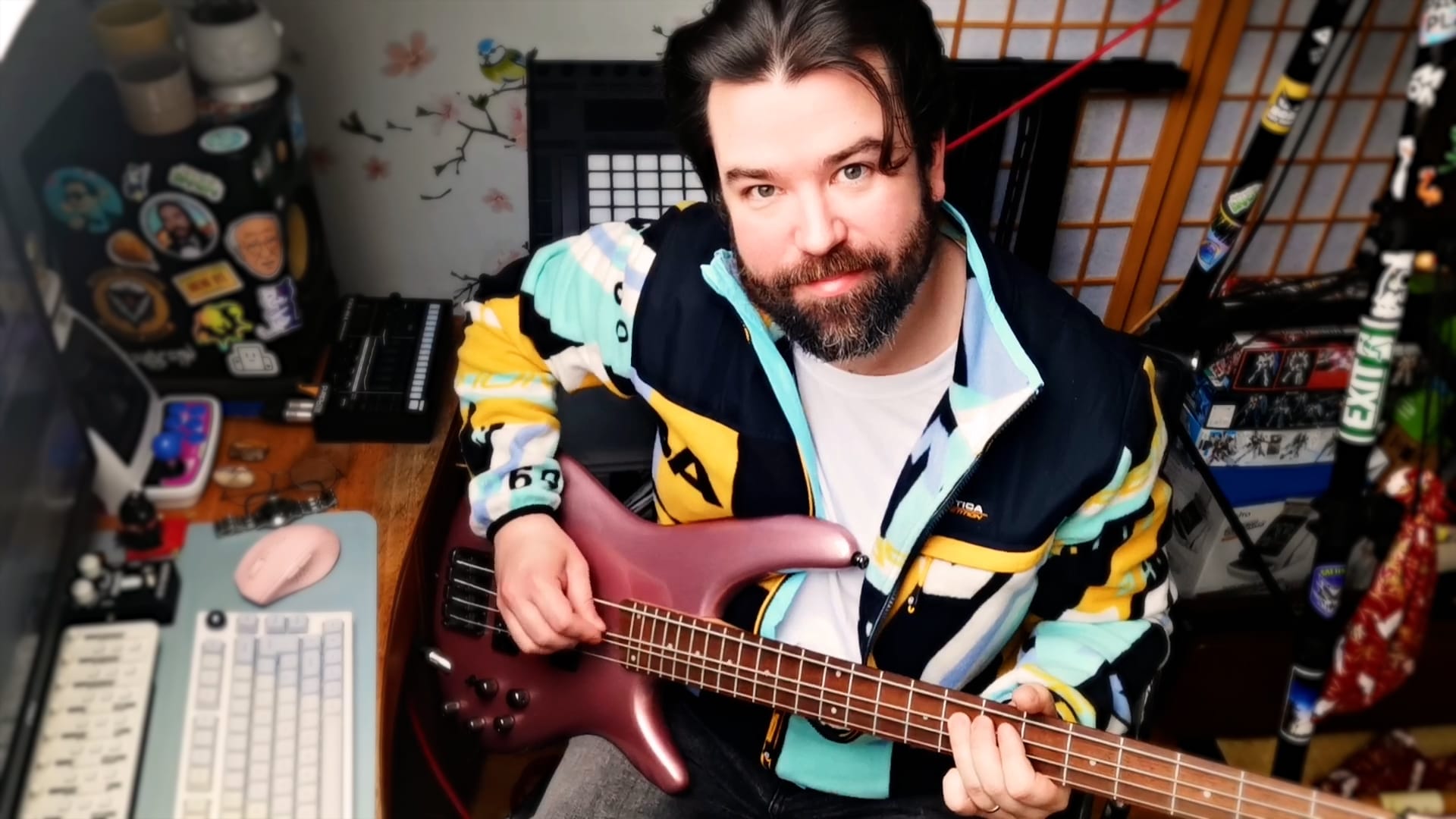
He made the soundtrack to one of 2025's most special games: Alpha Chrome Yayo from Belfast worked on Kaizen Game Work's Promise Mascot Agency. We interviewed the artist about making game music, the best game soundtracks and his favourite ways to work.
GamesMarkt: Lead us into the interview with a soundtrack: What one music piece of yours are you most proud of and why?
In terms of my own musicianship there are quite a few I could pick from, but what really makes me proud is the effect my music has on people.
There's a track that plays near the start of Promise Mascot Agency, and I've heard a lot of people saying they've driven round in-game listening to it for hours, even parking up the kei truck, turning up the volume and sitting back on the sofa with a drink to enjoy it. That is so unbelievably cool, and the greatest compliment.
It's also really special to me as we were able to bring one of my favourite singers, NOZ, on board for vocals. She is incredible, and her performance is spellbinding.
So yeah, it makes me very proud. Not just because I love the track, but because it was a collaborative effort that holds a special place in many hearts.
It's called Promises Lost (Promises Found).
GamesMarkt: What brought you to make game music?
The short answer is that I wanted to make music for games ever since I found out that was a thing people did, and did for a job. Which was at a pretty young age, maybe like ten or eleven years old.
The long answer? Well, I studied music in school and practised instruments until my fingers bled, all the good stuff.
But even so, when I was a teenager the idea of a career in making music for games seemed kind of… unreachable, or like something that was meant for other people. But that was so stupid, like, who are these other people? We’re all other people and we can all do cool things!
I ended up working briefly in film, then in radio for ages. And about eight years ago I started self-releasing music as Alpha Chrome Yayo on the side. Suddenly, composing for games felt a lot more possible.
And, like with many things in life, the simple act of doing something and sticking to it snowballed. I built up a passionate fan-base that I'm eternally grateful for, and I started picking up some composition gigs, then more gigs, and then I found myself having to turn down composition work to do a day-job that sucked.
Well that seemed REALLY stupid, and I'm big on encouraging people to chase dreams. So I figured it was time to put my money where my mouth is, and I'm now in my second year composing full time.
I should also say a huge thank you to the amazing Kaizen Game Works, who brought me on board as lead composer for Promise Mascot Agency. That experience, that game, and those people changed my life.
GamesMarkt: A good game with a bad soundtrack or a bad game with a good soundtrack – which is worse in your opinion and why?
Ohhhh that is a good question, and one I've never been asked before! And, like many good questions, it's kind of hard to answer.
To be honest I'm not entirely sure the two things can be removed from each other. A good game is the sum of its parts, and that includes the soundtrack as much as anything else. I think splitting the two up - even for a hypothetical - kind of ‘others’ the music. When really it's as much a part of the parcel as the writing, or the art, or the gameplay mechanics.
But, I know that's not really a clear answer. And hey, I guess if you don't like a game but you dig the soundtrack, you can always enjoy the music separately. That's something you can't really do so easily with those other core parts.
GamesMarkt: How do you ensure that your music supports both the gameplay pacing and the story?
Like many parts of the equation, I think this comes down to a few important things.
The first is frank and honest discussion, with everybody on a team - including me - having a clear, unified vision of what the end product should look, feel and sound like, and what exactly the constituent parts are that will make this happen.
The second is the technical and creative knowledge required for me to do this. In terms of how music works, how games work, how story works, how players work, how emotions work, and how all these things work together to form an experience greater than the sum of its parts.
And the third, the most ephemeral of all, is understanding the 'vibes' … the intangible collaborative sauce that glues everything together, throws welcome surprises into the mix and elevates something beyond an experience, into something unforgettable.
(Alpha Chrome Yayo, 2026)
GamesMarkt: How do you organize feedback loops with game developers and manage large audio projects?
Honestly, more of the above! Having those discussion lines open is of immense importance, to maintain a clear, collaborative vision and ensure a cohesive, engaging end product.
That sounds incredibly corporate from a dude who's been going on about vibes, but what I really mean is, everyone's gotta be singing from the same songbook, so to speak.
And what that actually looks like varies from project to project. It might involve a Discord where I can drop ideas in for quick feedback, or having regular online or IRL meetings, or even just bouncing DMs back and forth on Bluesky or wherever. Everyone works differently and it's all about finding the right groove, pun not intended.
Spreadsheets where things can be ticked off or notes added are always really handy. And if it's a large project, it's always great when there's a clear brief at various junctures about what needs tackled next, how we can work together to achieve it, how it all fits into the bigger picture.
And then personally, it's all about doing my best work and maintaining good housekeeping. Naming files properly, backing things up, good organisation for invoices, contracts and all the other paperwork.
Common sense and hard work really goes a long way. And part of working hard is also knowing when to take breaks. If I'm a bit jammed up creatively, I'll take a walk or have a bath or something, and the answer usually comes to me pretty quickly.
Then it's always a scramble back to the studio to bring that idea into reality!
GamesMarkt: What middleware, like FMOD or Wwise, do you use for adaptive music, and how do you prototype possible interactions?
I love both FMOD and Wwise, and both offer myriad possibilities when it comes to testing out interactions, triggers, environmental audio sources, building variations and all the other good stuff that can bring a project alive. When I first started using them I was blown away, it felt like using a DAW but from another planet! After being used to making music and designing sounds a certain way with certain constraints, it was like the horizon just expanded into infinity.
Honestly the nearest feeling I can compare it to was when I first got an electric guitar, and realised that there was this huge world of sonics at my fingertips. Like, just plugging it in and touching the strings sounded cool, but beyond that there were infinite possibilities for sculpting something unique and emotionally engaging that went far beyond basic musicality.
As such, ‘middleware’ always strikes me as an incredibly boring word for something so vast and powerful.
That being said, a lot of the time I'm working on projects where someone else is looking after everything in terms of implementation.
In any case it comes down to knowing the craft, the process, planning, trial and error and - again most importantly - clear communication in all directions. When everyone is on the same page, the project sings.
GamesMarkt: In your opinion, are game composers (often) involved too late in the game design process? Especially when it comes to dynamic soundtracks.
I've joined projects at just about every possible stage, and there are myriad, viable reasons for that.
But every single time I've been brought on board early, I've been told how awesome and helpful it is to have my audio help inform and inspire the vibe, the look and, especially with dynamic audio, the gameplay. That's always cool to hear, and I think it makes for a really cohesive, collaborative process.
Of course the inverse is also true; the sounds are massively inspired by the work put in by the other devs, and by the sources that inspire them.
So yeah, I think it's generally a great idea to bring a composer on early. But if that's the case I also think it's very, very helpful at my end if there's a solid pitch deck or something that I can work from. Something that lays out the aims of the game, an idea of the look, the feel, the inspiration behind it, all that.
I mentioned previously working in film and I'm still a very visually minded dude. One important piece of studio gear I have is a little CRT monitor that sits in my eyeline while I work. I run inspirational movies and other media on it while working, with the sound off. It really helps me get in the right mindset and, when the vibes are right, the music follows.
Basically the more juice we can all feed our respective brain-machines, the cooler the end product. And if I'm there early, we’re all gonna be drinking from the same… juice… cup?
I dunno, it's not the cleanest metaphor but it does the job. And more often than not, this is the way I have been lucky to work. My juice cup runneth over.
(Alpha Chrome Yayo, 2026)
GamesMarkt: What can the gaming industry learn from the film industry or other industries when it comes to soundtracks?
I think the main takeaway for both industries is that, in many ways, they're not all that different. Or at least, they maybe shouldn't be.
I think of myself primarily as a games composer, because it's where most of my work lies, but I also do work for film, animation, radio, podcasts, YouTube, all over the place.
But I think when we consider ourselves exclusively film composers or game composers, it once again ‘others’ the rest, makes it somehow less-than. I would argue that it's better to be a composer of great music for cool things, whatever they may be.
It just so happens that, for me, those cool things are mostly games. And I love that! I love games, and I love working in the industry. But there's no sense in closing doors which are much better left nice and open.
That's just me though. Another unifying fact about both industries is that everyone's individual situation is entirely unique.
GamesMarkt: What are your Top 3 favourite game soundtracks (which you did not work on)? Links are appreciated here as well
Man oh man, just three? This kind of thing is really tough, and varies wildly day to day. I think the best way to answer this is with what comes to mind first. So today my top three are…
Persona 4
A lot of my work, especially on Promise Mascot Agency, has been described as having ‘Persona vibes’ and, let me tell ya, I love that.
It's a great series with immaculate sounds and yes, it was a huge influence on my PMA work and my music in general. And, in my view, the best of the bunch is Persona 4.
It's got that funky, disco-y acid jazz thing going on, that's simultaneously cool and uplifting, but tinged with melancholia. That's a real neat magic trick and it rubs my brain just right.
Shenmue
It's been snowy here recently and I've been replaying Shenmue for the billionth time. With a blizzard raging outside, it feels great crunching around the frosty Dreamcast streets of Dobuita.
It's a game that insists that you operate on its level, at its own unique sense of pace. And that pace can be very, very slow. As such, the soundtrack does a lot of heavy lifting and is an eternal favourite of mine.
Like the game, it feels like something I carry with me and return to often.
Yakuza Franchise
I cannot overstate the effect the Yakuza series has had on me and my life.
When I first started making music as ACY, a lot of it was kinda goofy stuff inspired by the series, and these are games that fundamentally rewired my brain on some level. I fully believe that playing them has made me a better person.
I love it all, from the karaoke bangers to the frenzied horns of Yakuza 3’s battle music and the uplifting idol pop of Yakuza 5. These games encourage kindness, chasing dreams and taking no shit, and the music exemplifies that.
Things came full circle for me in a way when I found out Takaya Kuroda (Kiryu’s voice actor) was going to be playing the lead, Michi, in Promise Mascot Agency.
That news broke me. Like, I remember being told about it in a meeting with the Kaizen gang and I just couldn't function, couldn't speak! As you might be able to tell from my long-winded responses here, I'm not often lost for words, but that did it.
I could pick any track from the series, but let's go with this karaoke heartbreaker from Kiwami II. It's beautiful, it's unhinged, and it holds special significance to anyone invested in Majima’s love story. I adore it.
GamesMarkt: How can people reach you if they want to work with you?
Via the good ol’ information superhighway! I'm on most platforms @alphachromeyayo although I'm most active on Bluesky.
My DMs are open, as is my email inbox, and I'm always keen to hear about cool projects that I can hopefully help elevate with some vibey sounds.
And if people want to check out my music, Bandcamp is a great place to do that.
Pascal Wagner is Chief of Relations of GamesMarket and Senior Editor specialised in indie studios, politics, funding and academic coverage.
Stephen Lavelle alias increpare Games has made acclaimed Stephen's Sausage Roll in the past. With Oeuf, he's now delivering a 3D platforming challenge game (increpare)