Gamevestor Secures Funding to Create and Launch Crowd Investment Platform for Games
With €1 million in fresh capital, Gamevestor plans to launch its crowd investment platform for games in early 2026. An interview with founders Ivan Marchand and Arthur Van Clap about the platform, how it differs from crowdfunding, and their long-term goals including an expansion to the US.
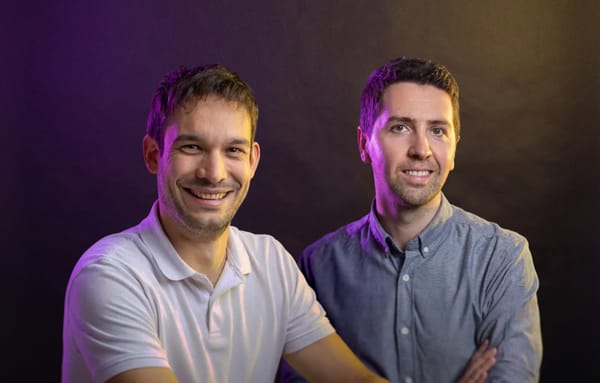
Arthur Van Clap and Ivan Marchand, President (from Left to Right)
With the news that it had successfully completed a €1 million financing round, French game investor also announced the launch of the Early 2026 platform. GamesMarkt conducted a written interview with founders Ivan Marchand and Arthur Van Clap, former managers at EA/Google and Ubisoft, in which both provided joint responses.
How did the idea for Gamevestor come about? About two and a half years ago, we decided to launch our own game studio. We put together a solid team, a strong game concept, a working prototype, and started looking for funding. We met with dozens of publishers and VCs, and most of the time, the answer was a quick no.
What surprised us most was how often we heard: “That’s too bad, you should have come two years ago, you would have already walked away with the money.” As we spoke with more studios – many of them more advanced than we were, with established communities and proven traction – we realized they were facing the same wall. That’s when it became clear that the problem wasn’t necessarily the quality of the games, but the way game funding was structured. Gamevestor came from that realization: there was a major opportunity to better connect players and studios, and to create a funding model adapted to how games are actually built with their communities today.
About Gamevestor and its platform
Gamevestor is a French company founded by Ivan Marchand and Arhur Van Clap. Ivan serves as CEO, while Van Clap is COO & CFO. Their stated goal is to democratise video game financing in Europe by bringing creators, investors and players together in a secure and transparent ecosystem.
Unlike crowdfunding, crowd investment is subject to much stricter regulations. This creates greater hurdles for those seeking capital. At the same time, Gamevestor wants to keep the hurdles for investors as low as possible so that gamers can also participate.
While crowdfunding backers know exactly what they are getting, crowd investment supporters share in the success. What does this mean for the implementation of your platform compared to Kickstarter? Crowd investment is fundamentally different. Because investors share in the success, Gamevestor operates under a completely different legal and regulatory framework. That means actual investor protection rules, legally binding documentation, due diligence on projects, and ongoing reporting obligations. As a result, we filter very heavily: out of more than 200 studios that contacted us, only six projects were selected.
This regulatory framework also makes the platform much heavier to implement on the legal side, and for now we can only accept European investors. It’s more complex, but it’s also what makes the model credible and sustainable for bigger fundings.
What does this difference mean for your target audience? Is Gamevestor aimed at gamers or investors? Our core target audience is core and hardcore gamers; people who engage with games beyond just playing them, representing roughly 20% of today’s global player base. These are players who understand development cycles, risks, and long-term value.
Gaming today is fundamentally about communities. That’s why we designed Gamevestor to remain accessible, with a low entry ticket starting at €100, allowing as many players as possible to participate and, for the first time, share in the profits of the industry. At the same time, we are also working with a circle of experienced gaming angels, who have the opportunity to position themselves earlier than the general public with larger investment tickets.
Finally, we obviously welcome more traditional investors looking to diversify their portfolio with a structured and regulated financial product that is more engaging and passion-driven than “traditional” assets.
Investments are usually about company shares. Why does investing in projects also make sense? For most players, it’s much easier to assess the potential of a game than of a studio. You can look at a concept, a prototype, or a community and have a good sense of whether a game might succeed commercially.
Gamevestor is built around a revenue-sharing model, which is very different from traditional equity investment. Investors receive a concrete and predefined share of the game’s sales, rather than betting on a company’s valuation to increase by a certain percentage.
Finally, investing in indie studios is simply not accessible to most people. Outside of public companies like Ubisoft or Embracer, private game studios are closed to retail investors. Project-based investment opens the door to a (huge) part of the industry that was previously out of reach.
Are there plans to allow investments in companies via Gamevestor? That’s not how Gamevestor is built today and there are already many established platforms that focus on equity investment out there. Our value for studios is precisely that Gamevestor can coexist with more traditional funding sources. Studios can combine a revenue-sharing campaign on Gamevestor with equity investors or publishers who prefer to invest at the company level. We believe this flexibility is also what makes us attractive today for studios.
You have just successfully completed an investment round yourself. Was it difficult to find investors who believe in crowd investment? We wouldn’t say it was easy given the current economical context, but it was much easier in comparison with when we were trying to raise funds for our own game studio.
Today, especially in Europe, many specialized investors have shifted away from game content itself and are focusing more on gaming tech and B2B products. This is largely a consequence of the extreme investment cycles that followed COVID.
That said, when we met investors who truly understood the problem we were addressing, things clicked immediately. There was a clear moment of alignment, a shared feeling that this could be a very relevant solution to what the games industry is experiencing right now.
What steps do you plan to take with the capital you have currently raised? First, a significant part of the capital went into covering our technology and legal costs. We’ve built a platform and a model that are quite unique, and that required substantial upfront investment. Our largest upcoming expense is marketing for the launch. We will actively invest in promoting both the Gamevestor platform itself and the game projects hosted on it.
Finally, with the remaining capital, we will expand the team and continue preparing for our entry into the U.S. market, which represents an important next step in our development.
What is your long-term goal? Could Gamevestor expand beyond games one day? Our long-term goal is to establish Gamevestor as the number one source of financing for mid-sized game studios in Europe and beyond. We don’t intend to expand into other industries. Focus is a strategic choice for us, we prefer to concentrate on the industry we know best, where we have credibility, expertise, and a deep understanding of how value is created.
Over time, we do see ourselves becoming more involved in the projects we support, going beyond funding alone. But that ambition depends on scale and community. The more studios, players, and investors join the platform, the more impact we can have, which is why we encourage your readers to visit gamevestor.co and create an account!
GamesMarkt Daily Newsletter
Sign up to receive the free daily newsletter about the Games Industry in GSA, Europe and beyond.
Stephan Steininger is Director of Operations and Editor-in-Chief of GamesMarket. As part of the magazine since its inception in 2001, he knows the GSA games industry by heart.
The south entrance of gamescom | Picture: Koelnmesse, Thomas Klerx
Bavaria's Minister for Digital Affairs, Fabian Mehring, delivered the keynote speech at the first GG Bavaria Business Day 2025. | Picture: Alexander Hartung for Games/Bavaria
Johannes and Simone Grünwald are Slime King Games. Their game Under the Island is an homage to classic titles like Alundra, Terranigma and Zelda (Slime King Games)