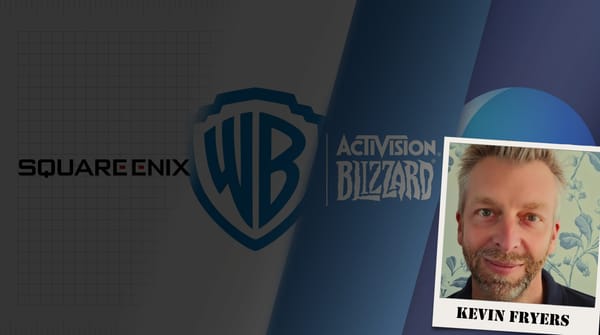
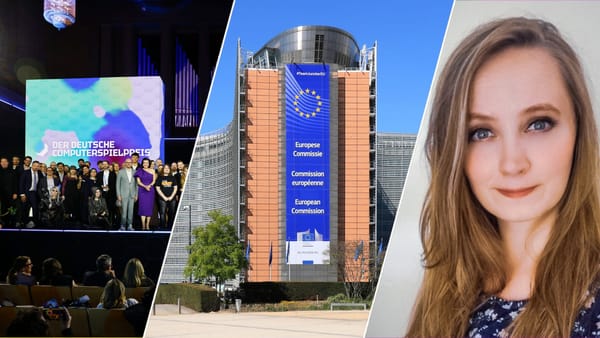
In Conversations with... Kevin Fryers
In the new ‘Zoran's Update,’ brand and marketing expert Zoran Roso talks to Kevin Fryers about
Welcome, Kevin. Your career path, spanning P&G, Activision, Warner Bros., and Square Enix, is truly unique. To kick off, I want to go back to the beginning: As mentioned you started your career at Procter & Gamble, which is universally recognized as the gold standard for traditional brand management. When you made the leap into gaming at Activision Blizzard, what was the biggest "culture shock" in applying P&G's data-driven, consumer-first marketing frameworks to a highly volatile, hit-driven entertainment industry?
Kevin Fryers: I remember that really clearly - it genuinely felt like a shock at the start, but also exciting of course! Gillette (P&G), was very structured - deep data, established brands, clear processes, defined ownership, and a relatively predictable business model. You could forecast and plan with relative confidence.
Then I arrived in games, and at times thought, this is wild, for many reasons back then. It was far less predictable, much less defined, but more opportunity to be creative. Success was created and delivered in a very different way - hits mattered, timing mattered, culture mattered - that was different, but also exciting and it felt entrepreneurial; way more so than now. What also stuck out to me was that despite what FMCG stands for, games moved much faster in how teams operated.
What held true though was that data still mattered, but you had to apply it differently. It couldn’t slow things down or over-structure the process - it had to support faster, more instinctive decision-making. But I knew with more expertise we could do more. So one of the first things I did was bring in a data expert from IRI to help us build better rigour, but in a way that worked for the pace of the industry. That balance between instinct and evidence was probably the biggest adjustment, and it’s something I’ve carried with me ever since. Ironically though, with the development of post launch content engagement, monetisation, live services and F2P, the same principles of the GIllette business model appeared in games. So the constant engagement and LTV models we work with now are very similar to what I did back at Gillette.
If you rely too heavily on the algorithm, you can end up with something that feels very transactional - you’re converting intent that already exists, rather than creating it.
Moving from Activision Blizzard to Warner Bros., you transitioned from pure-play gaming franchises to a massive transmedia organization. How did your strategic approach to product marketing change when a game wasn't just a standalone P&L, but part of a much larger, multi-billion dollar Hollywood IP wheel?
Kevin Fryers: The biggest shift was that the game stopped being the centre of everything - it became part of something much bigger. At Activision, even when we worked with licensed IP, the game for us was still the primary product and P&L; we still had to navigate license complexities but obviously not manage all the detail. At Warner Bros., the IP sat above everything, and the game had to fit into a much broader ecosystem, such as film, consumer products, partnerships.
That meant my role became a lot more about alignment and timing. You’re not just building a go-to-market plan for a game, you’re making sure it connects with everything else happening around that IP. Hogwarts Legacy was a great example. We had to engage really early with the global IP teams and other parts of the business, whether that was consumer products, licensing, or brand teams, to make sure what we were building and marketing worked across the whole system. Even something like the Collector’s Edition - we had this idea for a floating wand, which sounds simple, but it meant navigating very specific IP rights around wands. Those details really matter, and if you miss them early, you can create big problems later. So the shift for me was moving from leading a product launch to orchestrating something much more connected - where success comes from how well everything lines up, not just how strong the game is on its own.
In your role as Senior Marketing Director at Square Enix, you were tasked with marketing deep-heritage Japanese IP to a global, modern audience. What are the unique operational challenges of aligning Eastern development cycles and philosophies with Western marketing expectations and performance metrics?
Kevin Fryers: One of the biggest challenges is aligning creative philosophies. Goals are aligned, all the teams are dedicated and passionate, but how to message and what to message can be materially influenced by cultural nuance. Japanese development teams are incredibly product-focused, with a strong emphasis on craftsmanship and completeness - and that shows in the quality of the games. Marketing assets tend to come out of that - they’re often closer to a holistic expression of the game rather than something broken down into a structured narrative of features told over time.
Western marketing tends to work differently. Audiences are used to more staged storytelling, where you introduce the world, then mechanics, then features, maybe story or modes over time, with each asset doing a specific job in the funnel. We tend to like clear structured narrative a lot of the time, I guess similar to chapters of a good book where the story has clear progression. Maybe in part we have been trained that way by Hollywood.
Neither approach is right or wrong, but they don’t naturally line up. What works well in Japan doesn’t always land as clearly with Western audiences, particularly when you’re trying to build momentum, reveal specific themes at a certain moment, and drive conversion over time. So a big part of our role was acting as a bridge - working with the studios to be the voice of the western audience, to try and shape assets that stayed true to their vision, but could also be structured in a way that Western audiences could more easily engage with. Sometimes that meant influencing how things were presented, and sometimes it meant creating complementary assets for different markets.
The key was doing that without losing what makes the IP special - because that authenticity is exactly why these titles are so popular in the first place.
Given your foundational roots in traditional brand building (P&G) and your experience in the hyper-metric world of modern gaming, where do you see the industry failing right now regarding the split between top-of-funnel brand spend and bottom-of-funnel User Acquisition? Have we become too reliant on the algorithm at the expense of true brand affinity?
Kevin Fryers: I wouldn’t say the industry is failing, but I do think it’s become very weighted towards performance. A lot of that is understandable, performance marketing is easier to measure, easier to justify to the business, and the feedback loop is almost immediate. But that’s also the trap. You end up optimising what’s easy to prove now, and that can come at the cost of what actually drives long-term demand.
If you rely too heavily on the algorithm, you can end up with something that feels very transactional - you’re converting intent that already exists, rather than creating it. The titles that really break through tend to have strong brand and community signals well before launch, you can feel the momentum building! When that piece is missing, performance marketing has to work much harder, and often less efficiently. Some games have succeeded of course in the surprise launch, and many games would love to achieve that as it’s very efficient, but there aren’t many examples that can do it at scale - and importantly then hold and grow their players and deliver on their metrics.
So for me it’s not brand vs performance, it’s how they keep working together. Brand creates the desire and confidence, performance captures it. If you underinvest in brand, you’re effectively shrinking the pool you’re trying to convert. This isn’t new to marketing, but it’s still true of marketing.
We’ve become very good at optimising the bottom of the funnel, but brand investment still feels like a much higher risk. But for me investing early still, to support the brand, remains important in the mix to help ensure success. Marketing alone of course can’t guarantee long term success, but it’s an important part.
Square Enix has a uniquely passionate fanbase with high expectations, as seen with massive legacy franchises like Final Fantasy and Kingdom Hearts. From a marketing perspective, how do you mathematically quantify the "nostalgia factor" when forecasting a game's reach, while simultaneously trying to acquire Gen Z players who have no attachment to the PS1 or PS2 eras?
Kevin Fryers: I wouldn’t really try to quantify nostalgia as a standalone metric, it’s not something you can isolate cleanly, especially for franchises that span 20 years or more. What you can look for are the signals around it. Things like search demand, social conversation, community activity, engagement with legacy content, and how quickly trailers or announcements gain traction. That gives you an indication on how present that franchise still is in people’s minds.
But I’ve always been careful not to over-index on it. Nostalgia might create a strong initial spike in attention, but it doesn’t necessarily translate into sustained growth - and it doesn’t bring in new audiences on its own. I remember working on Pitfall: The Lost Expedition for Wii, which was built around nostalgia, but it doesn’t always deliver.
For Gen Z in particular, it’s much more about relevance. They’re not buying into what the franchise used to be, they’re buying into what it is now - the world, the characters, the experience. So when forecasting, I tend to separate the two. You can use those demand signals to help size the existing audience, but any real growth has to come from how compelling the current proposition is for new players. Marketing’s role is to bridge that, respect the legacy, but present it in a way that feels fresh and accessible. If you get that right, nostalgia can be helpful as part of the story.

With organic discovery on storefronts flatlining and the traditional media landscape fracturing, how is your outlook on restructuring the marketing mixes for the next 2 to 5 years? Will we see major publishers acting more like CPG companies, or entirely pivoting to creator-led ecosystem marketing?
Kevin Fryers: I think the pressure on discovery and media is real - it’s harder to rely on storefronts or paid media in the way we used to. The number of releases on Steam alone highlights the challenge new content faces in that space. But I don’t see it as a choice between a traditional, CPG-style model and a creator-led one. The shift is really in how brand is built. As in your earlier question, for me brand building as part of the mix is important. Increasingly, creators and influencers aren’t just part of the campaign, they’re part of how audiences experience and form opinions about a game. In that sense, investing in creators is investing in brand, just in a more intentional way. But, you need to balance the authenticity with it being joined up to your plan and messaging, otherwise it becomes fragmented very quickly. You also risk losing control of your brand and the messaging, and that isn’t the goal.
So for me, the future doesn’t feel binary. It’s more about balancing the mix. Less reliance on late, high-intensity paid bursts, and more focus on building momentum and credibility earlier through community, creators, and culturally relevant touchpoints - supported by more traditional brand and media when it matters.
I think the pressure on discovery and media is real - it’s harder to rely on storefronts or paid media in the way we used to.
Everyone talks about Generative AI in game development, but looking strictly at the marketing and publishing side, where do you see AI genuinely moving the needle for a Senior Marketing Director? Are we talking purely localized asset generation, or are we moving toward dynamic, real-time campaign adjustments?
Kevin Fryers:
I think there’s a lot of discussion and opinion around AI at the moment, so I try to stay quite open minded. But I think the most immediate benefits are quite practical, it’s about moving faster, doing more, reducing simple repetitive tasks, and using AI as a tool to help make better decisions. Things like localisation and asset variation are the obvious areas which get talked about. AI can help you move faster and create more options. But I think human engagement is still really important, to keep on track and maintain control - we mustn’t lose the human touch, I’ve seen AI outputs miss nuance or not get it quite right, which can be a problem for brand and player trust. AI driven communication still feels quite obvious, and because of that feels slightly less authentic and engaging. But using it to test, learn, and adjust media much more quickly is a really interesting space with opportunities to deliver efficiencies.
Looking slightly ahead, we’re starting to hear about more potential exploration of AI within the product itself - things like conversational NPCs or more dynamic live content. It’s still very early, but if that were to happen and prove valuable, it could start to influence how marketing works as well, with a need to be more responsive and adaptable.
I also feel there are also clear boundaries though. In areas like social and community, where you’re directly engaging with players, authenticity really matters. People want to feel like they’re hearing from the teams behind the game, not a machine. If you get that wrong, you risk eroding trust, especially given how sensitive audiences already are around AI in games.
So for me, AI is an enabler, not a replacement. It can help teams work more efficiently and aid decisions, but the core of marketing - understanding the audience, building trust, and knowing what to say - still needs to stay human.
I think there’s a lot of discussion and opinion around AI at the moment, so I try to stay quite open minded. But I think the most immediate benefits are quite practical, it’s about moving faster, doing more, reducing simple repetitive tasks, and using AI as a tool to help make better decisions.
You’ve essentially experienced the three distinct pillars of modern game publishing: the aggressive, live-service and metric-driven machine of Activision; the transmedia, Hollywood-scale IP integration at Warner Bros.; and the prestige, deep-lore Japanese heritage of Square Enix. How do these three contrasting mentalities synthesize in your day-to-day thought process? When you are evaluating a new go-to-market strategy today, which of those three "voices" tends to drive the conversation, and how do they balance each other out?
Kevin Fryers: I feel those experiences have given me a more rounded view. At Activision, I had quite a broad grounding across marketing and commercial roles — from trade and go-to-market through to digital sales, working across the full portfolio, from live service titles like Call of Duty through to things like Squinkies (you may need to look that one up), and everything in between. Experiencing different roles and ways of working was a deliberate choice early in my career, even going back to P&G. I wanted to understand how it all fits together.
At Warner Bros., the shift was scale and complexity, working across regions, teams and partners, where success depended on how well everything lined up, not just how strong one campaign was in isolation.
And at Square Enix, it’s been much more about the product and the player, making sure what we do feels true to the IP, and that we’re really understanding what matters to the audience.
Those experiences have never felt in conflict, they reinforce each other. You’re thinking about the player and the product, but with a clear view of the commercial impact, and how everything needs to come together to deliver it. That’s probably how I use it every day. I tend to think about decisions end-to-end, what we’re trying to achieve, how it connects across teams, and what that will mean. So ultimately, you have to deliver commercially, but not at the expense of the brand or the player. The balance is making the right decisions to hit your goals, while building something people genuinely want to engage with.
If you were teaching a masterclass to current marketing students and had to use one campaign from your time across Activision, WB, or Square Enix to demonstrate how to successfully pivot a strategy mid-flight, which campaign would you choose and why?
Kevin Fryers: I’d probably point to Gotham Knights, more as an example of how you respond when things don’t quite land as expected. During the campaign, some of the signals we were tracking weren’t where we needed them to be. In those moments, the instinct can be to push harder, but often it’s about stepping back and being more deliberate about where you focus and how you show up.
For us, that meant rebalancing investment and leaning into the areas that were working better, rather than trying to force the original plan. I don’t think of it as a single “pivot” moment though. In reality, most campaigns are a series of small adjustments rather than one big change. You’re constantly reading what’s happening and making decisions along the way.
The key is not to overcorrect. If you react too aggressively, you can take the momentum out of a campaign, and make things worse. It’s about making measured changes that improve performance, while still building confidence in what you’re putting into the market.
We've covered everything from CPG fundamentals to mid-campaign pivots and the complexities of AI. Now, let’s end on a purely fun note about IP and legacy. You’ve worked with countless major entertainment properties—if you were given a blank check and total marketing control, what one dormant IP would you bring back?
Kevin Fryers: I would love to bring back Burnout! I loved that game, and so it was quite sad that after Burnout Paradise there would be no more releases in the franchise. I was also a big fan of Forza, but Burnout offered a different experience. Come on EA, lets take a risk…
Zoran Roso stands as a highly influential veteran of the video game and entertainment industry, with a distinguished career spanning over 25 years in global publishing, marketing, and leadership roles. His professional journey includes serving in significant executive positions at some of the world's most recognizable gaming giants, including Rockstar Games/Take 2 Interactive, Activision Blizzard, and Sony PlayStation, where he was instrumental in the marketing and strategic positioning of flagship AAA franchises and brands. Most recently, he leveraged this extensive experience as the Global Publishing & Marketing Director at Tencent Games, a critical role focused on expanding the company's international reach and developing successful go-to-market strategies for its massive portfolio of internal and partner studios.
Now operating as the founder of ZR Consulting, Zoran continues to drive success in the industry by advising major global publishers and developers. His firm specializes in crafting winning strategies for international brand development, optimizing live service performance, and executing flawless launch plans across all major platforms, including console, PC, and mobile. An active figure in the global games community, his career is marked by a clear strategic vision and a successful track record in translating complex products into global commercial successes.
Contact details:
ZR Consulting
eMail: [email protected]
LinkedIn: https://www.linkedin.com/in/zoran-roso/