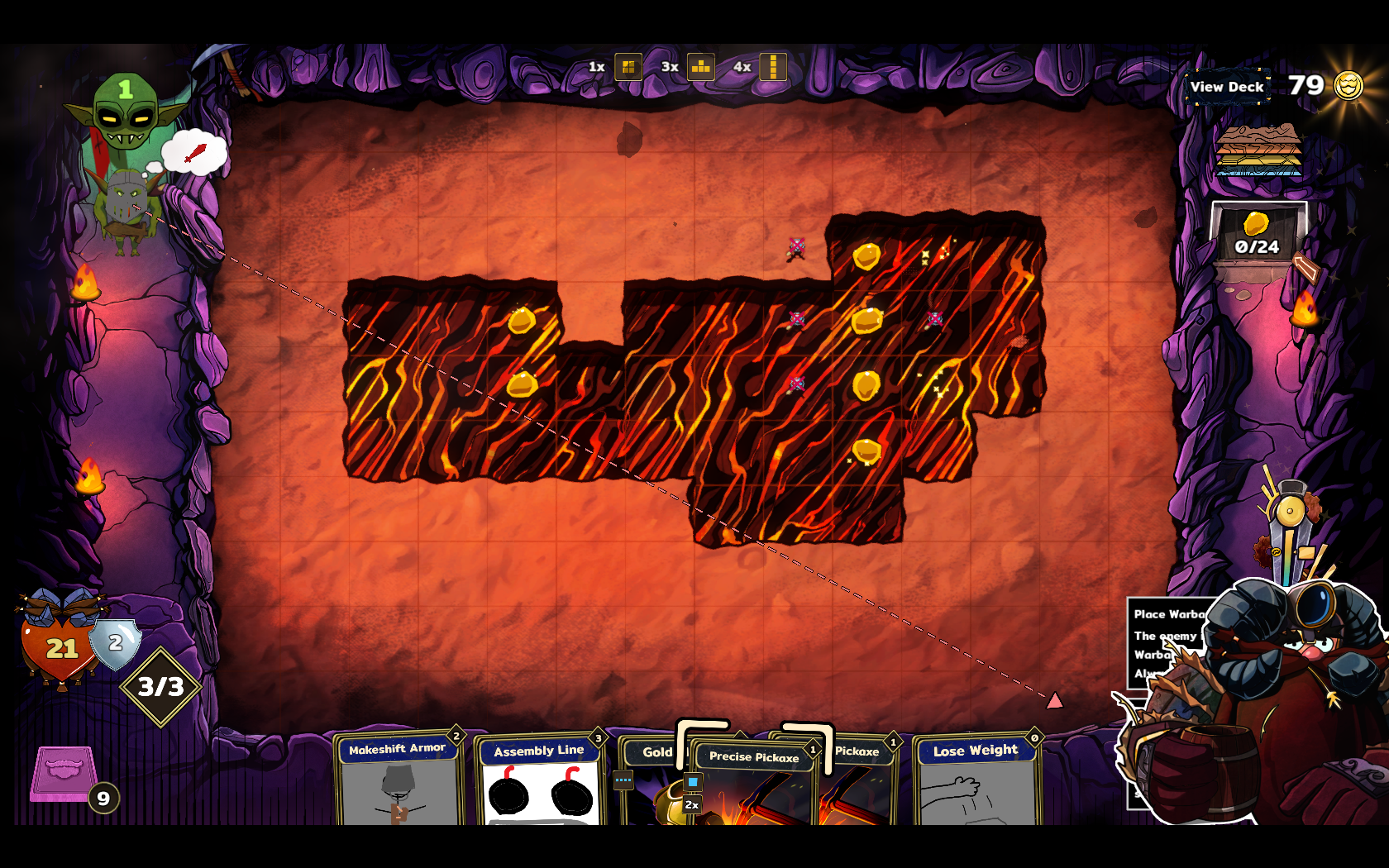
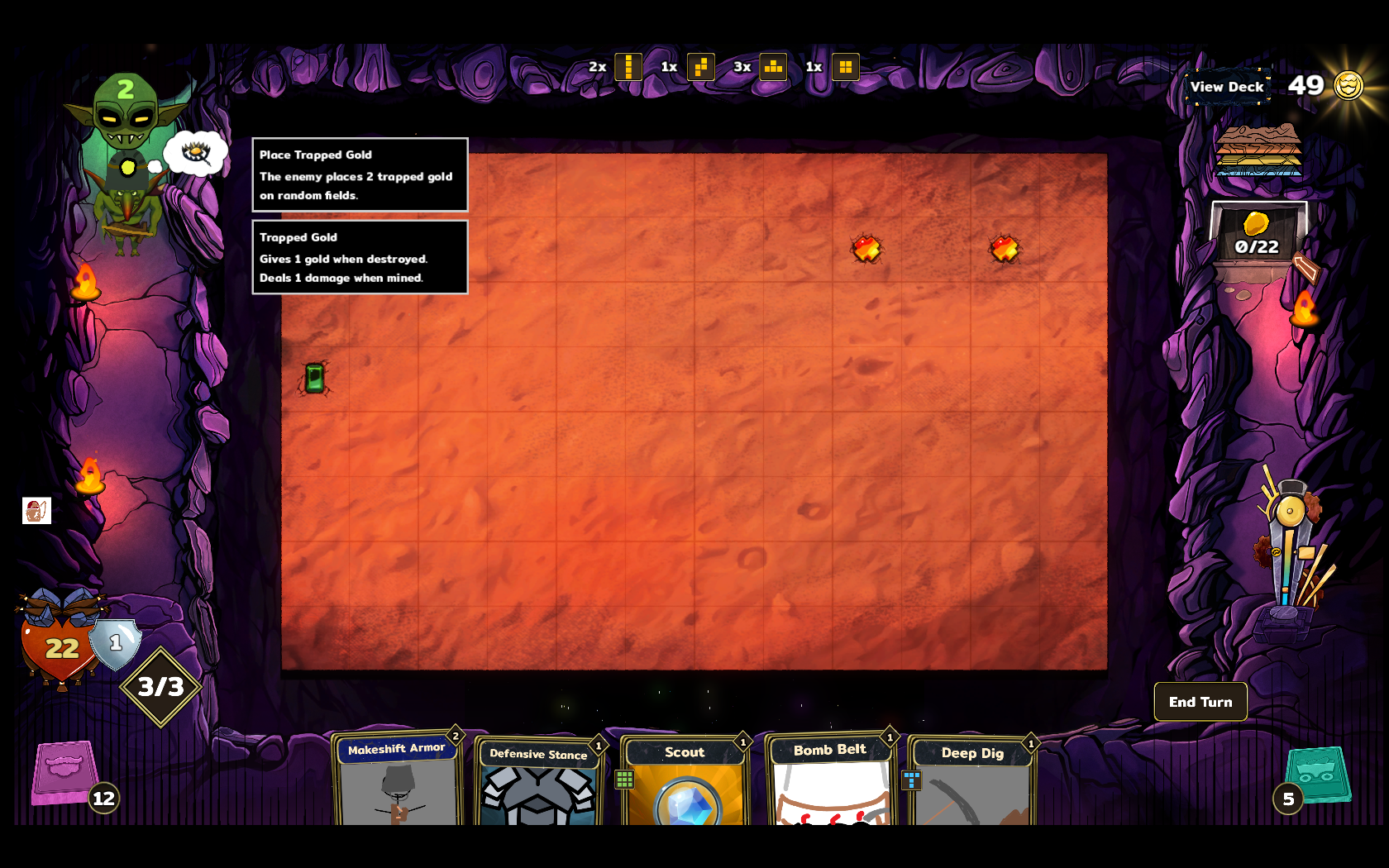
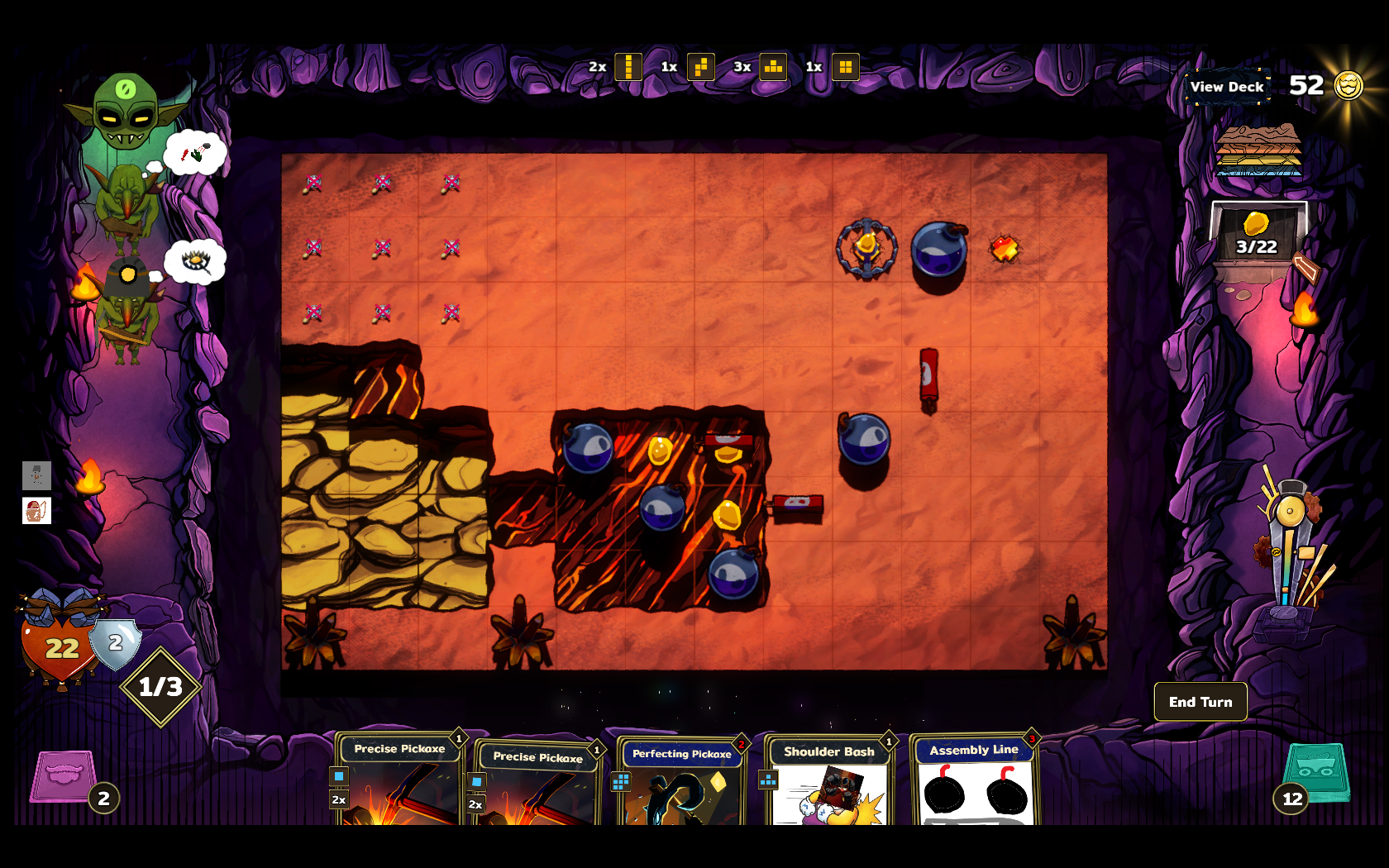
We played an exclusive gameplay preview of Beards Go Underground, the upcoming mining deckbuilder by PandaBee Studios, and were absolutely enamored by what could well become the internet's next card-based digging obsession.
Dig up gold with tools and explosives, chain combos together and work to keep enemies in check in Beards Go Underground, the mining deckbuilder. (All screenshots in this article: GamesMarkt, Pascal Wagner)
The next deckbuilding hit might well come from Germany. Revealed on Thursday night at the Second Wind Showcase, PandaBee Studios have now officially presented their new game Beards Go Underground to the public. And after the first playable demo in the wild at caggtus 2026 and the first reveal in the showcase, we had the pleasure to play an early version of the game over the last few weeks and show you an exclusive first demo of the gameplay of Beards Go Underground.
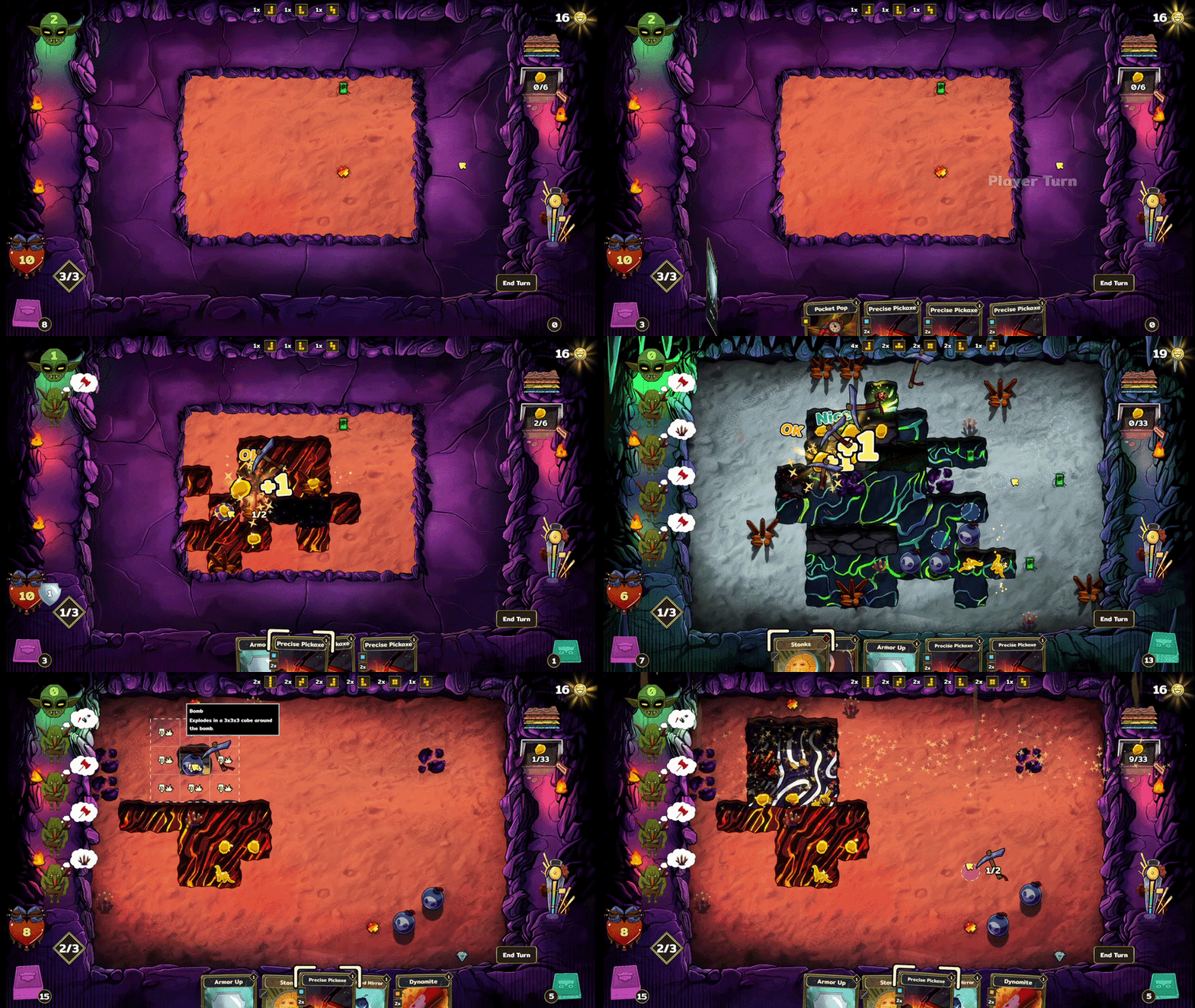
Gameplay gif provided by the developers (PandaBee)
What is the game about?
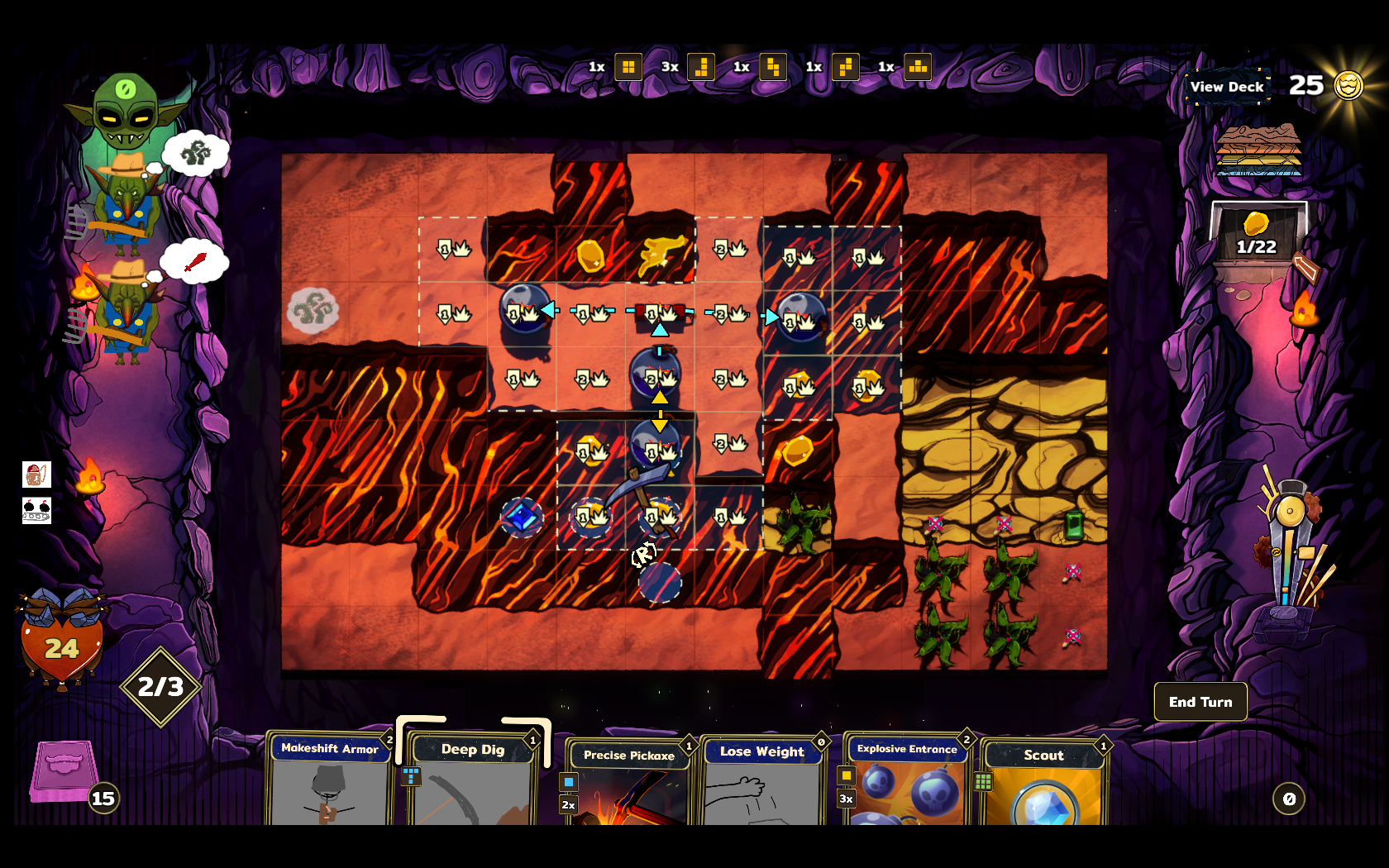
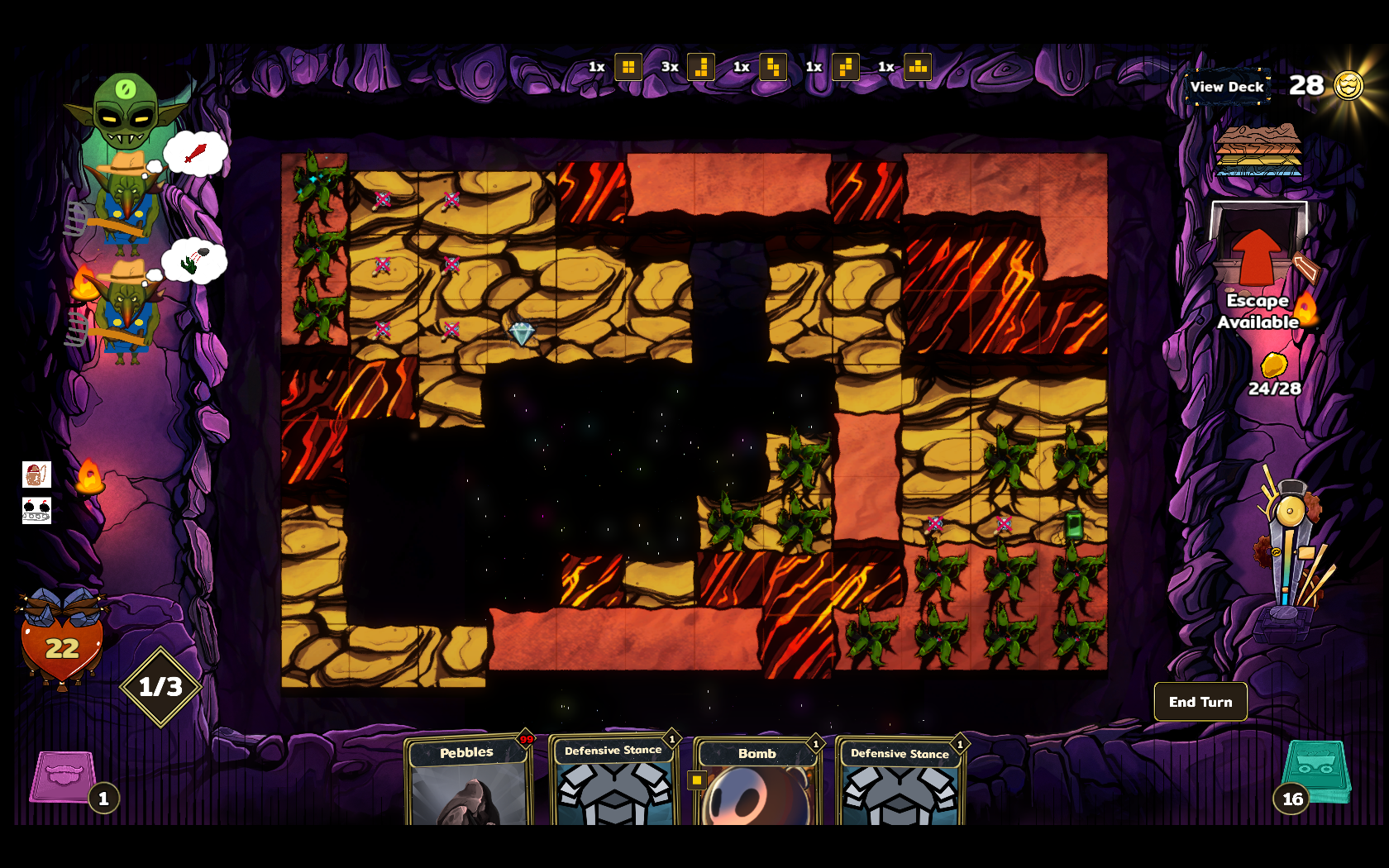
Beards Go Underground is a deckbuilder game in which players dig open layers of a mine in each level with the tools that the deck provides. These range from pickaxes that rip open the ground in certain formations to explosives of all kinds which have specific areas of effect. Goal of the game is to find gold on the dirt layers and dig it out, before an oncoming army of different enemies can overwhelm the player with their specific skills. And of course, gold is best dug out in impressive combos, made by lining up explosives the perfect way so they trigger each other, destroy goblin banners and thorny barricades, enable combos dig up as much gold in the same turn as possible.
Digging through layers of dirt for gold with a deck of tools represented by cards - the concept is simple, the execution impressive.
Great Visuals, Amazing Art Decisions
While the game is still in an early version, the polish of the visual and auditive experience is remarkable. You can read more on the interconnection of visual design and gameplay in our exclusive interview with PandaBee co-founder Julien Schillinger dropping this Friday, but let me say here that the artstyle envisioned by game artist Anna Wägner and the 3D elements by art generalist Aaron Zabel go exceptionally well together. Especially the animated art elements like the bombs slightly rolling on the spot which they will soon destroy make for an incredible game feel. Equally pleasing is the music by Fabian Schock, of which there are currently about five tracks in the game that perfectly encapsulate the feeling of digging down a medieval-style mine with a bunch of beer-drenched dwarfs.
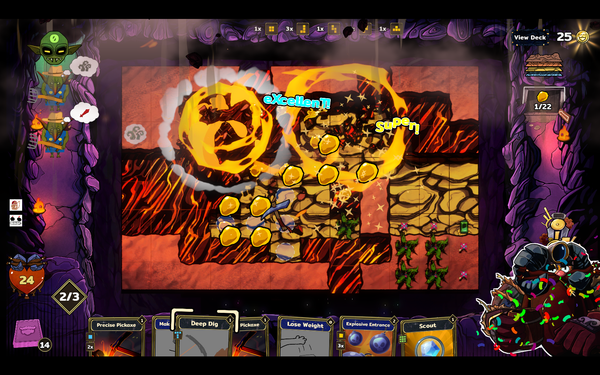
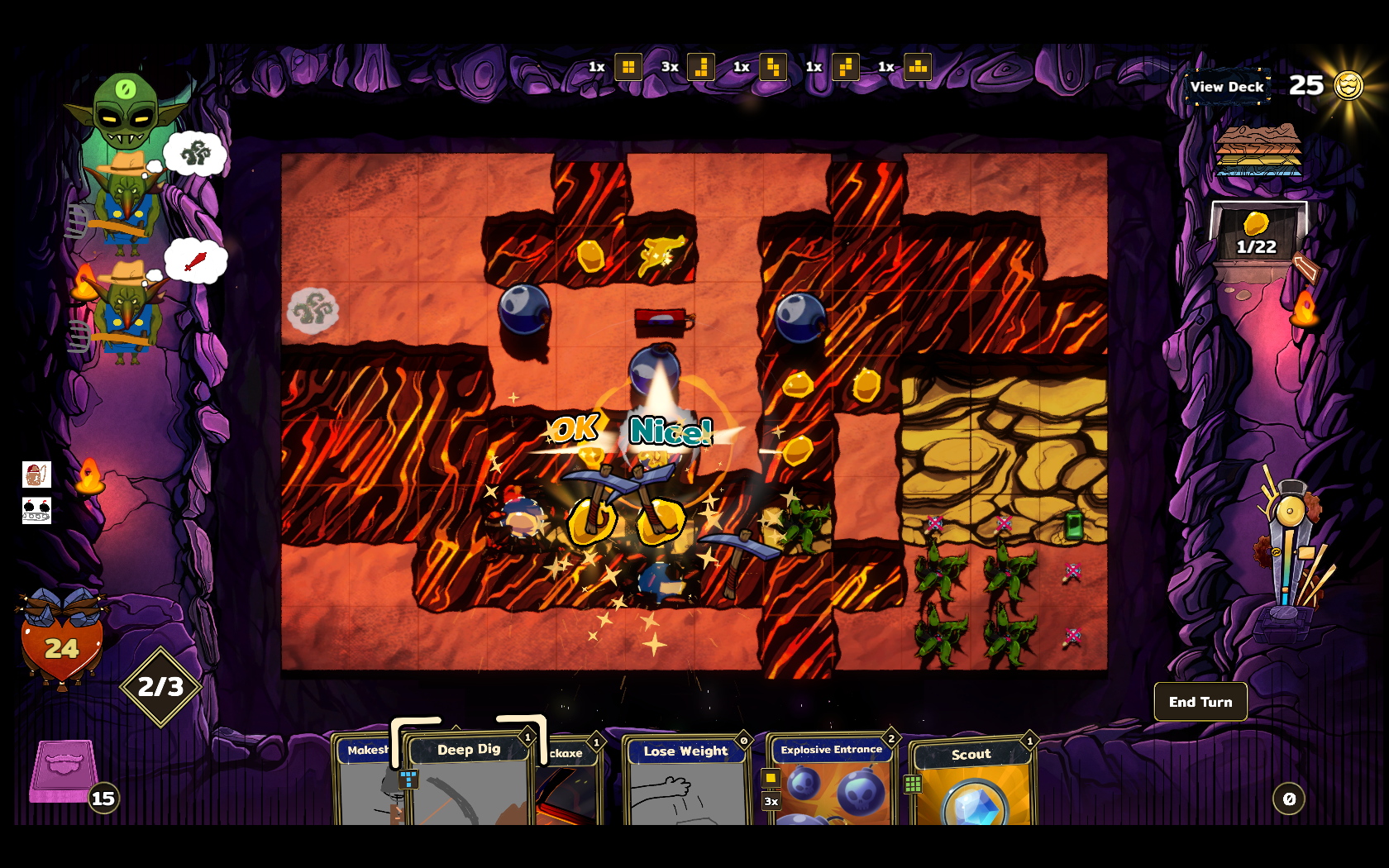
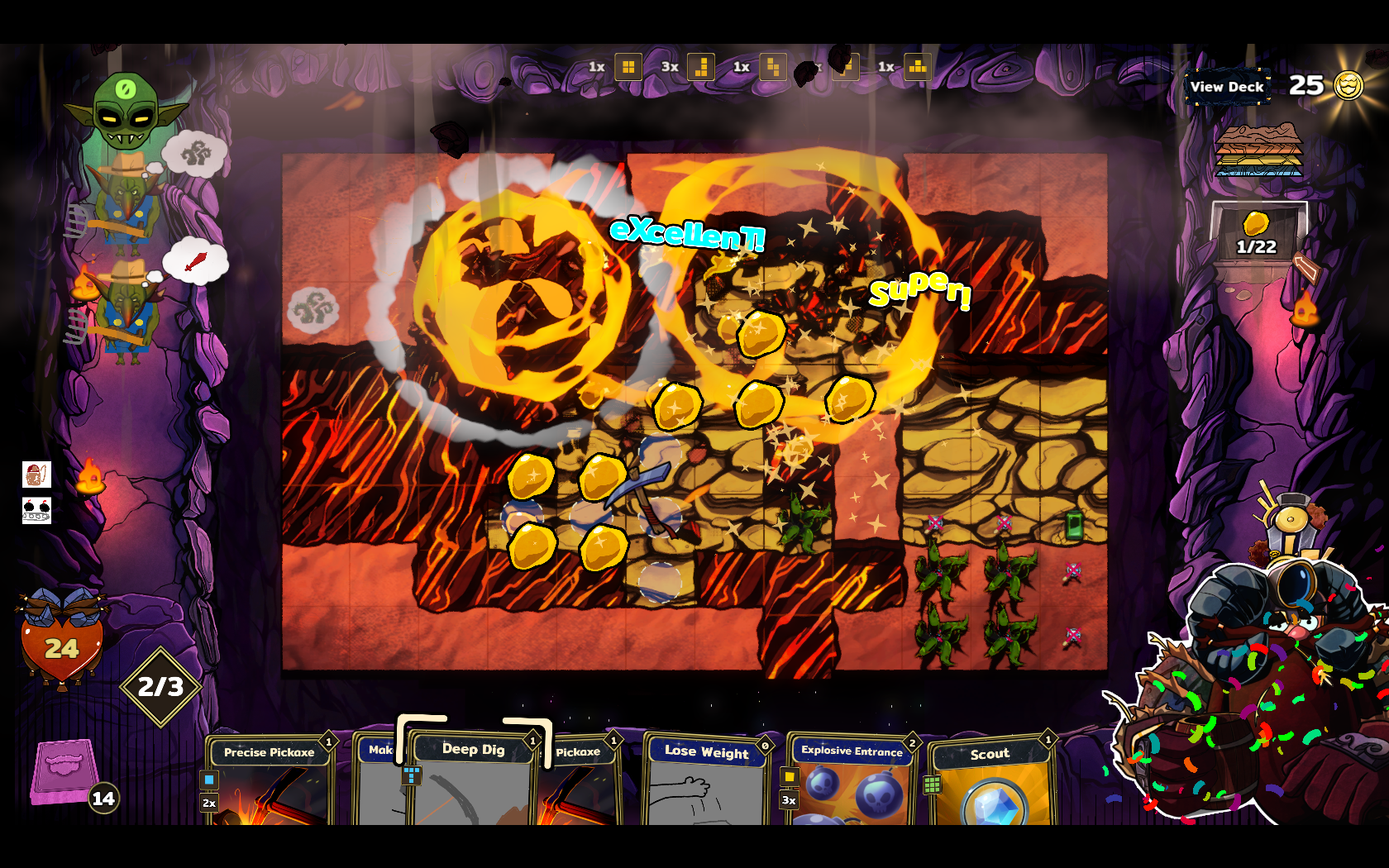
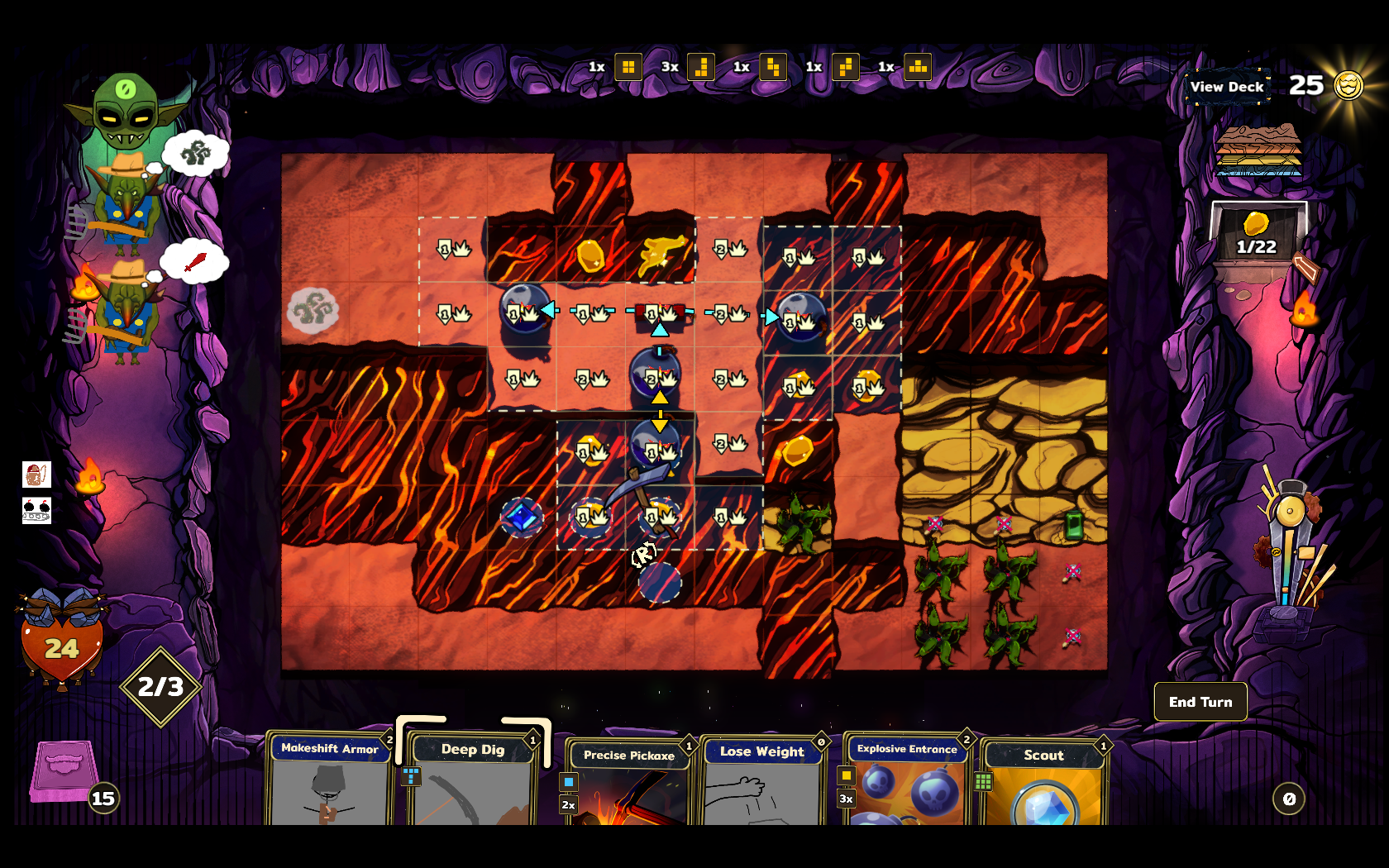
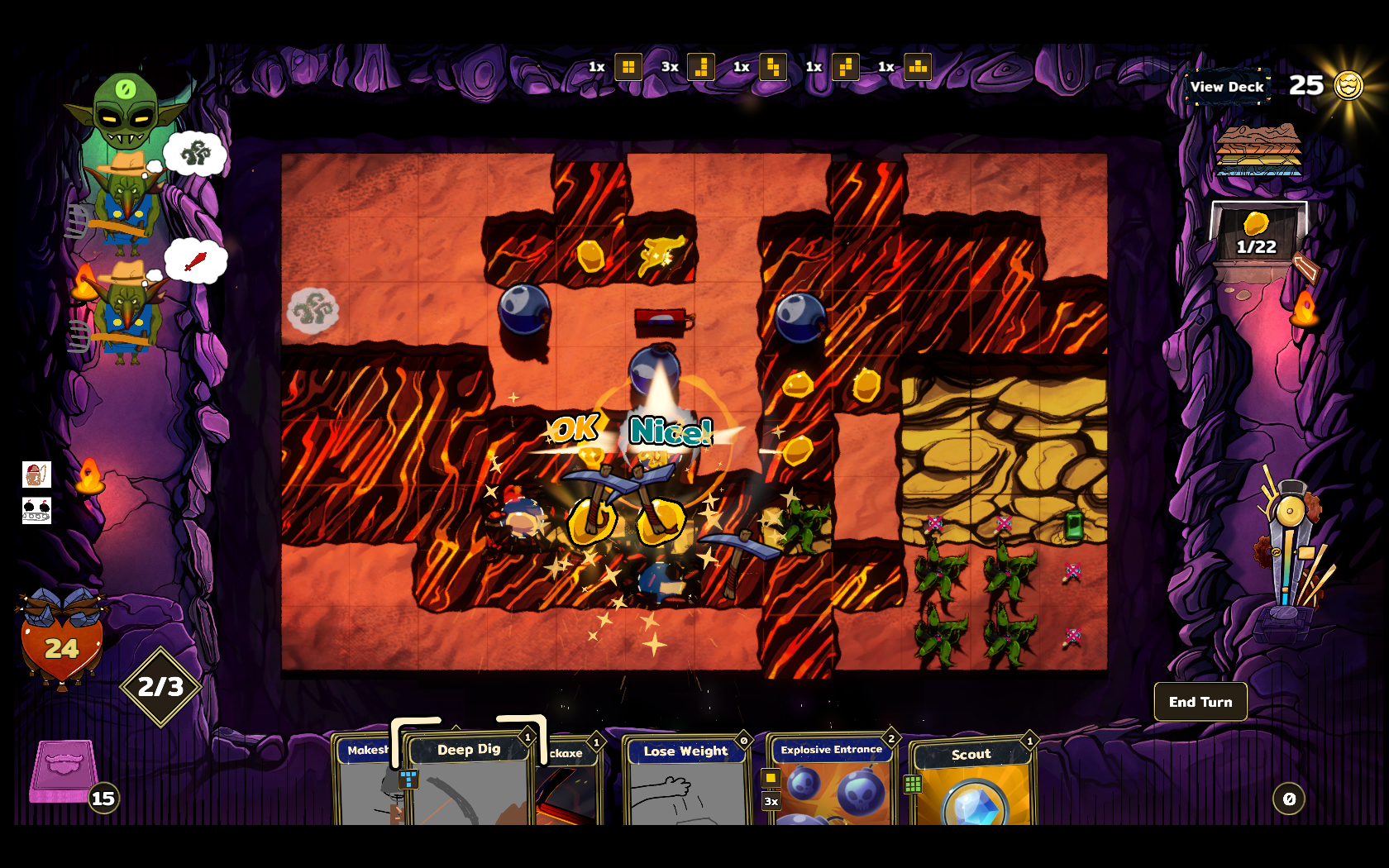
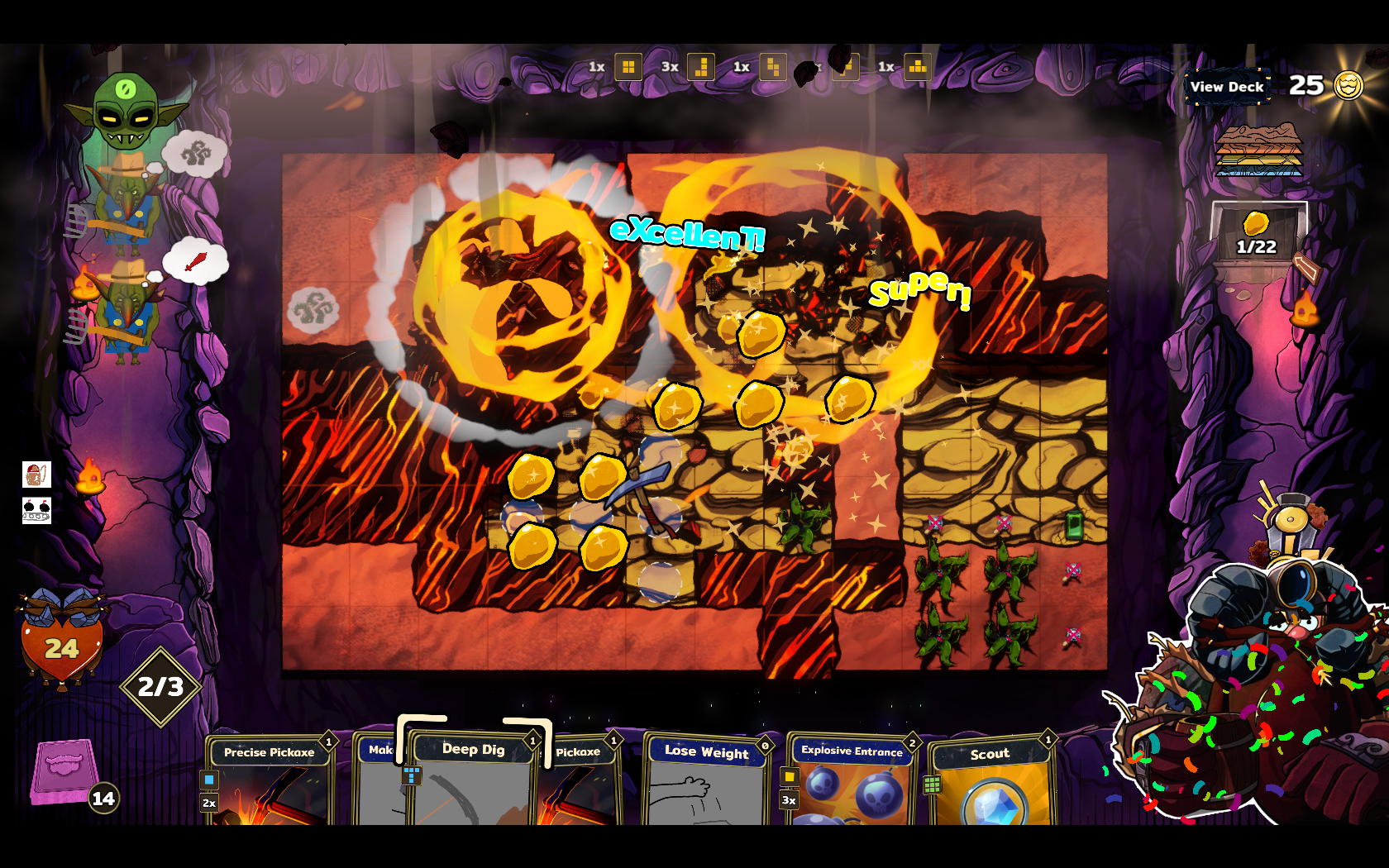
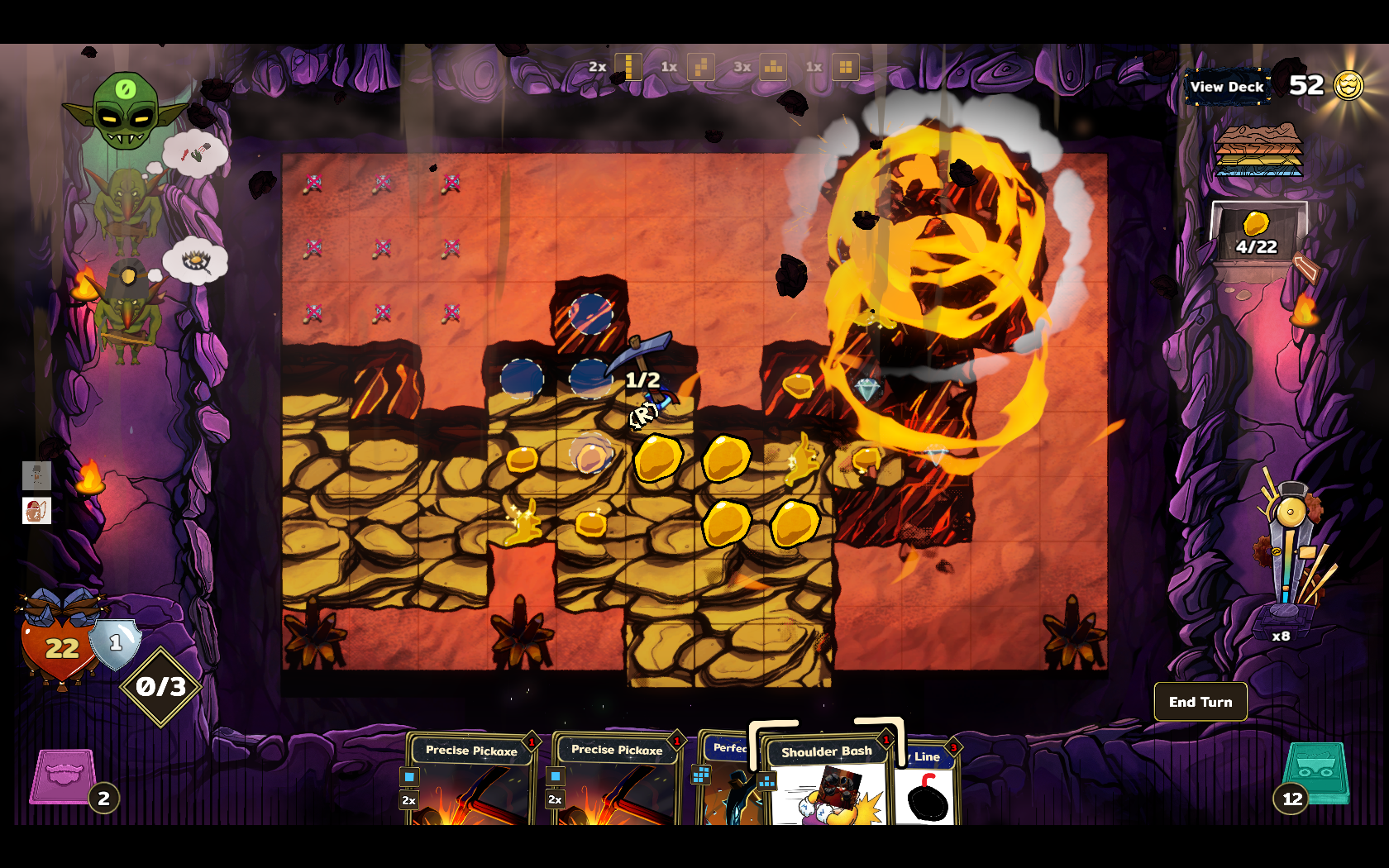
All these artistic decisions of course culminate in the inevitable explosions: When the bombs are perfectly placed, dynamite are connecting them all over the field and a final pinch with a pickaxe rips open almost the full field through the chain reaction and an impressed dwarf commemorates your combo of earned gold, nothing else feels quite like it.
If you cleverly place bombs and dynamite...... they can set each other off, culminating in massive explosions......and huge combos of simultaneously mined gold nuggets.
Layered Tactics, Clever Upgrades
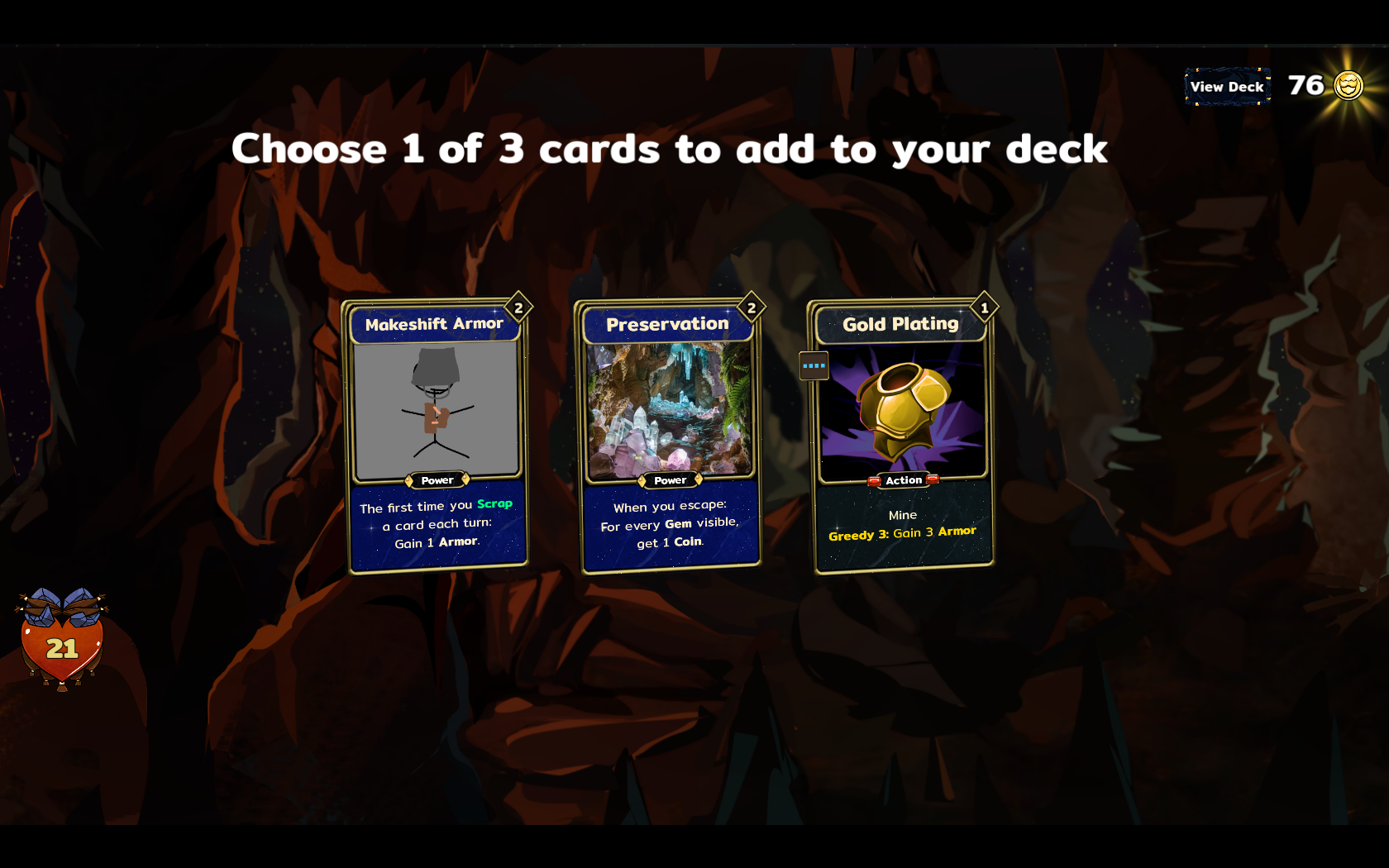
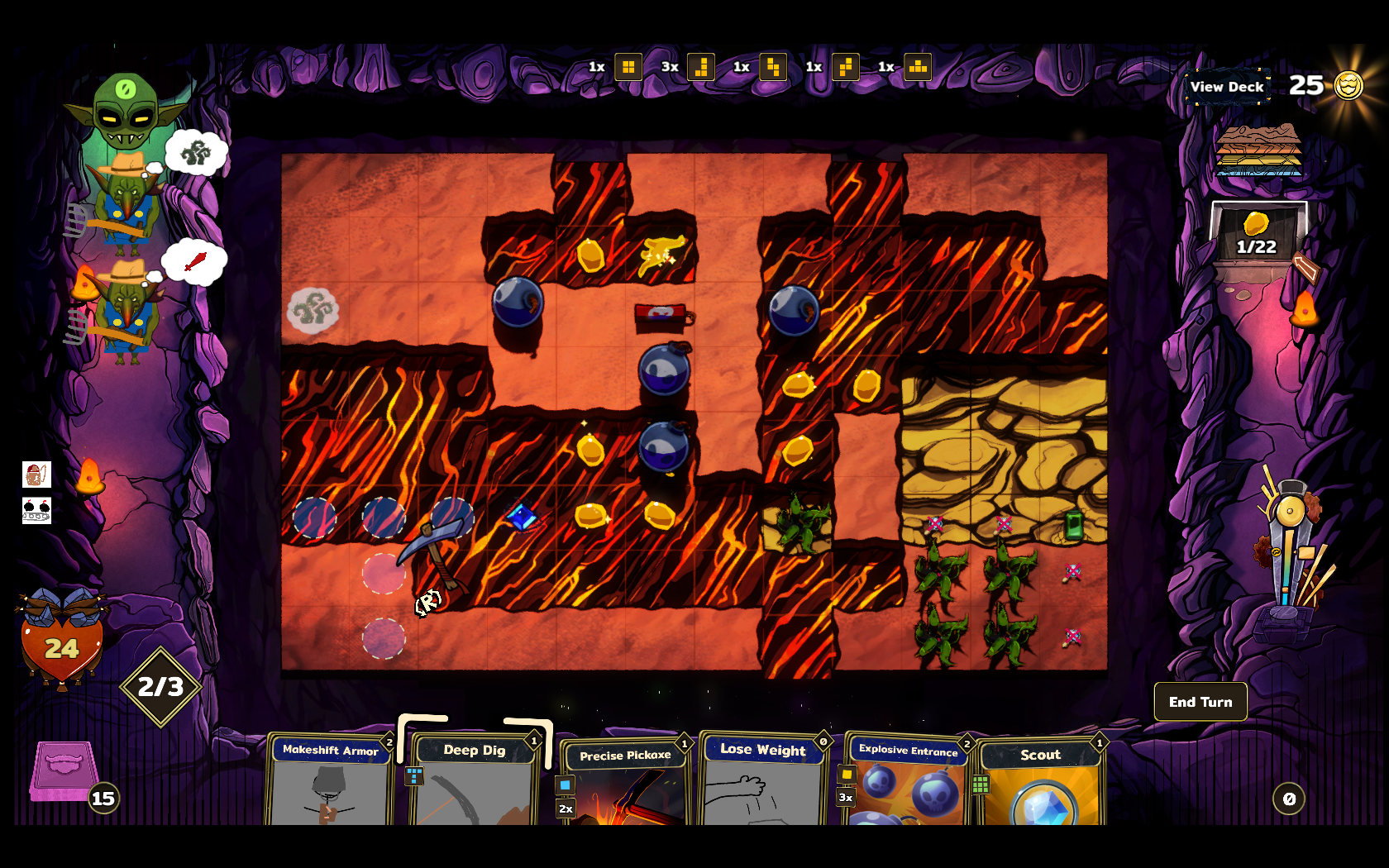
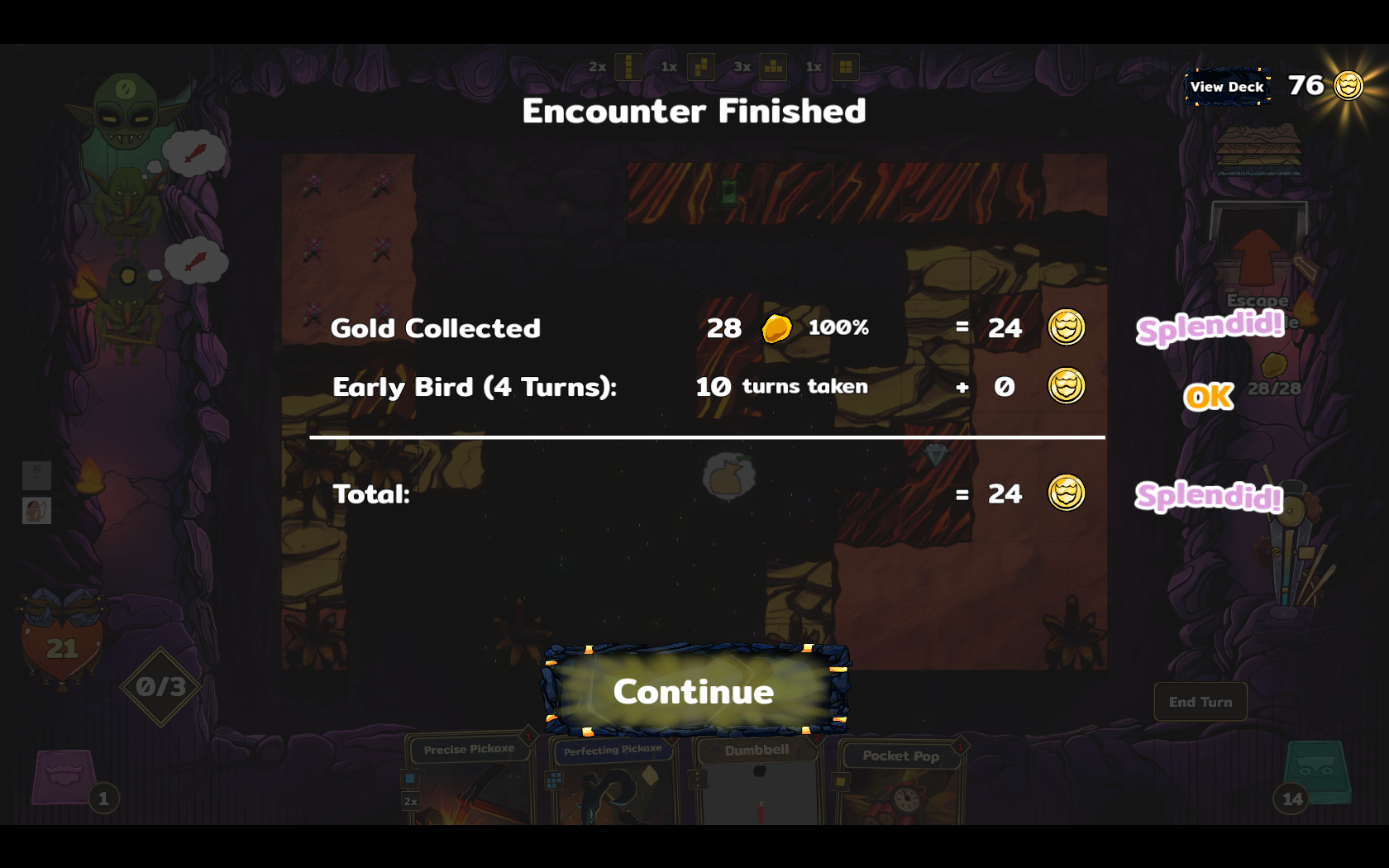
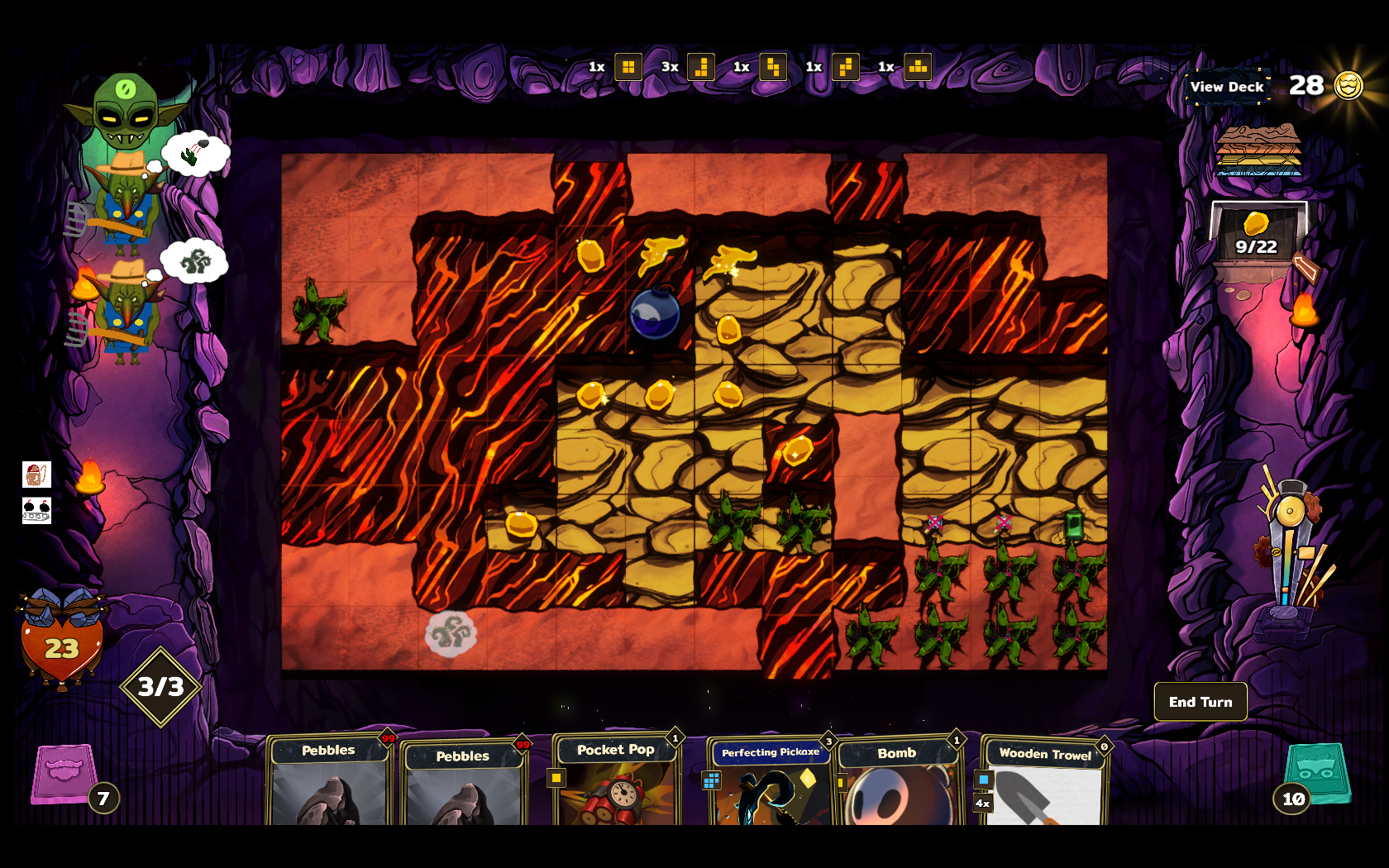
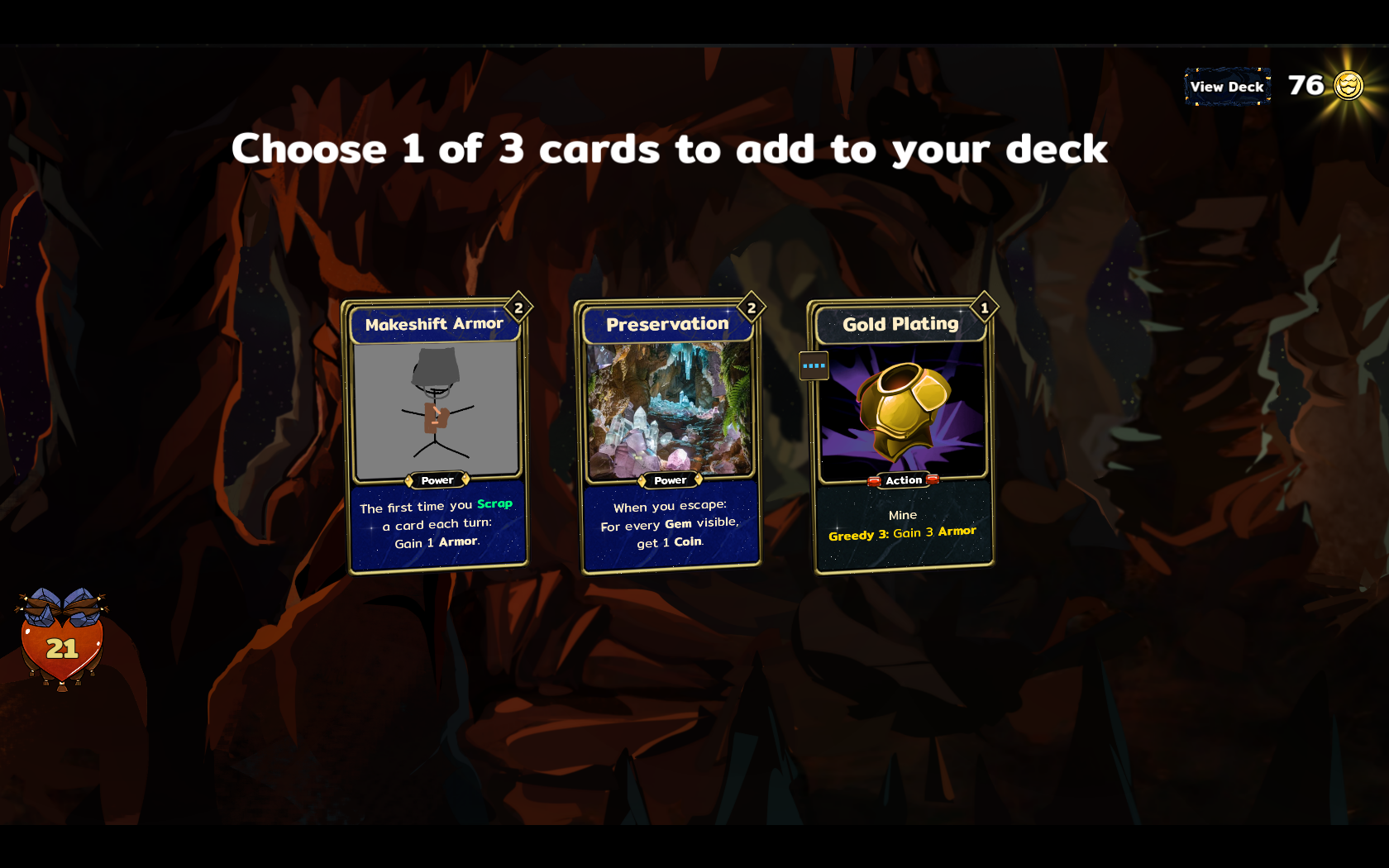
The complexity of the gameplay doesn't end there, too. Every level played gives a new card for deckbuilding of course, as is standard in these kinds of games, which widens your arsenal of tools significantly, from different digging implements and explosives to armor against the enemies' attacks and situational card draw (which, knowing that the developers are fans of the TCG, feels especially inspired by some great Magic: The Gathering cantrip designs).
Live every good deckbuilder game, successfully completed levels give more tools. (The developer art is, of course, temporary, yet also very charming)
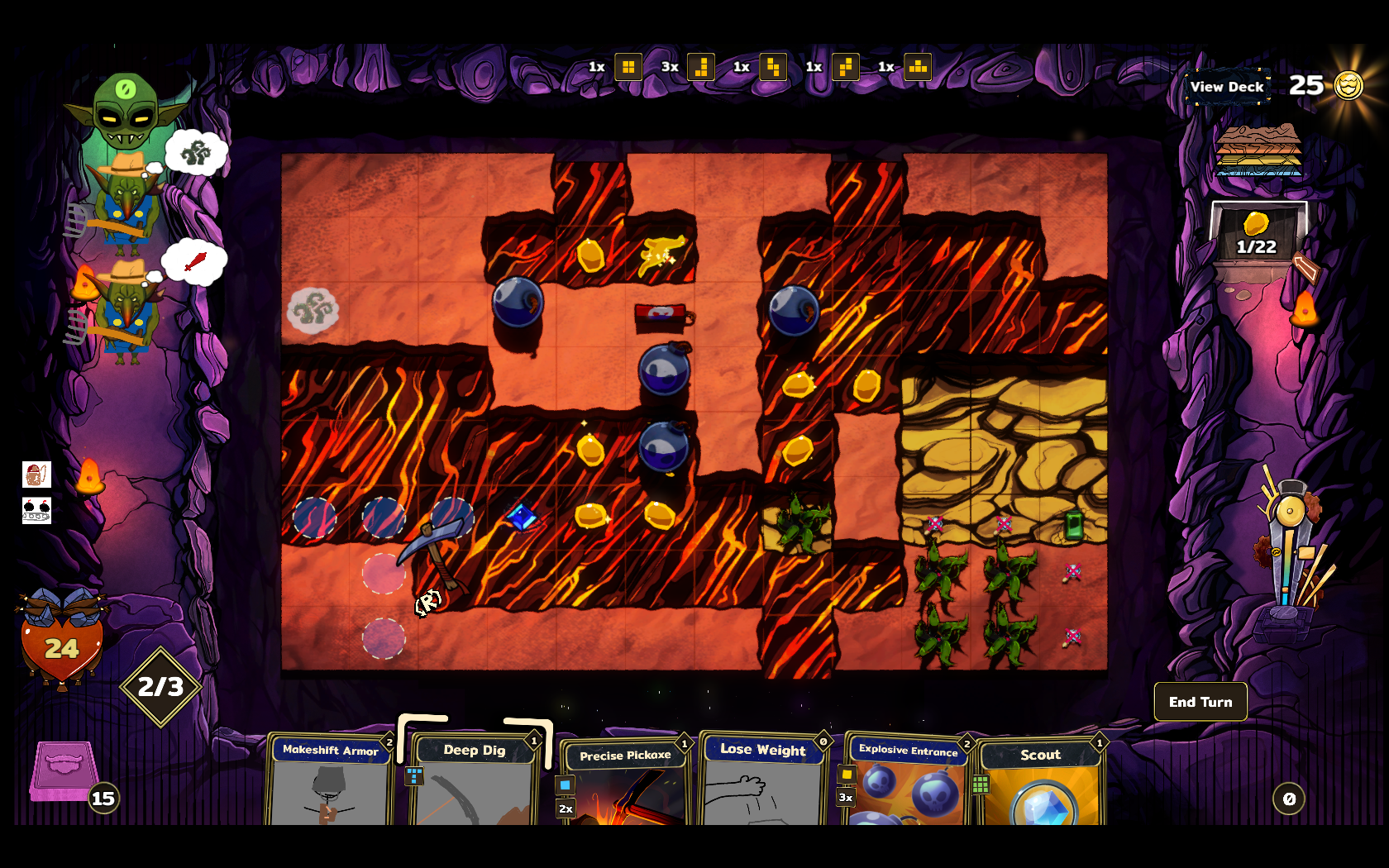
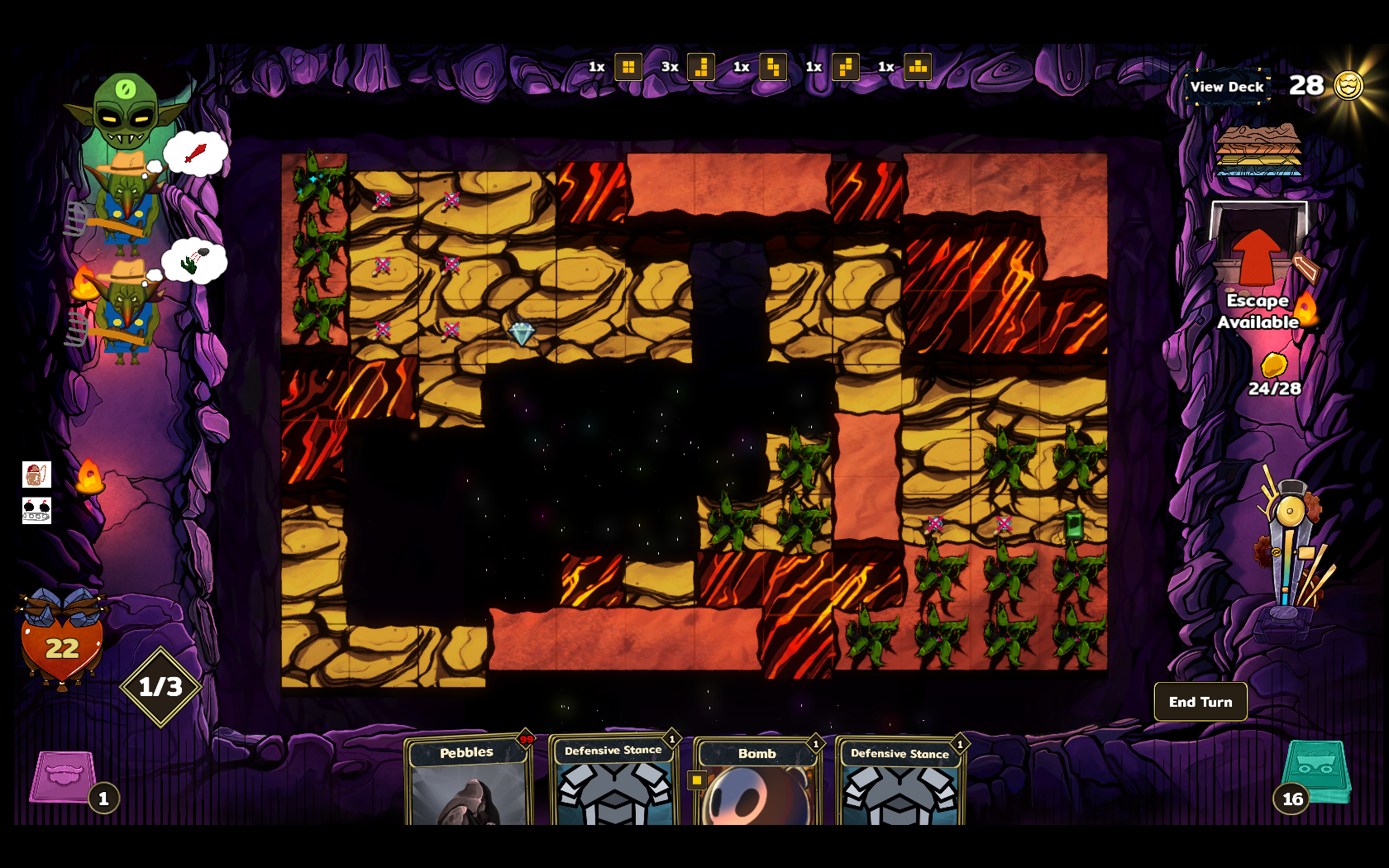
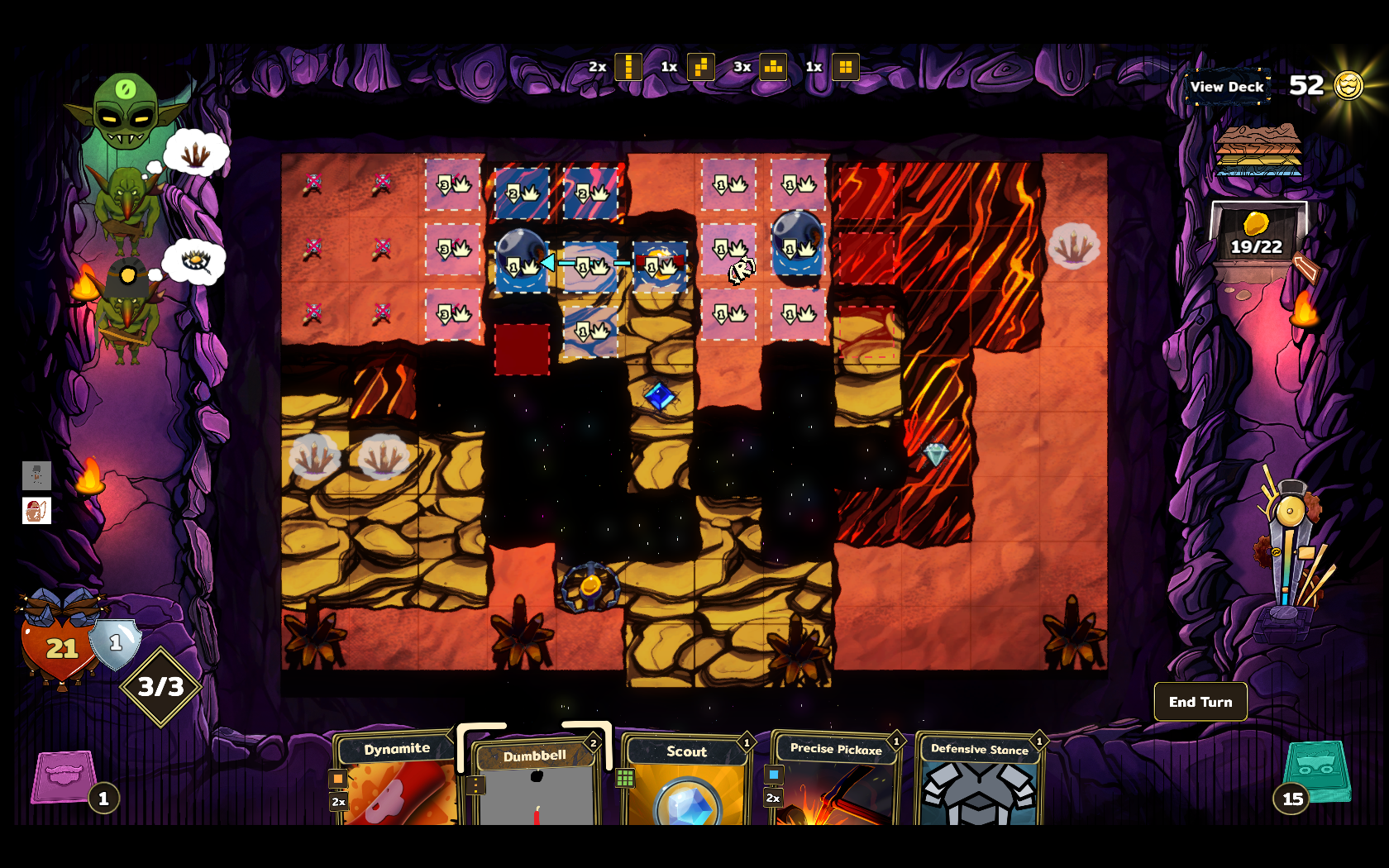
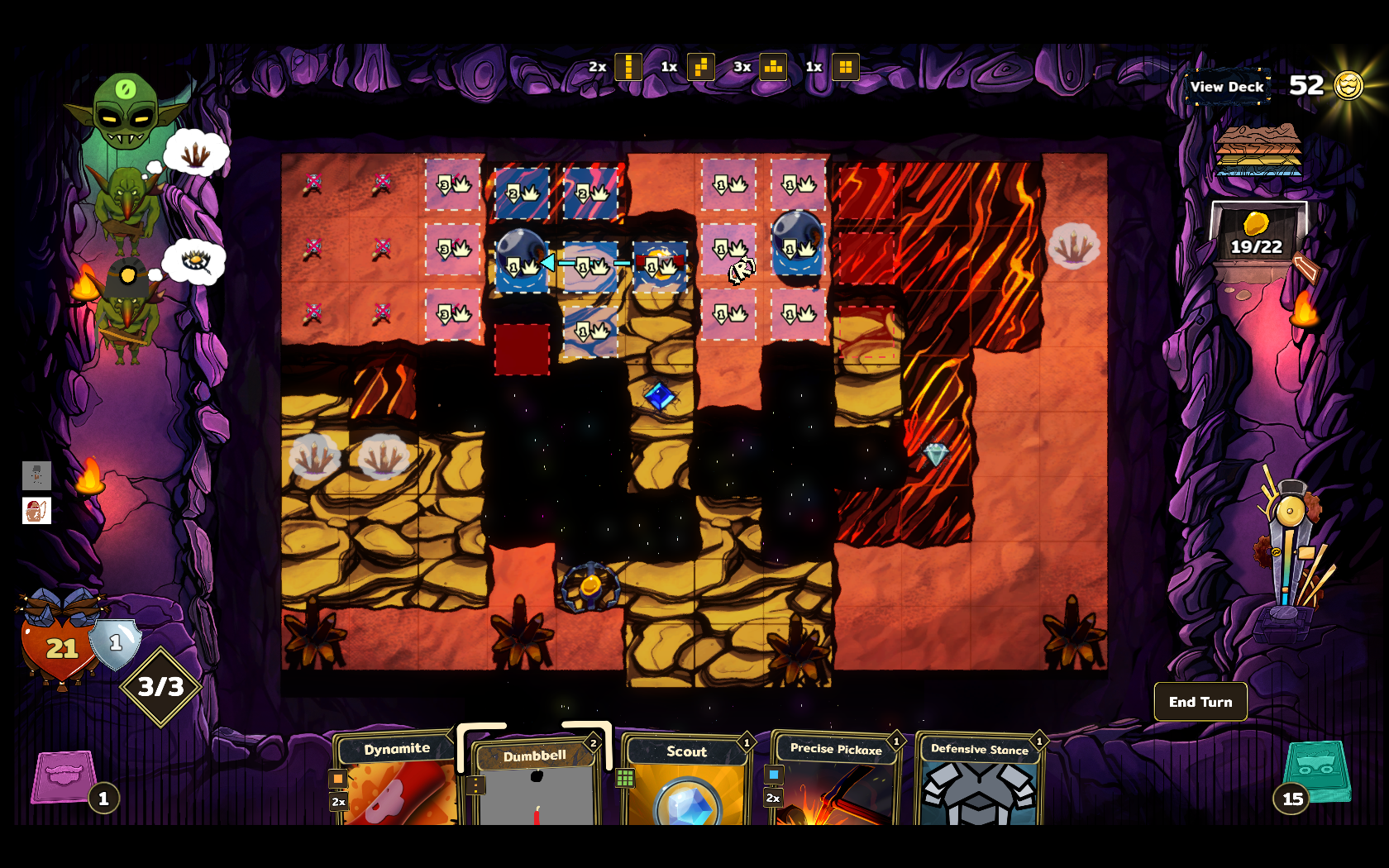
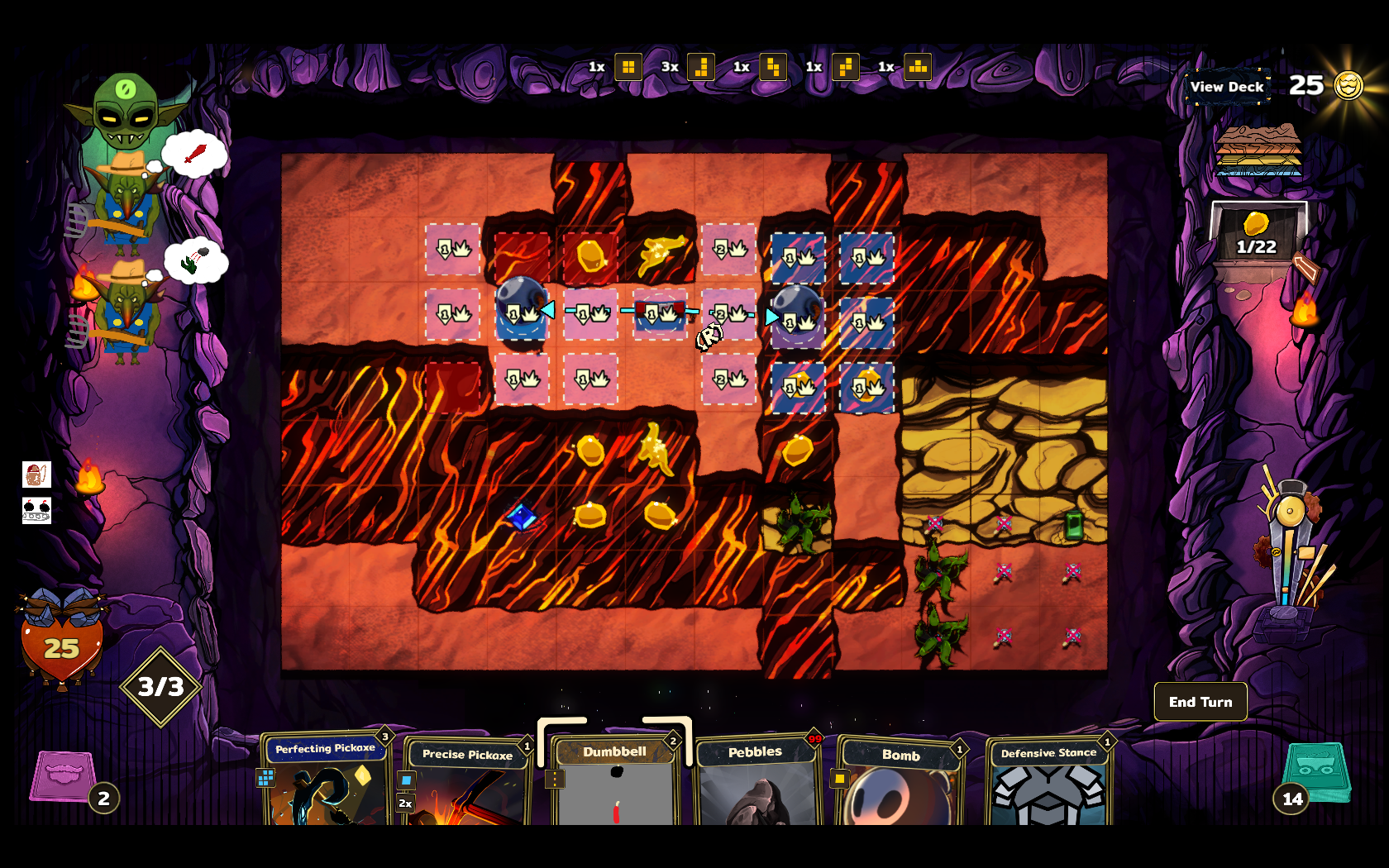
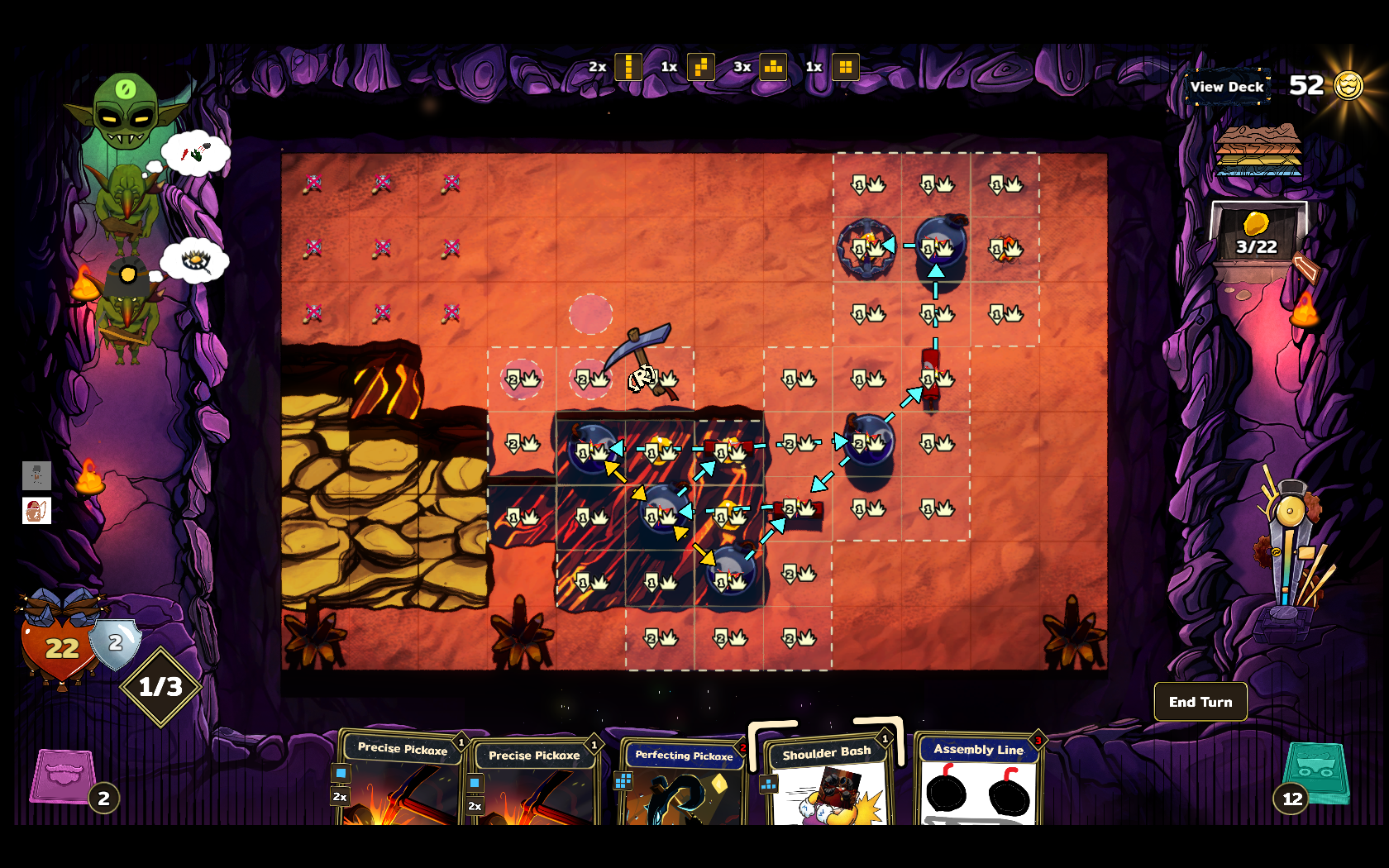
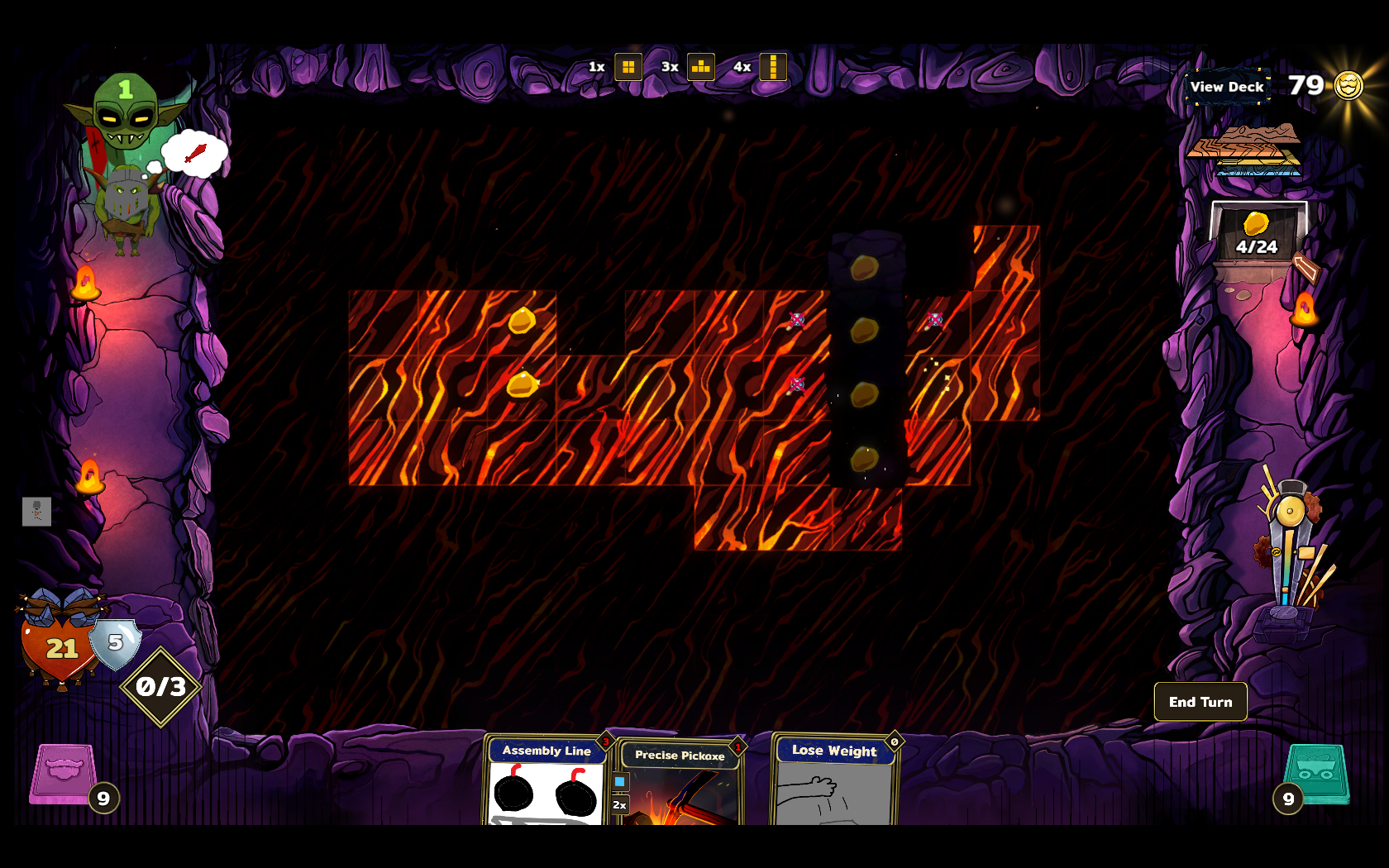
Even more significant for tactical digging are the layers, however: The further the player digs, the more layers any given level consists of. While the upper layer of soft earth can for example often be dug relatively cheap with certain wooden tool cards, those break when using them on deeper layers like magma rock. Explosives, in turn, have to be placed with care: A bomb on a top layer will destroy deeper ones, but a bomb that touches a top level layer from the side can destroy it as well. The beauty of the game comes from keeping all these layered systems in mind while placing the perfect avalanche of explosions, all while dealing with the increasingly more interesting hurdles the oncoming enemies provide. Some goblins for example collect gold that is dug open, but not dug out yet, and redistribute it on the field - but put in a bear trap this time. Others plant thorns, which grow every turn, but only on the same layer, making strategic digging even more important.
Each level has several layers (here, the orange dirt, the yellow rock, and the red-black magma stone). Obstacles often only affect the same layer, and some tools outright break when a layer is too hard. Explosives also need to be placed with layers in mind: The bombs here can destroy the layer they are place on and layer blocks next to them, but cannot extend their blast to lower layers (visualised here with the red squares)
Preview Conclusion
Even in its current early version, Beards Go Underground kept me playing until I had seen absolutely everything, and then I started again - because the core loop of the digging and card selection process is so timeless, so satisfyingly tuned that it works without further progress incentive. I think the biggest commendation I can give Beards Go Underground in its current version is this: It kept me from playing Titanium Court further, because digging holes was more satisfying than match-three-ing castles. There, I said it.